James Fawcett - Böcker
Visar alla böcker från författaren James Fawcett. Handla med fri frakt och snabb leverans.
3 produkter
3 produkter
1 204 kr
Skickas inom 7-10 vardagar
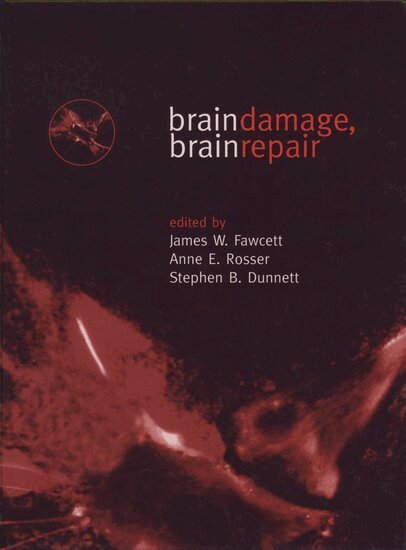
Many neurological conditions are caused by damage to neurons and glial cells. For most of these diseases there are at present no effective treatments to minimise the extent of neuronal and glial loss, and no effective way of replacing what has been lost. This picture is rapidly changing. Developments in basic neuroscience have produced various potential therapies that can protect neurons and glia following traumatic, anoxic, infectious and immunological damage. The old doctrine that axons cannot be made to regenerate, and dead neurons cannot be replaced is no longer tenable, and a wide variety of reconstructive techniques for the nervous system are under development. These and other basic science discoveries will progress into clinical practice, and lead to a revolution in neurology and neurosurgery. This book describes the various conditions that lead to damage to the nervous system, and the ways in which they may be ameliorated. It covers the burgeoning science of reconstruction of the nervous system, through neuronal, glial and stem cell transplantation, axon regeneration, remyelination, plasticity and pharmacological interventions. The clinical conditions to which these treatments will be applied and their assessment are described. This is the first book to cover this enormous and expanding field of neuroscience and neurology. It will be useful to students and scientists working in the field of nervous system damage and reconstruction, and also to clinicians who wish to look forward to the developments which will shape the future of their practice
6 668 kr
Skickas inom 5-8 vardagar
This book is the first one in English to focus in depth upon the private international law problems raised by the sale of goods. It begins with the substantive law and practice, and uses this as the basis for a comparative and critical discussion of the private international law issues. Examples of the typical obligations of the buyer and seller are also provided. International Sale of Goods in the Conflict of Laws is a strong new addition to the Oxford Private International Law Series and covers everything from torts to e-commerce.Contracts of sale with a cross-border element are an everyday occurrence and one which is becoming ever more common with the advent of modern communications technology. For example, where, for jurisdictional purposes, is the place or performance of the obligation to pay for goods? Where software is sold over the Internet, is this a sale of goods contract and, if so, where are the goods delivered? Foreign judgments as to title raise complex questions as to enforcement, recognition and res judicata. As regards choice of law, sales-specific problems arise to a large extent from the interaction of contractual obligations and title matters which are central to the sale contract and the complex characterisation questions which ensue. They arise from the enactment in many countries of the Vienna Convention, from the complex inter-relationship between buyer, seller and third parties and from sales-specific domestic legislation which may be mandatory irrespective of the applicable law.The book is concerned not only with contractual disputes that can arise out of the international sale of goods but also with torts, such as conversion and negligent misstatement, that can arise out of this type of contract. Restitutionary and proprietary claims can also arise. Special attention is paid to both the jurisdictional and choice of law problems that occur in cases of business to business e-commerce.
Reform and Development of Private International Law
Essays in Honour of Sir Peter North
Inbunden, Engelska, 2002
2 643 kr
Skickas inom 7-10 vardagar
This collection of essays by his friends and colleagues honours Sir Peter North's remarkable career and outstanding contribution to private international law. It takes as its theme the reform and development of private international law, reflecting the three different levels at which the development and reform of private international law takes place. Robin Morse discusses the creeping codification of private international law. Trevor Hartley draws attention to an area of private international law, that relating to matrimonial property, which is entirely judge-made. Joost Blom shows how quickly the judges, in this case in the Supreme Court of Canada, can develop private international law once they set their mind to it. Sir Lawrence Collins discusses the concept of comity in modern private international law. Writers too have had their part to play in the development of private international law; this is the subject of the contribution by Ole Lando. Kurt Siehr looks at the impact of international instruments on national private international law and the problems that this throws up.A number of contributors discuss various aspects of the ever-growing Europeanization of private international law. Ian Fletcher focuses on the EC Regulation on Insolvency Proceedings and its impact upon established law and practice in England and Wales. Paul Beaumont examines questions of legal basis and external competence and the best way for the UK and Europe to be represented in issues of private international law globally as well as offering a technical analysis of the contract provision of the Brussels I Regulation. Hans Ulrich Jessurun d'Oliveira examines the uneasy relationship between the European Union and private international law and the movement towards eroding the latter. Peter Nygh compares declining jurisdiction under the Brussels I Regulation and the preliminary draft Hague Judgments Convention.Other contributors have concentrated on aspects of the reform of private international law on a world-wide basis. Jonathan Harris discusses the Hague Convention on the Law Applicable to Trusts and on their Recognition 1985 in his examination of the trust in private international law. Not surprisingly there is much discussion in this book of the ambitious project that has been absorbing the Hague Conference for nearly ten years, namely a Hague Convention on Jurisdiction and Foreign Judgments in Civil and Commercial Matters. David McClean discusses the history of the project and, if it does fail, a possible way forward. Ron Brand suggests a more modest goal at the Hague Conference, namely a choice of court plus recognition convention. Whatever the fate of the Hague Judgments Convention, the work undertaken at the Hague can still be used in the future. It can inform the discussion of what we should do in intellectual property cases in private international law, which is the subject of James Fawcett's contribution.