James Knowlson - Böcker
Visar alla böcker från författaren James Knowlson. Handla med fri frakt och snabb leverans.
5 produkter
5 produkter
421 kr
Skickas
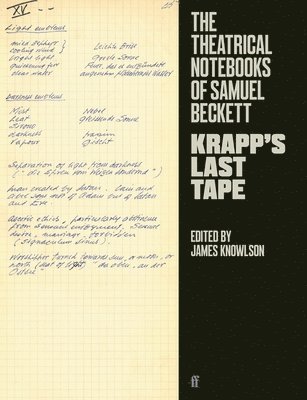
Samuel Beckett directed Krapp's Last Tape on four separate occasions: this volume offers a facsimile of his 1969 Schiller-Theater notebook.Professor Knowlson writes that in these notes 'we see Beckett simplifying, shaping and refining, as he works towards a realization of the play that will function well dramatically. The material reveals a flexibility and openness of approach often considered alien to Beckett's ways of working in the theatre.' The Schiller notebook also contains some of the most explicit analysis by Beckett of his own work ever revealed.The revised text incorporates many of the changes Beckett made in the 1969 Schiller production, as well as subsequent changes in later productions. Professor Knowlson worked closely with Beckett over these revisions - and deviations from the original are noted and explained in detail.
226 kr
Tillfälligt slut
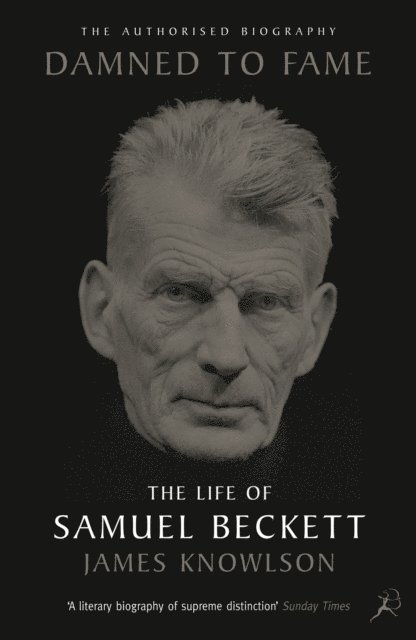
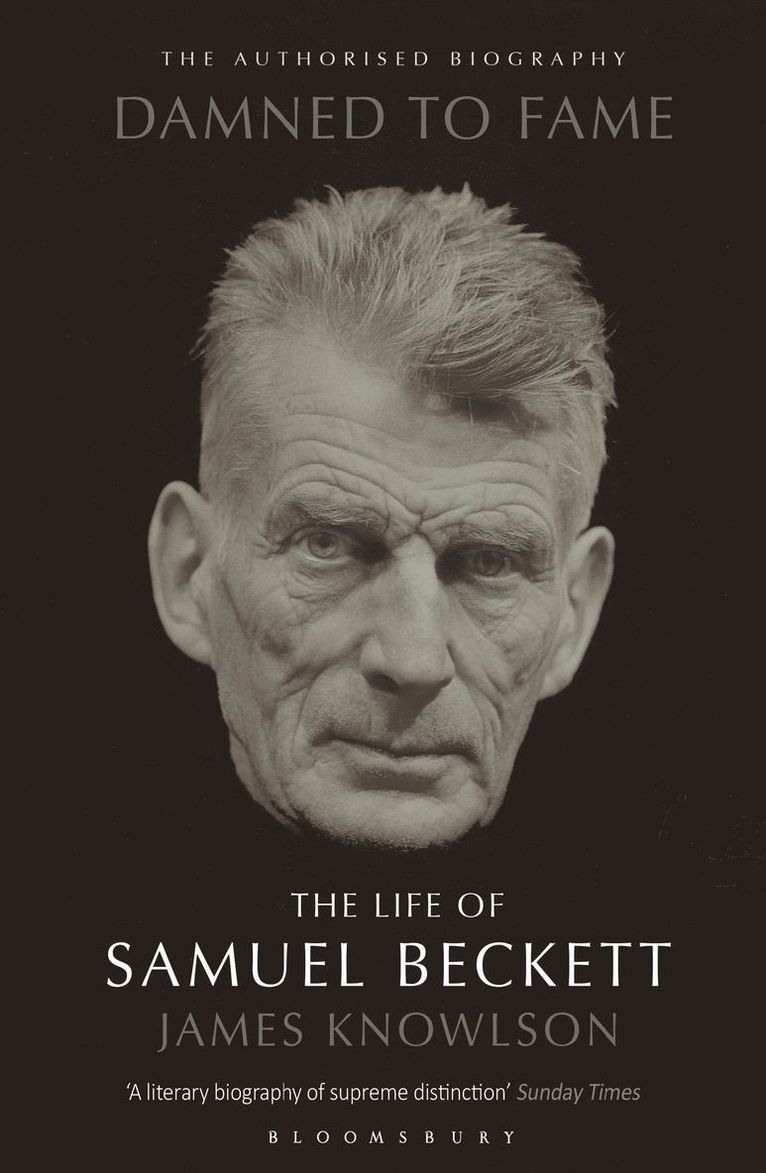
_______________‘A triumph of scholarship and sympathy... one of the great post-war biographies' - Independent‘A landmark in scholarly criticism... Knowlson is the world's largest Beckett scholar. His life is right up there with George Painter's Proust and Richard Ellmann's Joyce in sensitivity and fascination' - Daily Telegraph‘It is hard to imagine a fuller portrait of the man who gave our age some of the myths by which it lives' - Evening Standard_______________SHORTLISTED FOR THE WHITBREAD PRIZE_______________Samuel Beckett's long-standing friend, James Knowlson, recreates Beckett's youth in Ireland, his studies at Trinity College, Dublin in the early 1920s and from there to the Continent, where he plunged into the multicultural literary society of late-1920s Paris. The biography throws new light on Beckett's stormy relationship with his mother, the psychotherapy he received after the death of his father and his crucial relationship with James Joyce. There is also material on Beckett's six-month visit to Germany as the Nazi's tightened their grip. The book includes unpublished material on Beckett's personal life after he chose to live in France, including his own account of his work for a Resistance cell during the war, his escape from the Gestapo and his retreat into hiding. Obsessively private, Beckett was wholly committed to the work which eventually brought his public fame, beginning with the controversial success of "Waiting for Godot" in 1953, and culminating in the award of the Nobel Prize for Literature in 1969.
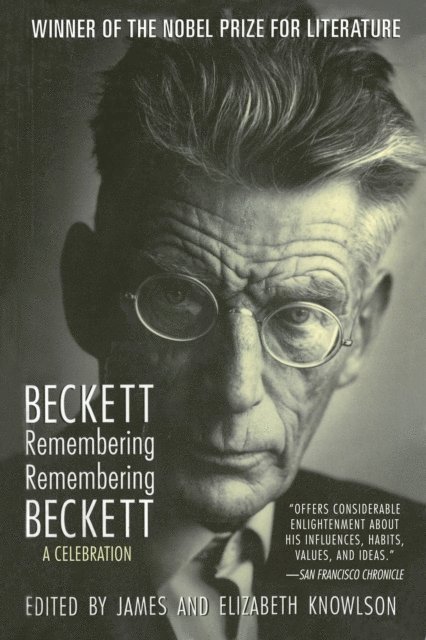
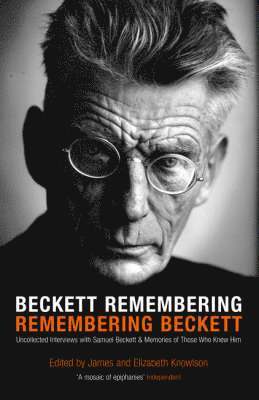
Beckett Remembering: Remembering Beckett
Unpublished Interviews with Samuel Beckett & Memories of Those Who Knew Him
Häftad, Engelska, 2007
204 kr
Skickas inom 10-15 vardagar
_______________‘A volume that admirers will seize on hungrily for its details, and for the many photographs ... Refreshing and enlightening. I closed the book eager to go back to the masterworks' - Kevin Jackson, Sunday Times‘These humanising glimpses are a treat for the Beckett fan' - Independent‘Magnificently enriched by a series of interviews spread over a decade between Professor James Knowlson and Beckett' - Glasgow Herald_______________Samuel Beckett, one of the towering figures of twentieth-century literature, was also famously reclusive. In these intimate interviews conducted by his biographer, James Knowlson, Beckett and his family, friends and contemporaries reveal more of the writer's human side than ever before. Beckett himself talks of his early youth, his friendship with James Joyce and his Resistance work in Paris during the Second World War. Some of his closest friends remember him both as a schoolboy and struggling young writer, while his students at Trinity College, Dublin give their opinions of him as a lecturer. Esteemed actors, writers and directors, including Billie Whitelaw, Edward Albee and J. M. Coetzee, remember Beckett at the time of his international success. The result is a vivid collection of first-hand experiences, a tribute to a remarkable novelist, poet and dramatist.
361 kr
Skickas inom 7-10 vardagar
For centuries Latin served as an international language for scholars in Europe. Yet as early as the first half of the seventeenth century, scholars, philosophers, and scientists were beginning to turn their attention to the possibility of formulating a totally new universal language. This wide-ranging book focuses upon the role that it was thought an ideal, universal, constructed language would play in the advancement of learning.The first section examines seventeenth-century attempts to establish a universal 'common writing' or, as Bishop Wilkins called it, a 'real character and philosophical language.' This movement involved or interested scientists and philosophers as distinguished as Descartes, Mersenne, Comenius, Newton, Hooke, and Leibniz.The second part of the book follows the same theme through to the final years of the eighteenth century, where the implications of language-building for the progress of knowledge are presented as part of the wider question which so interested French philosophers, that of the influence of signs on thought. The author also includes a chapter tracing the frequent appearance of ideal languages in French and English imaginary voyages, and an appendix on the idea that gestural signs might supply a universal language. This work is intended as a contribution to the history of ideas rather than of linguistics proper, and because it straddles several disciplines, will interest a wide variety of reader. It treats comprehensively a subject that has not previously been adequately dealt with, and should become the standard work in its field.
532 kr
Skickas inom 3-6 vardagar