James McMullen - Böcker
Visar alla böcker från författaren James McMullen. Handla med fri frakt och snabb leverans.
3 produkter
3 produkter
1 440 kr
Skickas inom 5-8 vardagar
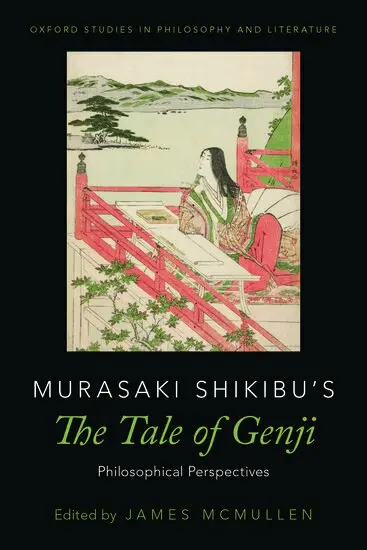
Murasaki Shikibu's The Tale of Genji is variously read as a work of feminist protest, the world's first psychological novel and even as a post-modern masterpiece. Commonly seen as Japan's greatest literary work, its literary, cultural, and historical significance has been thoroughly acknowledged. As a work focused on the complexities of Japanese court life in the Heian period, however, the The Tale of Genji has never before been the subject of philosophical investigation. The essays in this volume address this oversight, arguing that the work contains much that lends itself to philosophical analysis. The authors of this volume demonstrate that The Tale of Genji confronts universal themes such as the nature and exercise of political power, freedom, individual autonomy and agency, renunciation, gender, and self-expression; it raises deep concerns about aesthetics and the role of art, causality, the relation of man to nature, memory, and death itself. Although Murasaki Shikibu may not express these themes in the text as explicitly philosophical problems, the complex psychological tensions she describes and her observations about human conduct reveal an underlying framework of philosophical assumptions about the world of the novel that have implications for how we understand these concerns beyond the world of Genji. Each essay in this collection reveals a part of this framework, situating individual themes within larger philosophical and historical contexts. In doing so, the essays both challenge prevailing views of the novel and each other, offering a range of philosophical interpretations of the text and emphasizing the The Tale of Genji's place as a masterful work of literature with broad philosophical significance.
409 kr
Skickas inom 5-8 vardagar
Murasaki Shikibu's The Tale of Genji is variously read as a work of feminist protest, the world's first psychological novel and even as a post-modern masterpiece. Commonly seen as Japan's greatest literary work, its literary, cultural, and historical significance has been thoroughly acknowledged. As a work focused on the complexities of Japanese court life in the Heian period, however, the The Tale of Genji has never before been the subject of philosophical investigation. The essays in this volume address this oversight, arguing that the work contains much that lends itself to philosophical analysis. The authors of this volume demonstrate that The Tale of Genji confronts universal themes such as the nature and exercise of political power, freedom, individual autonomy and agency, renunciation, gender, and self-expression; it raises deep concerns about aesthetics and the role of art, causality, the relation of man to nature, memory, and death itself. Although Murasaki Shikibu may not express these themes in the text as explicitly philosophical problems, the complex psychological tensions she describes and her observations about human conduct reveal an underlying framework of philosophical assumptions about the world of the novel that have implications for how we understand these concerns beyond the world of Genji. Each essay in this collection reveals a part of this framework, situating individual themes within larger philosophical and historical contexts. In doing so, the essays both challenge prevailing views of the novel and each other, offering a range of philosophical interpretations of the text and emphasizing the The Tale of Genji's place as a masterful work of literature with broad philosophical significance.
679 kr
Skickas inom 7-10 vardagar
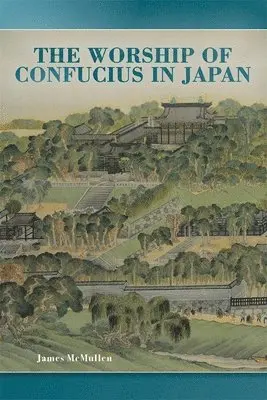
How has Confucius, quintessentially and symbolically Chinese, been received throughout Japanese history? The Worship of Confucius in Japan provides the first overview of the richly documented and colorful Japanese version of the East Asian ritual to venerate Confucius, known in Japan as the sekiten. The original Chinese political liturgy embodied assumptions about sociopolitical order different from those of Japan. Over more than thirteen centuries, Japanese in power expressed a persistently ambivalent response to the ritual’s challenges and often tended to interpret the ceremony in cultural rather than political terms.Like many rituals, the sekiten self-referentially reinterpreted earlier versions of itself. James McMullen adopts a diachronic and comparative perspective. Focusing on the relationship of the ritual to political authority in the premodern period, McMullen sheds fresh light on Sino-Japanese cultural relations and on the distinctive political, cultural, and social history of Confucianism in Japan. Successive sections of The Worship of Confucius in Japan trace the vicissitudes of the ceremony through two major cycles of adoption, modification, and decline, first in ancient and medieval Japan, then in the late feudal period culminating in its rejection at the Meiji Restoration. An epilogue sketches the history of the ceremony in the altered conditions of post-Restoration Japan and up to the present.