James Noggle – författare
Visar alla böcker från författaren . Handla med fri frakt och snabb leverans.
12 produkter
12 produkter
E-bok
Engelska, 20011 290 kr
Läs direkt efter köp
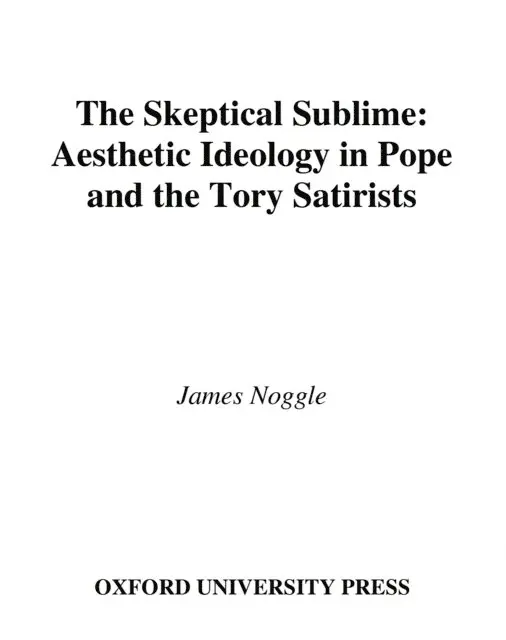
This book argues that philosophical skepticism helps define the aesthetic experience of the sublime in late seventeenth- and eighteenth-century British literature, especially the poetry of Alexander Pope. Skeptical doubt appears in the period as an astonishing force in discourse that cannot be controlled--"doubt''s boundless Sea," in Rochester''s words--and as such is consistently seen as affiliated with the sublime, itself emerging as an important way to conceive of excessive power in rhetoric, nature, psychology, religion, and politics. This view of skepticism as a force affecting discourse beyond its practitioners'' control links Noggle''s discussion to other theoretical accounts of sublimity, especially psychoanalytic and ideological ones, that emphasize the sublime''s activation of unconscious personal and cultural anxieties and contradictions. But because The Skeptical Sublime demonstrates the sublime''s roots in the epistemological obsessions of Pope and his age, it also grounds such theories in what is historically evident in the period''s writing. The skeptical sublime is a concrete, primary instance of the transformation of modernity''s main epistemological liability, its loss of certainty, into an aesthetic asset--retaining, however, much of the unsettling irony of its origins in radical doubt. By examining the cultural function of such persistent instability, this book seeks to clarify the aesthetic ideology of major writers like Pope, Swift, Dryden, and Rochester, among others, who have been seen, sometimes confusingly, as both reactionary and supportive of the liberal-Whig model of taste and civil society increasingly dominant in the period. While they participate in the construction of proto-aesthetic categories like the sublime to stabilize British culture after decades of civil war and revolution, their appreciation of the skepticism maintained by these means of stabilization helps them express ambivalence about the emerging social order and distinguishes their views from the more providentially assured appeals to the sublime of their ideological opponents.
E-bok
PDF, Engelska, 20122 047 kr
Läs direkt efter köp
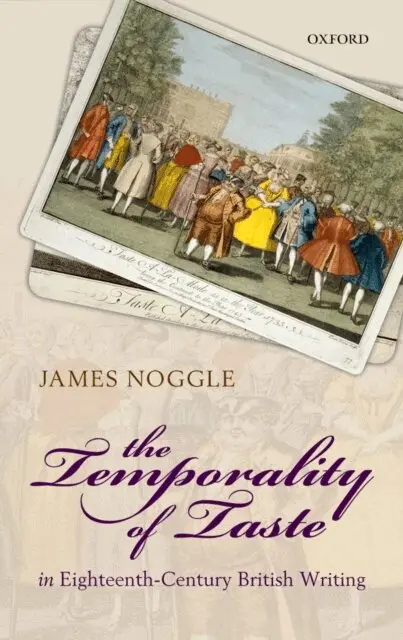
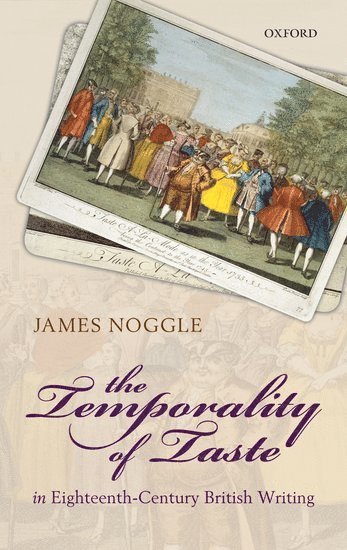
Is taste a quick, momentary experience in the individual mind? Or something durable, shaped by slow, historical processes, affecting groups of people at different times and places? British writers in the eighteenth century believed that it was both, and the tension between these temporal poles shaped the meaning of taste in the period and set a course for aesthetics in following centuries. Focusing on works in many genres-Alexander Pope's poems, David Hume's historiography, essays by Hannah More and Anna Barbauld, and novels by Frances Burney and William Beckford-this book sees the divided temporality of taste as an unpredictable force in British writing. The eighteenth century was the age of taste. Writers considered its intense effects on individual minds as especially characteristic of the collective present of British modernity, whilst they also recognized the disturbing tendency of taste's immediacy and its historical roles to interrupt and foreclose on each other. While noting how taste's two temporal flavours may be made to agree in order to consolidate various national, social, and gendered identities, this book also demonstrates that taste's dual temporality makes it more disruptive than scholars usually think. As such, taste models a kind of critical practice that this book itself endeavours to inherit: the insistent testing of the moment of discernment and on-going patterns of thinking and feeling against each other.
Inbunden, Engelska, 2001
2 140 kr
Skickas inom 5-8 vardagar
This book examines the role of scepticism in initiating the idea of the sublime in early modern British literature. James Noggle draws on philosophy, intellectual history, and critical theory to illuminate the aesthetic ideology of Pope, Swift, Dryden, and Rochester among other important writers of the period. The Skeptical Sublime compares the view of sublimity presented by these authors with that of the dominant, liberal tradition of eighteenth-century criticism to offer a new understanding of how these writers helped construct proto-aesthetic categories that stabilized British culture after years of civil war and revolution, while at the same time their scepticism allowed them to express ambivalence about the emerging social order.
E-bok
PDF, Engelska, 20011 290 kr
Läs direkt efter köp
This book argues that philosophical skepticism helps define the aesthetic experience of the sublime in late seventeenth- and eighteenth-century British literature, especially the poetry of Alexander Pope. Skeptical doubt appears in the period as an astonishing force in discourse that cannot be controlled--"doubt''s boundless Sea," in Rochester''s words--and as such is consistently seen as affiliated with the sublime, itself emerging as an important way to conceive of excessive power in rhetoric, nature, psychology, religion, and politics. This view of skepticism as a force affecting discourse beyond its practitioners'' control links Noggle''s discussion to other theoretical accounts of sublimity, especially psychoanalytic and ideological ones, that emphasize the sublime''s activation of unconscious personal and cultural anxieties and contradictions. But because The Skeptical Sublime demonstrates the sublime''s roots in the epistemological obsessions of Pope and his age, it also grounds such theories in what is historically evident in the period''s writing. The skeptical sublime is a concrete, primary instance of the transformation of modernity''s main epistemological liability, its loss of certainty, into an aesthetic asset--retaining, however, much of the unsettling irony of its origins in radical doubt. By examining the cultural function of such persistent instability, this book seeks to clarify the aesthetic ideology of major writers like Pope, Swift, Dryden, and Rochester, among others, who have been seen, sometimes confusingly, as both reactionary and supportive of the liberal-Whig model of taste and civil society increasingly dominant in the period. While they participate in the construction of proto-aesthetic categories like the sublime to stabilize British culture after decades of civil war and revolution, their appreciation of the skepticism maintained by these means of stabilization helps them express ambivalence about the emerging social order and distinguishes their views from the more providentially assured appeals to the sublime of their ideological opponents.
Inbunden, Engelska, 2012
3 279 kr
Skickas inom 3-6 vardagar
Is taste a quick, momentary experience in the individual mind? Or something durable, shaped by slow, historical processes, affecting groups of people at different times and places? British writers in the eighteenth century believed that it was both, and the tension between these temporal poles shaped the meaning of taste in the period and set a course for aesthetics in following centuries. Focusing on works in many genres-Alexander Pope's poems, David Hume's historiography, essays by Hannah More and Anna Barbauld, and novels by Frances Burney and William Beckford-this book sees the divided temporality of taste as an unpredictable force in British writing. The eighteenth century was the age of taste. Writers considered its intense effects on individual minds as especially characteristic of the collective present of British modernity, whilst they also recognized the disturbing tendency of taste's immediacy and its historical roles to interrupt and foreclose on each other. While noting how taste's two temporal flavours may be made to agree in order to consolidate various national, social, and gendered identities, this book also demonstrates that taste's dual temporality makes it more disruptive than scholars usually think. As such, taste models a kind of critical practice that this book itself endeavours to inherit: the insistent testing of the moment of discernment and on-going patterns of thinking and feeling against each other.
Häftad, Engelska, 2024
918 kr
Kommande
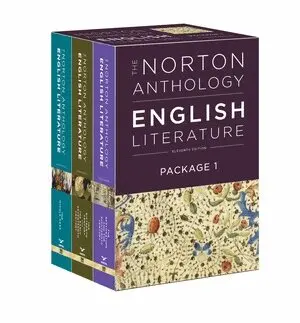
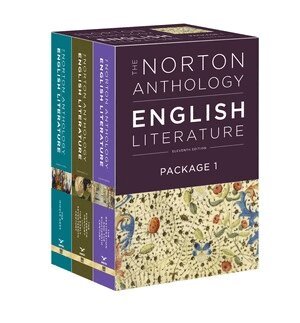
A sweeping revision that speaks to how English literature is taught today.From the Middle Ages to the twenty-first century, The Norton Anthology of English Literature, Eleventh Edition, showcases exciting new authors, works, and textual clusters that demonstrate the relevance of literature to contemporary students and trace the creative arc that has yielded the ever-changing and ever-fascinating body of material called English literature. This anthology offers the experience of literature as part of the world—not apart from it. It is also now available in ebook format for the complete anthology. The Norton Ebook Reader platform provides an active reading environment that equips students with tools for placing works within their social and historical contexts.
633 kr
Skickas inom 5-8 vardagar
A sweeping revision that speaks to how English literature is taught today.From the Middle Ages to the twenty-first century, The Norton Anthology of English Literature, Eleventh Edition, showcases exciting new authors, works, and textual clusters that demonstrate the relevance of literature to contemporary students and trace the creative arc that has yielded the ever-changing and ever-fascinating body of material called English literature. This anthology offers the experience of literature as part of the world—not apart from it. It is also now available in ebook format for the complete anthology. The Norton Ebook Reader platform provides an active reading environment that equips students with tools for placing works within their social and historical contexts.
1 175 kr
Skickas inom 5-8 vardagar
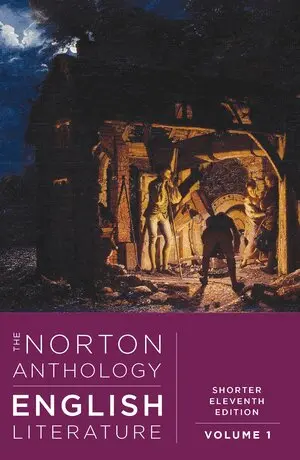
From the Middle Ages to the twenty-first century, The Norton Anthology of English Literature, Shorter Eleventh Edition, showcases exciting new authors, works, and textual clusters that demonstrate the relevance of literature to contemporary students and trace the creative arc that has yielded the ever-changing and ever-fascinating body of material called English literature. This anthology offers the experience of literature as part of the world—not apart from it. It is also now available in ebook format for the complete anthology. The Norton Ebook Reader platform provides an active reading environment that equips students with tools for placing works within their social and historical contexts.
733 kr
Skickas inom 5-8 vardagar
A sweeping revision that speaks to how English literature is taught today.From the Middle Ages to the twenty-first century, The Norton Anthology of English Literature, Shorter Eleventh Edition, showcases exciting new authors, works, and textual clusters that demonstrate the relevance of literature to contemporary students and trace the creative arc that has yielded the ever-changing and ever-fascinating body of material called English literature. This anthology offers the experience of literature as part of the world—not apart from it. It is also now available in ebook format for the complete anthology. The Norton Ebook Reader platform provides an active reading environment that equips students with tools for placing works within their social and historical contexts.
Häftad, Engelska, 2024
878 kr
Skickas inom 5-8 vardagar
From the Middle Ages to the twenty-first century, The Norton Anthology of English Literature, Eleventh Edition, showcases exciting new authors, works, and textual clusters that demonstrate the relevance of literature to contemporary students and trace the creative arc that has yielded the ever-changing and ever-fascinating body of material called English literature. This anthology offers the experience of literature as part of the world—not apart from it. It is also now available in ebook format for the complete anthology. The Norton Ebook Reader platform provides an active reading environment that equips students with tools for placing works within their social and historical contexts.
Inbunden, Engelska, 2020
665 kr
Skickas inom 10-15 vardagar
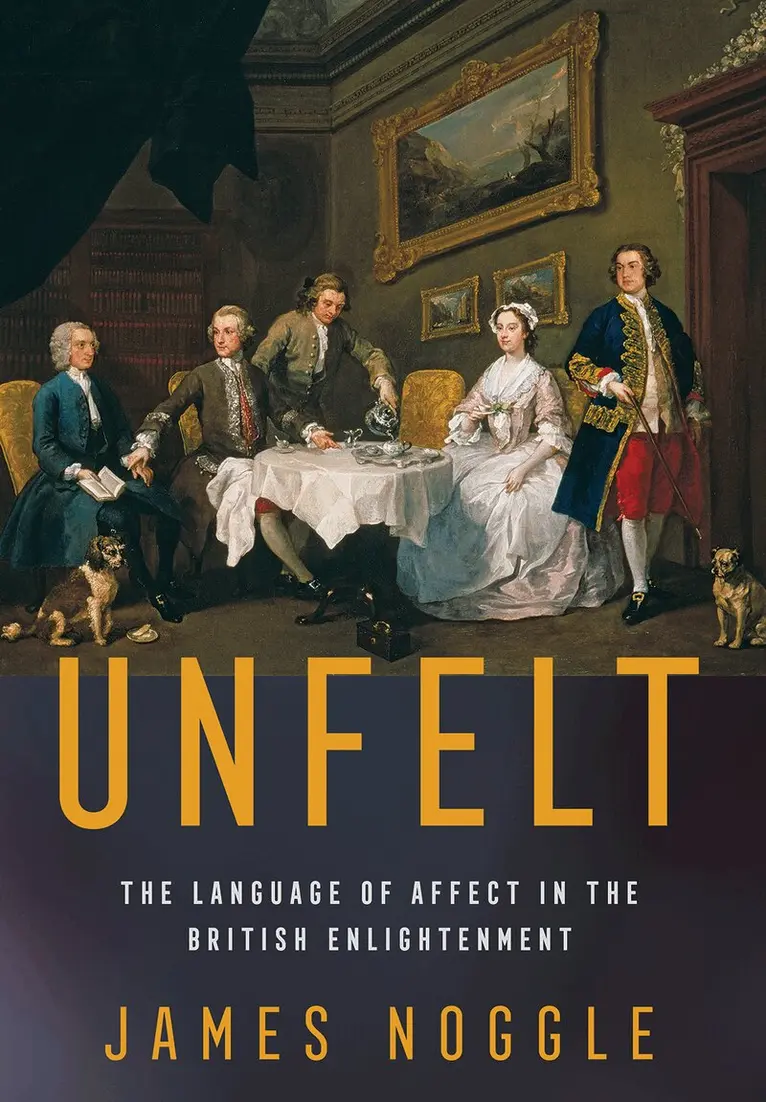
Unfelt offers a new account of feeling during the British Enlightenment, finding that the passions and sentiments long considered as preoccupations of the era depend on a potent insensibility, the secret emergence of pronounced emotions that only become apparent with time. Surveying a range of affects including primary sensation, love and self-love, greed, happiness, and patriotic ardor, James Noggle explores literary evocations of imperceptibility and unfeeling that pervade and support the period's understanding of sensibility.Each of the four sections of Unfelt—on philosophy, the novel, historiography, and political economy—charts the development of these idioms from early in the long eighteenth century to their culmination in the age of sensibility. From Locke to Eliza Haywood, Henry Fielding, and Frances Burney, and from Dudley North to Hume and Adam Smith, Noggle's exploration of the insensible dramatically expands the scope of affect in the period's writing and thought.Drawing inspiration from contemporary affect theory, Noggle charts how feeling and unfeeling flow and feed back into each other, identifying emotional dynamics at their most elusive and powerful: the potential, the incipient, the emergent, the virtual.Open Access edition funded by the National Endowment for the Humanities
Häftad, Engelska, 2023
360 kr
Skickas inom 10-15 vardagar
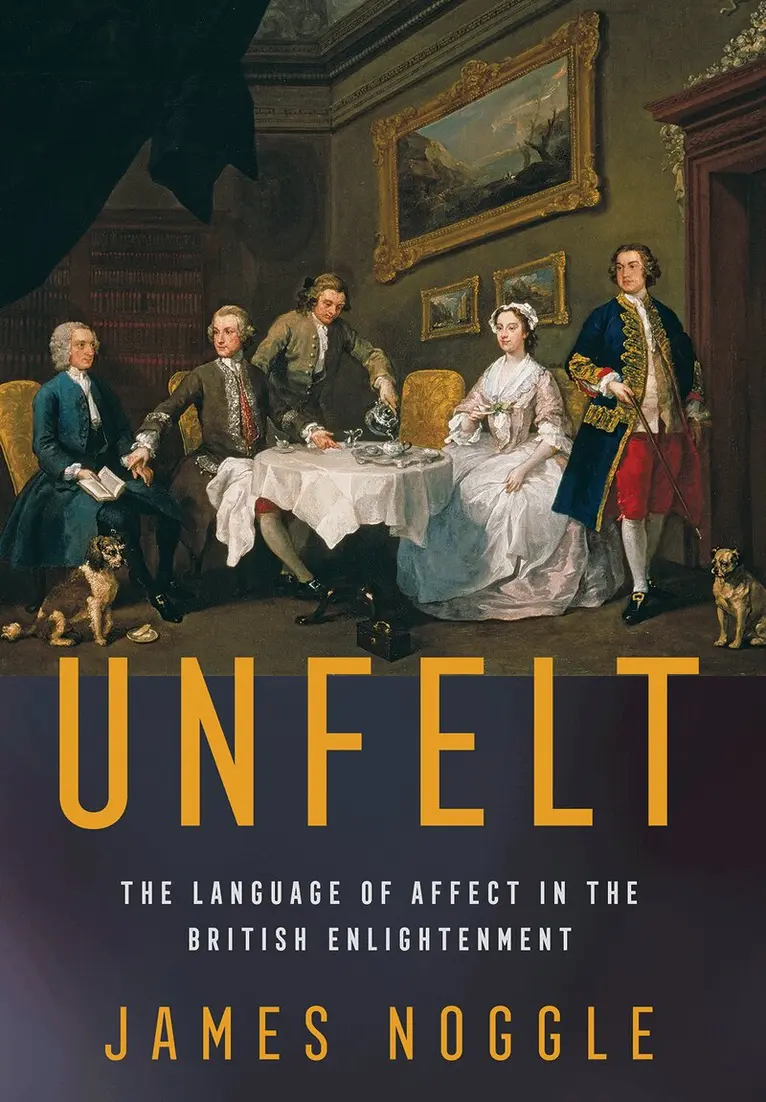
Unfelt offers a new account of feeling during the British Enlightenment, finding that the passions and sentiments long considered as preoccupations of the era depend on a potent insensibility, the secret emergence of pronounced emotions that only become apparent with time. Surveying a range of affects including primary sensation, love and self-love, greed, happiness, and patriotic ardor, James Noggle explores literary evocations of imperceptibility and unfeeling that pervade and support the period's understanding of sensibility.Each of the four sections of Unfelt—on philosophy, the novel, historiography, and political economy—charts the development of these idioms from early in the long eighteenth century to their culmination in the age of sensibility. From Locke to Eliza Haywood, Henry Fielding, and Frances Burney, and from Dudley North to Hume and Adam Smith, Noggle's exploration of the insensible dramatically expands the scope of affect in the period's writing and thought.Drawing inspiration from contemporary affect theory, Noggle charts how feeling and unfeeling flow and feed back into each other, identifying emotional dynamics at their most elusive and powerful: the potential, the incipient, the emergent, the virtual.Open Access edition funded by the National Endowment for the Humanities