James Stuart Olson – författare
Visar alla böcker från författaren James Stuart Olson. Handla med fri frakt och snabb leverans.
6 produkter
6 produkter
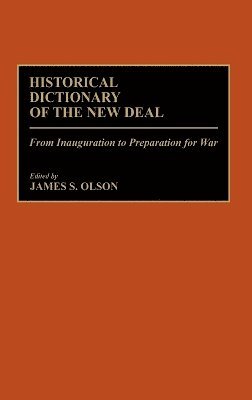
Historical Dictionary of the New Deal
From Inauguration to Preparation for War
Inbunden, Engelska, 1985
901 kr
Skickas inom 10-15 vardagar
This volume will be useful in all types of libraries from high school up where material on this historical period is needed. Reference Books Bulletin
901 kr
Skickas inom 10-15 vardagar
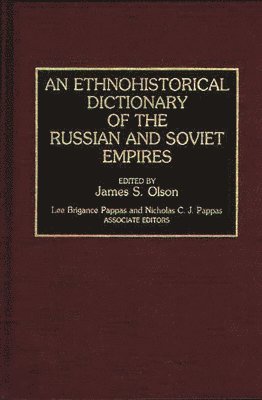
In 1991, the centrifugal forces of ethnic nationalism destroyed the Soviet Union. Religious and ethnic issues will be the defining principles of political life in East Europe, Transcaucasia, and Central Asia for the next decade. Yet when most Americans and Europeans read, for instance, of the Ossetians and Ingush, they have no idea who these peoples are or why they are fighting. This volume will provide a ready reference for students, researchers, and librarians who are trying to sort out the political and social struggles in that part of the world. Focusing on ethnolinguistic groups rather than peoples with purely religious orientations, Olson provides entries on over 450 ethnic groups, with appropriate cross-references. Each entry concludes with references, and the volume includes a selected bibliography of English-language titles. The volume also includes a chronology, several appendixes providing statistical information, and an appendix essay on Islam in Russia and the Soviet Union.
1 177 kr
Skickas inom 10-15 vardagar
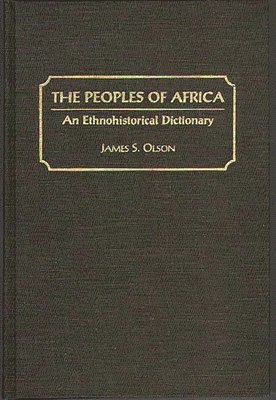
Recent historical events have made it quite clear that the world is in for a long-term continuation of ethnic rivalries that have been going on for centuries. The short-term hegemony of the European empires, the Soviet Union, and the United States may have temporarily subdued some of those conflicts, but older identities are now reasserting themselves. The most complicated, diverse ethnic setting is in Africa, where several thousand languages still provide powerful identities to as many ethnic groups. The Peoples of Africa provides a brief description of the more than 1,800 individual African ethnic groups living today in Africa.Where possible, the individual ethnic groups are discussed in terms of their geographical settings, religion, population, and local economy. Reference librarians, African area specialists, and students of African history and culture will find the book an invaluable guide.
1 177 kr
Skickas inom 10-15 vardagar
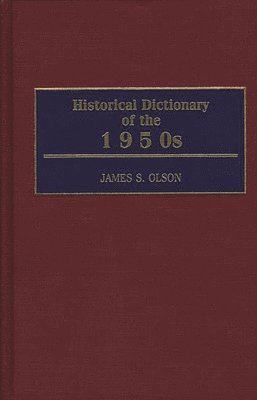
Today, Americans look back nostalgically at the 1950s, an era when television and rock and roll revolutionized popular culture, and Vietnam, race riots, drug abuse, and protest movements were still in the future. With homes in the suburbs, new automobiles, and the latest electrical gadgets, many Americans believed they were the most prosperous people on earth. Yet the era was tainted by the fear of thermonuclear war with the Soviet Union, deepening racial tensions, and discontent with rigid roles for women and the demands of corporate conformity. A sense of rebellion had begun to brew behind the facade. It manifested itself in rock and roll, the budding civil rights movement, and the appearance of a youth culture, eventually exploding in the 1960s.Providing a comprehensive overview, this book includes entries on the prominent people, major events, issues, scandals, ideas, popular culture, and court cases of the decade that gave rise to the tensions of the 1960s.
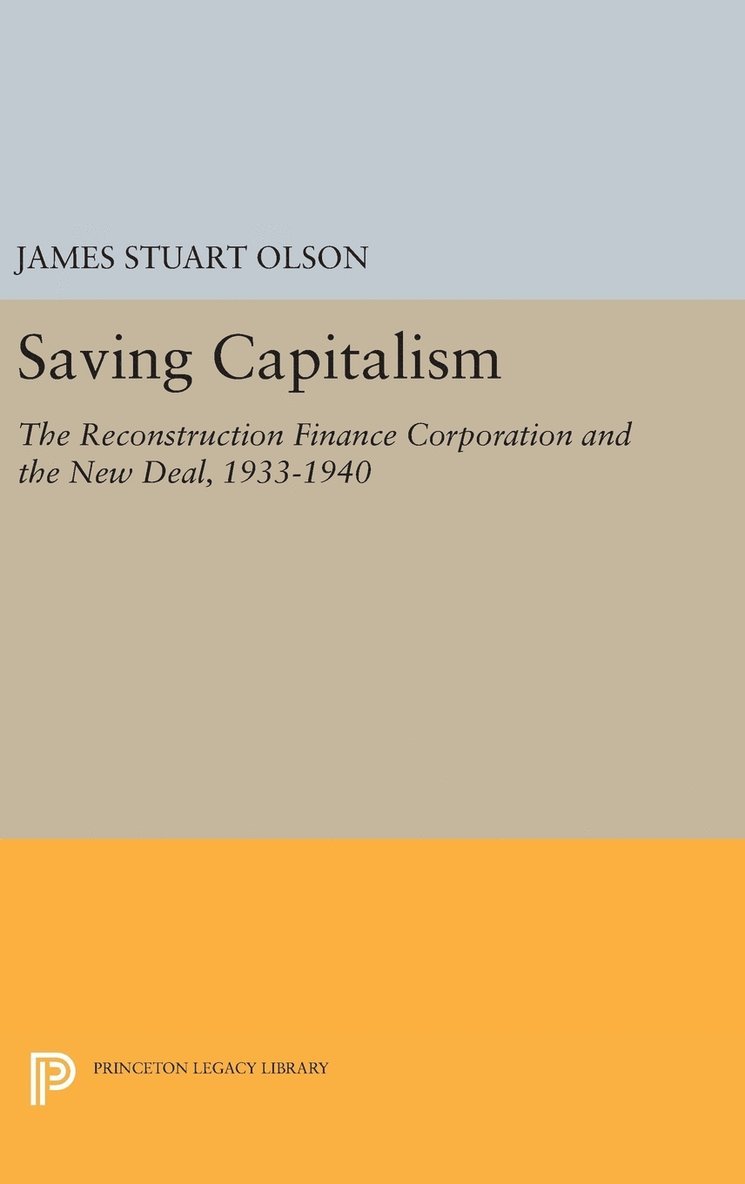
Saving Capitalism
The Reconstruction Finance Corporation and the New Deal, 1933-1940
Häftad, Engelska, 2017
379 kr
Skickas inom 3-6 vardagar
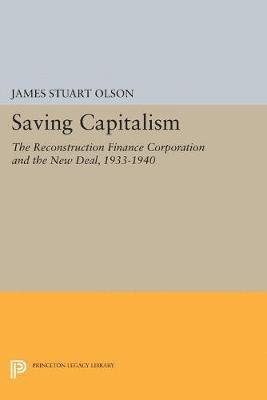
For two generations historians have debated the significance of the New Deal, arguing about what it tried and tried not to do, whether it was radical or reactionary, and what its origins were. They have emphasized the National Recovery Administration, Agricultural Adjustment Administration, Tennessee Valley Authority, or the various social and labor legislation to illustrate an assortment of arguments about the "real" New Deal. Here James Olson contends that the little-studied Reconstruction Finance Corporation was the major New Deal agency, even though it was the product of the Hoover Administration. Pouring more than ten billion dollars into private businesses during the 1930s in a strenuous effort to "save capitalism," the RFC was the largest, most powerful, and most influential of all New Deal agencies, proving that the main thrust of the New Deal was state capitalism--the use of the federal government to shore up private property and the status quo. As national and international money markets collapsed in 1930, Hoover created an RFC with a structure similar to that of his War Finance Corporation.The agency was given two billion dollars to make low-interest loans to commercial banks, savings banks, other financial institutions, and railroads. With modifications, it survived the ultimate collapse of the economy in 1933 and went on to become the central part of the New Deal's effort to preserve fundamental American institutions. Originally published in 1988. The Princeton Legacy Library uses the latest print-on-demand technology to again make available previously out-of-print books from the distinguished backlist of Princeton University Press. These editions preserve the original texts of these important books while presenting them in durable paperback and hardcover editions. The goal of the Princeton Legacy Library is to vastly increase access to the rich scholarly heritage found in the thousands of books published by Princeton University Press since its founding in 1905.
Saving Capitalism
The Reconstruction Finance Corporation and the New Deal, 1933-1940
Inbunden, Engelska, 2017
1 678 kr
Skickas inom 3-6 vardagar
For two generations historians have debated the significance of the New Deal, arguing about what it tried and tried not to do, whether it was radical or reactionary, and what its origins were. They have emphasized the National Recovery Administration, Agricultural Adjustment Administration, Tennessee Valley Authority, or the various social and labor legislation to illustrate an assortment of arguments about the "real" New Deal. Here James Olson contends that the little-studied Reconstruction Finance Corporation was the major New Deal agency, even though it was the product of the Hoover Administration. Pouring more than ten billion dollars into private businesses during the 1930s in a strenuous effort to "save capitalism," the RFC was the largest, most powerful, and most influential of all New Deal agencies, proving that the main thrust of the New Deal was state capitalism--the use of the federal government to shore up private property and the status quo. As national and international money markets collapsed in 1930, Hoover created an RFC with a structure similar to that of his War Finance Corporation.The agency was given two billion dollars to make low-interest loans to commercial banks, savings banks, other financial institutions, and railroads. With modifications, it survived the ultimate collapse of the economy in 1933 and went on to become the central part of the New Deal's effort to preserve fundamental American institutions. Originally published in 1988. The Princeton Legacy Library uses the latest print-on-demand technology to again make available previously out-of-print books from the distinguished backlist of Princeton University Press. These editions preserve the original texts of these important books while presenting them in durable paperback and hardcover editions. The goal of the Princeton Legacy Library is to vastly increase access to the rich scholarly heritage found in the thousands of books published by Princeton University Press since its founding in 1905.