James W. Marquart – författare
Visar alla böcker från författaren James W. Marquart. Handla med fri frakt och snabb leverans.
10 produkter
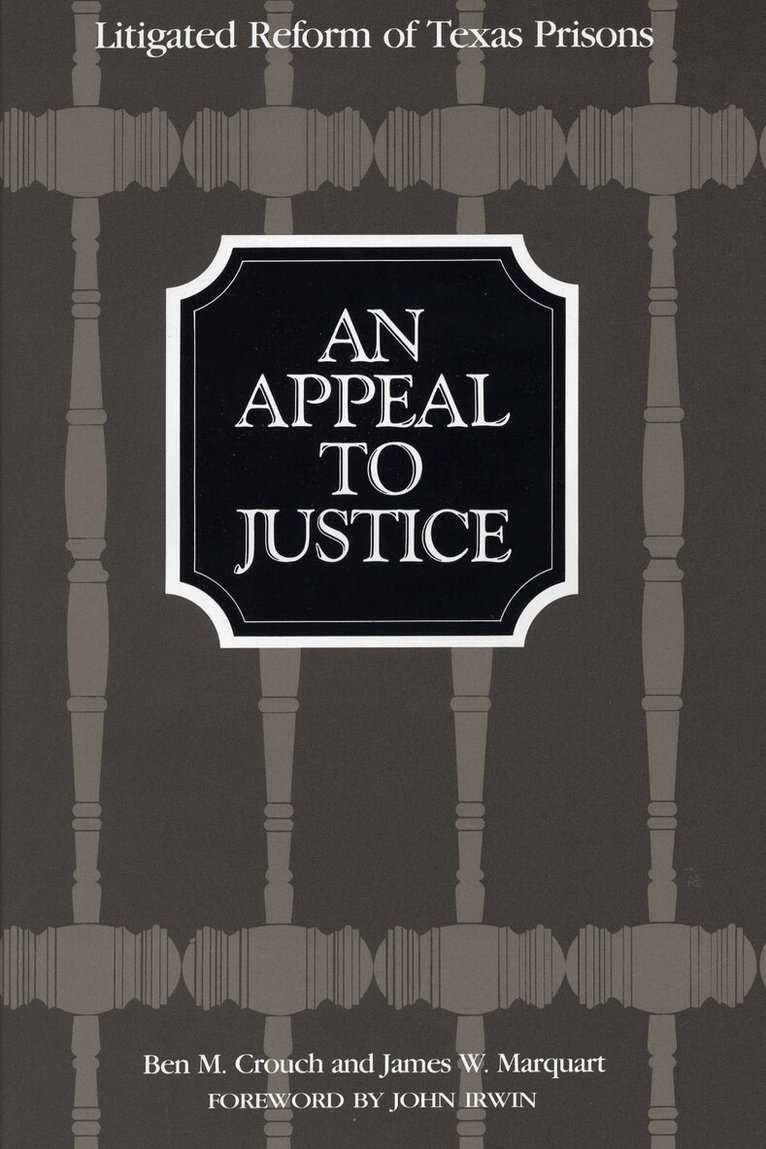
Appeal to Justice
Litigated Reform of Texas Prisons
Av Ben M. Crouch, James W. Marquart
Häftad, 1989
328 kr
Lägg i varukorg
How does a prison achieve institutional order while safeguarding prisoners' rights? Since the early 1960s, prison reform advocates have aggressively used the courts to extend rights and improve life for inmates, while prison administrators have been slow to alter the status quo. Litigated reform …
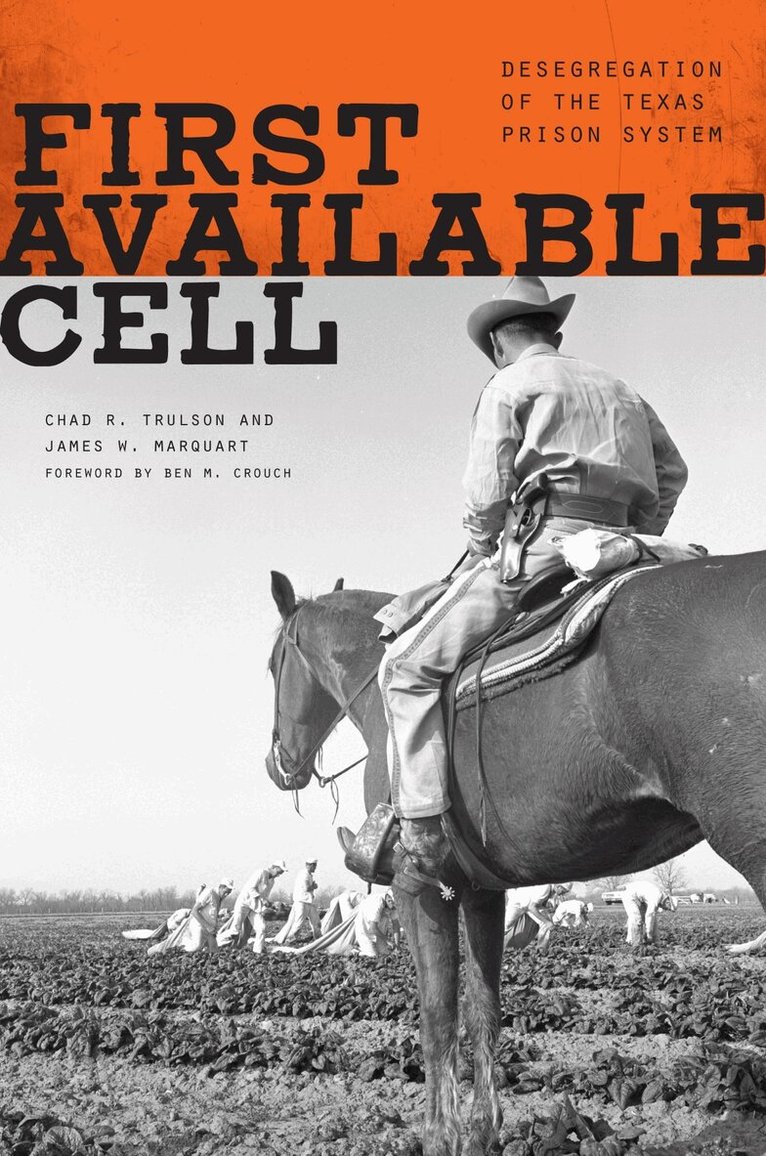
First Available Cell
Desegregation of the Texas Prison System
Av Chad R. Trulson, James W. Marquart
Häftad, 2009
361 kr
Lägg i varukorg
Decades after the U.S. Supreme Court and certain governmental actions struck down racial segregation in the larger society, American prison administrators still boldly adhered to discriminatory practices. Not until 1975 did legislation prohibit racial segregation and discrimination in Texas …
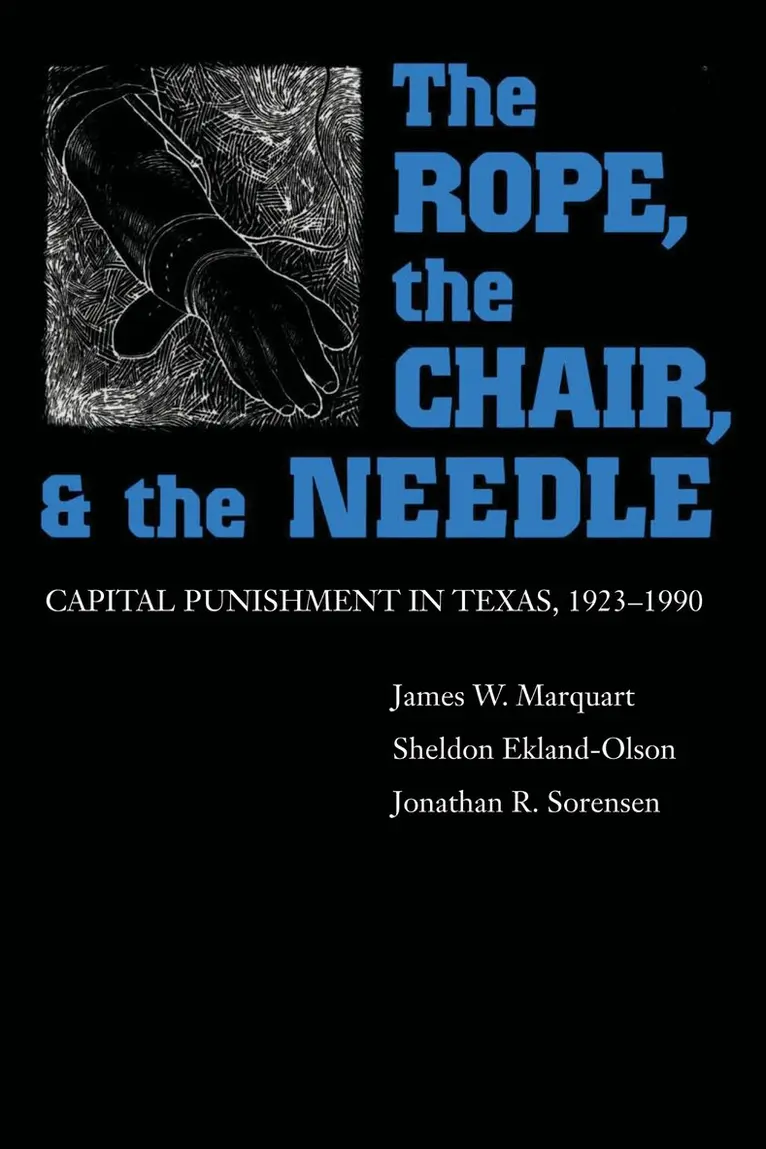
Rope, the Chair, and the Needle
Capital Punishment in Texas, 1923-1990
Av James W. Marquart, Sheldon Ekland-Olson m. fl.
Häftad, 1998
328 kr
Lägg i varukorg
In late summer 1923, legal hangings in Texas came to an end, and the electric chair replaced the gallows. Of 520 convicted capital offenders sentenced to die between 1923 and 1972, 361 were actually executed, thus maintaining Texas’ traditional reputation as a staunch supporter of capital …
Life Without Parole and Medically Assisted Death
The Coming Crisis in American Punishment
Av James W. Marquart, Joshua S. Long
Häftad, 2026
316 kr
Lägg i varukorg
There is a coming crisis in the American criminal legal system involving the development of two policies in the United States - the expansive use of life-without-parole sentences (LWOP) and the expanding legalization of medical assistance in dying (MAID). While MAID remains a controversial …
Life Without Parole and Medically Assisted Death
The Coming Crisis in American Punishment
Av James W. Marquart, Joshua S. Long
Inbunden, 2026
1063 kr
Lägg i varukorg
There is a coming crisis in the American criminal legal system involving the development of two policies in the United States - the expansive use of life-without-parole sentences (LWOP) and the expanding legalization of medical assistance in dying (MAID). While MAID remains a controversial …
Deadly Betrayal
The Kidnapping and Murder of Mckay Everett
Av Paulette Everett-Norman, James W. Marquart m. fl.
Häftad, 2007
128 kr
Lägg i varukorg
Dear Reader: Reality comes when an exact moment coincides with acceptance of a certain event. Reality came for me on September 12, 1995, when McKay, my only child, was abducted and murdered by an adult family friend named Hilton Crawford. McKay loved and trusted Hilton. Hilton betrayed that love …
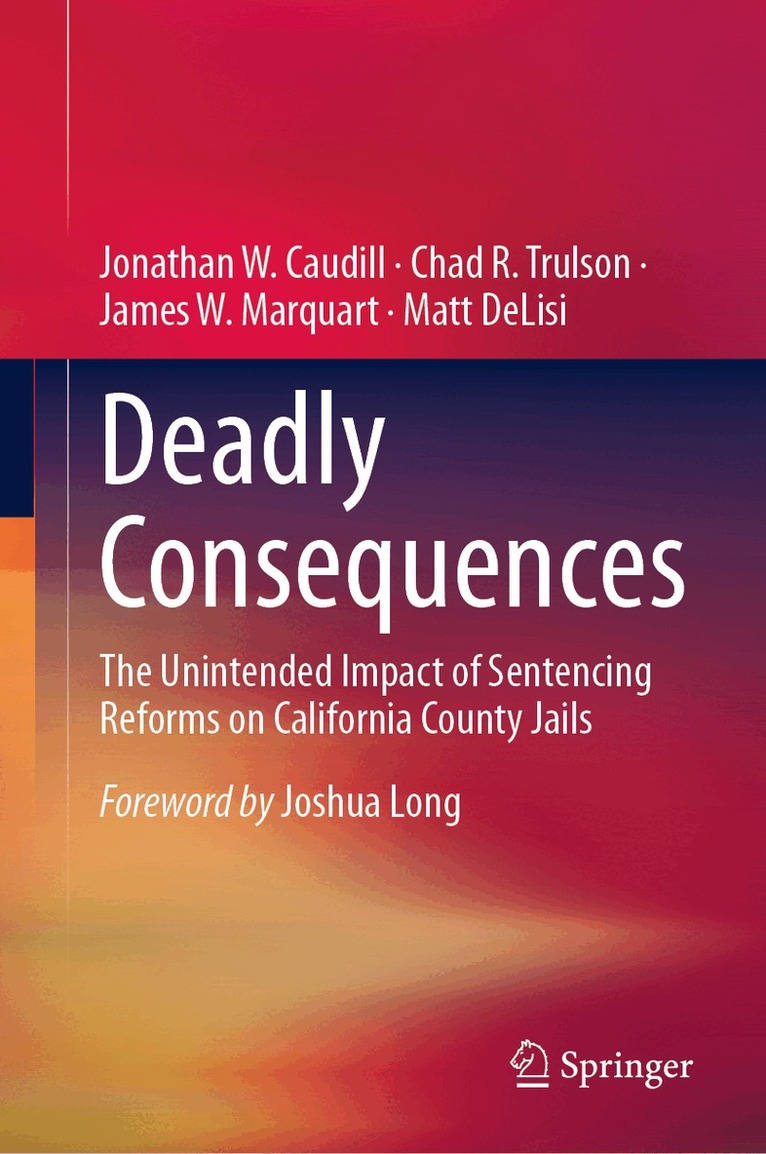
Deadly Consequences
The Unintended Impact of Sentencing Reforms on California County Jails
Av Jonathan W. Caudill, Chad R. Trulson m. fl.
Inbunden, 2025
1313 kr
Lägg i varukorg
This book investigates the unintended and deadly consequences of criminal justice reforms through observing the effects of prison depopulation sentencing reform on county jails. This mixed-methods case study explores how California’s sentencing reform efforts in 2011 (Assembly Bill 109) and 2014 …
Deadly Consequences
The Unintended Impact of Sentencing Reforms on California County Jails
Av Matt DeLisi, James W. Marquart m. fl.
E-bok, 2025
1733 kr
Lägg i varukorg
This book investigates the unintended and deadly consequences of criminal justice reforms through observing the effects of prison depopulation sentencing reform on county jails. This mixed-methods case study explores how California’s sentencing reform efforts in 2011 (Assembly Bill 109) and 2014 …
Deadly Consequences
The Unintended Impact of Sentencing Reforms on California County Jails
Av Jonathan W. Caudill, Chad R. Trulson m. fl.
Häftad, 2026
932 kr
Lägg i varukorg
This book investigates the unintended and deadly consequences of criminal justice reforms through observing the effects of prison depopulation sentencing reform on county jails. This mixed-methods case study explores how California’s sentencing reform efforts in 2011 (Assembly Bill 109) and 2014 …