James Whitley – författare
Visar alla böcker från författaren James Whitley. Handla med fri frakt och snabb leverans.
7 produkter
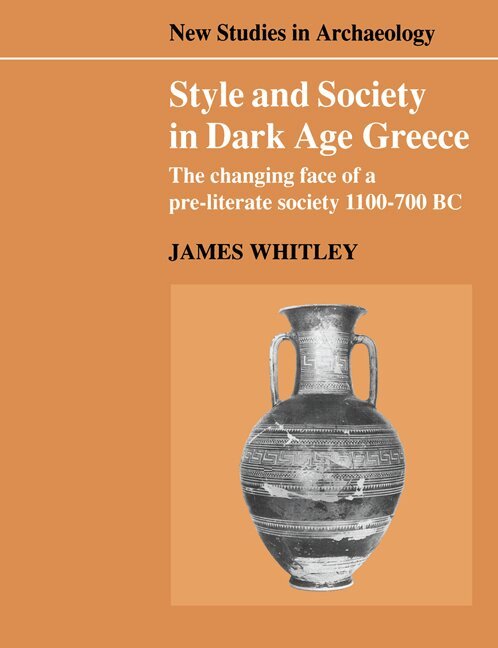
Style and Society in Dark Age Greece
The Changing Face of a Pre-literate Society 1100-700 BC
Av James Whitley, Colin Renfrew m. fl.
Häftad, 2003
687 kr
Lägg i varukorg
In this innovative study, James Whitley examines the relationship between the development of pot style and social changes in the Dark Age of Greece (1100-700 BC). He focuses on Athens where the Protogeometric and Geometric styles first appeared. He considers pot shape and painted decoration …
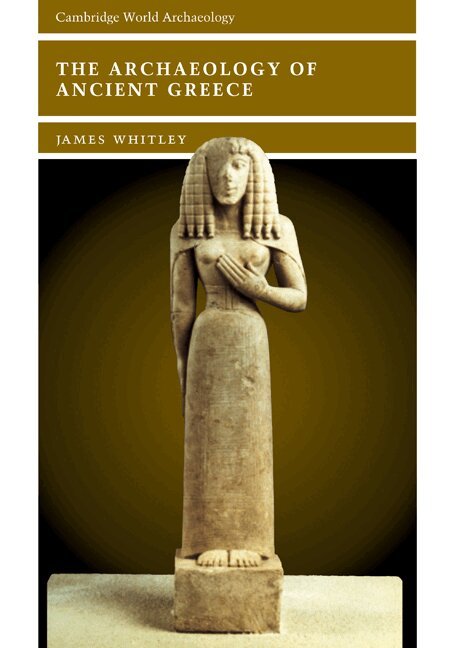
The Archaeology of Ancient Greece
Av James Whitley, Norman Yoffee m. fl.
Inbunden, 2001
1928 kr
Lägg i varukorg
The Archaeology of Ancient Greece provides a synthesis of research on the material culture of Greece in the Archaic and Classical periods (1000-300 BC). The rich and diverse material culture of ancient Greece has always provoked admiration and even wonder, but it is seldom analysed as a key to our …
The Archaeology of Ancient Greece
Häftad, 2001
720 kr
Lägg i varukorg
The Archaeology of Ancient Greece provides a synthesis of research on the material culture of Greece in the Archaic and Classical periods (1000-300 BC). The rich and diverse material culture of ancient Greece has always provoked admiration and even wonder, but it is seldom analysed as a key to our …
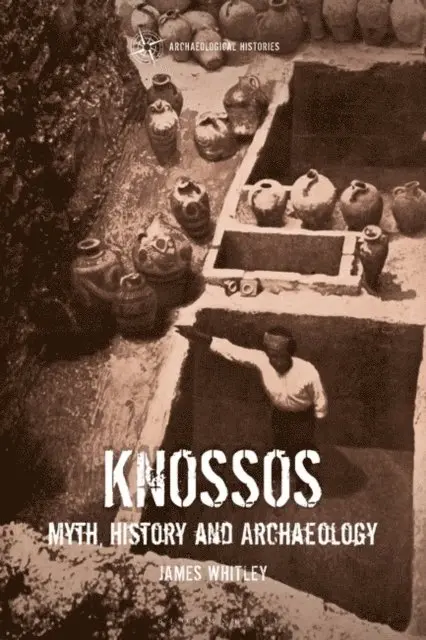
Knossos
Myth, History and Archaeology
E-bok, 2023
369 kr
Lägg i varukorg
Knossos is one of the most important sites in the ancient Mediterranean. It remained amongst the largest settlements on the island of Crete from the Neolithic until the late Roman times, but aside from its size it held a place of particular significance in the mythological imagination of Greece and …
Knossos
Myth, History and Archaeology
E-bok, 2023
369 kr
Lägg i varukorg
Knossos is one of the most important sites in the ancient Mediterranean. It remained amongst the largest settlements on the island of Crete from the Neolithic until the late Roman times, but aside from its size it held a place of particular significance in the mythological imagination of Greece and …
Knossos
Myth, History and Archaeology
Av James Whitley, Thomas Harrison
Inbunden, 2023
1023 kr
Lägg i varukorg
Knossos is one of the most important sites in the ancient Mediterranean. It remained amongst the largest settlements on the island of Crete from the Neolithic until the late Roman times, but aside from its size it held a place of particular significance in the mythological imagination of Greece and …
Knossos
Myth, History and Archaeology
Av James Whitley, Thomas Harrison
Häftad, 2023
321 kr
Lägg i varukorg
Knossos is one of the most important sites in the ancient Mediterranean. It remained amongst the largest settlements on the island of Crete from the Neolithic until the late Roman times, but aside from its size it held a place of particular significance in the mythological imagination of Greece and …