Jan Lin - Böcker
Visar alla böcker från författaren Jan Lin. Handla med fri frakt och snabb leverans.
7 produkter
7 produkter
3 257 kr
Skickas inom 10-15 vardagar
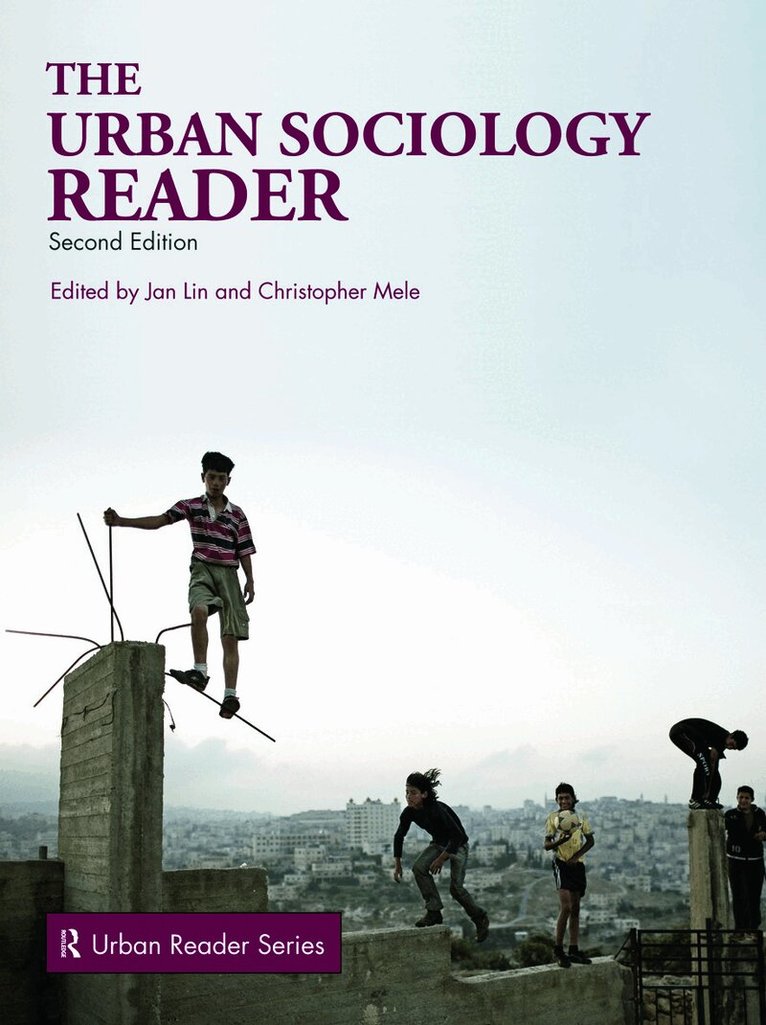
The urban world is an exciting terrain for investigating the central institutions, structures and problems of the social world and how they have transformed through the last 200 years. This Reader comprises sections on urban social theory, racial and social difference in the city, culture in everyday life, culture and the urban economy, globalization and transnational social relations and the regulation of urban space. Drawing together seminal selections covering the nineteenth to the twenty-first centuries, this Reader includes forty-three significant writings from eminent names such as Simmel, Wirth, Park, Burgess, DuBois, Zukin, Sassen, and Harvey. The 2nd edition illuminates more recent urban issues such as sprawl, sustainability, immigration and urban protest. Selections are predominantly sociological, but some readings cross disciplinary boundaries.Providing an essential resource for students of urban studies, this book brings together important but, till now, widely dispersed writings. Editorial commentaries precede each entry; introducing the text, demonstrating its significance, and outlining the issues surrounding its topic, whilst the associated bibliography enables deeper investigations.
873 kr
Skickas inom 10-15 vardagar
The urban world is an exciting terrain for investigating the central institutions, structures and problems of the social world and how they have transformed through the last 200 years. This Reader comprises sections on urban social theory, racial and social difference in the city, culture in everyday life, culture and the urban economy, globalization and transnational social relations and the regulation of urban space. Drawing together seminal selections covering the nineteenth to the twenty-first centuries, this Reader includes forty-three significant writings from eminent names such as Simmel, Wirth, Park, Burgess, DuBois, Zukin, Sassen, and Harvey. The 2nd edition illuminates more recent urban issues such as sprawl, sustainability, immigration and urban protest. Selections are predominantly sociological, but some readings cross disciplinary boundaries.Providing an essential resource for students of urban studies, this book brings together important but, till now, widely dispersed writings. Editorial commentaries precede each entry; introducing the text, demonstrating its significance, and outlining the issues surrounding its topic, whilst the associated bibliography enables deeper investigations.
2 491 kr
Skickas inom 10-15 vardagar
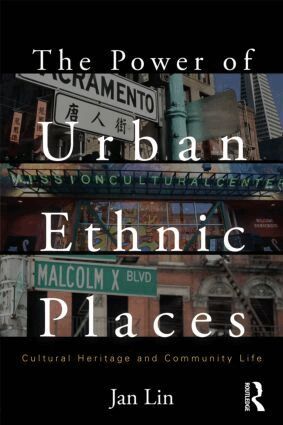
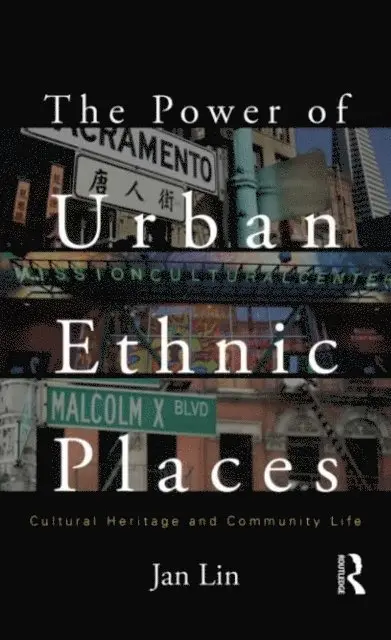
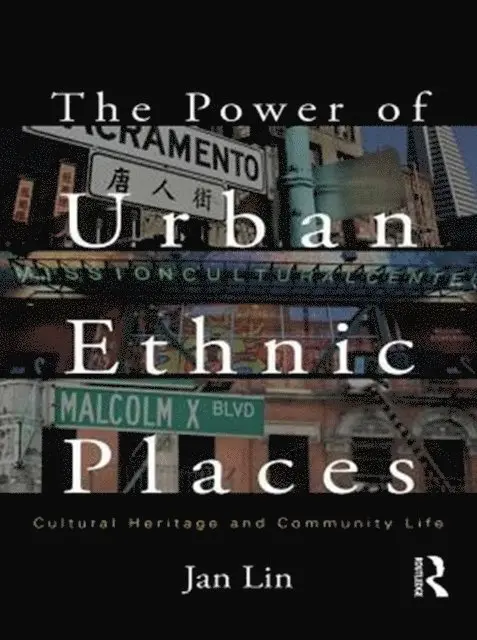
The Power of Ethnic Places discusses the growing visibility of ethnic heritage places in U.S. society. The book examines a spectrum of case studies of Chinese, Latino and African American communities in the U.S., disagreeing with any perceptions that the rise of ethnic enclaves and heritage places are harbingers of separatism or balkanization. Instead, the text argues that by better understanding the power and dynamics of ethnic enclaves and heritage places in our society, we as a society will be better prepared to harness the economic and cultural changes related to globalization rather than be hurt or divided by these same forces of economic and cultural restructuring.
671 kr
Skickas inom 10-15 vardagar
The Power of Ethnic Places discusses the growing visibility of ethnic heritage places in U.S. society. The book examines a spectrum of case studies of Chinese, Latino and African American communities in the U.S., disagreeing with any perceptions that the rise of ethnic enclaves and heritage places are harbingers of separatism or balkanization. Instead, the text argues that by better understanding the power and dynamics of ethnic enclaves and heritage places in our society, we as a society will be better prepared to harness the economic and cultural changes related to globalization rather than be hurt or divided by these same forces of economic and cultural restructuring.
278 kr
Skickas inom 7-10 vardagar
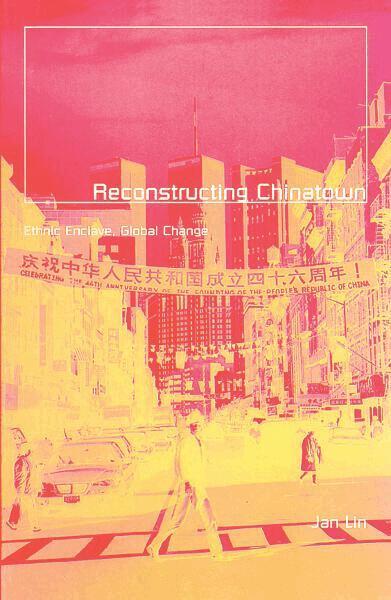
An exploration of this fascinating community as a window on globalization.In the American popular imagination, Chinatown is a mysterious and dangerous place, clannish and dilapidated, filled with sweatshops, vice, and organized crime. In this well-written and engaging volume, Jan Lin presents a real-world picture of New York City’s Chinatown, countering this “orientalist” view by looking at the human dimensions and the larger forces of globalization that make this vital neighborhood both unique and broadly instructive. Using interviews with residents, firsthand observation, archival research, and U.S. census data, Lin delivers an informed, reliable picture of Chinatown today. Lin claims that to understand contemporary ethnic neighborhoods like this one we must dispense with notions of monolithic “community.” When he looks at Chinatown, Lin sees a neighborhood that is being rebuilt, both literally and economically. Rather than a clannish and unified peer group, he sees substantial class inequality and internal social conflict. There is also social change, most visibly manifested in dramatic episodes of collective action by sweatshop workers and community activists and in the growing influence of Chinatown’s denizens in electoral politics. Popular portrayals of Chinatown also reflect a new global reality: as American cities change with the international economy, traditional assumptions about immigrant incorporation into U.S. society alter as well. Lin describes the public disquiet and official response regarding immigration, sweatshops, and the influx of Asian capital. He outlines the ways that local, state, and federal governments have directed and gained from globalization in Chinatown through banking deregulation and urban redevelopment policy. Finally, Lin puts forth Chinatown as a central enclave in the “world city” of New York, arguing that globalization brings similar structural processes of urban change to diverse locations. In the end, Lin moves beyond the myth of Chinatown, clarifying the meaning of globalization and its myriad effects within the local context.
1 093 kr
Skickas inom 10-15 vardagar
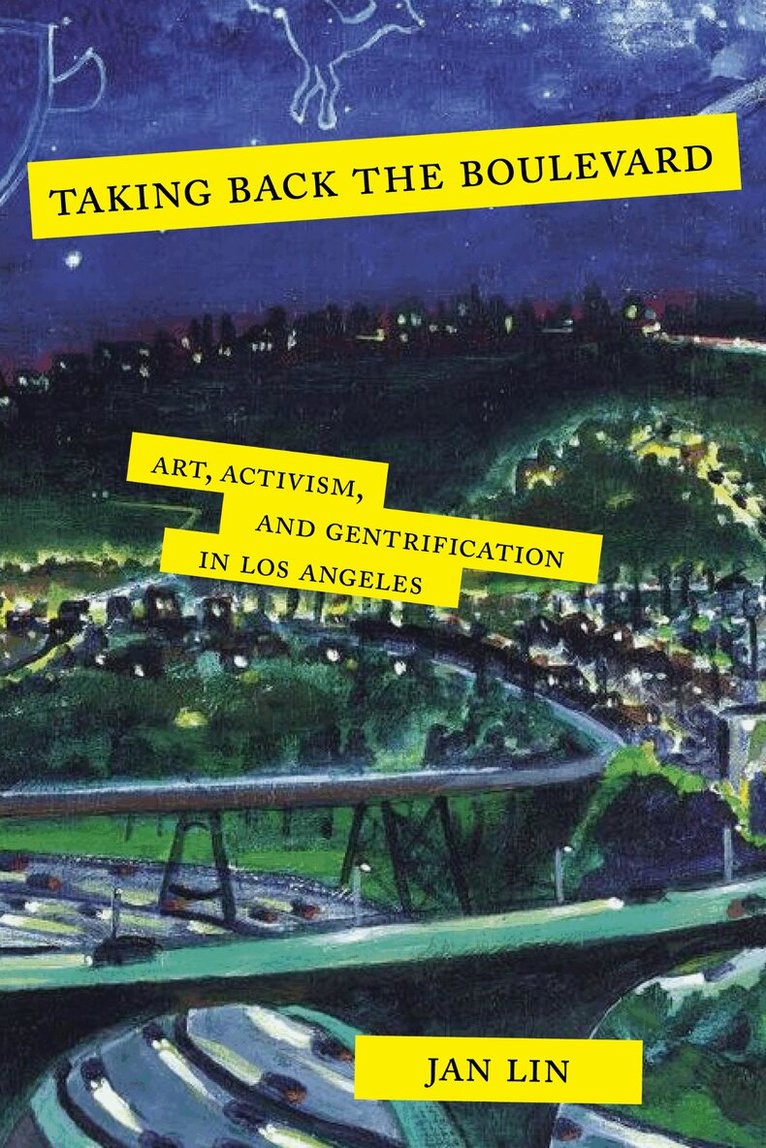
The promises and conflicts faced by public figures, artists, and leaders of Northeast Los Angeles as they enliven and defend their neighborhoods Los Angeles is well known as a sprawling metropolis with endless freeways that can make the city feel isolating and separate its communities. Yet in the past decade, as Jan Lin argues in Taking Back the Boulevard, there has been a noticeable renewal of public life on several of the city's iconic boulevards, including Atlantic, Crenshaw, Lankershim, Sunset, Western, and Wilshire. These arteries connect neighborhoods across the city, traverse socioeconomic divides and ethnic enclaves, and can be understood as the true locational heart of public life in the metropolis. Focusing especially on the cultural scene of Northeast Los Angeles, Lin shows how these gentrifying communities help satisfy a white middle-class consumer demand for authentic experiences of "living on the edge" and a spirit of cultural rebellion. These neighborhoods have gone through several stages, from streetcar suburbs, to disinvested neighborhoods with the construction of freeways and white flight, to immigrant enclaves, to the home of Chicano/a artists in the 1970s. Those artists were then followed by non-Chicano/a, white artists, who were later threatened with displacement by gentrifiers attracted by the neighborhoods' culture, street life, and green amenities that earlier inhabitants had worked to create. Lin argues that gentrification is not a single transition, but a series of changes that disinvest and re-invest neighborhoods with financial and cultural capital. Drawing on community survey research, interviews with community residents and leaders, and ethnographic observation, this book argues that the revitalization in Northeast LA by arts leaders and neighborhood activists marks a departure in the political culture from the older civic engagement to more socially progressive coalition work involving preservationists, environmentalists, citizen protestors, and arts organizers. Finally, Lin explores how accelerated gentrification and mass displacement of Latino/a and working-class households in the 2010s has sparked new rounds of activism as the community grapples with new class conflicts and racial divides in the struggle to self-determine its future.
373 kr
Skickas inom 7-10 vardagar
The promises and conflicts faced by public figures, artists, and leaders of Northeast Los Angeles as they enliven and defend their neighborhoods Los Angeles is well known as a sprawling metropolis with endless freeways that can make the city feel isolating and separate its communities. Yet in the past decade, as Jan Lin argues in Taking Back the Boulevard, there has been a noticeable renewal of public life on several of the city's iconic boulevards, including Atlantic, Crenshaw, Lankershim, Sunset, Western, and Wilshire. These arteries connect neighborhoods across the city, traverse socioeconomic divides and ethnic enclaves, and can be understood as the true locational heart of public life in the metropolis. Focusing especially on the cultural scene of Northeast Los Angeles, Lin shows how these gentrifying communities help satisfy a white middle-class consumer demand for authentic experiences of "living on the edge" and a spirit of cultural rebellion. These neighborhoods have gone through several stages, from streetcar suburbs, to disinvested neighborhoods with the construction of freeways and white flight, to immigrant enclaves, to the home of Chicano/a artists in the 1970s. Those artists were then followed by non-Chicano/a, white artists, who were later threatened with displacement by gentrifiers attracted by the neighborhoods' culture, street life, and green amenities that earlier inhabitants had worked to create. Lin argues that gentrification is not a single transition, but a series of changes that disinvest and re-invest neighborhoods with financial and cultural capital. Drawing on community survey research, interviews with community residents and leaders, and ethnographic observation, this book argues that the revitalization in Northeast LA by arts leaders and neighborhood activists marks a departure in the political culture from the older civic engagement to more socially progressive coalition work involving preservationists, environmentalists, citizen protestors, and arts organizers. Finally, Lin explores how accelerated gentrification and mass displacement of Latino/a and working-class households in the 2010s has sparked new rounds of activism as the community grapples with new class conflicts and racial divides in the struggle to self-determine its future.