• Fri frakt över 249 kr
  • •
  • Snabba leveranser
  • •
  • Billiga böcker
Kundservice

Du är på sajten för privatpersoner.

Företag, bibliotek eller offentlig verksamhet?

Du handlar på classic.bokus.com, där alla dina funktioner finns intakta.
Till classic.bokus.com
Bokus logotyp. Gå till startsidan.
  • Erbjudanden
  • Nyheter
  • Student
  • Topplistor
  • Barn & ungdom
  • Bokus Play
  • E-böcker
  • Pocketböcker
  • Spel & pussel

10% rabatt på allt med kod NYSTART10 →

Sidfot

Mina sidor

    Hjälp

    • Kundservice
    • Vanliga frågor och svar
    • Frakt och leverans
    • Retur vid ångerrätt
    • Reklamera vara
    • Betalning
    • Köpvillkor
    • Allmänna villkor
    • Information om webbplatsens tillgänglighet

    Om Bokus

    • Om oss
    • Pressrum
    • För studenter
    • För företag
    • För bibliotek och offentlig verksamhet
    • För leverantörer
    • Hållbarhet

    Populärt

    • Aktuella erbjudanden
    • Presentkort
    • Studentlitteratur
    • Nya böcker
    • Topplistor
    • Signerade böcker
    • Engelska böcker

    Inspiration

    • Boktips
    • BookTok
    • Populära bokserier
    • Barnbokskaraktärer
    • Populära författare
    Logotyp för Bokus
    Följ oss på Facebook (extern länk)Följ oss på Instagram (extern länk)Följ oss på YouTube (extern länk)Följ oss på TikTok (extern länk)
    bokus @ CookiesAnpassa cookiesIntegritetspolicyKöpvillkor
    Till Citymail hemsida (extern länk)Till Budbee hemsida (extern länk)Till Postnord hemsida (extern länk)Till Schenker hemsida (extern länk)Till Early Bird hemsida (extern länk)Till Walleys hemsida (extern länk)
    1. Samhälle och politik
    2. Samhälle och kultur
    3. Kultur och medier
    4. Kulturvetenskap

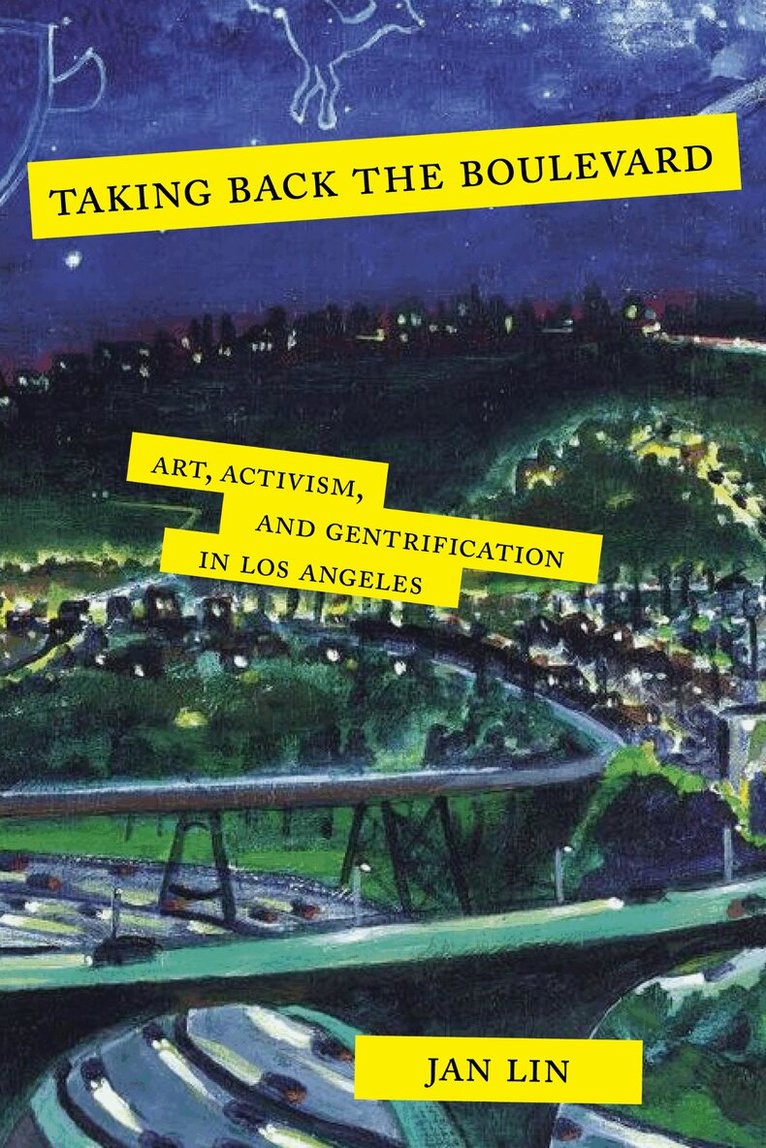
    Taking Back the Boulevard

    Art, Activism, and Gentrification in Los Angeles

    AvJan Lin

    Inbunden, Engelska, 2019

    1 137 kr

    Beställningsvara. Skickas inom 10-15 vardagar. Fri frakt över 249 kr.

    Fler format och utgåvor

    Häftad

    388 kr

    Beskrivning

    The promises and conflicts faced by public figures, artists, and leaders of Northeast Los Angeles as they enliven and defend their neighborhoods Los Angeles is well known as a sprawling metropolis with endless freeways that can make the city feel isolating and separate its communities. Yet in the past decade, as Jan Lin argues in Taking Back the Boulevard, there has been a noticeable renewal of public life on several of the city's iconic boulevards, including Atlantic, Crenshaw, Lankershim, Sunset, Western, and Wilshire. These arteries connect neighborhoods across the city, traverse socioeconomic divides and ethnic enclaves, and can be understood as the true locational heart of public life in the metropolis. Focusing especially on the cultural scene of Northeast Los Angeles, Lin shows how these gentrifying communities help satisfy a white middle-class consumer demand for authentic experiences of "living on the edge" and a spirit of cultural rebellion. These neighborhoods have gone through several stages, from streetcar suburbs, to disinvested neighborhoods with the construction of freeways and white flight, to immigrant enclaves, to the home of Chicano/a artists in the 1970s. Those artists were then followed by non-Chicano/a, white artists, who were later threatened with displacement by gentrifiers attracted by the neighborhoods' culture, street life, and green amenities that earlier inhabitants had worked to create. Lin argues that gentrification is not a single transition, but a series of changes that disinvest and re-invest neighborhoods with financial and cultural capital. Drawing on community survey research, interviews with community residents and leaders, and ethnographic observation, this book argues that the revitalization in Northeast LA by arts leaders and neighborhood activists marks a departure in the political culture from the older civic engagement to more socially progressive coalition work involving preservationists, environmentalists, citizen protestors, and arts organizers. Finally, Lin explores how accelerated gentrification and mass displacement of Latino/a and working-class households in the 2010s has sparked new rounds of activism as the community grapples with new class conflicts and racial divides in the struggle to self-determine its future.

    Produktinformation

    • Utgivningsdatum:2019-01-15
    • Mått:152 x 229 x 22 mm
    • Vikt:544 g
    • Format:Inbunden
    • Språk:Engelska
    • Antal sidor:256
    • Förlag:New York University Press
    • ISBN:9781479809806

    Utforska kategorier

    • Kulturvetenskap inom Samhälle och politik
    • Konstböcker inom Kultur
    • Sociala grupper och identitet inom Samhälle och politik

    Mer om författaren

    Jan Lin is Professor of Sociology at Occidental College. He is the author of The Power of Urban Ethnic Places: Cultural Heritage and Community Life and co-editor of The Urban Sociology Reader.

    Recensioner i media

    Taking Back the Boulevard is exemplary in its ability to weave the strands of structure and agency together to show how real gentrified spaces are produced. And just as important, such complexity is delivered with clear prose and riveting stories. Although the book focuses on Northeast Los Angeles, its lessons are generalizable. Scholars and students of gentrification would enjoy reading the book and benefit from engaging with its core arguments. It is at once a labour of love by an established urban sociologist and an important contribution to the sprawling literature on the subject. - International Journal of Urban and Regional Research Taking Back the Boulevard is an excellent resource for scholars and researchers who see themselves as public intellectuals, as well as for individuals wishing to engage art and activism in urban communities. The text is accessible, comprehensive, and passionate. Lin offers a stimulating tales for which to approach Northeast L.A., transgenerational activism, and a community's cycles of cultural and economic transition. - Social Forces Jan Lin has written both a meticulous and a passionate documentation of the long waves of investment, migration, and cultural expression that have shaped Northeast Los Angeles since the heyday of Anglo urbanization. From bohemianism and bike lanes, to tacos and lattes, Lin shows how embedded cultural patterns and determined community activists keep the vitality of the streets even in our most automobile-dependent city. - Sharon Zukin,Author of Naked City: The Death and Life of Authentic Urban Places In this heartfelt and meticulously researched history of the boulevard-lined neighborhoods of Northeast L.A., Jan Lin has given us a crucial and timely investigation into how local cultural and community movements, together with struggles over the right to the city, shape our contemporary urban landscapeWith imaginative theorization and brilliantly clear prose, Lin attends to the contradictions and conflicts of the current moment, as well as new, radical possibilities for a green and equitable city that are now also within sight. - Miriam Greenberg,Co-editor of The City is the Factory: New Solidarities and Spatial Tactics in an Urban Age Jan Lin has produced a deeply researched and beautifully written examination of more than a century of neighborhood change and activism in northeast Los Angeles ... Lin aims to take back the boulevards as a topic for urban sociology so that the continuity, growth, change, conflict, and drama of street life get a hearing in their own right. At this he succeeds admirably, and students of urban sociology at all levels have something to learn from entering into the world Lin has so skillfully depicted. (American Journal of Sociology)