Jan Maarten Schraagen - Böcker
Visar alla böcker från författaren Jan Maarten Schraagen. Handla med fri frakt och snabb leverans.
6 produkter
6 produkter
1 788 kr
Skickas inom 7-10 vardagar
The study of expertise weaves its way through various communities of practice, across disciplines, and over millennia. To date, the study of expertise has been primarily concerned with how human beings perform at a superior level in complex environments and sociotechnical systems, and at the highest levels of proficiency. However, more recent research has continued the search for better descriptions, and causal mechanisms that explain the complexities of expertise in context, with a view to translating this understanding into useful predictions and interventions capable of improving the performance of human systems as efficiently as possible. The Oxford Handbook of Expertise provides a comprehensive picture of the field of Expertise Studies. It offers both traditional and contemporary perspectives, and importantly, a multidiscipline-multimethod view of the science and engineering research on expertise. The book presents different perspectives, theories, and methods of conducting expertise research, all of which have had an impact in helping us better understand expertise across a broad range of domains. The Handbook also describes how researchers and practitioners have addressed practical problems and societal challenges. Throughout, the authors have sought to demonstrate the heterogeneity of approaches and conceptions of expertise, to place current views of expertise in context, to show how these views can be used to address current issues, and to examine ways to advance the study of expertise.The Oxford Handbook of Expertise is an essential resource both to those wanting to gain an up-to-date knowledge of the science of expertise and those wishing to study experts.
2 898 kr
Skickas inom 10-15 vardagar
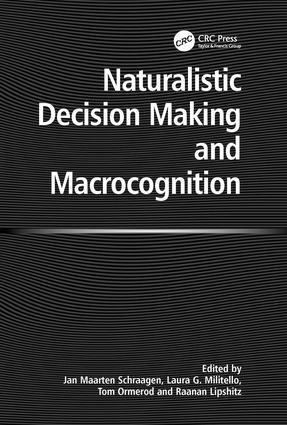
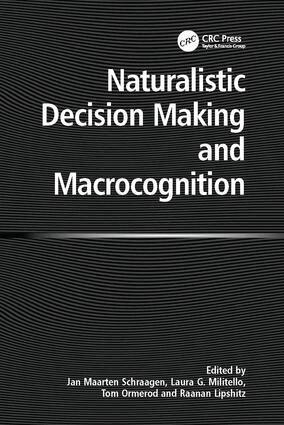
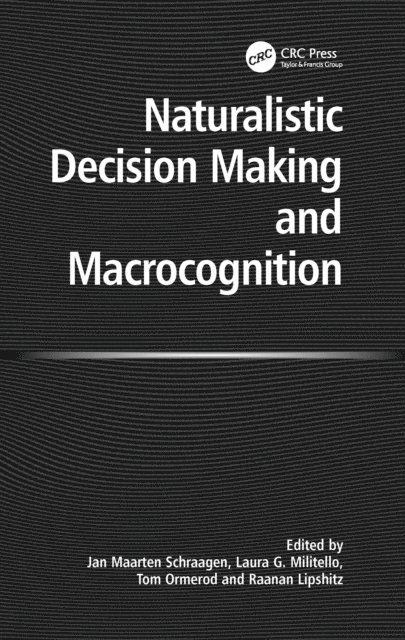
This book presents the latest work in the area of naturalistic decision making (NDM) and its extension into the area of macrocognition. It contains 18 chapters relating research centered on the study of expertise in naturalistic settings, written by international experts in NDM and cognitive systems engineering. The objective of the book is to present the reader with exciting new developments in this field of research, which is characterized by its application-oriented focus. The work addresses only real-world problems and issues. For instance, how do multi-national teams collaborate effectively? How can surgeons best be supported by technology? How do detectives make sense of complex criminal cases? In all instances the studies have been carried out on experts within their respective domains. The traditional field of NDM is extended in this work by focusing on macrocognitive functions other than decision making, namely sense-making, coordination and planning. This has broadened the scope of the field. The book also contains a theoretical discussion of the macro-micro distinction. Naturalistic Decision Making and Macrocognition will be relevant to graduate students, researchers and professionals (including professionals and researchers in business, industry and government) who are interested in decision making, expertise, training methods and system design. The material may be used in two ways: theoretically, to advance understanding of the field of naturalistic decision making; and practically, to gain insight into how experts in various domains solve particular problems, understand and deal with issues and collaborate with others.
1 847 kr
Skickas inom 10-15 vardagar
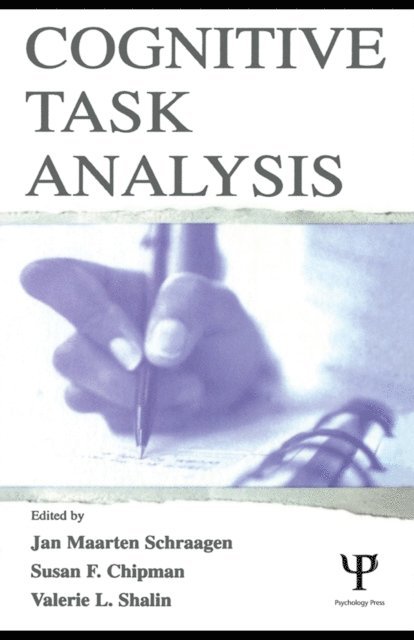
Cognitive task analysis is a broad area consisting of tools and techniques for describing the knowledge and strategies required for task performance. Cognitive task analysis has implications for the development of expert systems, training and instructional design, expert decision making and policymaking. It has been applied in a wide range of settings, with different purposes, for instance: specifying user requirements in system design or specifying training requirements in training needs analysis. The topics to be covered by this work include: general approaches to cognitive task analysis, system design, instruction, and cognitive task analysis for teams. The work settings to which the tools and techniques described in this work have been applied include: 911 dispatching, faultfinding on board naval ships, design aircraft, and various support systems.The editors' goal in this book is to present in a single source a comprehensive, in-depth introduction to the field of cognitive task analysis. They have attempted to include as many examples as possible in the book, making it highly suitable for those wishing to undertake a cognitive task analysis themselves. The book also contains a historical introduction to the field and an annotated bibliography, making it an excellent guide to additional resources.
1 630 kr
Skickas inom 10-15 vardagar
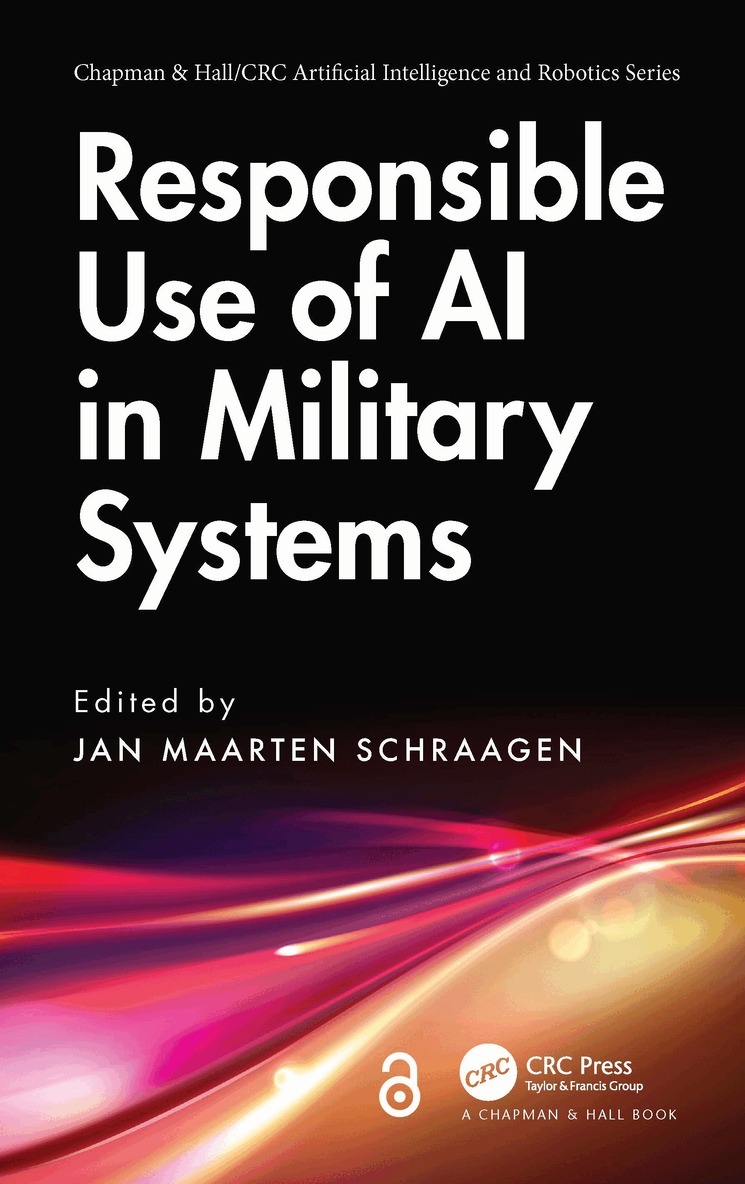
Artificial Intelligence (AI) is widely used in society today. The (mis)use of biased data sets in machine learning applications is well‑known, resulting in discrimination and exclusion of citizens. Another example is the use of non‑transparent algorithms that can’t explain themselves to users, resulting in the AI not being trusted and therefore not being used when it might be beneficial to use it.Responsible Use of AI in Military Systems lays out what is required to develop and use AI in military systems in a responsible manner. Current developments in the emerging field of Responsible AI as applied to military systems in general (not merely weapons systems) are discussed. The book takes a broad and transdisciplinary scope by including contributions from the fields of philosophy, law, human factors, AI, systems engineering, and policy development.Divided into five sections, Section I covers various practical models and approaches to implementing military AI responsibly; Section II focuses on liability and accountability of individuals and states; Section III deals with human control in human‑AI military teams; Section IV addresses policy aspects such as multilateral security negotiations; and Section V focuses on ‘autonomy’ and ‘meaningful human control’ in weapons systems.Key Features:Takes a broad transdisciplinary approach to responsible AIExamines military systems in the broad sense of the wordFocuses on the practical development and use of responsible AIPresents a coherent set of chapters, as all authors spent two days discussing each other’s workThis book provides the reader with a broad overview of all relevant aspects involved with the responsible development, deployment and use of AI in military systems. It stresses both the advantages of AI as well as the potential downsides of including AI in military systems.
724 kr
Skickas inom 10-15 vardagar
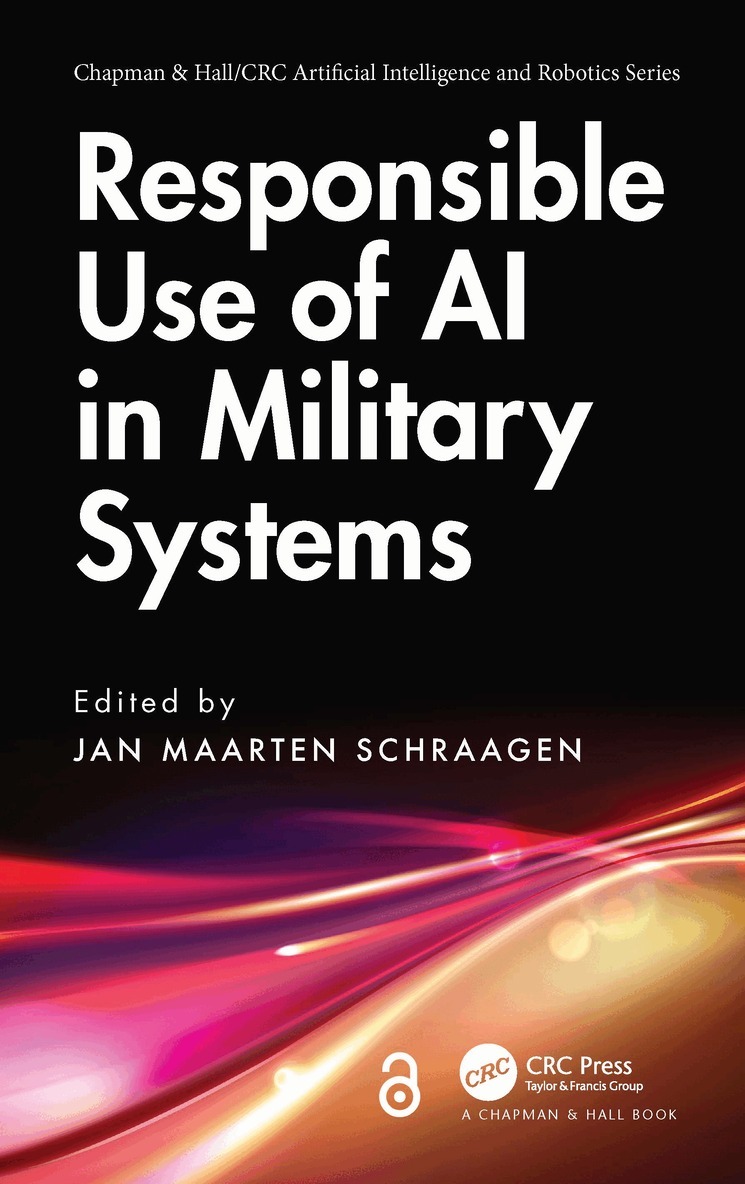
Artificial Intelligence (AI) is widely used in society today. The (mis)use of biased data sets in machine learning applications is well‑known, resulting in discrimination and exclusion of citizens. Another example is the use of non‑transparent algorithms that can’t explain themselves to users, resulting in the AI not being trusted and therefore not being used when it might be beneficial to use it.Responsible Use of AI in Military Systems lays out what is required to develop and use AI in military systems in a responsible manner. Current developments in the emerging field of Responsible AI as applied to military systems in general (not merely weapons systems) are discussed. The book takes a broad and transdisciplinary scope by including contributions from the fields of philosophy, law, human factors, AI, systems engineering, and policy development.Divided into five sections, Section I covers various practical models and approaches to implementing military AI responsibly; Section II focuses on liability and accountability of individuals and states; Section III deals with human control in human‑AI military teams; Section IV addresses policy aspects such as multilateral security negotiations; and Section V focuses on ‘autonomy’ and ‘meaningful human control’ in weapons systems.Key Features:Takes a broad transdisciplinary approach to responsible AIExamines military systems in the broad sense of the wordFocuses on the practical development and use of responsible AIPresents a coherent set of chapters, as all authors spent two days discussing each other’s workThis book provides the reader with a broad overview of all relevant aspects involved with the responsible development, deployment and use of AI in military systems. It stresses both the advantages of AI as well as the potential downsides of including AI in military systems.
1 184 kr
Skickas inom 10-15 vardagar
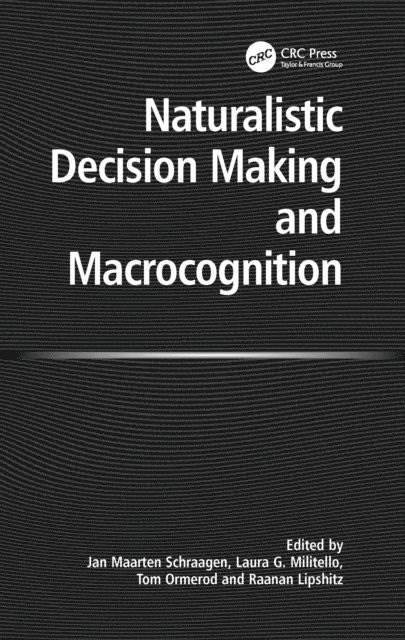
This book presents the latest work in the area of naturalistic decision making (NDM) and its extension into the area of macrocognition. It contains 18 chapters relating research centered on the study of expertise in naturalistic settings, written by international experts in NDM and cognitive systems engineering. The objective of the book is to present the reader with exciting new developments in this field of research, which is characterized by its application-oriented focus. The work addresses only real-world problems and issues. For instance, how do multi-national teams collaborate effectively? How can surgeons best be supported by technology? How do detectives make sense of complex criminal cases? In all instances the studies have been carried out on experts within their respective domains. The traditional field of NDM is extended in this work by focusing on macrocognitive functions other than decision making, namely sense-making, coordination and planning. This has broadened the scope of the field. The book also contains a theoretical discussion of the macro-micro distinction. Naturalistic Decision Making and Macrocognition will be relevant to graduate students, researchers and professionals (including professionals and researchers in business, industry and government) who are interested in decision making, expertise, training methods and system design. The material may be used in two ways: theoretically, to advance understanding of the field of naturalistic decision making; and practically, to gain insight into how experts in various domains solve particular problems, understand and deal with issues and collaborate with others.