Jan Plug - Böcker
Visar alla böcker från författaren Jan Plug. Handla med fri frakt och snabb leverans.
6 produkter
6 produkter
1 215 kr
Tillfälligt slut
Explores the role of language, history, and politics in Romantic literature and thought, from Kant to Yeats.This book recasts questions about the overlapping boundaries of language, history, and politics that have been at the center of critical and theoretical debates in the study of Romantic literature and thought. While poststructuralism and deconstruction have been accused of privileging language over history, the New Historicism and other historicist and cultural approaches to literature have attempted to restore history's place in the study of literature. Taking its title from a reading of the word Lippe in Kleist's Die Hermannsschlacht, Borders of a Lip is drawn to neither of these poles, but instead to their meeting place or coincidence: the site of a border, a political or national boundary, even the boundary that is the political, the lip that is also the place of language. Through readings of Kant, Wordsworth, Kleist, Mary Shelley, Yeats, and Lyotard, the book examines the convergence of language and history that takes place in their work. Instead of placing language and history in absolute opposition, making the border an unbreachable limit, the book explores how crossing these borders (re)defines the political.
440 kr
Tillfälligt slut
Explores the role of language, history, and politics in Romantic literature and thought, from Kant to Yeats.This book recasts questions about the overlapping boundaries of language, history, and politics that have been at the center of critical and theoretical debates in the study of Romantic literature and thought. While poststructuralism and deconstruction have been accused of privileging language over history, the New Historicism and other historicist and cultural approaches to literature have attempted to restore history's place in the study of literature. Taking its title from a reading of the word Lippe in Kleist's Die Hermannsschlacht, Borders of a Lip is drawn to neither of these poles, but instead to their meeting place or coincidence: the site of a border, a political or national boundary, even the boundary that is the political, the lip that is also the place of language. Through readings of Kant, Wordsworth, Kleist, Mary Shelley, Yeats, and Lyotard, the book examines the convergence of language and history that takes place in their work. Instead of placing language and history in absolute opposition, making the border an unbreachable limit, the book explores how crossing these borders (re)defines the political.
449 kr
Skickas inom 7-10 vardagar
In perhaps the most provocative reading to date of the Swiss German modernist Robert Walser, Walter Benjamin asserted that Walser's figures ""have all been healed."" They Have All Been Healed takes up and extends Benjamin's assessment by following the figure of healing throughout major works by Walser, from his minidrama Snow White and his acknowledged masterpieces The Walk and Jakob von Gunten to his enigmatic last novel, The Robber. At the same time, Jan Plug reads Walser alongside his most compelling readers, tracing how not only Benjamin but also Giorgio Agamben, W. G. Sebald, and the Brothers Quay complicate, clarify, and enact that same process of healing in their own work. Working out the theological implications of Walser's work and of the tradition to which he gives rise, Plug at once recasts one of the major authors of the twentieth century and articulates a new conception of healing and salvation.
1 487 kr
Skickas inom 10-15 vardagar
In perhaps the most provocative reading to date of the Swiss German modernist Robert Walser, Walter Benjamin asserted that Walser's figures ""have all been healed."" They Have All Been Healed takes up and extends Benjamin's assessment by following the figure of healing throughout major works by Walser, from his minidrama Snow White and his acknowledged masterpieces The Walk and Jakob von Gunten to his enigmatic last novel, The Robber. At the same time, Jan Plug reads Walser alongside his most compelling readers, tracing how not only Benjamin but also Giorgio Agamben, W. G. Sebald, and the Brothers Quay complicate, clarify, and enact that same process of healing in their own work. Working out the theological implications of Walser's work and of the tradition to which he gives rise, Plug at once recasts one of the major authors of the twentieth century and articulates a new conception of healing and salvation.
603 kr
Skickas
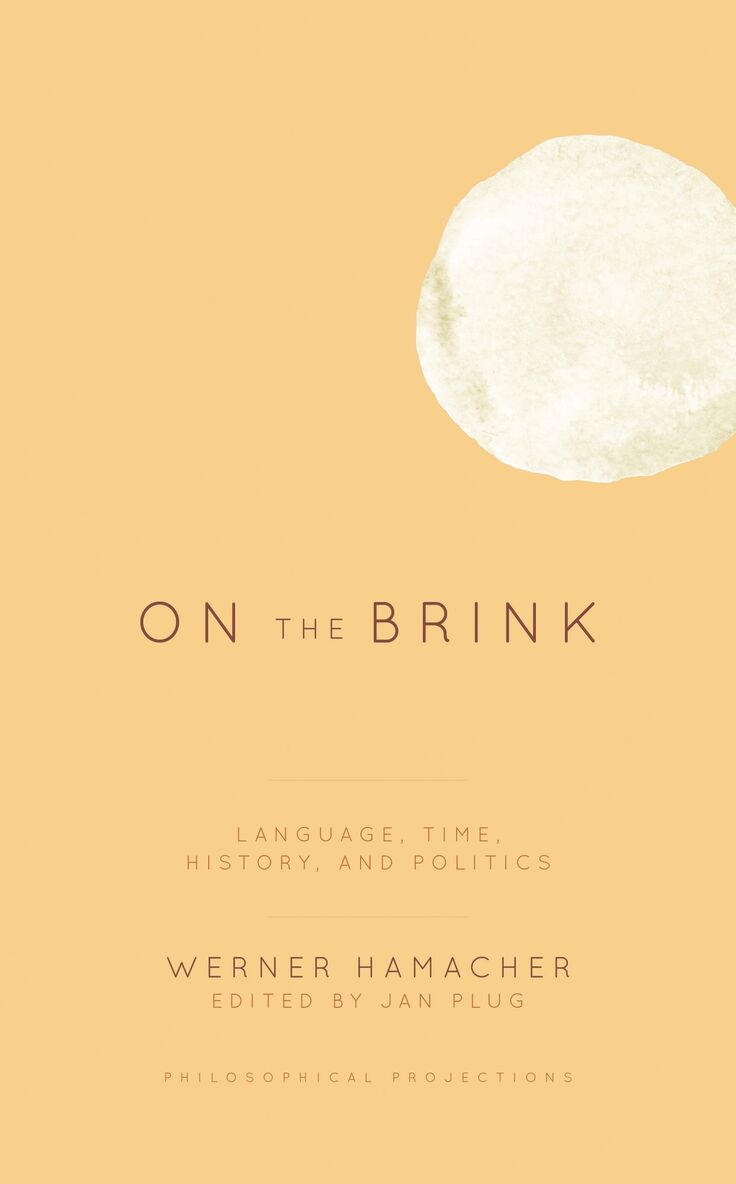
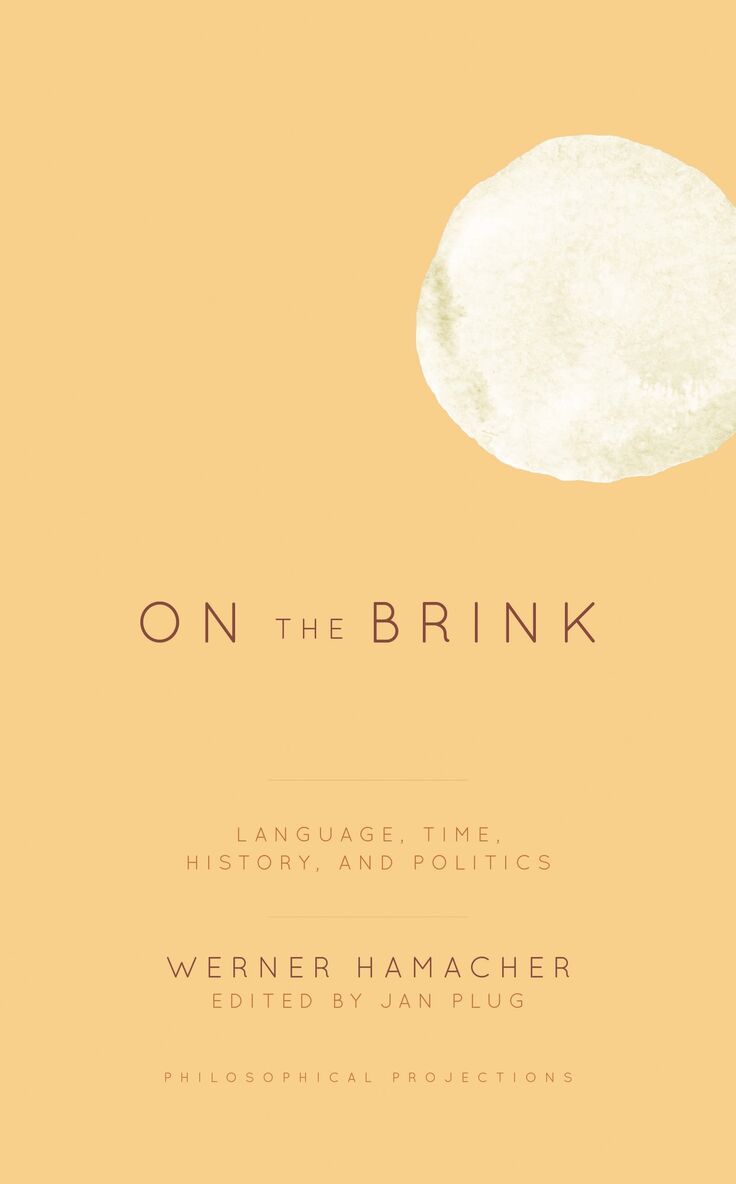
This collection of essays by one of the foremost figures in contemporary theory takes as its theme the edge or limit between language, time, history, and politics. These are essays that are all on the brink, the very extreme at which one can no longer define where one is located, neither on the cliff, say, nor over the edge. To be on the brink is to take up that extreme limit, the point of contamination or indetermination where language, time, history, and politics all converge upon one another.On the Brink begins with a consideration of Kant’s treatment of time as representation and of Hegel’s treatment of the writing of history and the end of art, all while taking up other key figures in the history of philosophy. The book then moves to an exploration of language in a variety of manifestations, from translation to complaint and greeting. It concludes by analyzing political and social questions that continue to haunt us today—the conception of work, not least in National Socialism, and our relationship to democracy. Taken together, Werner Hamacher’s essays offer trenchant historical, political, and rhetorical interventions into the history of philosophy, literature, and our contemporary political situation.
581 kr
Skickas inom 10-15 vardagar
This collection of essays by one of the foremost figures in contemporary theory takes as its theme the edge or limit between language, time, history, and politics. These are essays that are all on the brink, the very extreme at which one can no longer define where one is located, neither on the cliff, say, nor over the edge. To be on the brink is to take up that extreme limit, the point of contamination or indetermination where language, time, history, and politics all converge upon one another.On the Brink begins with a consideration of Kant’s treatment of time as representation and of Hegel’s treatment of the writing of history and the end of art, all while taking up other key figures in the history of philosophy. The book then moves to an exploration of language in a variety of manifestations, from translation to complaint and greeting. It concludes by analyzing political and social questions that continue to haunt us today—the conception of work, not least in National Socialism, and our relationship to democracy. Taken together, Werner Hamacher’s essays offer trenchant historical, political, and rhetorical interventions into the history of philosophy, literature, and our contemporary political situation.