Jane Hawkes - Böcker
Visar alla böcker från författaren Jane Hawkes. Handla med fri frakt och snabb leverans.
6 produkter
6 produkter
Del 13 - Corpus of Anglo-Saxon Stone Sculpture
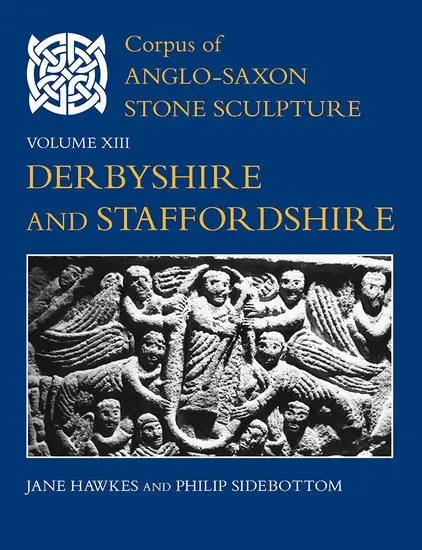
Corpus of Anglo-Saxon Stone Sculpture, Volume XIII, Derbyshire and Staffordshire
Inbunden, Engelska, 2018
1 658 kr
Skickas inom 7-10 vardagar
This volume in the Corpus of Anglo-Saxon Sculpture surveys the counties of Derbyshire and Staffordshire and provides an analytical catalogue of the Anglo-Saxon stone sculptures of that region. Introductory chapters set the material within historical, topographical, archaeological and art-historical contexts, as well as its scholarly framework, and there are specialist contributions concerning the geology of the monuments and the sculpture from the (originally) royal ecclesiastical site at Repton in Derbyshire. There is a full photographic record of each monument, and many of the images were taken specially for the volume.The monuments include important collections of material from Derby (St Alkmund's) and Repton, as well as individual sculptures of the highest quality such as the Lichfield Angel, cross-shafts from Bakewell and Bradbourne, the unique column standing at Wolverhampton and the sarcophagus cover from Wirksworth. Much of the material was carved at a time when Mercian art was at its zenith in the late 8th to early 10th centuries, but there is also a significant body of carvings from the later 10th and 11th centuries when the Scandinavians are known to have been active, although the region marks the fluctuating border between Scandinavian and Anglo-Saxon controlled Mercia. This volume thus represents a synthesis of resent research and a complete survey of the Anglo-Saxon and Anglo-Scandinavian sculpture of the two counties, and will provide a major contribution to the study of pre-Conquest sculpture in Britain. It shows that in the early Middle Ages Derbyshire and Staffordshire offered a vibrant milieu in which influential artistic ideas could develop and spread, not just in carved stone but also in manuscripts, metalwork and other materials, and that craftsmen, working for ecclesiastical and secular patrons, produced works of the highest quality.
649 kr
Skickas inom 10-15 vardagar
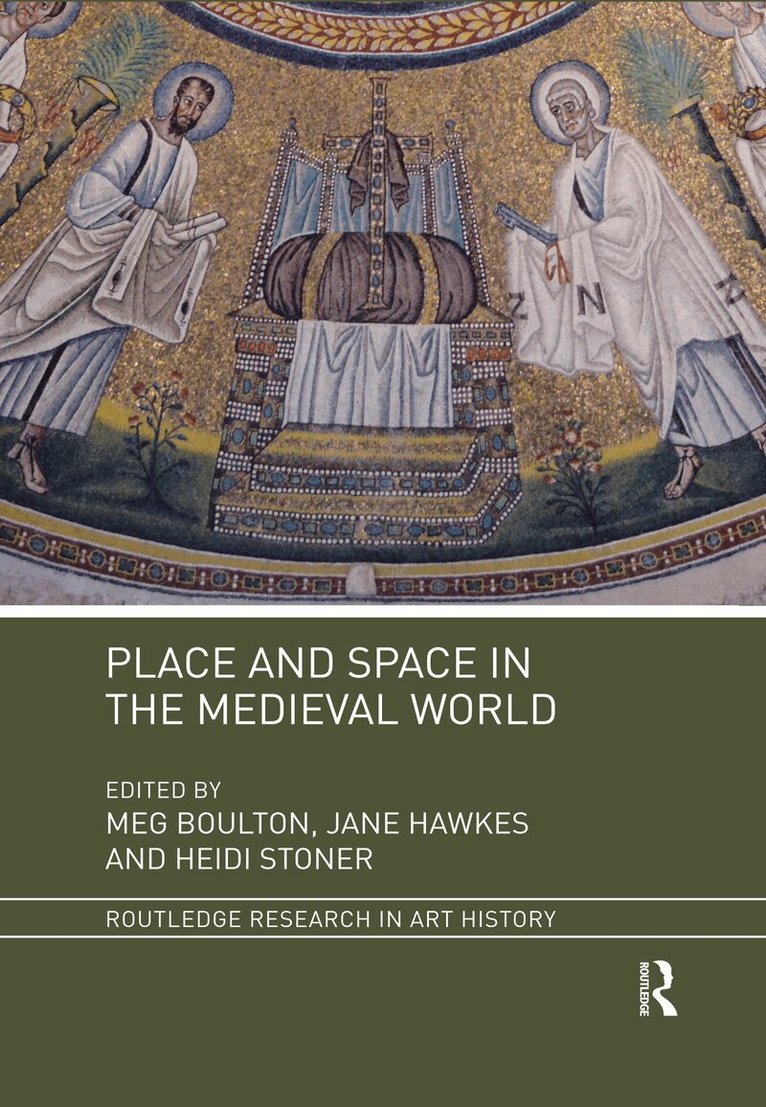
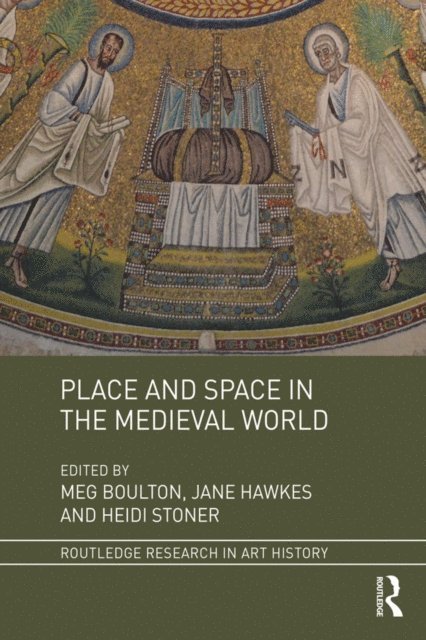
This book addresses the critical terminologies of place and space (and their role within medieval studies) in a considered and critical manner, presenting a scholarly introduction written by the editors alongside thematic case studies that address a wide range of visual and textual material. The chapters consider the extant visual and textual sources from the medieval period alongside contemporary scholarly discussions to examine place and space in their wider critical context, and are written by specialists in a range of disciplines including art history, archaeology, history, and literature.
2 369 kr
Skickas inom 10-15 vardagar
This book addresses the critical terminologies of place and space (and their role within medieval studies) in a considered and critical manner, presenting a scholarly introduction written by the editors alongside thematic case studies that address a wide range of visual and textual material. The chapters consider the extant visual and textual sources from the medieval period alongside contemporary scholarly discussions to examine place and space in their wider critical context, and are written by specialists in a range of disciplines including art history, archaeology, history, and literature.
Del 22 - Boydell Studies in Medieval Art and Architecture
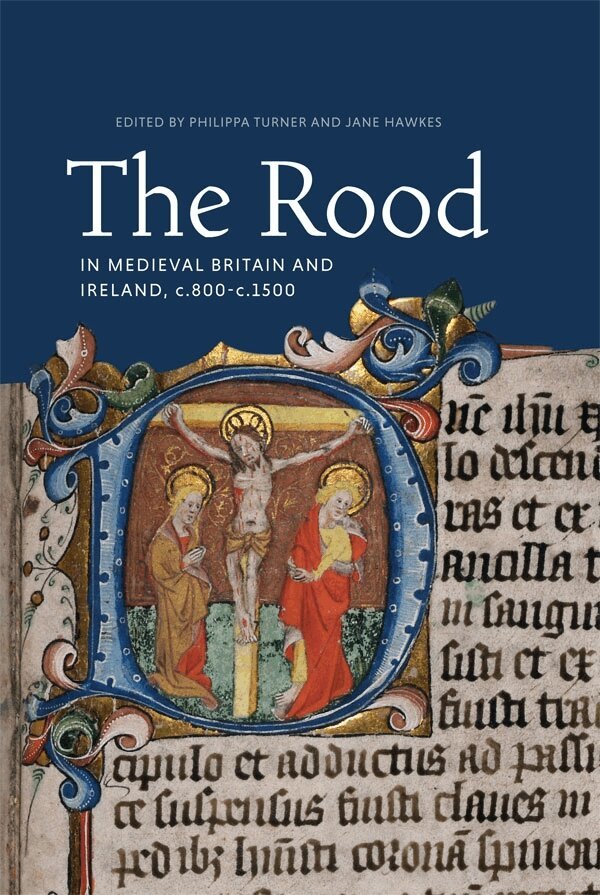
Rood in Medieval Britain and Ireland, c.800-c.1500
Inbunden, Engelska, 2020
570 kr
Skickas inom 7-10 vardagar
New readings demonstrate the centrality of the rood to the visual, material and devotional cultures of the Middle Ages, its richness and complexity.The rood was central to medieval Christianity and its visual culture: Christ's death on the cross was understood as the means by which humankind was able to gain salvation, and depictions of the cross, and Christ's death upon it,were ubiquitous.This volume brings together contributions offering a new perspective on the medieval rood - understood in its widest sense, as any kind of cross - within the context of Britain and Ireland, over a wide periodof time which saw significant political and cultural change. In doing so, it crosses geographical, chronological, material, and functional boundaries which have traditionally characterised many previous discussions of the medieval rood. Acknowledging and exploring the capacity of the rood to be both universal and specific to particular locations and audiences, these contributions also tease out the ways in which roods related to one another, as well as how they related to their physical and cultural surroundings, often functioning in dialogue with other images and the wider devotional topography - both material and mental - in which they were set.The chapters consider roods in a variety of media and contexts: the monumental stone crosses of early medieval England, twelfth-century Ireland, and, spreading further afield, late medieval Galicia; the three-dimensional monumental wooden roods in English monasteries, Irish friaries, and East Anglian parish churches; roods that fit in the palm of a hand, encased in precious metals, those that were painted on walls, drawn on the pages of manuscripts, and those that appeared in visions, dreams, and gesture.
Art, Image, Power and Place
Contextualising the Stone Sculpture of Anglo-Saxon England
Inbunden, Engelska, 2026
986 kr
Kommande
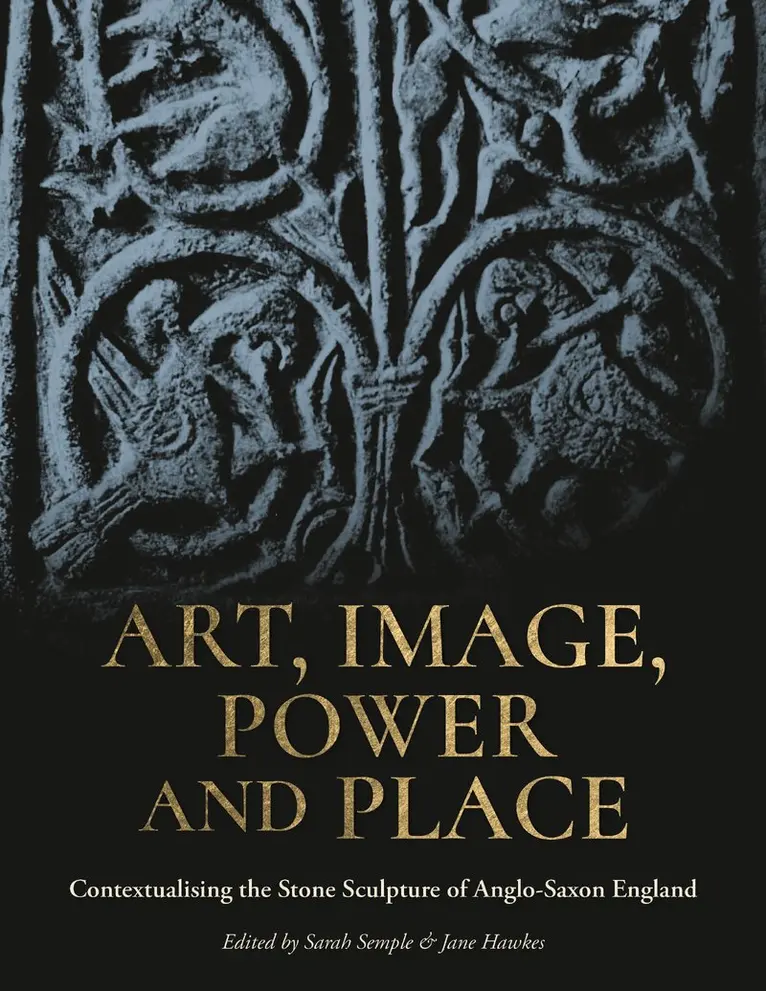
Early medieval stone sculptures survive across Europe: at waysides, in architectural settings and in churches and graveyards, and provide an exceptional source for understanding the aesthetics and beliefs of early medieval communities. England is no exception to this. Thousands of intact and fragmentary stone monuments survive from the seventh to eleventh centuries CE, evidencing the emergence of a rich Anglo-Saxon sculptural tradition in stone. These often elaborately carved monuments that were generally painted – some with considerable sophistication – and could be inset with paste glass and metal, provide clear evidence of a rich and new form of visual material culture connected with the Church in the region. Some monuments acted as liturgical markers, others as markers of working relations between secular and ecclesiastical communities, while others still commemorated the dead, and some fragments demonstrate the ways in which stone buildings were decorated both inside and out. By the tenth century, stone crosses and monuments were frequently commissioned by the Anglo-Saxon and Anglo-Scandinavian secular elites, demonstrating strong connections between sculptural commemoration, power, and identity.For decades, the celebrated project, the Corpus of Anglo-Saxon Stone Sculpture, has provided information on these monuments, cataloguing each example in terms of date, geology, and decoration. This multi-authored volume draws on the expertise of many specialists connected with the Corpus to provide a first accessible national overview of the resource. Thematic chapters reflect on discoveries to date and archaeological and art historical approaches to researching and understanding sculpture. Key themes include quarrying and production, chronology, the intellectual and artistic context for sculpture, aesthetics and iconography, and the places and contexts of sculpture use. This extensively illustrated volume introduces Anglo-Saxon sculpture in its broader European context and offers a stepping-off point for all those wanting to learn more and research these often-enigmatic fragments.
Del 29 - Boydell Studies in Medieval Art and Architecture
Early Medieval Sculpture in Stone
Inbunden, Engelska, 2025
1 452 kr
Skickas inom 7-10 vardagar
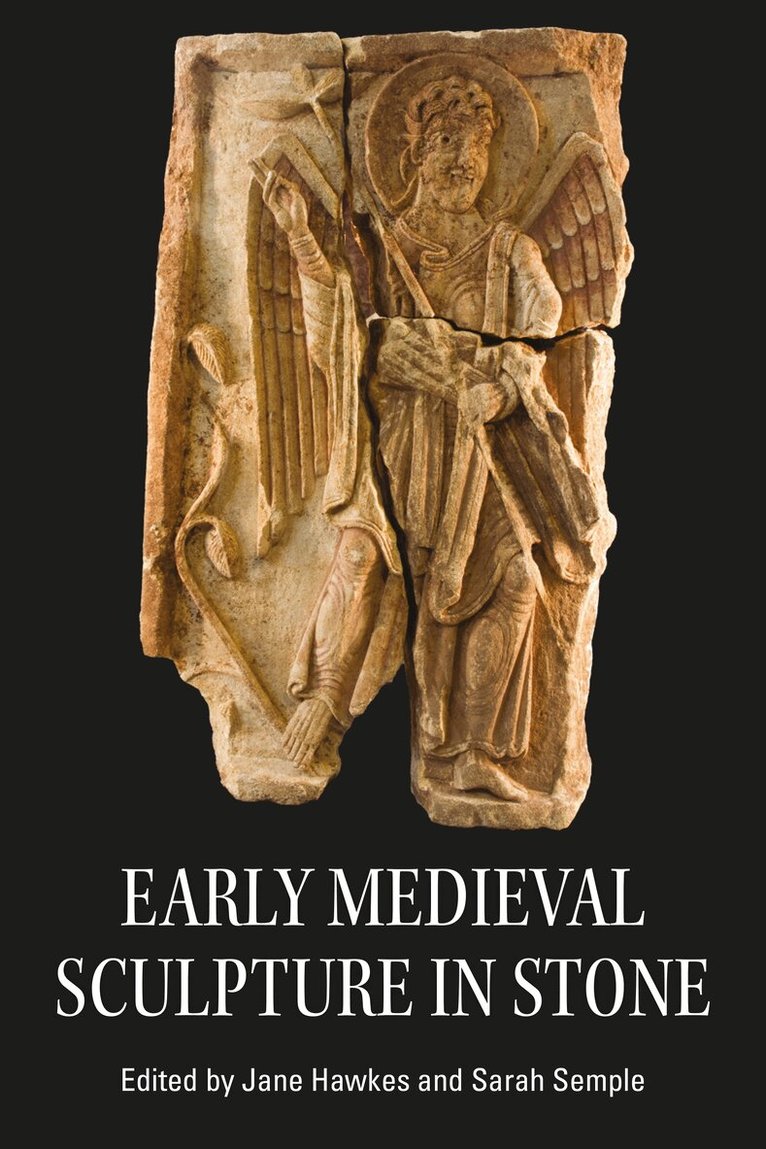
Multidisciplinary scholarship showcasing innovative methods for working with sculptural material - with essays ranging from Merovingian funerary art to Old English and Scandinavian runic inscriptions.The stone sculptures surviving across Europe from the early medieval period are an exceptional resource for understanding the communities that created them. Found at waysides, in architectural settings, and graveyards - standing crosses, inscribed stones, runestones and grave-markers are just some of the highly varied forms that attest to the art, technologies and beliefs of both Christian and non-Christian societies. The new approaches to sculpture studies found in this volume range from rethinking late antique influences to exploring how sculpture was used and encountered in a variety of political and cultural contexts; contributors also draw out the dialogues inherent in form and decoration within and across temporal and national boundaries. These fresh perspectives on iconographies, narrative art, sculpture and nature and the power of sculpture in multi-media environments, alongside studies of sourcing, production and portability, and the afterlives of carved stones, reflect the vibrancy of current research and the way in which it now integrates digital, scientific and spatial methods. The introduction and chapters 26 and 27 are available as Open Access under the Creative Commons licence CC BY-NC-ND. This work was supported by the Arts and Humanities Research Council [AH/R003556/1] and the British Academy [AQ2324\240012].Chapter 17 is Open Access under the Creative Commons License CC BY-NC-ND with funding from the Swedish National Heritage Board.