Sarah Semple - Böcker
Visar alla böcker från författaren Sarah Semple. Handla med fri frakt och snabb leverans.
9 produkter
9 produkter
Perceptions of the Prehistoric in Anglo-Saxon England
Religion, Ritual, and Rulership in the Landscape
Häftad, Engelska, 2019
715 kr
Skickas inom 5-8 vardagar
Perceptions of the Prehistoric in Anglo-Saxon England represents an unparalleled exploration of the place of prehistoric monuments in the Anglo-Saxon psyche, and examines how Anglo-Saxon communities perceived and used these monuments during the period AD 400-1100. Sarah Semple employs archaeological, historical, art historical, and literary sources to study the variety of ways in which the early medieval population of England used the prehistoric legacy in the landscape, exploring it from temporal and geographic perspectives. Key to the arguments and ideas presented is the premise that populations used these remains, intentionally and knowingly, in the articulation and manipulation of their identities: local, regional, political, and religious. They recognized them as ancient features, as human creations from a distant past. They used them as landmarks, battle sites, and estate markers, giving them new Old English names. Before, and even during, the conversion to Christianity, communities buried their dead in and around these monuments. After the conversion, several churches were built in and on these monuments, great assemblies and meetings were held at them, and felons executed and buried within their surrounds. This volume covers the early to late Anglo-Saxon world, touching on funerary ritual, domestic and settlement evidence, ecclesiastical sites, place-names, written sources, and administrative and judicial geographies. Through a thematic and chronologically-structured examination of Anglo-Saxon uses and perceptions of the prehistoric, Semple demonstrates that populations were not only concerned with Romanitas (or Roman-ness), but that a similar curiosity and conscious reference to and use of the prehistoric existed within all strata of society.
Perceptions of the Prehistoric in Anglo-Saxon England
Religion, Ritual, and Rulership in the Landscape
Inbunden, Engelska, 2013
1 647 kr
Skickas inom 7-10 vardagar
Perceptions of the Prehistoric in Anglo-Saxon England represents an unparalleled exploration of the place of prehistoric monuments in the Anglo-Saxon psyche, and examines how Anglo-Saxon communities perceived and used these monuments during the period AD 400-1100. Sarah Semple employs archaeological, historical, art historical, and literary sources to study the variety of ways in which the early medieval population of England used the prehistoric legacy in the landscape, exploring it from temporal and geographic perspectives. Key to the arguments and ideas presented is the premise that populations used these remains, intentionally and knowingly, in the articulation and manipulation of their identities: local, regional, political, and religious. They recognized them as ancient features, as human creations from a distant past. They used them as landmarks, battle sites, and estate markers, giving them new Old English names. Before, and even during, the conversion to Christianity, communities buried their dead in and around these monuments. After the conversion, several churches were built in and on these monuments, great assemblies and meetings were held at them, and felons executed and buried within their surrounds. This volume covers the early to late Anglo-Saxon world, touching on funerary ritual, domestic and settlement evidence, ecclesiastical sites, place-names, written sources, and administrative and judicial geographies. Through a thematic and chronologically-structured examination of Anglo-Saxon uses and perceptions of the prehistoric, Semple demonstrates that populations were not only concerned with Romanitas (or Roman-ness), but that a similar curiosity and conscious reference to and use of the prehistoric existed within all strata of society.
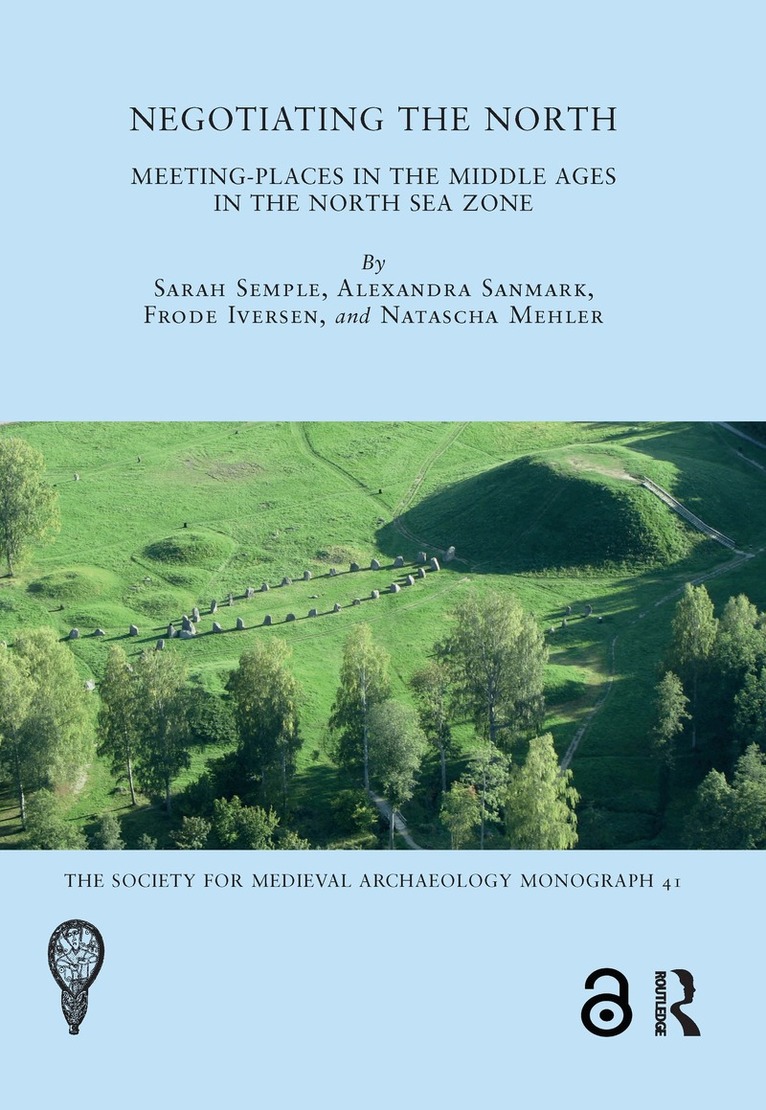
Negotiating the North
Meeting-Places in the Middle Ages in the North Sea Zone
Inbunden, Engelska, 2020
2 151 kr
Skickas inom 10-15 vardagar
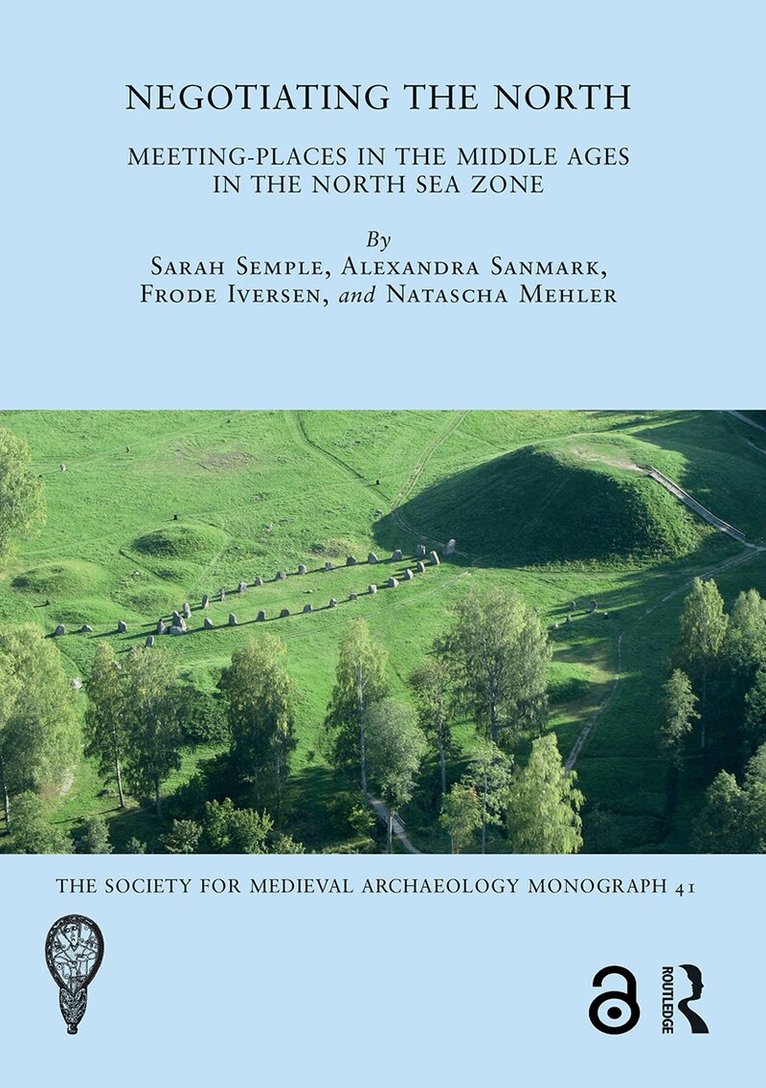
This book brings together the cumulative results of a three-year project focused on the assemblies and administrative systems of Scandinavia, Britain, and the North Atlantic islands in the 1st and 2nd millennia AD. In this volume we integrate a wide range of historical, cartographic, archaeological, field-based, and onomastic data pertaining to early medieval and medieval administrative practices, geographies, and places of assembly in Norway, Sweden, Denmark, Iceland, the Faroe Islands, Scotland, and eastern England. This transnational perspective has enabled a new understanding of the development of power structures in early medieval northern Europe and the maturation of these systems in later centuries under royal control. In a series of richly illustrated chapters, we explore the emergence and development of mechanisms for consensus. We begin with a historiographical exploration of assembly research that sets the intellectual agenda for the chapters that follow. We then examine the emergence and development of the thing in Scandinavia and its export to the lands colonised by the Norse. We consider more broadly how assembly practices may have developed at a local level, yet played a significant role in the consolidation, and at times regulation, of elite power structures. Presenting a fresh perspective on the agency and power of the thing and cognate types of local and regional assembly, this interdisciplinary volume provides an invaluable, in-depth insight into the people, places, laws, and consensual structures that shaped the early medieval and medieval kingdoms of northern Europe.
649 kr
Skickas inom 10-15 vardagar
This book brings together the cumulative results of a three-year project focused on the assemblies and administrative systems of Scandinavia, Britain, and the North Atlantic islands in the 1st and 2nd millennia AD. In this volume we integrate a wide range of historical, cartographic, archaeological, field-based, and onomastic data pertaining to early medieval and medieval administrative practices, geographies, and places of assembly in Norway, Sweden, Denmark, Iceland, the Faroe Islands, Scotland, and eastern England. This transnational perspective has enabled a new understanding of the development of power structures in early medieval northern Europe and the maturation of these systems in later centuries under royal control. In a series of richly illustrated chapters, we explore the emergence and development of mechanisms for consensus. We begin with a historiographical exploration of assembly research that sets the intellectual agenda for the chapters that follow. We then examine the emergence and development of the thing in Scandinavia and its export to the lands colonised by the Norse. We consider more broadly how assembly practices may have developed at a local level, yet played a significant role in the consolidation, and at times regulation, of elite power structures. Presenting a fresh perspective on the agency and power of the thing and cognate types of local and regional assembly, this interdisciplinary volume provides an invaluable, in-depth insight into the people, places, laws, and consensual structures that shaped the early medieval and medieval kingdoms of northern Europe.
373 kr
Skickas inom 7-10 vardagar
A Cultural History of Objects in the Medieval Age covers the period 500 to 1400, examining the creation, use and understanding of human-made objects and their consequences and impacts. The power and agency of objects significantly evolved over this time. Exploring objects and artefacts within art, technology, and everyday life, the volume challenges our understanding of both life worlds and object worlds in medieval society.The 6 volume set of the Cultural History of Objects examines how objects have been created, used, interpreted and set loose in the world over the last 2500 years. Over this time, the West has developed particular attitudes to the material world, at the centre of which is the idea of the object. The themes covered in each volume are objecthood; technology; economic objects; everyday objects; art; architecture; bodily objects; object worlds.Julie Lund is Professor at the University of Oslo, Norway. Sarah Semple is Professor at Durham University, UK.Volume 2 in the Cultural History of Objects set.General Editors: Dan Hicks and William Whyte
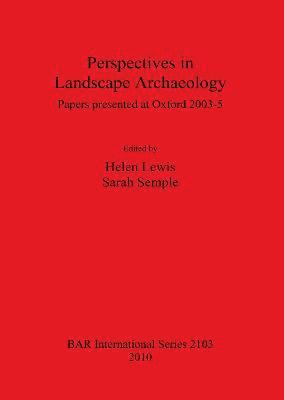
Perspectives in Landscape Archaeology Papers presented at Oxford 2003-5
Papers presented at Oxford 2003-5
Häftad, Engelska, 2010
510 kr
Skickas inom 5-8 vardagar
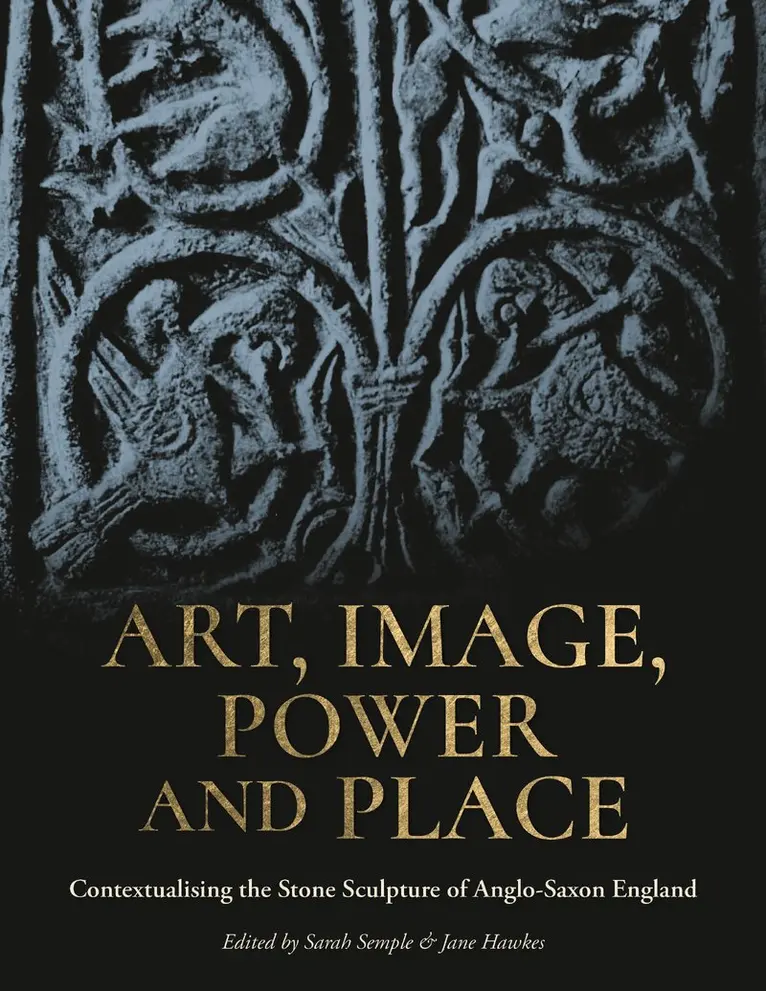
Art, Image, Power and Place
Contextualising the Stone Sculpture of Anglo-Saxon England
Inbunden, Engelska, 2026
986 kr
Kommande
Early medieval stone sculptures survive across Europe: at waysides, in architectural settings and in churches and graveyards, and provide an exceptional source for understanding the aesthetics and beliefs of early medieval communities. England is no exception to this. Thousands of intact and fragmentary stone monuments survive from the seventh to eleventh centuries CE, evidencing the emergence of a rich Anglo-Saxon sculptural tradition in stone. These often elaborately carved monuments that were generally painted – some with considerable sophistication – and could be inset with paste glass and metal, provide clear evidence of a rich and new form of visual material culture connected with the Church in the region. Some monuments acted as liturgical markers, others as markers of working relations between secular and ecclesiastical communities, while others still commemorated the dead, and some fragments demonstrate the ways in which stone buildings were decorated both inside and out. By the tenth century, stone crosses and monuments were frequently commissioned by the Anglo-Saxon and Anglo-Scandinavian secular elites, demonstrating strong connections between sculptural commemoration, power, and identity.For decades, the celebrated project, the Corpus of Anglo-Saxon Stone Sculpture, has provided information on these monuments, cataloguing each example in terms of date, geology, and decoration. This multi-authored volume draws on the expertise of many specialists connected with the Corpus to provide a first accessible national overview of the resource. Thematic chapters reflect on discoveries to date and archaeological and art historical approaches to researching and understanding sculpture. Key themes include quarrying and production, chronology, the intellectual and artistic context for sculpture, aesthetics and iconography, and the places and contexts of sculpture use. This extensively illustrated volume introduces Anglo-Saxon sculpture in its broader European context and offers a stepping-off point for all those wanting to learn more and research these often-enigmatic fragments.
Del 29 - Boydell Studies in Medieval Art and Architecture
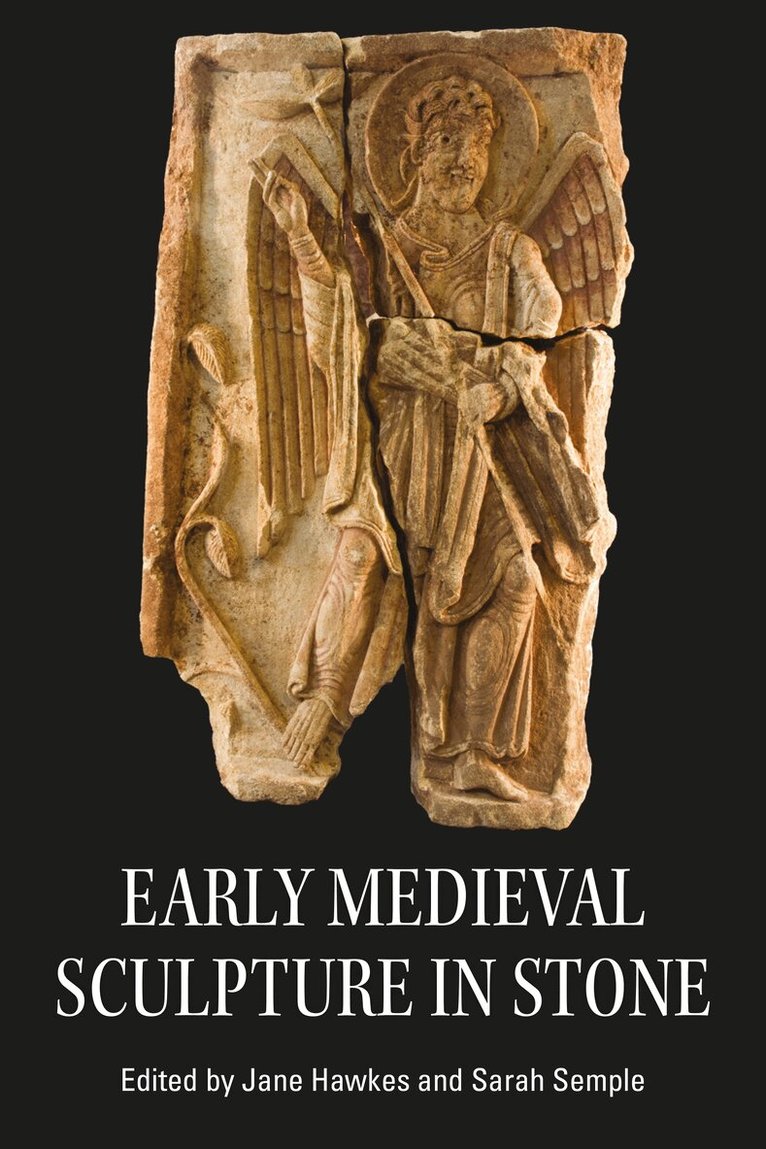
Early Medieval Sculpture in Stone
Inbunden, Engelska, 2025
1 445 kr
Skickas inom 7-10 vardagar
Multidisciplinary scholarship showcasing innovative methods for working with sculptural material - with essays ranging from Merovingian funerary art to Old English and Scandinavian runic inscriptions.The stone sculptures surviving across Europe from the early medieval period are an exceptional resource for understanding the communities that created them. Found at waysides, in architectural settings, and graveyards - standing crosses, inscribed stones, runestones and grave-markers are just some of the highly varied forms that attest to the art, technologies and beliefs of both Christian and non-Christian societies. The new approaches to sculpture studies found in this volume range from rethinking late antique influences to exploring how sculpture was used and encountered in a variety of political and cultural contexts; contributors also draw out the dialogues inherent in form and decoration within and across temporal and national boundaries. These fresh perspectives on iconographies, narrative art, sculpture and nature and the power of sculpture in multi-media environments, alongside studies of sourcing, production and portability, and the afterlives of carved stones, reflect the vibrancy of current research and the way in which it now integrates digital, scientific and spatial methods. The introduction and chapters 26 and 27 are available as Open Access under the Creative Commons licence CC BY-NC-ND. This work was supported by the Arts and Humanities Research Council [AH/R003556/1] and the British Academy [AQ2324\240012].Chapter 17 is Open Access under the Creative Commons License CC BY-NC-ND with funding from the Swedish National Heritage Board.
481 kr
Tillfälligt slut
This volume will throw new light on the intellect of the earliest English - the way they thought, the way they viewed the world, and the way they viewed worlds other than this. Previous understanding of the topic, well rooted in the ideas of its time, regarded the English as adherents of two consecutive religions: Paganism governed the settlers of the 4th-6th century, but was superseded in the 7th-10th century by Christianity. Of the two, Christianity, a religion of the book, documented itself thoroughly, while in failing to do so Paganism laid itself open to centuries of abuse, conjecture or mindless admiration. In developing new objectives, the papers here demonstrate that beliefs varied from place to place and were expressed in material culture. Through archaeology therefore, these beliefs can be rediscovered. Aware of the fact that even the best archaeology provides no open access to the mind, the contributors record, and study, signals of belief rather than what was believed. The premise of this volume is therefore that paganism was not a religion with supraregional rules and institutions but a loose term for a variety of local intellectual world views. The same courtesy is extended to Christianity. Both religions are treated as sources on which people, local people - the true agents of Anglo-Saxon England - eclectically drew. A range of material culture and locations across Northern Europe are explored, looking at signals of belief from the landscape, water cults, burial rites, the hall and animals in life and art. Each author looks across the sea to Scandinavia, as well as to the woods and fields, mires and mounds of Old England, resulting in a new perspective on the intellectual preoccupations and anxieties of a crucial age.