Janet Ajzenstat - Böcker
Visar alla böcker från författaren Janet Ajzenstat. Handla med fri frakt och snabb leverans.
3 produkter
3 produkter
364 kr
Skickas inom 7-10 vardagar
A new interpretation of confederation contends that the founding fathers were John Locke's disciples - champions of universal human rights and popular sovereignty.
524 kr
Skickas inom 7-10 vardagar
Canada's Founding Debates is about Confederation—about the process that brought together six out of the seven territories of British North America in the years 1864-73 to form a country called Canada. It presents excerpts from the debates on Confederation in all of the colonial parliaments from Newfoundland to British Columbia and in the constituent assembly of the Red River Colony. The voices of the powerful and those of lesser note mingle in impassioned debate on the pros and cons of creating or joining the new country, and in defining its nature.In short explanatory essays and provocative annotations, the editors sketch the historical context of the debates and draw out the significance of what was said. By organizing the debates thematically, they bring out the depth of the founders' concern for issues that are as vital today as they were then: the meaning of liberty, the merits of democracy, the best form of self-government, the tension between collective and individual rights, the rule of law, the requirements of political leadership, and, of course, the nature of Canadian nationality. Canada's Founding Debates offers a fresh and often surprising perspective on Canada's origins, history, and political character.Previously published by Stoddart Publishing, 1999.
396 kr
Skickas inom 10-15 vardagar
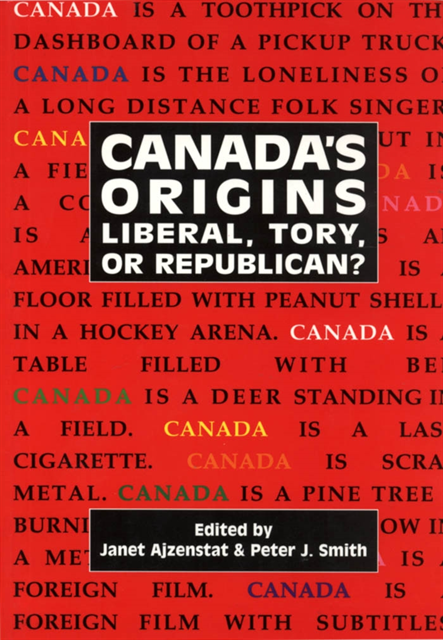
Ajzenstat and Smith challenge the idea of Canada as a country whose liberal individualism, unlike that of the United States, is redeemed by a tradition of government intervention in economic and social life: the so-called "tory touch." This ground-breaking book begins with the now classic article in which the red tory view was formulated. It then presents a new and illuminating picture of Canadian political life, in which liberal individualism confronts not toryism but the participatory tradition of civic republicanism. In the final section the two editors, one a liberal, the other a civic republican, debate the crucial questions dominating Canadian politics today-including Quebec's search for recognition-from the perspective of their shared understanding of Canada's founding.