Janet Vähämäki - Böcker
Visar alla böcker från författaren Janet Vähämäki. Handla med fri frakt och snabb leverans.
2 produkter
2 produkter
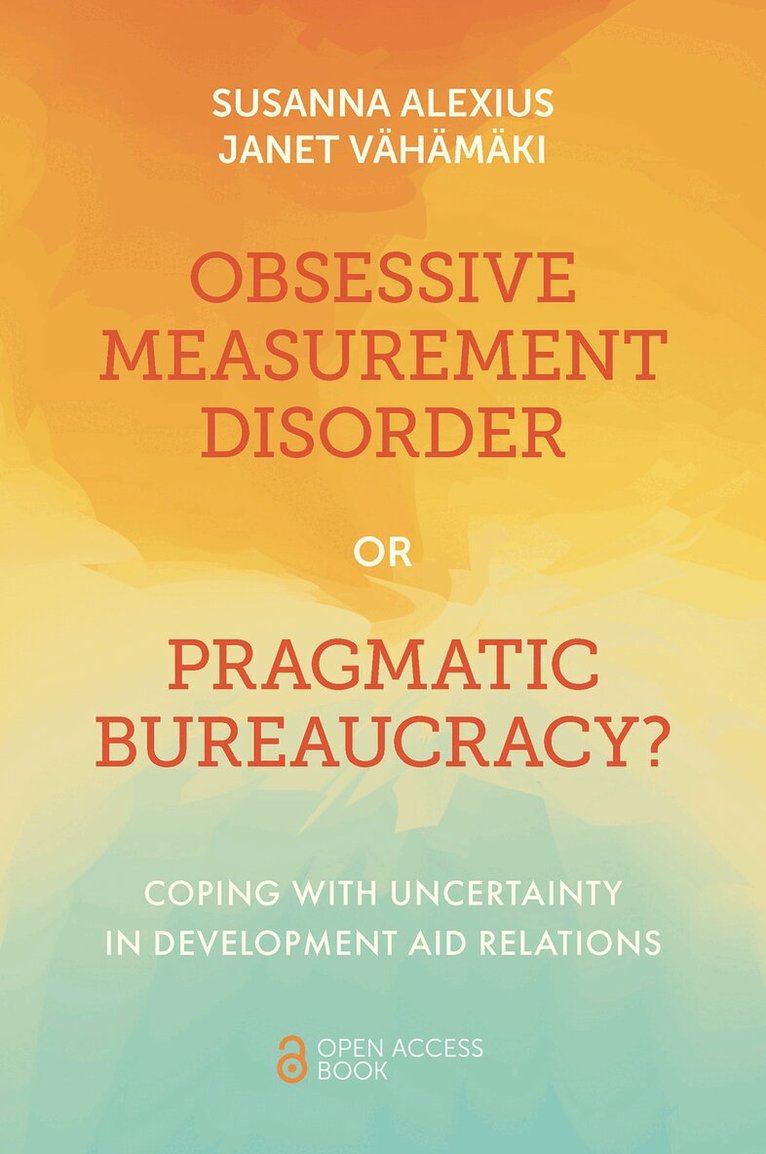
Obsessive Measurement Disorder or Pragmatic Bureaucracy?
Coping with Uncertainty in Development Aid Relations
Häftad, Engelska, 2024
270 kr
Skickas inom 7-10 vardagar
The ebook edition of this title is Open Access and freely available to read online.Complex coordination across time, space, and cultures involves a great deal of uncertainty. This uncertainty may be accepted and handled with judgment and pragmatism, but more often in contemporary modern society, it is treated as a technical problem to be ‘solved’. This is a book about the paradoxical implications of the quest for certainty in interorganizational relations in the complex field of development aid.Authors Alexius and Vähämäki scrutinize questions related to the concept Obsessive Measurement Disorder, i.e. what causes an increase in control mechanisms, and how and when can this prove counterproductive? They further investigate the question on why performance management - and measurement requirements seem in some instances to hinder, and in others to support the implementation of aid projects and programs.Drawing on 80 original interviews with aid bureaucrats working at different levels and in different organizations, including public agencies, companies, non-government organisations, and universities all involved in development aid projects financed fully, or in part, by the Swedish taxpayer, they identify coping mechanisms and responses that may help to prevent the extremes of obsessive measurement disorder, and foster instead pragmatic, constructive organizing and learning that benefits not only aid organizations and their employees, but also - and more fundamentally - the societies in need.
Matrixing aid : the rise and fall of 'results initiatives' in Swedish development aid
Häftad, Engelska, 2017
161 kr
Skickas inom 5-8 vardagar
Obtaining knowledge on whether and how aid contributes to results is considered important for decision making and planning, but also for continuous public support for aid. This dissertation examines how a public aid agency, Sida, has operationalized the demand to demonstrate results since the 1960s. Why has there been an increased demand for results at some times in history? And why does there seem to be a greater acceptance at other times that demonstrating exact results might not be possible? This dissertation contributes to knowledge on the reasons behind the quest to report on results but also on what happens when results are not reportable. Four similar ‘results initiatives’, launched and implemented within Sida in 1971, 1981, 1998 and 2012 are studied. It is shown that despite that all four initiatives have encountered difficulties with non-use of the results information, the initiatives have been a way to show that the organization is doing the best it can to demonstrate results. Since the mere feeling of doing, or wish to do, good for someone else is for many people sufficient “payment” of aid, it is argued that in the end it is not only the knowledge of exact results that matters for continuous trust and support for aid.