Jason Frank - Böcker
Visar alla böcker från författaren Jason Frank. Handla med fri frakt och snabb leverans.
6 produkter
6 produkter
1 335 kr
Skickas inom 5-8 vardagar
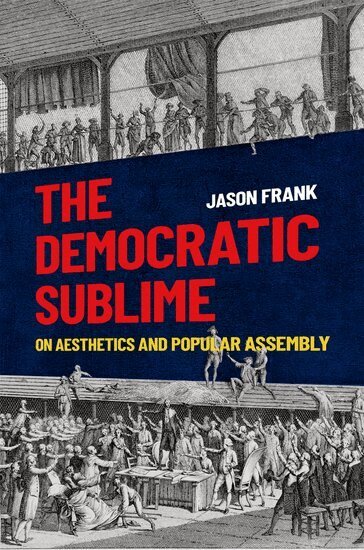
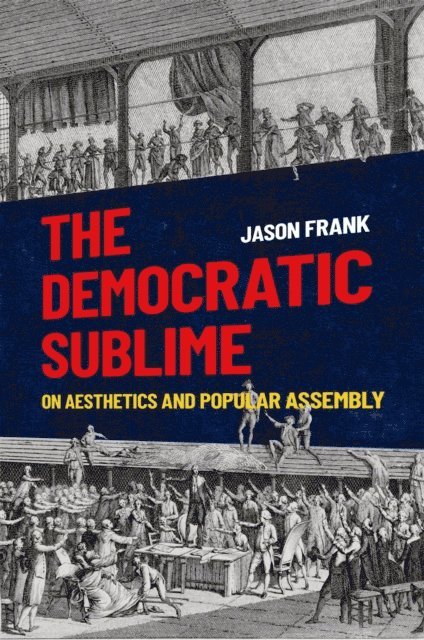
The transition from royal to popular sovereignty during the age of democratic revolutions--from 1776 to 1848--entailed not only the reorganization of institutions of governance and norms of political legitimacy, but also a dramatic transformation in the iconography and symbolism of political power. The personal and external rule of the king, whose body was the physical locus of political authority, was replaced with the impersonal and immanent self-rule of the people, whose power could not be incontestably embodied. This posed representational difficulties that went beyond questions of institutionalization and law, extending into the aesthetic realm of visualization, composition, and form. How to make the people's sovereign will tangible to popular judgment was, and is, a crucial problem of democratic political aesthetics. The Democratic Sublime offers an interdisciplinary exploration of how the revolutionary proliferation of popular assemblies--crowds, demonstrations, gatherings of the "people out of doors"--came to be central to the political aesthetics of democracy during the age of democratic revolutions. Jason Frank argues that popular assemblies allowed the people to manifest as a collective actor capable of enacting dramatic political reforms and change. Moreover, Frank asserts that popular assemblies became privileged sites of democratic representation as they claimed to support the voice of the people while also signaling the material plenitude beyond any single representational claim. Popular assemblies continue to retain this power, in part, because they embody that which escapes representational capture: they disrupt the representational space of appearance and draw their power from the ineffability and resistant materiality of the people's will. Engaging with a wide range of sources, from canonical political theorists (Rousseau, Burke, and Tocqueville) to the novels of Hugo, the visual culture of the barricades, and the memoirs of popular insurgents, The Democratic Sublime demonstrates how making the people's sovereign will tangible to popular judgment became a central dilemma of modern democracy, and how it remains so today.
359 kr
Skickas inom 5-8 vardagar
The transition from royal to popular sovereignty during the age of democratic revolutions--from 1776 to 1848--entailed not only the reorganization of institutions of governance and norms of political legitimacy, but also a dramatic transformation in the iconography and symbolism of political power. The personal and external rule of the king, whose body was the physical locus of political authority, was replaced with the impersonal and immanent self-rule of the people, whose power could not be incontestably embodied. This posed representational difficulties that went beyond questions of institutionalization and law, extending into the aesthetic realm of visualization, composition, and form. How to make the people's sovereign will tangible to popular judgment was, and is, a crucial problem of democratic political aesthetics. The Democratic Sublime offers an interdisciplinary exploration of how the revolutionary proliferation of popular assemblies--crowds, demonstrations, gatherings of the "people out of doors"--came to be central to the political aesthetics of democracy during the age of democratic revolutions. Jason Frank argues that popular assemblies allowed the people to manifest as a collective actor capable of enacting dramatic political reforms and change. Moreover, Frank asserts that popular assemblies became privileged sites of democratic representation as they claimed to support the voice of the people while also signaling the material plenitude beyond any single representational claim. Popular assemblies continue to retain this power, in part, because they embody that which escapes representational capture: they disrupt the representational space of appearance and draw their power from the ineffability and resistant materiality of the people's will. Engaging with a wide range of sources, from canonical political theorists (Rousseau, Burke, and Tocqueville) to the novels of Hugo, the visual culture of the barricades, and the memoirs of popular insurgents, The Democratic Sublime demonstrates how making the people's sovereign will tangible to popular judgment became a central dilemma of modern democracy, and how it remains so today.
1 564 kr
Skickas inom 5-8 vardagar
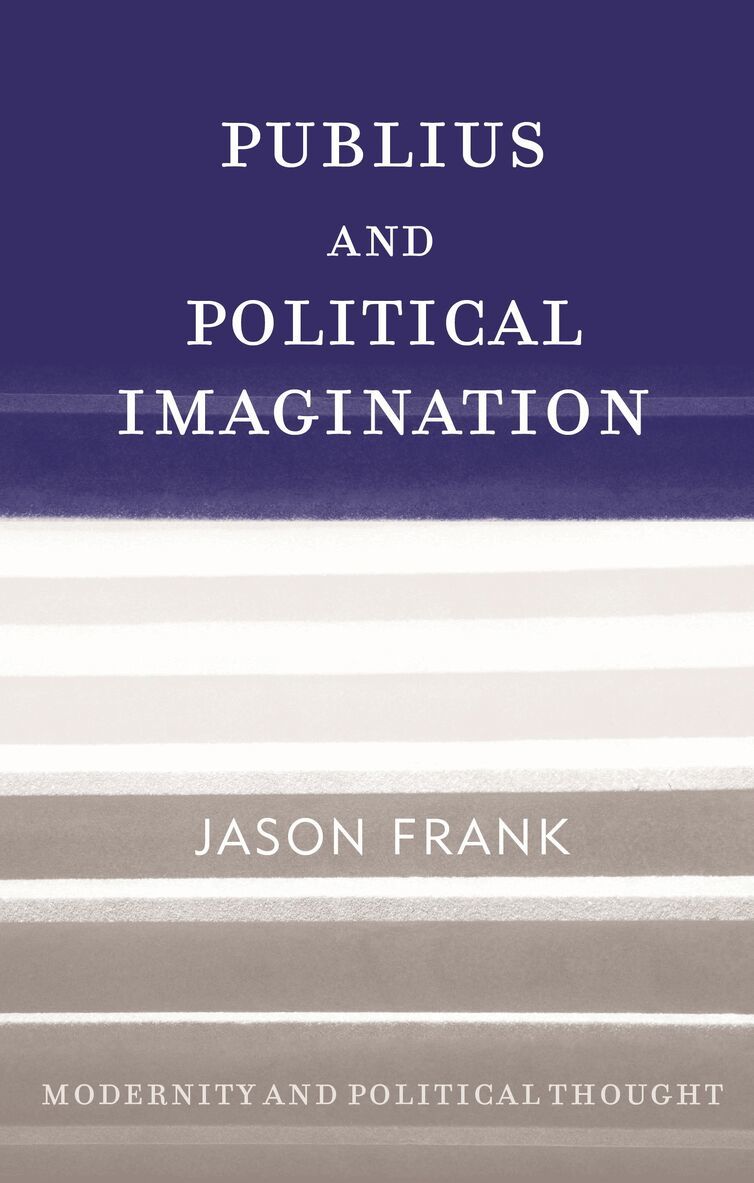
Jason Frank’s Publius and Political Imagination is the first volume of the Modernity and Political Thought series to take as its focus not a single author, but collaboration between political thinkers, in this very special case the collective known by the pseudonym: Publius. Frank's revisionist reading of The Federalist Papers—perhaps the most canonical text in American political thought—counters familiar realist and deliberativist interpretations and demonstrates the neglected importance of political imagination to both Publius's arguments and to the republic he was invented to found.
891 kr
Skickas inom 3-6 vardagar
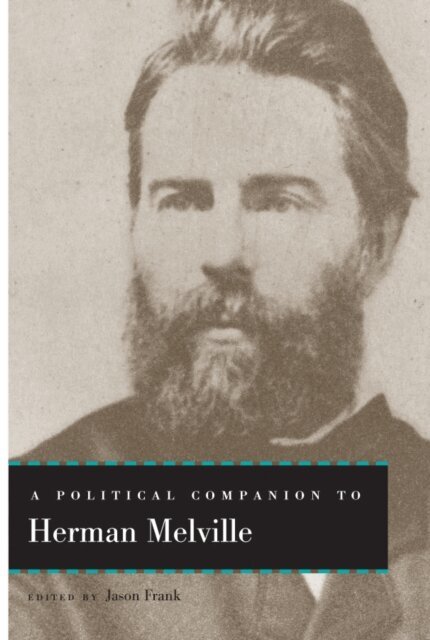
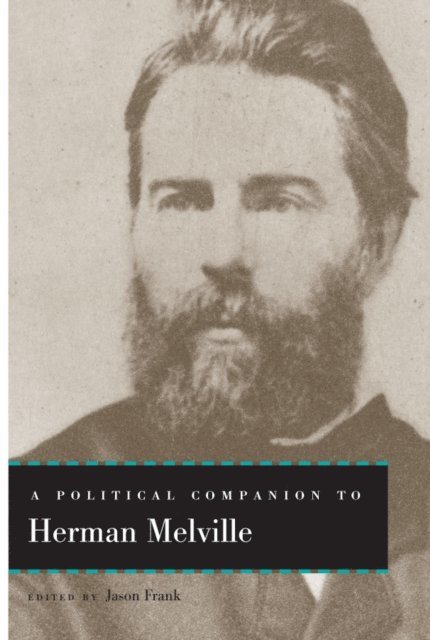
Herman Melville is widely considered to be one of America's greatest authors, and countless literary theorists and critics have studied his life and work. However, political theorists have tended to avoid Melville, turning rather to such contemporaries as Ralph Waldo Emerson and Henry David Thoreau to understand the political thought of the American Renaissance. While Melville was not an activist in the traditional sense and his philosophy is notoriously difficult to categorize, his work is nevertheless deeply political in its own right. As editor Jason Frank notes in his introduction to A Political Companion to Herman Melville, Melville's writing "strikes a note of dissonance in the pre-established harmonies of the American political tradition."This unique volume explores Melville's politics by surveying the full range of his work -- from Typee (1846) to the posthumously published Billy Budd (1924). The contributors give historical context to Melville's writings and place him in conversation with political and theoretical debates, examining his relationship to transcendentalism and contemporary continental philosophy and addressing his work's relevance to topics such as nineteenth-century imperialism, twentieth-century legal theory, the anti-rent wars of the 1840s, and the civil rights movement. From these analyses emerges a new and challenging portrait of Melville as a political thinker of the first order, one that will establish his importance not only for nineteenth-century American political thought but also for political theory more broadly.
428 kr
Skickas inom 7-10 vardagar
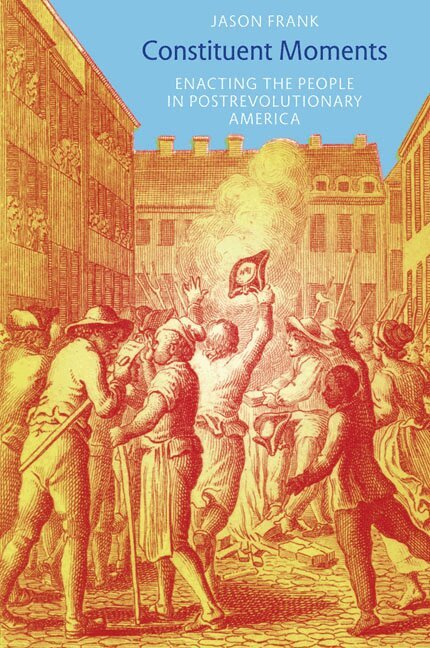
Since the American Revolution, there has been broad cultural consensus that “the people” are the only legitimate ground of public authority in the United States. For just as long, there has been disagreement over who the people are and how they should be represented or institutionally embodied. In Constituent Moments, Jason Frank explores this dilemma of authorization: the grounding of democratic legitimacy in an elusive notion of the people. Frank argues that the people are not a coherent or sanctioned collective. Instead, the people exist as an effect of successful claims to speak on their behalf; the power to speak in their name can be vindicated only retrospectively. The people, and democratic politics more broadly, emerge from the dynamic tension between popular politics and representation. They spring from what Frank calls “constituent moments,” moments when claims to speak in the people’s name are politically felicitous, even though those making such claims break from established rules and procedures for representing popular voice.Elaborating his theory of constituent moments, Frank focuses on specific historical instances when under-authorized individuals or associations seized the mantle of authority, and, by doing so, changed the inherited rules of authorization and produced new spaces and conditions for political representation. He looks at crowd actions such as parades, riots, and protests; the Democratic-Republican Societies of the 1790s; and the writings of Walt Whitman and Frederick Douglass. Frank demonstrates that the revolutionary establishment of the people is not a solitary event, but rather a series of micropolitical enactments, small dramas of self-authorization that take place in the informal contexts of crowd actions, political oratory, and literature as well as in the more formal settings of constitutional conventions and political associations.
528 kr
Skickas inom 10-15 vardagar
Jason Frank’s Publius and Political Imagination is the first volume of the Modernity and Political Thought series to take as its focus not a single author, but collaboration between political thinkers, in this very special case the collective known by the pseudonym: Publius. Frank's revisionist reading of The Federalist Papers—perhaps the most canonical text in American political thought—counters familiar realist and deliberativist interpretations and demonstrates the neglected importance of political imagination to both Publius's arguments and to the republic he was invented to found.