Jason L Riley - Böcker
Visar alla böcker från författaren Jason L Riley. Handla med fri frakt och snabb leverans.
6 produkter
6 produkter
The Affirmative Action Myth
Why Blacks Don't Need Racial Preferences to Succeed
Inbunden, Engelska, 2025
266 kr
Skickas inom 7-10 vardagar
From Wall Street Journal columnist and Manhattan Institute senior fellow Jason L. Riley, a contrarian argument that racial preferences have done more harm than good for black AmericansAfter the Supreme Court ruled in 2023 that the use of race in college admissions was unconstitutional, many predicted that the black middle class was doomed. One byproduct of a half century of affirmative action is that it has given people the impression that blacks can't advance without special treatment. In The Affirmative Action Myth, Jason L. Riley details the neglected history of black achievement without government intervention. Using empirical data, Riley shows how black families lifted themselves out of poverty prior to the racial preference policies of the 1960s and 1970s. Black employment, incomes, homeownership, and educational attainment all were on the rise in the first two-thirds of the twentieth century and began to stagnate only after affirmative action became the law of the land, tainting black achievement with suspicions of unfair advantage. Countering thinkers who blame white supremacy and systemic racism for today's racial gaps, Riley offers a more optimistic story of black success without racial favoritism.
275 kr
Skickas inom 7-10 vardagar
Thomas Sowell has an almost godlike status amongst conservative intellectuals. "It's a scandal that economist Sowell has not been awarded the Nobel Prize," wrote a reviewer in Forbes. A profile in the Wall Street Journal described him as "one of America's great sages." His writing on politics, economics, and social issues have prompted both contempt and praise. In Maverick, Jason Riley explores the life and ideas of Thomas Sowell, one of America's most important Black intellectuals.A bright student with a tumultuous home life, Sowell was admitted to one of New York's most competitive high schools but dropped out at age 16. He left home a year later and moved into a shelter in the Bronx for homeless boys where he kept a knife under his pillow for protection. Years later, the G.I. bill enabled him to enroll in night school at Howard University and after his freshman year, he transferred to Harvard. By 1968, Sowell received his doctorate in economics from the University of Chicago, his dissertation written under the guidance of future Nobel economists Milton Friedman and George Stigler. Maverick follows Sowell from the University of Chicago to his early critiques of the Civil Rights moment. In the 60s and 70s, Sowell accepted teaching positions at Howard, Cornell, UCLA, and elsewhere -- but the campus turmoil of the era clashed with Sowell's principles and he refused to bend. He turned his attention to writing.Over the past fifty tears, Sowell has written over thirty books and countless columns and media appearances. Riley offers an introduction to Sowell's ideas, from race and inequality to economics and education. Riley considers how Sowell's own history alongside the moments and movements that shaped his thinking to offer a nuanced portrait of one of America's leading conservative intellectuals. Maverick explores the extraordinary scope and depth of arguably the most influential and trenchant Black social critics alive in America today - one whose contributions have been underacknowledged because they do not align with progressive ideas about race.
305 kr
Skickas inom 3-6 vardagar
147 kr
Skickas inom 5-8 vardagar
Why is it that so many efforts by liberals to lift the black underclass not only fail, but often harm the intended beneficiaries? In Please Stop Helping Us, Jason L. Riley examines how well-intentioned welfare programs are in fact holding black Americans back. Minimum-wage laws may lift earnings for people who are already employed, but they price a disproportionate number of blacks out of the labor force. Affirmative action in higher education is intended to address past discrimination, but the result is fewer black college graduates than would otherwise exist. And so it goes with everything from soft-on-crime laws, which make black neighborhoods more dangerous, to policies that limit school choice out of a mistaken belief that charter schools and voucher programs harm the traditional public schools that most low-income students attend. In theory these efforts are intended to help the poor-and poor minorities in particular. In practice they become massive barriers to moving forward. Please Stop Helping Us lays bare these counterproductive results.People of goodwill want to see more black socioeconomic advancement, but in too many instances the current methods and approaches aren't working. Acknowledging this is an important first step.
170 kr
Skickas inom 7-10 vardagar
Black civil rights leaders have long supported ethnic identity politics and prioritized the integration of political institutions, and seldom has that strategy been questioned. In False Black Power?, Jason L. Riley takes an honest, factual look at why increased black political power has not paid off in the ways that civil rights leadership has promised.Recent decades have witnessed a proliferation of black elected officials, culminating in the historic presidency of Barack Obama. However, racial gaps in employment, income, homeownership, academic achievement, and other measures not only continue but in some cases have even widened. While other racial and ethnic groups in America have made economic advancement a priority, the focus on political capital for blacks has been a disadvantage, blocking them from the fiscal capital that helped power upward mobility among other groups.Riley explains why the political strategy of civil rights leaders has left so many blacks behind. The key to black economic advancement today is overcoming cultural handicaps, not attaining more political power. The book closes with thoughtful responses from key thought leaders Glenn Loury and John McWhorter.
170 kr
Skickas inom 11-20 vardagar
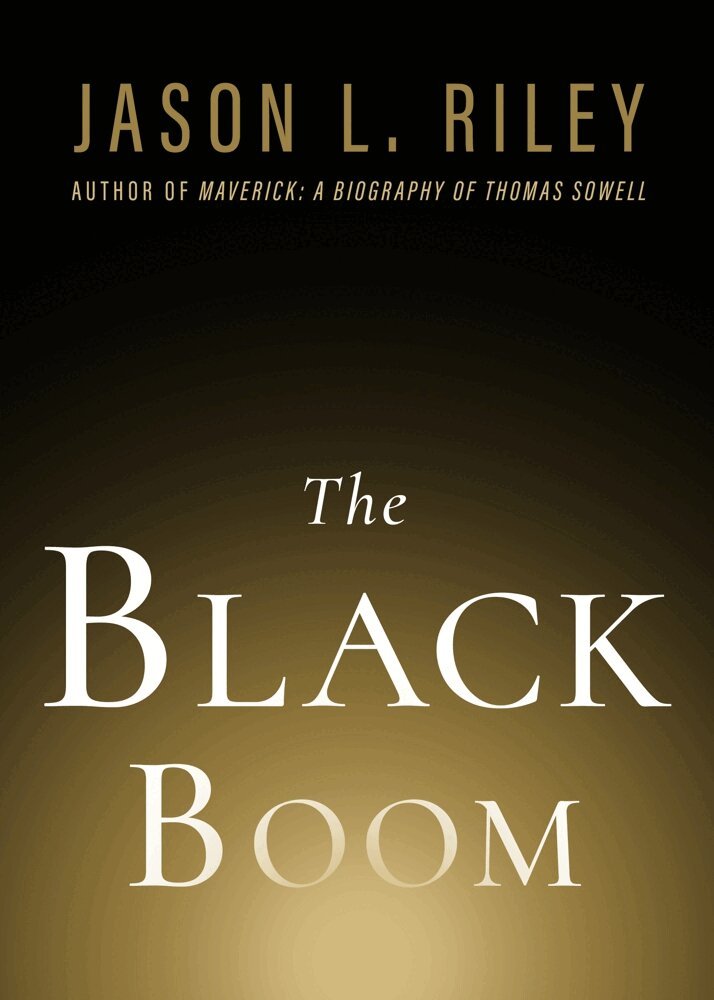
Economic inequality continues to be one of America’s most hotly debated topics. Still, there has been relatively little discussion of the fact that black-white gaps in joblessness, income, poverty and other measures were shrinking before the pandemic. Why was it happening, and why did this phenomenon go unacknowledged by so much media? In The Black Boom, Jason L. Riley-acclaimed Wall Street Journal columnist and senior fellow at the Manhattan Institute-digs into the data and concludes that the economic lives of black people improved significantly under policies put into place during the Trump administration. To acknowledge as much is not to endorse the 45th president but to champion policies that achieve a clear moral objective shared by most Americans. Riley argues that before the Covid-19 pandemic of 2020, the economic fortunes of blacks improved under Trump to an extent unseen under Obama and unseen going back several generations. Black unemployment and poverty reached historic lows, and black wages increased faster than white wages. Less inequality is something that everyone wants, but disapproval of Trump’s personality and methods too often skewed the media’s appraisal of effective policies advocated by his administration. If we're going to make real progress in improving the lives of low-income minorities, says Riley, we must look beyond our partisan differences at what works and keep doing it. Unfortunately, many press outlets were unable or unwilling to do that. Riley notes that political reporters were not unaware of this data. Instead, they chose to ignore or downplay it because it was inconvenient. In their view, Trump, because he was a Republican and because he was Trump, had it in for blacks, and thus his policy preferences would be harmful to minorities. To highlight that significant racial disparities were narrowing on his watch-that the administration’s tax and regulatory reforms were mainly boosting the working and middle classes rather than ‘the rich’-would have undermined a narrative that the media preferred to advance, regardless of its veracity.” As with previous books in our New Threats to Freedom series, The Black Boom includes two essays from prominent experts who take issue with the author’s perspective. Juan Williams, a veteran journalist, and Wilfred Reilly, a political scientist, contribute thoughtful responses to Riley and show that it is possible to share a deep concern for disadvantaged groups while disagreeing on how best to help them.