Jason Protass - Böcker
Visar alla böcker från författaren Jason Protass. Handla med fri frakt och snabb leverans.
2 produkter
2 produkter
236 kr
Skickas inom 7-10 vardagar
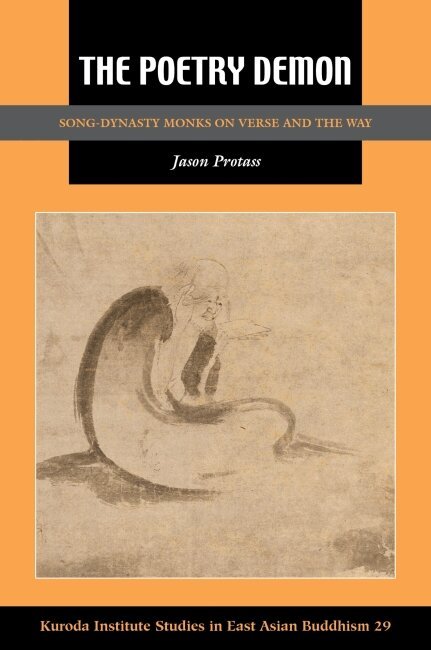
Chinese Buddhist monks of the Song dynasty (960–1279) called the irresistible urge to compose poetry "the poetry demon." In this ambitious study, Jason Protass seeks to bridge the fields of Buddhist studies and Chinese literature to examine the place of poetry in the lives of Song monks. Although much has been written about verses in the gong’an (Jpn. kōan) tradition, very little is known about the large corpora—roughly 30,000 extant poems—composed by these monastics. Protass addresses the oversight by using strategies associated with religious studies, literary studies, and sociology. He weaves together poetry with a wide range of monastic sources and in doing so argues against positing a "literary Chan" movement that wrote poetry as a path to awakening; he instead presents an understanding of monks’ poetry grounded in the Song discourse of monks themselves.The work begins by examining how monks fashioned new genres, created their own books, and fueled a monastic audience for monks’ poetry. It traces the evolution of gāthā from hymns found in Buddhist scripture to an independent genre for poems associated with Chan masters as living buddhas. While Song monastic culture produced a prodigious amount of verse, at the same time it promoted prohibitions against monks’ participation in poetry as a worldly or Confucian art: This constructive tension was an animating force. The Poetry Demon highlights this and other intersections of Buddhist doctrine with literary sociality and charts productive pathways through numerous materials, including collections of Chan "recorded sayings," monastic rulebooks, "eminent monk" and "flame record" hagiographies, manuscripts of poetry, Buddhist encyclopedia, primers, and sūtra commentary.Two chapter-length case studies illustrate how Song monks participated in two of the most prominent and conservative modes of poetry of the time, those of parting and mourning. Protass reveals how monks used Chan humor with reference to emptiness to transform acts of separation into Buddhist teachings. In another chapter, monks in mourning expressed their grief and dharma through poetry. The Poetry Demon impressively uncovers new and creative ways to study Chinese Buddhist monks’ poetry while contributing to the broader study of Chinese religion and literature.
773 kr
Skickas inom 7-10 vardagar
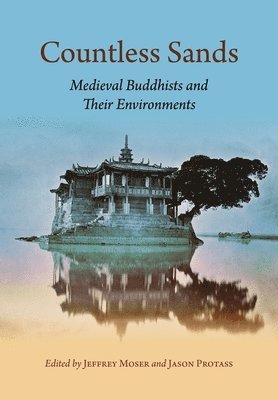
Countless Sands presents engaging analyses of the diverse relationships between Buddhism and the environment that existed in medieval Asia. Recent years have witnessed a surge in publications across the humanities that advance powerful ethical and political arguments to account for the human failure to respond effectively to global climate change. While the contributors to this volume are attuned to this challenge, rather than present explicit political arguments, they pursue a subtler effort to historicize the environment as a site and subject of Buddhist practice while providing research grounded in rigorous analysis of complex and fragmentary sources. The volume thereby mitigates against the Orientalist, East-West binaries that have long informed the invocation of Buddhism in Euro-American environmental discourses. As the chapters collectively demonstrate, there was no singular, consistently "Buddhist" understanding of the natural world, but innumerable, varied engagements preserved in discrete texts, images, and artifacts. We title the volume Countless Sands to echo the Buddhist metaphor of "sands of the Ganges" that implies an uncountable number. Through specific case studies, the authors consider such questions as: How did premodern Buddhists understand what we today call "the environment"? How did they think about their earth? How, when, and where did the various processes of the earth actually impinge on the practices of historical Buddhists? What kinds of "environmental imaginations" informed specific Buddhist practices? In so doing, the authors explore the connections between the ways in which historical Buddhist communities interacted with their environments and how they understood those environments. In the broader field of Buddhist studies, Countless Sands contributes to ongoing efforts to expand the locus of inquiry from textually based investigations of Buddhist doctrine to a broader examination of the complex and varied place of Buddhism in the lives of historical communities. The book furthers this broader process by casting it in environmental terms and will engage readers looking for models of thought-provoking historical analysis on environmental themes.