
Jay Geller – författare
Visar alla böcker från författaren Jay Geller. Handla med fri frakt och snabb leverans.
7 produkter
7 produkter

Inbunden, Engelska, 2026
1 328 kr
Kommande
The first extensive study of how living while circumcised affected the day-to-day efforts of Jewish men and women to survive the Shoah. During the Shoah a circumcised male Jew trying to pass was always at risk. Scenes of threatened exposure, efforts to avoid such situations, and responses when they were unavoidable play significant roles in survivor testimonies and memoirs. Most studies that explore these issues focus on the readily visible or audible stereotypes of Jewishness—such as dark, curly hair; dark eyes; a curved nose; accented speech; distinctive surnames—before noting the danger posed by this corporeal feature that would eliminate virtually all doubts of Jewish identity. However, how circumcision affected the everyday choices, experiences, feelings, gender- and self-identities of Jewish men—and women— has yet to be fully explored by scholars of the Shoah.Living While Circumcised addresses this gap by drawing on hundreds of survivor interviews, memoirs, diaries, and other written testimonies, as well as dozens of literary and cinematic works based on or adapted from survivors' accounts. Jay Geller details the wide variety of strategies individuals developed and the tactics they employed to avoid exposure during a police raid or ID check, medical examination or group shower, sex or children's games: from cross-dressing to assuming a Muslim identity, from claiming an operation for an infection to soaping one's groin, from ingenious distractions to playing against stereotype. Living While Circumcised thus documents an added dimension of Jewish resilience and resourcefulness during the Shoah.

Häftad, Engelska, 2026
493 kr
Kommande
The first extensive study of how living while circumcised affected the day-to-day efforts of Jewish men and women to survive the Shoah. During the Shoah a circumcised male Jew trying to pass was always at risk. Scenes of threatened exposure, efforts to avoid such situations, and responses when they were unavoidable play significant roles in survivor testimonies and memoirs. Most studies that explore these issues focus on the readily visible or audible stereotypes of Jewishness—such as dark, curly hair; dark eyes; a curved nose; accented speech; distinctive surnames—before noting the danger posed by this corporeal feature that would eliminate virtually all doubts of Jewish identity. However, how circumcision affected the everyday choices, experiences, feelings, gender- and self-identities of Jewish men—and women— has yet to be fully explored by scholars of the Shoah.Living While Circumcised addresses this gap by drawing on hundreds of survivor interviews, memoirs, diaries, and other written testimonies, as well as dozens of literary and cinematic works based on or adapted from survivors' accounts. Jay Geller details the wide variety of strategies individuals developed and the tactics they employed to avoid exposure during a police raid or ID check, medical examination or group shower, sex or children's games: from cross-dressing to assuming a Muslim identity, from claiming an operation for an infection to soaping one's groin, from ingenious distractions to playing against stereotype. Living While Circumcised thus documents an added dimension of Jewish resilience and resourcefulness during the Shoah.
Häftad, Engelska, 2007
498 kr
Skickas inom 10-15 vardagar
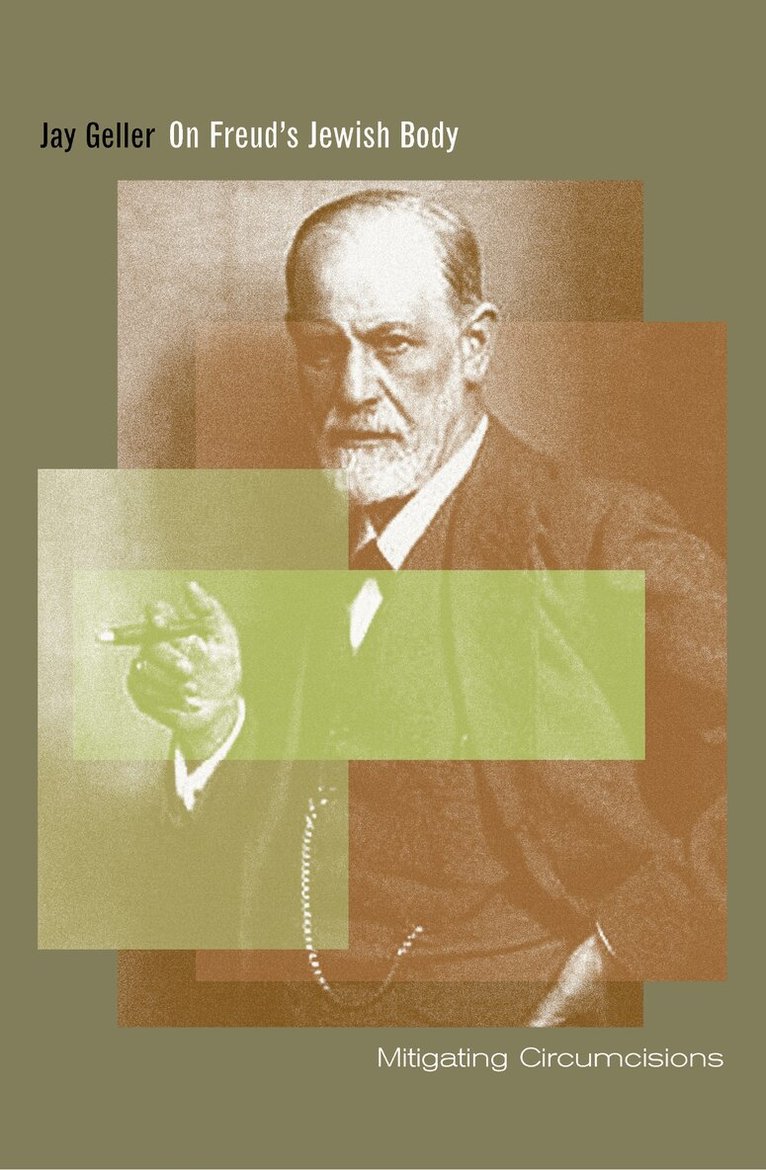
Through a symptomatic reading of Freud's corpus, from his letters to Fliess through the case of Little Hans to Moses and Montheism, this book demonstrates how "circumcision"—the fetishized signifier of Jewish difference and source of knowledge about Jewish identity—is central to Freud's construction of psychoanalysis.Jay Geller depicts Freud as an ordinary Viennese Jew making extraordinary attempts to mitigate the trauma of everyday antisemitism. He situates Freud at the nexus of antisemitic, misogynistic, colonialist, and homophobic discourses, both scientific and popular. These held in place the double bind of post-Emancipation and pre-Shoah Viennese Jewish life: the demand for complete assimilation into the dominant culture, accompanied by the assumption that Jews were constitutionally incapable of eliminating their difference. Incarnate in the figure of the circumcised (male) Jew, this difference haunted the Central European cultural imaginationand helped create, maintain, and confirm Central European identities and hierarchies.Exploring overlapping layers of gender, sexuality, ethnicity, and race in identity construction, theories of trauma, fetishism, and writing, Geller looks at Freud's representations of the Jewish body—especially circumcised penises and their displacements onto noses. He shows how Freud reinscribed the virile masculine norm and the at once hypervirile and effeminate Jewish other into the discourse of psychoanalysis.
Inbunden, Engelska, 2011
1 372 kr
Skickas inom 10-15 vardagar
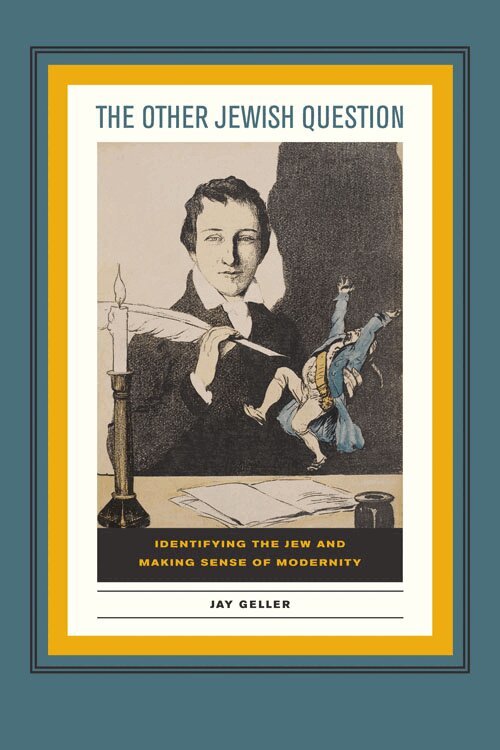
This book examines how modernizing German-speaking cultures, undergoing their own processes of identification, responded to the narcissistic threat posed by the continued persistence of Judentum (Judaism, Jewry, Jewishness) by representing "the Jew"'s body—or rather parts of that body and the techniques performed upon them. Such fetish-producing practices reveal the question of German-identified modernity to be inseparable from the Jewish Question.But Jewish-identified individuals, immersed in the phantasmagoria of such figurations—in the gutter and garret salon, medical treatise and dirty joke, tabloid caricature and literary depiction, church façade and bric-a-brac souvenir—had their own question, another Jewish Question. They also had other answers, for these physiognomic fragments not only identified "the Jew" but also became for some Jewish-identified individuals the building blocks for working through their particular situations and relaying their diverse responses.The Other Jewish Question maps the dissemination of and interrelationships among these corporeal signifiers in Germanophone cultures between the Enlightenment and the Shoah. Its analyses of ascribed Jewish physiognomy include tracing the gendered trajectory of the reception of Benedict Spinoza's correlation of Jewish persistence, anti-Semitism, and circumcision; the role of Zopf ("braid") in mediating German Gentile–Jewish relations; the skin(ny) on the association of Jews and syphilis in Arthur Dinter's antisemitic bestseller Sin against the Blood and Adolf Hitler's Mein Kampf; as well as the role of Jewish corporeality in the works of such Jewish-identified authors as Rahel Levin Varnhagen, Heinrich Heine, Karl Marx, Max Nordau, Franz Kafka, and Walter Benjamin, as well as such "Jew"-identifying writers as Ludwig Feuerbach and Daniel Paul Schreber.The Other Jewish Question portrays how Jewish-identified individuals moved beyond introjection and disavowal to appropriate and transform this epidemic of signification to make sense of their worlds and our modernity.
Häftad, Engelska, 2011
580 kr
Skickas inom 10-15 vardagar
This book examines how modernizing German-speaking cultures, undergoing their own processes of identification, responded to the narcissistic threat posed by the continued persistence of Judentum (Judaism, Jewry, Jewishness) by representing "the Jew"'s body—or rather parts of that body and the techniques performed upon them. Such fetish-producing practices reveal the question of German-identified modernity to be inseparable from the Jewish Question.But Jewish-identified individuals, immersed in the phantasmagoria of such figurations—in the gutter and garret salon, medical treatise and dirty joke, tabloid caricature and literary depiction, church façade and bric-a-brac souvenir—had their own question, another Jewish Question. They also had other answers, for these physiognomic fragments not only identified "the Jew" but also became for some Jewish-identified individuals the building blocks for working through their particular situations and relaying their diverse responses.The Other Jewish Question maps the dissemination of and interrelationships among these corporeal signifiers in Germanophone cultures between the Enlightenment and the Shoah. Its analyses of ascribed Jewish physiognomy include tracing the gendered trajectory of the reception of Benedict Spinoza's correlation of Jewish persistence, anti-Semitism, and circumcision; the role of Zopf ("braid") in mediating German Gentile–Jewish relations; the skin(ny) on the association of Jews and syphilis in Arthur Dinter's antisemitic bestseller Sin against the Blood and Adolf Hitler's Mein Kampf; as well as the role of Jewish corporeality in the works of such Jewish-identified authors as Rahel Levin Varnhagen, Heinrich Heine, Karl Marx, Max Nordau, Franz Kafka, and Walter Benjamin, as well as such "Jew"-identifying writers as Ludwig Feuerbach and Daniel Paul Schreber.The Other Jewish Question portrays how Jewish-identified individuals moved beyond introjection and disavowal to appropriate and transform this epidemic of signification to make sense of their worlds and our modernity.
Inbunden, Engelska, 2017
1 138 kr
Skickas inom 5-8 vardagar
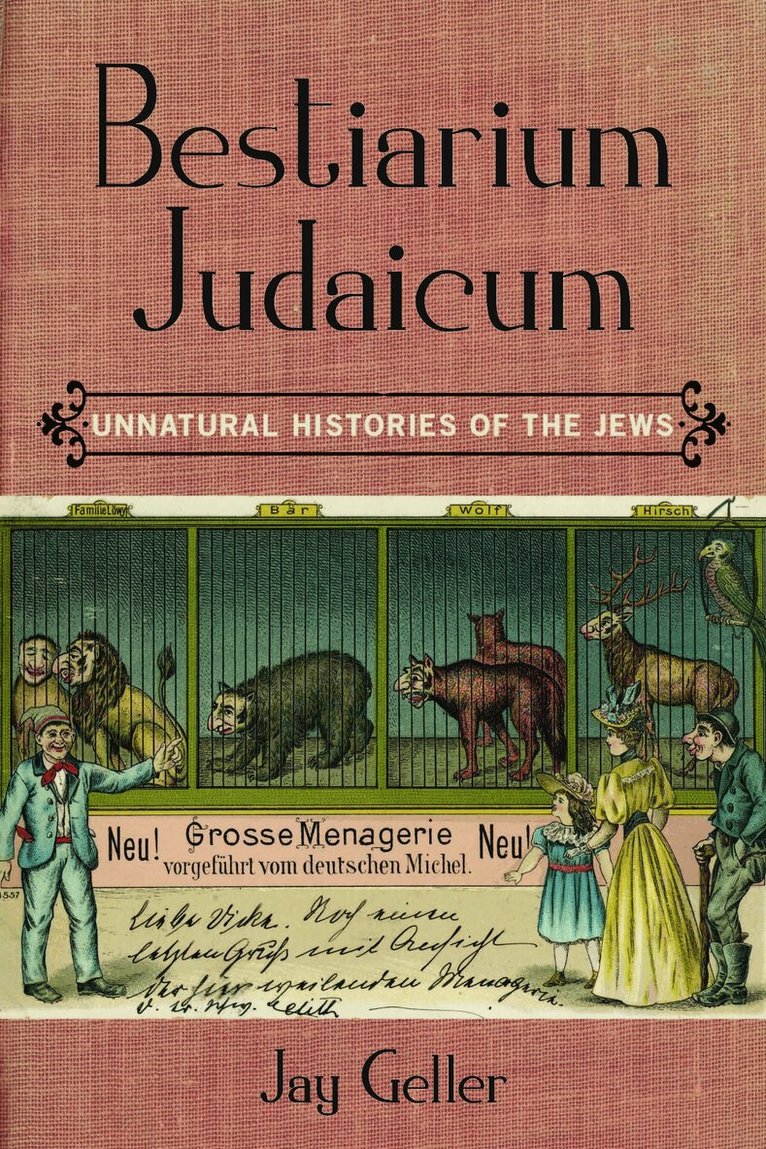
Given the vast inventory of verbal and visual images of nonhuman animals—pigs, dogs, vermin, rodents, apes disseminated for millennia to debase, dehumanize, and justify the persecution of Jews, Bestiarium Judaicum asks: What is at play when Jewish-identified writers tell animal stories? Focusing on the nonhuman-animal constructions of primarily Germanophone authors, including Sigmund Freud, Heinrich Heine, Franz Kafka, and Gertrud Kolmar, Jay Geller expands his earlier examinations (On Freud's Jewish Body: Mitigating Circumcisions and The Other Jewish Question: Identifying the Jew and Making Sense of Modernity) of how such writers drew upon representations of Jewish corporeality in order to work through their particular situations in Gentile modernity. From Heine's ironic lizards to Kafka's Red Peter and Siodmak's Wolf Man, Bestiarium Judaicum brings together Jewish cultural studies and critical animal studies to ferret out these writers' engagement with the bestial answers upon which the Jewish and animal questions converged and by which varieties of the species "Jew" were identified.
Del 25 - JOSEPH C. MILLER MEMORIAL LECTURES SERIES
Vol. 25: "After all, it's only an animal": Antisemitism, Racism, and the Human-Animal Great Divide
Häftad, Engelska
172 kr
Skickas inom 3-6 vardagar