Jay P. Greene - Böcker
Visar alla böcker från författaren Jay P. Greene. Handla med fri frakt och snabb leverans.
5 produkter
5 produkter
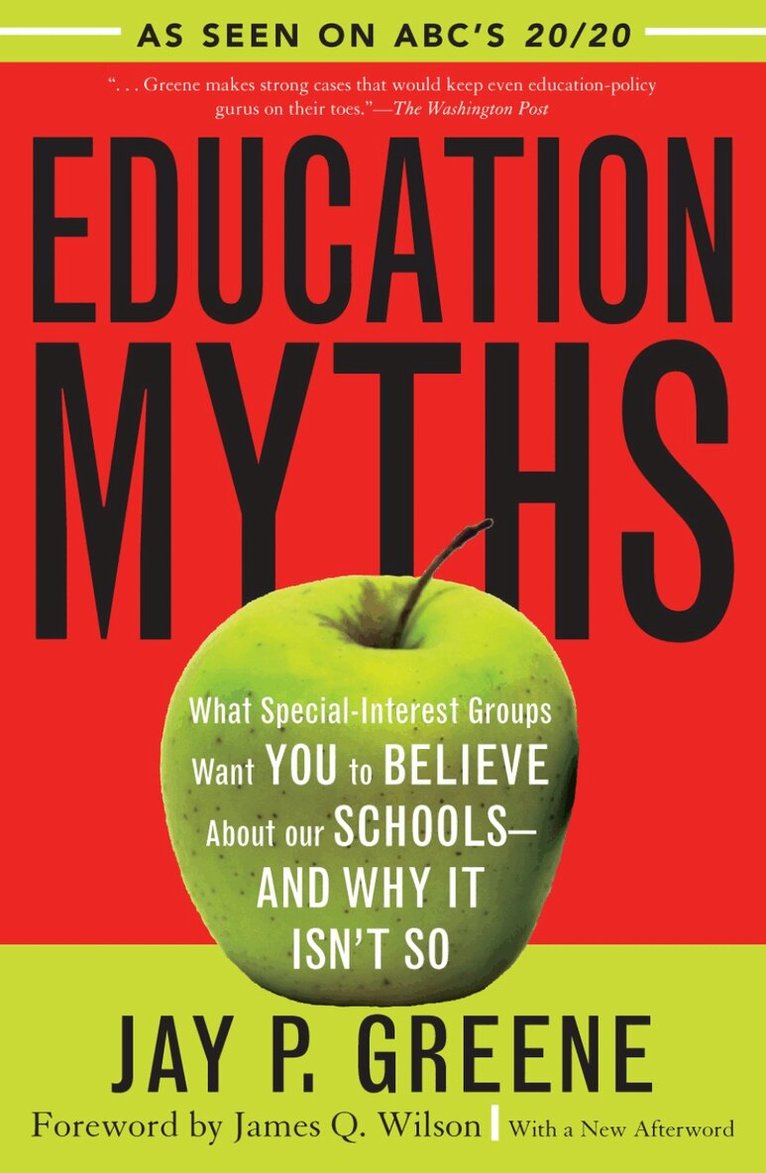
Education Myths
What Special Interest Groups Want You to Believe About Our Schools--And Why It Isn't So
Häftad, Engelska, 2006
240 kr
Skickas inom 5-8 vardagar
How can we fix America's floundering public schools? The conventional wisdom says that schools need a lot more money, that poor and immigrant children can't do as well as most American kids, that high-stakes tests just produce teaching to the test, and that vouchers do little to help students while undermining our democracy. But what if the conventional wisdom is wrong? In Education Myths: What Special Interest Groups Want You to Believe About Our Schools—And Why It Isn't So, Jay Greene and the researchers at the Manhattan Institute have gathered the evidence to show that much of what people believe about education policy is little more than a series of myths. Greene takes on the conventional wisdom and closely examines eighteen myths advanced by the special interest groups dominating public education. In addition to the money myth, the class size myth, and the teacher pay myth, Greene debunks the special education myth (special ed programs burden public schools), the certification myth (certified or more experience teachers are more effective in the classroom), the graduation myth (nearly all students graduate from high school), the draining myth (choice harms public schools), the segregation myth (private schools are more racially segregated), and several more.Greene's reasoned and accessible approach identifies the myth and then refutes it with relevant and reliable facts and figures-including the education establishment's own research. He believes our schools can be fixed and concludes the book with important recommendations that will achieve measurable and affordable success. This is essential reading for all those interested in quality public education and a wake-up call for undemanding taxpayers.
916 kr
Skickas inom 10-15 vardagar
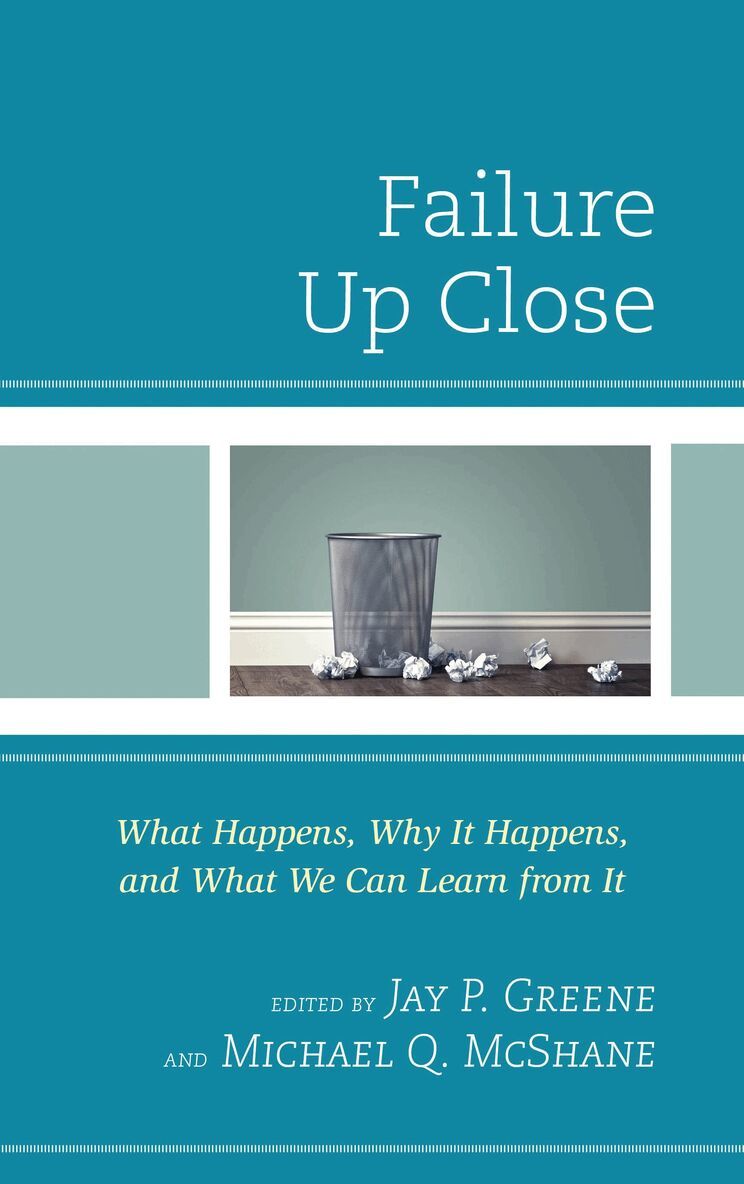
For many reasons, failure in education reform is rarely admitted. Even though it is incredibly hard work to try and improve the enormous and diverse American education system, because there are political consequences of admitting that a particular effort did not live up to its promises and pressure from philanthropic funders to show success, unsuccessful efforts are often swept under the rug or papered over with public relations efforts that avoid wrestling with the tough realities of educational improvement. This doesn’t help anyone. As any educator will tell you, failure is an essential part of learning. Insofar as education reform needs to be a learning movement itself, it has to be able to admit where it has failed and learn from it. Failure Up-Close engages a select group of scholars from across the ideological spectrum to examine particular education reform efforts of recent years that have not succeeded and offer lessons for school and system improvement that can be learned from them. Rather than view failure as negative, this volume looks at failure as an opportunity to learn and grow. In fact, the editors endeavored to find authors that would analyze reforms for which they had some fundamental sympathy. The goal is not to bash particular efforts or castigate their supporters but rather to help those supporters understand how to do what they do better, and ultimately, do better for children.
474 kr
Skickas inom 10-15 vardagar
For many reasons, failure in education reform is rarely admitted. Even though it is incredibly hard work to try and improve the enormous and diverse American education system, because there are political consequences of admitting that a particular effort did not live up to its promises and pressure from philanthropic funders to show success, unsuccessful efforts are often swept under the rug or papered over with public relations efforts that avoid wrestling with the tough realities of educational improvement. This doesn’t help anyone. As any educator will tell you, failure is an essential part of learning. Insofar as education reform needs to be a learning movement itself, it has to be able to admit where it has failed and learn from it. Failure Up-Close engages a select group of scholars from across the ideological spectrum to examine particular education reform efforts of recent years that have not succeeded and offer lessons for school and system improvement that can be learned from them. Rather than view failure as negative, this volume looks at failure as an opportunity to learn and grow. In fact, the editors endeavored to find authors that would analyze reforms for which they had some fundamental sympathy. The goal is not to bash particular efforts or castigate their supporters but rather to help those supporters understand how to do what they do better, and ultimately, do better for children.
721 kr
Skickas inom 10-15 vardagar
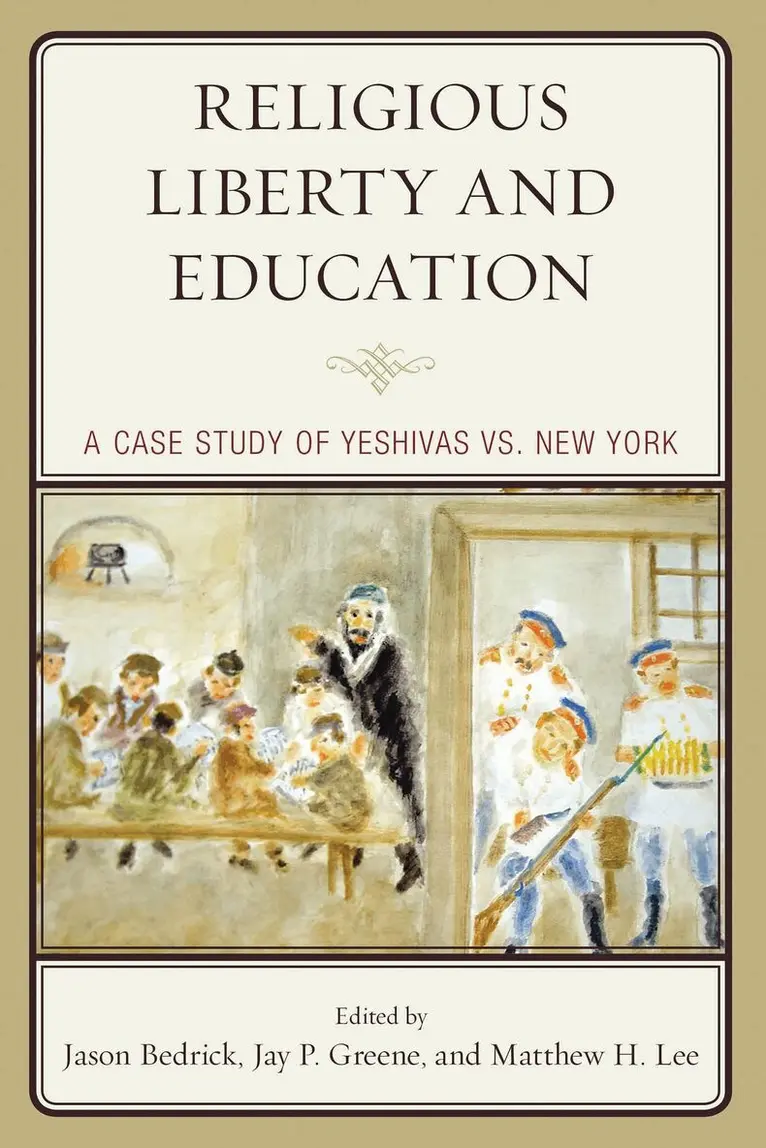
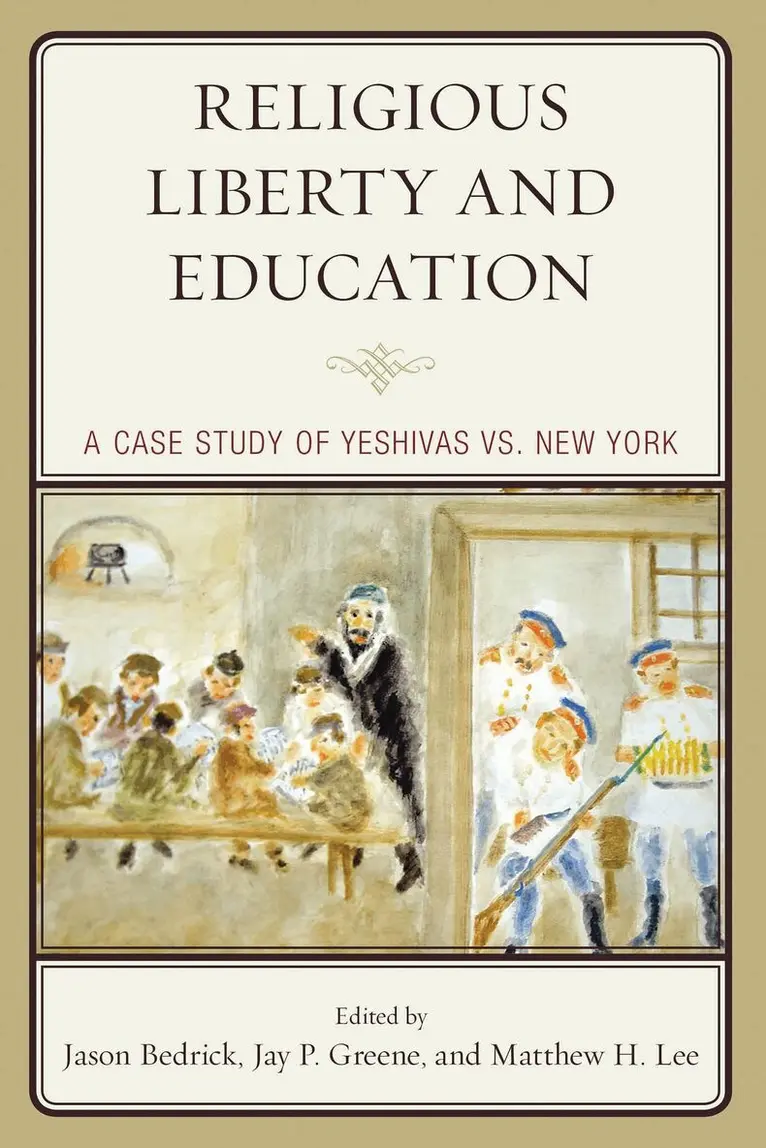
Over the last few years, Orthodox Jewish private schools, also known as yeshivas, have been under fire by a group of activists known as Young Advocates for Fair Education, run by several yeshiva graduates, who have criticized them for providing an inadequate secular education. At the heart of the yeshiva controversy lies two important interests in education: the right of the parent to choose an appropriate education, which may include values-laden religious education, and the right of each child to receive an appropriate education, as guaranteed by the state. These interests raise further questions. If preference is given to the former, how much freedom should be given to a parent in choosing an appropriate education? If the latter, how does the state define what constitutes an appropriate education or measure the extent to which an appropriate education has been achieved? And when can—or must—the state override the wishes of parents? The purpose of this book is to explore these difficult questions.
422 kr
Skickas inom 10-15 vardagar
Over the last few years, Orthodox Jewish private schools, also known as yeshivas, have been under fire by a group of activists known as Young Advocates for Fair Education, run by several yeshiva graduates, who have criticized them for providing an inadequate secular education. At the heart of the yeshiva controversy lies two important interests in education: the right of the parent to choose an appropriate education, which may include values-laden religious education, and the right of each child to receive an appropriate education, as guaranteed by the state. These interests raise further questions. If preference is given to the former, how much freedom should be given to a parent in choosing an appropriate education? If the latter, how does the state define what constitutes an appropriate education or measure the extent to which an appropriate education has been achieved? And when can—or must—the state override the wishes of parents? The purpose of this book is to explore these difficult questions.