Jean-Francois Bayart – författare
Visar alla böcker från författaren Jean-Francois Bayart. Handla med fri frakt och snabb leverans.
23 produkter
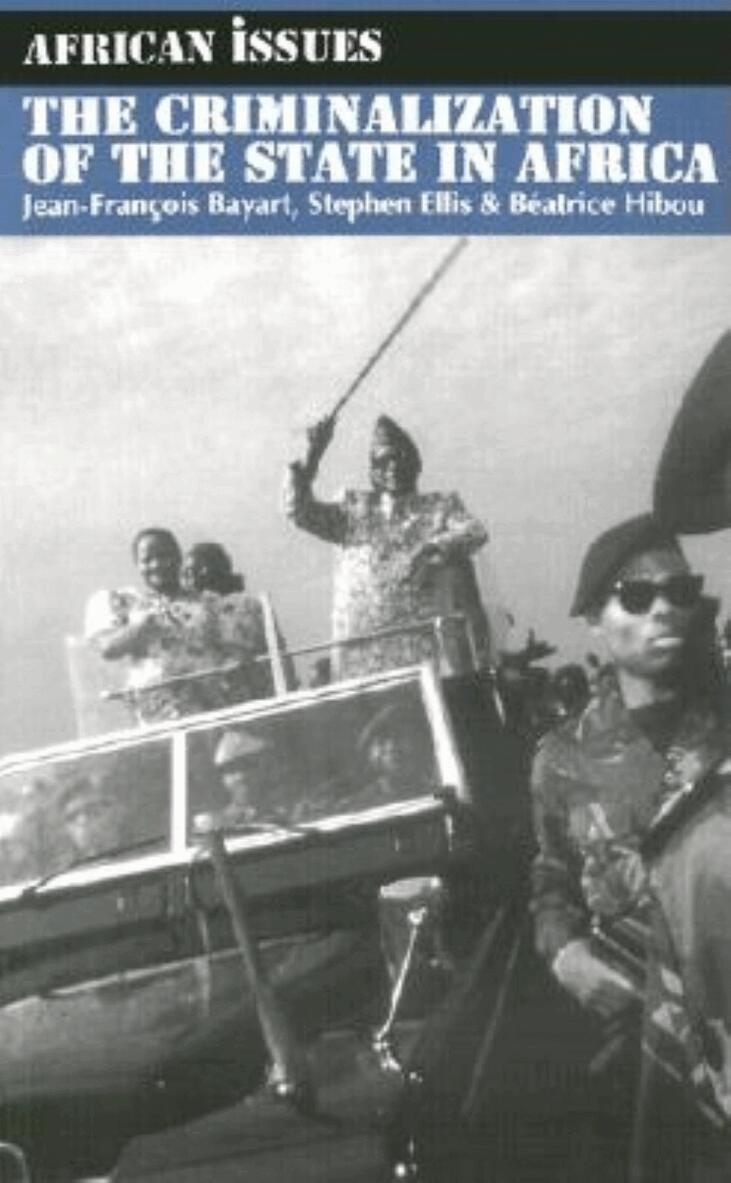
Criminalization of the State in Africa
Av Jean-Francois Bayart, Stephen Ellis m. fl.
Häftad, 2009
386 kr
Lägg i varukorg
The growth of fraud and smuggling on a major scale, the plundering of natural resources, the privatisation of state institutions, the development of an economy of plunder, the growth of private armies—all of these features of public life in Africa suggest that the state itself is becoming a vehicle …
Global Subjects
A Political Critique of Globalization
Inbunden, 2007
914 kr
Lägg i varukorg
Taking the plane or sending an e-mail: globalization has become part of the fabric of our daily lives. And yet it is often seen as an impersonal force that is threatening to destroy identities and undermine nation-states. In this major new book, Jean-Franois Bayart offers a radically new account of …
Global Subjects
A Political Critique of Globalization
Häftad, 2007
356 kr
Lägg i varukorg
Taking the plane or sending an e-mail: globalization has become part of the fabric of our daily lives. And yet it is often seen as an impersonal force that is threatening to destroy identities and undermine nation-states. In this major new book, Jean-Franois Bayart offers a radically new account of …
State in Africa
The Politics of the Belly
Häftad, 2009
356 kr
Lägg i varukorg
The State in Africa is one of the important and compelling texts of comparative politics and historical sociology of the last twenty years. Bayart rejects the assumption of African ‘otherness’ based on stereotyped images of famine, corruption and civil war. Instead he invites the reader to see that …
Criminalization of the State in Africa
Av Jean-Francois Bayart, Stephen Ellis m. fl.
Häftad, 1999
332 kr
Lägg i varukorg
Has Africa moved on from 'classical corruption? What are the political and economic origins of official implication in crime? What are the new frontiers of crime in South Africa?This book examines the growth of fraud and smuggling in African states, the plundering of natural resources, the …
Le gouvernement du monde: Une critique politique de la globalisation
Häftad, 2018
813 kr
Lägg i varukorg
Malheur à la ville dont le prince est un enfant
De Macron à Le Pen ? 2017-2025
E-bok, 2024
305 kr
Lägg i varukorg
Emmanuel Macron est le plus jeune président de la Ve République que la France s’est donné, Gabriel Attal son plus jeune Premier ministre. Mais, Parole d’évangile, « on ne met pas du vin nouveau dans de vieilles outres ». L’Ecclésiaste nous avertit aussi : « Malheur à la ville dont le Prince est un …
Malheur à la ville dont le prince est un enfant
De Macron à Le Pen ? 2017-2025
E-bok, 2024
305 kr
Lägg i varukorg
Emmanuel Macron est le plus jeune président de la Ve République que la France s’est donné, Gabriel Attal son plus jeune Premier ministre. Mais, Parole d’évangile, « on ne met pas du vin nouveau dans de vieilles outres ». L’Ecclésiaste nous avertit aussi : « Malheur à la ville dont le Prince est un …
La cité cultuelle - Rendre à Dieu ce qui revient à César
Av Ariane Zambiras, Jean-Francois Bayart m. fl.
E-bok, 2015
225 kr
Lägg i varukorg
Comment penser le retour en force de la foi sur la place publique, voire des institutions religieuses sur la scène politique ? L’analyse de situations sociales concrètes, contemporaines ou historiques, permet de saisir l’articulation du religieux et du politique au-delà des passions identitaires et …
Les fondamentalistes de l'identité
Laïcisme versus djihadisme
E-bok, 2016
153 kr
Lägg i varukorg
La question identitaire s’est substituée à la question sociale et politique. L’islam s’est mué en nouvel ennemi de l’intérieur, en remplacement du communisme défunt. L’idée laïque, constitutive de la loi de 1905 actant la séparation des cultes et de l’État et la neutralité de celui-ci en matière …
Etat et religion en Afrique
E-bok, 2018
102 kr
Lägg i varukorg
Jamais, peut-être, l’évidence de l’interaction entre la sphère de la religion et celle de la politique n’a été aussi grande en Afrique. « Peut-être », faut-il bien insister car, en la matière, les illusions d’optique de l’actualité et le prisme déformant des émotions ne sont pas bons conseillers. …
Violence et religion en Afrique
E-bok, 2018
173 kr
Lägg i varukorg
Le rapport privilégié que la religion entretiendrait avec la violence est devenu l’un des poncifs du débat public. En proie au djihadisme et au radicalisme politique du christianisme évangélique, l’Afrique semble être un cas d’espèce. Mais cette pseudo-évidence soulève plus de questions qu’elle …
Les études postcoloniales - Un carnaval académique
Un carnaval academique
E-bok, 2010
232 kr
Lägg i varukorg
Les études postcoloniales se sont imposées comme un courant important des études culturelles et de la recherche en sciences sociales de langue anglaise. Il est de plus en plus reproché à l''Université française de les ignorer, alors que des militants et des historiens engagés interprètent la crise …
Le politique par le bas en Afrique noire
Av Comi Toulabor, Achille Mbembe m. fl.
E-bok, 2008
373 kr
Lägg i varukorg
Dès le début des années 1980, les auteurs posaient le problème du politique par le bas en Afrique. Ils soulignaient le rôle des "petits", des "sans importance", des "en bas du bas" dans l''invention de formes originales de l''Etat, alors même que prévalaient au sud du Sahara des situations …
Matière à politique - Le pouvoir, les corps et les choses
Le pouvoir, les corps et les choses
Av Jean-Pierre WARNIER, Jean-Francois Bayart
E-bok, 2004
339 kr
Lägg i varukorg
A l''intersection de l''anthropologie et de la science politique, ce recueil d''essais emmène le lecteur à Java, dans différentes sociétés africaines, gare Saint-Lazare et faubourg Saint-Antoine. Le lecteur tirera du périple une compréhension renouvelée de l''exercice du pouvoir, de la vie de la …
Voyages du développement - Emigration, commerce, exil
Av Fariba Adelkhah, Jean-Francois Bayart
E-bok, 2007
373 kr
Lägg i varukorg
Les migrations, les pratiques du voyage nous rappellent que le monde est en mouvement parce qu''elles constituent elles-mêmes un mouvement social. Il est nécessaire que les problématiques du développement prennent mieux en compte la complexité des mobilités contemporaines, tant ces dernières …
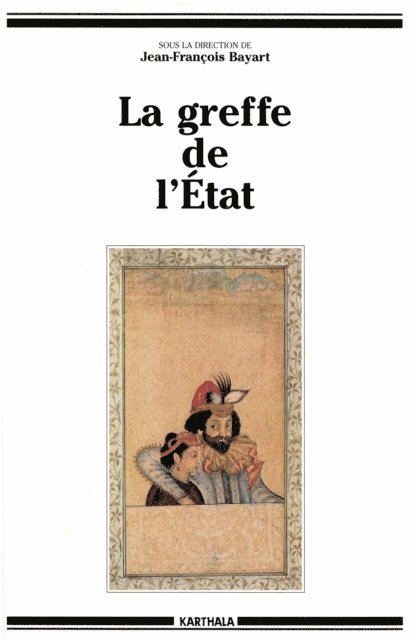
La greffe de l'Etat
Av Jean-Francois Bayart, Collectif
E-bok, 1996
450 kr
Lägg i varukorg
Dans ses institutions contemporaines, l''État est volontiers considéré comme un produit d''importation en Afrique et en Asie. De fait, son édification sous cette forme particulière, est le fruit de l’expansion impérialiste de l’Occident et du processus communément qualifié de « globalisation » ou …
L'Etat de distorsion en Afrique de l'Ouest
Des empires à la nation
Av Giovanni Zanoletti, Ibrahima Puidiougou m. fl.
E-bok, 2019
225 kr
Lägg i varukorg
Les classes politiques africaines ont choisi, au lendemain des indépendances, de reproduire le cadre territorial hérité de la colonisation et ont entériné le principe de l’État-nation. Ce dernier contredit la plupart des ressorts politiques, économiques, culturels des sociétés africaines. Mais il a …
Le politique par le bas en Afrique noire
Av Comi Toulabor, Achille Mbembe m. fl.
E-bok, 2008
381 kr
Lägg i varukorg
Dès le début des années 1980, les auteurs posaient le problème du politique par le bas en Afrique. Ils soulignaient le rôle des "petits", des "sans importance", des "en bas du bas" dans l''invention de formes originales de l''Etat, alors même que prévalaient au sud du Sahara des situations …