Jean-Pierre Chauffour - Böcker
Visar alla böcker från författaren Jean-Pierre Chauffour. Handla med fri frakt och snabb leverans.
5 produkter
5 produkter
497 kr
Skickas inom 10-15 vardagar
Economists have repeatedly warned against them, NGOs have fought them, and some governments have begrudgingly (at least in appearance) signed them. Yet, in the last twenty years the growth in number of preferential trade agreements (PTAs) has been unabated. Even more strikingly, their scope has broadened while their number was increasing. Deep integration provisions in PTAs have now become ubiquitous. Gaining market access or preserving existing preferences has remained an important motivation for acceding to PTAs. But with the liberalization of trade around the world and the related diminishing size of preferential rents, the growing success of PTAs cannot be only explained by traditional market access motives (even factoring for the possible substitution of tariff for other less transparent forms of protection). Countries are looking beyond market access in PTAs. They are interested in a host of objectives, including importing higher policy standards, strengthening regional policy coordination, locking-in domestic reforms, and even addressing foreign policy issues. This handbook on PTA policies for development offers an introduction into the world of modern preferential trade agreements. It goes beyond the traditional paradigm of trade creation versus trade diversion to address the economic and legal aspects of the regulatory policies that are contained in today‘s PTAs. The book maps the landscape of PTAs, summarizes the theoretical arguments, political economy, and development dimensions of PTAs, and presents the current practice in the main policy areas typically covered in PTAs (from agriculture policy, rules of origin, customs unions, trade remedies, product standards, technical barriers, to behind the border issues related to investment, trade facilitation, competition, government procurement, intellectual property, labor rights, human rights, environment, migration, and dispute resolution). These are also usually the policies driven by powerful trading blocs as they strive to influence the evolution of the global trading system.
447 kr
Skickas inom 10-15 vardagar
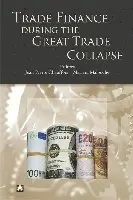
On September 15, 2008, Lehman Brothers, the fourth largest U.S. investment bank filed for bankruptcy. Global credit markets tightened. Spreads skyrocketed. International trade plummeted by double-digits. Banks were reportedly unable to meet the demand from their customers to finance their international trade operations, leaving a trade finance “gap” estimated at around US$25 billion. Governments and international institutions were encouraged to intervene based on the information that some 80-90 percent of world trade relies on some form of trade finance. As the recovery unfolds, time has come to provide policy makers and analysts with a comprehensive assessment of the role of trade finance in the 2008-09 “great” trade collapse and the subsequent role of governments and institutions to help restore trade finance markets. After reviewing the underpinning of trade finance and inter-firm trade credit, ""Trade Finance during the Great Trade Collapse: Role, Response, and Results"" aims to answer the following questions: Was the availability and cost of trade finance a major constraint for trade during the 2008-2009 global economic crisis? What are the underpinnings and limits for national and international public interventions in support of trade finance markets in times of crisis? How effective were the public and private sector mechanisms put in place during the crisis to support trade and trade finance? And to what extent have the new banking regulations under Basel II and Basel III exacerbated the trade finance shortfall during the crisis and in the post-crisis environment, respectively? The book offers insights for policy makers in developed and developing countries and international organizations on the challenges confronting trade finance in times of crisis, especially in low-income countries and for small-and-medium size traders. Trade Finance during the Great Trade Collapse: Role, Response, and Results is the product of a fruitful collaboration during the crisis and includes mainly original contributions from the World Bank Group, international financial partners, private banks, and academia.
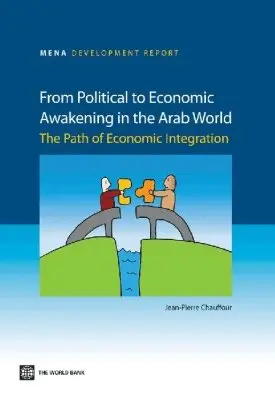
From Political to Economic Awakening in the Arab World
The Path of Economic Integration
Häftad, Engelska, 2012
447 kr
Skickas inom 10-15 vardagar
The popular grievances that have fuelled the Arab Spring since 2010 demonstrate that past development paradigms have failed to deliver the inclusive and sustainable growth expected by Arab populations. Countries in the Middle East and North Africa (MENA) region have failed to develop a strong private sector that is linked with global markets, survives without state assistance, and generates productive employment for young people. One key symptom of this failure is that, with the exception of the petroleum sector, MENA remains the least trade-integrated region in the world. The creation of the Deauville Partnership, launched by the Group of Eight (G8) in Deauville, France, in May 2011, was thus strategic and timely.At the request of the Deauville Partnership, From Political to Economic Awakening in the Arab World provides an analytical framework for increasing trade and foreign direct investment (FDI) for The Arab Republic of Egypt, Jordan, Libya, Morocco, and Tunisia (the 'Partnership Countries'). Increased trade and FDI is a key means by which Partnership countries can achieve a path of sustainable growth that reduces youth unemployment. Moreover, trade and investment can also show short-term results. The G8 countries, Turkey, the Gulf states, and other Deauville Partners can help the new Arab democracies achieve their objectives in two main ways: by effectively expanding market opportunities and by supporting domestic regulatory reforms. To start implementing a long-term vision of increased trade and investment integration, based on an integrated economic space in the Mediterranean basin, the Deauville Partnership could focus on these priority areas: helping Partnership Countries adapt to a fast-changing trade, FDI, and jobs landscape; improving market access opportunities and market regulations; fostering competitiveness, diversification, and employment; facilitating trade and mobilising trade finance and diaspora resources; and promoting inclusiveness, equity, and sustainability of the structural transformation brought about by the process of integration. The success of the Arab political awakening will greatly depend on the emergence of such an economic awakening that can generate quality employment for the millions of young Arab men and women who seek jobs and decent lives.
480 kr
Skickas inom 10-15 vardagar
Morocco 2040: Emerging by Investing in Intangible Capital documents the major economic and social strides made by Morocco over the past 15 years and analyzes the policies and political economy conditions for accelerating the pace of economic catch-up by 2040.
Le Maroc à L'horizon 2040
Investir Dans Le Capital Immatériel Pour Accélérer L?émergence économique
Häftad, Franska, 2017
494 kr
Skickas inom 3-6 vardagar
Morocco 2040 documents the major economic and social strides made by Morocco in recent decades and analyzes the obstacles that it must overcome in order to ensure that the economic catch-up process underway in the country can be accelerated and will pave the way for sustainable economic convergence.