Jean Starobinski - Böcker
Visar alla böcker från författaren Jean Starobinski. Handla med fri frakt och snabb leverans.
6 produkter
6 produkter
517 kr
Skickas inom 7-10 vardagar
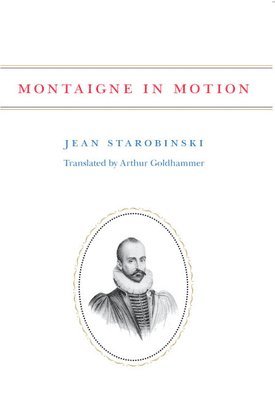
Educated in the humanities and trained in psychiatry, Jean Starobinski is a central figure in the Geneva School of criticism. His classic work, "Montaigne in Motion", is a subtly conceived and elegantly written study of the "Essais of Montaigne", whose deceptively plainspoken meditations have entranced readers and stimulated philosophers since their first publication in 1580. Here Starobinski offers a decidedly postmodern reading of Montaigne. In chapters dealing with the themes of public and private life, friendship, death, the body, and love, Starobinski reveals much that will remind us that Montaigne's thought is as apropos to our time as it was to his own.
572 kr
Skickas inom 7-10 vardagar
In 1990 the Department of Graphic Arts at the Louvre made their holdings available to guest curatos for a programme called "Parti Pris" or "Taking Sides". Jean Starobinski, literary critic and intellectual historian from the University of Geneva, was selected as the third curator in the programme. In his exhibition and accompanying essay, Starobinski explores the theme of largesse in its broadest sense. Arguing that gift giving and receiving are fundamental human gestures, he examines graphic and textual representations from the offering of the apple to Eve to Salome's gift of the head of John the Baptist, from the giving of lawsto the gift of death.
455 kr
Skickas inom 7-10 vardagar
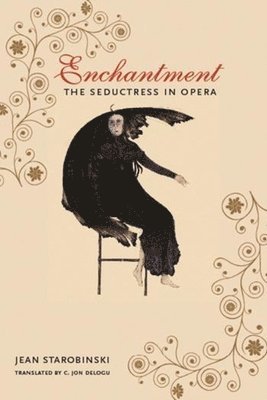
We often look to the theater for spectacle and wonder, but in opera, we find pure enchantment. What is it about the marriage of music and the stage that fills us with such bewilderment and passion? How does the sensual space of opera transport us into the realm of dream? Jean Starobinski considers the allure of several seducers and seductresses from nineteenth-century opera-Monteverdi's Poppea, Handel's Alcina, and Massenet's Manon, among others-and how their stories are woven into the fabric of Western culture. A talented storyteller and renowned critic of literature and music, Starobinski moves from musical analysis and textual exegesis to an investigation of the political, social, and aesthetic scene of Europe at the time. He traces the elements of theater, poetry, painting, sculpture, dance, and music as they occur in operatic performance, and shows how opera's use of narrative genres, especially the fairy tale, in turn influenced many important short stories, novels, and other works. Nineteenth-century romantics were drawn to opera because of their desire to revive a religious vision of the world that the Enlightenment suppressed.Starobinski revisits the experiences of Rousseau, Stendhal, Hoffmann, Balzac, and Nietzsche, major writers who fell for opera's portrayal of "heaven," the loss of one's love, and the task of the artist, whether composer or performer. Starobinski's critical breadth and depth, as well as his eclectic taste and keen observation, echo such great comparative critics as Erich Auerbach, Rene Wellek, George Steiner, Harold Bloom, and Angus Fletcher. This spellbinding book will enchant not only fans of the opera, but also those who wish to understand the form's enduring heritage in Western culture.
339 kr
Skickas inom 7-10 vardagar
260 kr
Skickas inom 7-10 vardagar
147 kr
Tillfälligt slut
Ersatz Essay 003 Melankolin var den franske diktaren Charles Baudelaires intima följeslagare. Med skiftande intensitet är den ständigt närvarande i Ondskans blommor och kan uppfattas som diktverkets centrala motiv. Starobinskis tolkning förmedlar inte bara flera insikter i melankolins historia utan visar också hur konsten att läsa mynnar i konsten att skriva. Efteressay av Anders Olsson Född 1920 i Genève (Schweiz), där han studerade först klassiska språk, sedan medicin. Han har undervisat i fransk litteratur, idéhistoria och medicinens historia, och hans böcker har översatts till ett flertal språk. Hans studier i melankoli har tidigare resulterat i boken Trois Fureurs (Tre raserier, 1974). Ledamot i Académie des Sciences Morales et Politiques och Institut de France.