Jeffrey D. Burson - Böcker
Visar alla böcker från författaren Jeffrey D. Burson. Handla med fri frakt och snabb leverans.
5 produkter
5 produkter
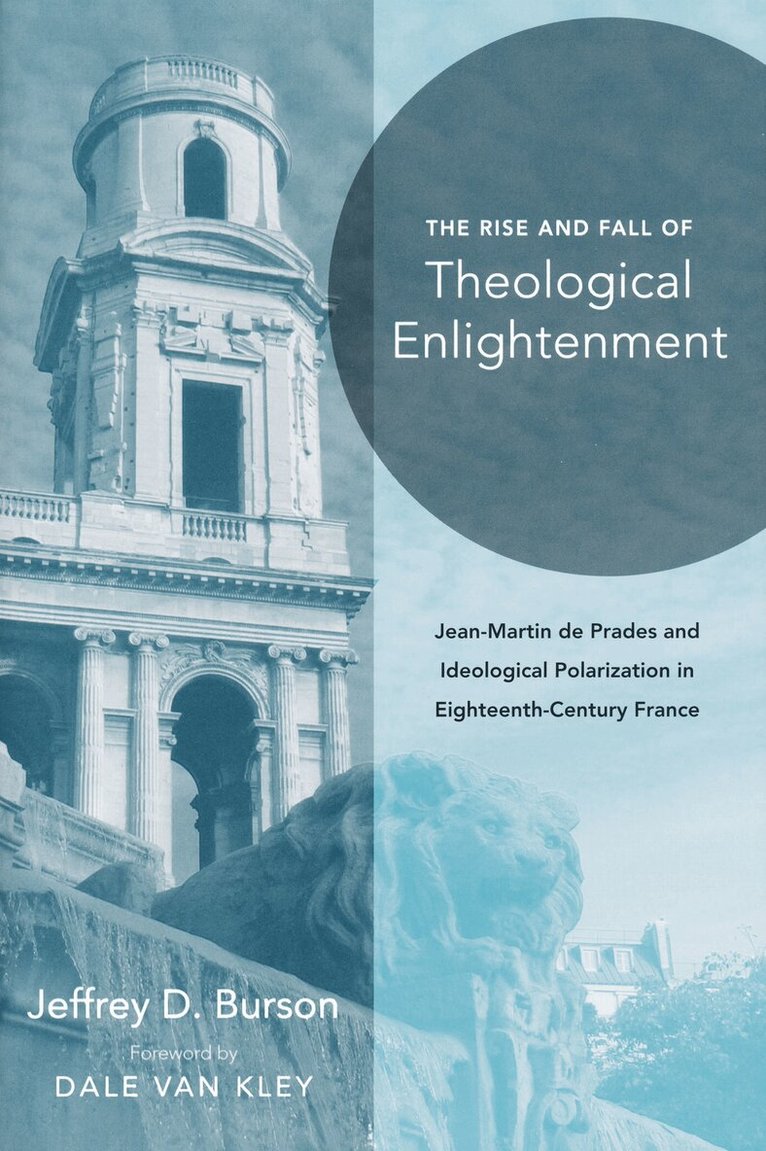
Rise and Fall of Theological Enlightenment
Jean-Martin De Prades and Ideological Polarization in Eighteenth-Century France
Inbunden, Engelska, 2010
594 kr
Skickas inom 10-15 vardagar
In The Rise and Fall of Theological Enlightenment, Jeffrey D. Burson analyzes the history of the French Enlightenment and its relationship to the French Revolution by casting it as a diverse constellation of Theological Enlightenment discourses, compromised between about 1730 and 1762 by high-stakes cultural and political controversies involving the royal court, the government, and the Catholic Church. Burson places the Abbé Jean-Martin de Prades at the center of the storm. In 1749, Prades was working on his doctorate in theology at the University of Paris. An ambitious young theologian, Prades, like his teachers at the Sorbonne and like many lay and clerical apologists in mid-eighteenth-century France, had been deeply inspired by the spirit of the Enlightenment. Burson reinterprets the Jesuit Enlightenment and its influence on French society, arguing that Jesuits had pioneered ways of synthesizing Locke, Malebranche, and Newton in light of the expansion of the public sphere. Hoping to defend Catholic theology against the Radical Enlightenment by adapting these Jesuit Enlightenment discourses with natural history and Enlightenment theological debates, Prades inadvertently sparked a public scandal that galvanized members of the royal court and the Parlement of Paris, Jansenists, Jesuits, and philosophes, alike—all of whom refashioned the person and work of Prades to suit their own ends. Ultimately, the controversy polarized the cultural politics of pre-Revolutionary France into two camps, that of a self-consciously secular Enlightenment and that of a staunchly opposed Counter-Enlightenment. Prades's history provides Burson with a lens through which to reevaluate the intersections of theology and Enlightenment philosophy, of French politics and the French Catholic church, and of conservatives, moderates, and radicals on all sides in order to provide us with a newly-capacious Enlightenment historiography.
474 kr
Skickas inom 10-15 vardagar
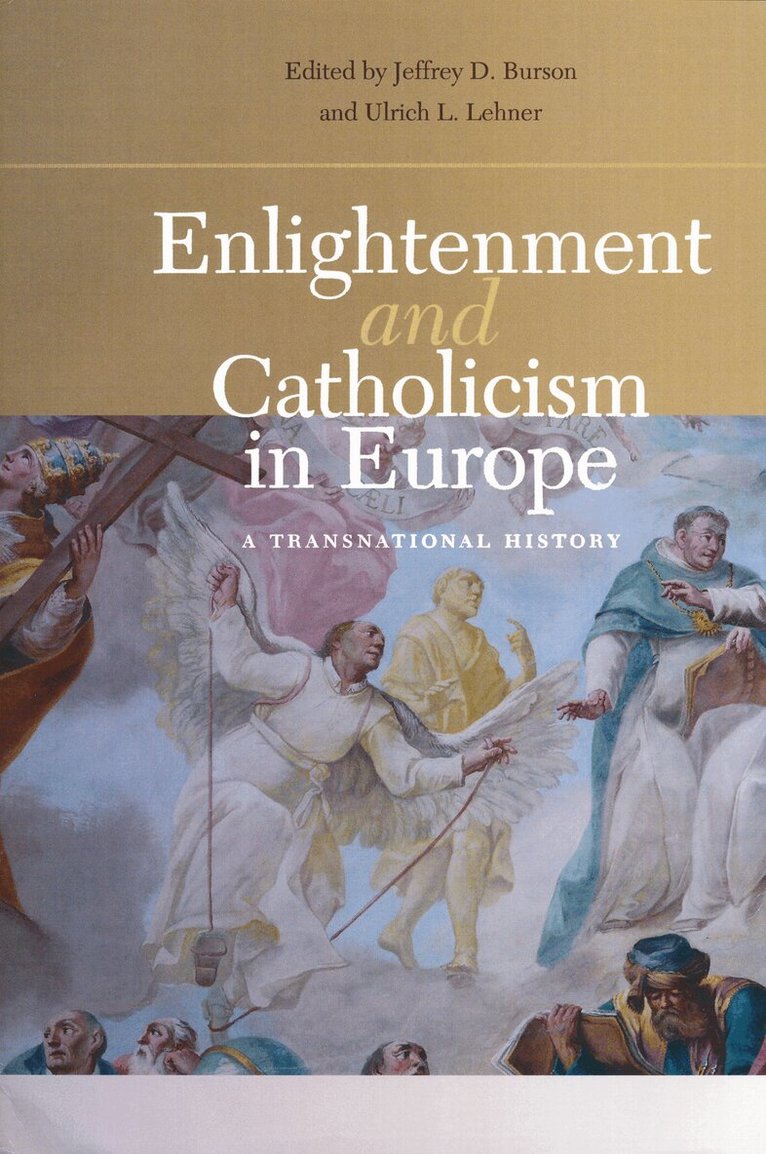
In recent years, historians have rediscovered the religious dimensions of the Enlightenment. This volume offers a thorough reappraisal of the so-called "Catholic Enlightenment" as a transnational Enlightenment movement. This Catholic Enlightenment was at once ultramontane and conciliarist, sometimes moderate but often surprisingly radical, with participants active throughout Europe in universities, seminaries, salons, and the periodical press.In Enlightenment and Catholicism in Europe: A Transnational History, the contributors, primarily European scholars, provide intellectual biographies of twenty Catholic Enlightenment figures across eighteenth-century Europe, many of them little known in English-language scholarship on the Enlightenment and pre-revolutionary eras. These figures represent not only familiar French intellectuals of the Catholic Enlightenment but also Iberian, Italian, English, Polish, and German thinkers. The essays focus on the intellectual and cultural factors influencing the lives and works of their subjects, revealing the often global networks of intellectual sociability and reading that united them both to the Catholic Enlightenment and to eighteenth-century policies and projects. The volume, whose purpose is to advance the understanding of a transnational "Catholic Enlightenment," will be a reliable reference for historians, theologians, and scholars working in religious studies.
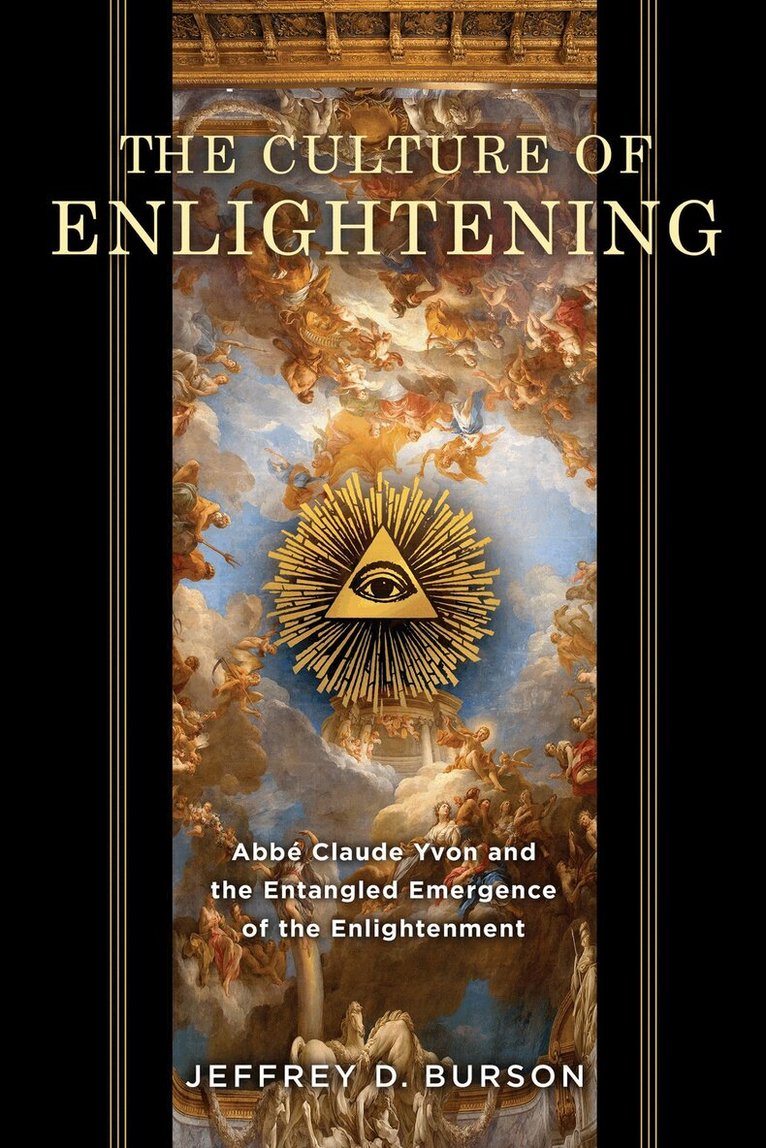
Culture of Enlightening
Abbé Claude Yvon and the Entangled Emergence of the Enlightenment
Inbunden, Engelska, 2019
807 kr
Skickas inom 10-15 vardagar
Recent scholarly and popular attempts to define the Enlightenment, account for its diversity, and evaluate its historical significance suffer from a surprising lack of consensus at a time when the social and political challenges of today cry out for a more comprehensive and serviceable understanding of its importance. This book argues that regnant notions of the Enlightenment, the Radical Enlightenment, and the multitude of regional and religious enlightenments proposed by scholars all share an entangled intellectual genealogy rooted in a broader revolutionary "culture of enlightening" that took shape over the long-arc of intellectual history from the waning of the sixteenth-century Reformations to the dawn of the Atlantic Revolutionary era. Generated in competition for a changing readership and forged in dialog and conflict, dynamic and diverse notions of what it meant to be enlightened constituted a broader culture of enlightening from which the more familiar strains of the Enlightenment emerged, often ironically and accidentally, from originally religious impulses and theological questioning.By adapting, for the first time, methodological insights from the scholarship of historical entanglement (l'histoire croisée) to the study of the Enlightenment, this book provides a new interpretation of the European republic of letters from the late 1600s through the 1700s by focusing on the lived experience of the long-neglected Catholic theologian, historian, and contributor to Diderot's Encyclopédie, Abbé Claude Yvon. The ambivalent historical memory of Yvon, as well as the eclectic and global array of his sources and endeavors, Burson argues, can serve as a gauge for evaluating historical transformations in the surprisingly diverse ways in which eighteenth-century individuals spoke about enlightening human reason, religion, and society. Ultimately, Burson provocatively claims that even the most radical fruits of the Enlightenment can be understood as the unintended offspring of a revolution in theology and the cultural history of religious experience.
1 297 kr
Skickas inom 7-10 vardagar
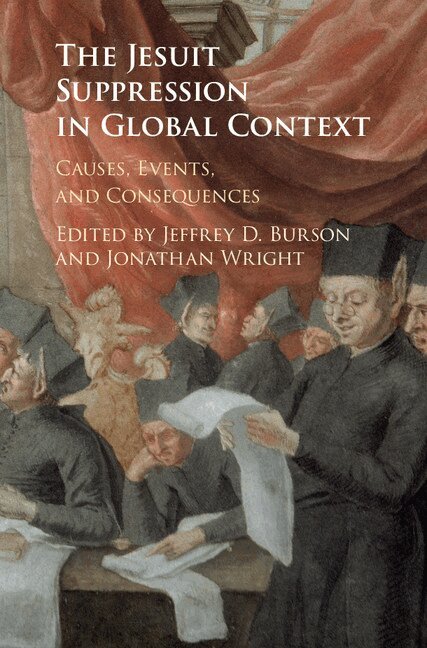
In 1773, Pope Clement XIV suppressed the Society of Jesus, a dramatic, puzzling act that had a profound impact. This volume traces the causes of the attack on the Jesuits, the national expulsions that preceded universal suppression, and the consequences of these extraordinary developments. The Suppression occurred at a unique historical juncture, at the high-water mark of the Enlightenment and on the cusp of global imperial crises and the Age of Revolution. After more than two centuries, answers to how and why it took place remain unclear. A diverse selection of essays - covering France, Spain, Portugal, Italy, the Netherlands, China, Eastern Europe, and the Americas - reflects the complex international elements of the Jesuit Suppression. The contributors shed new light on its significance by drawing on the latest research. Essential reading on a crucial yet previously neglected topic, this collection will interest scholars of eighteenth-century religious, intellectual, cultural, and political history.
1 771 kr
Skickas inom 7-10 vardagar
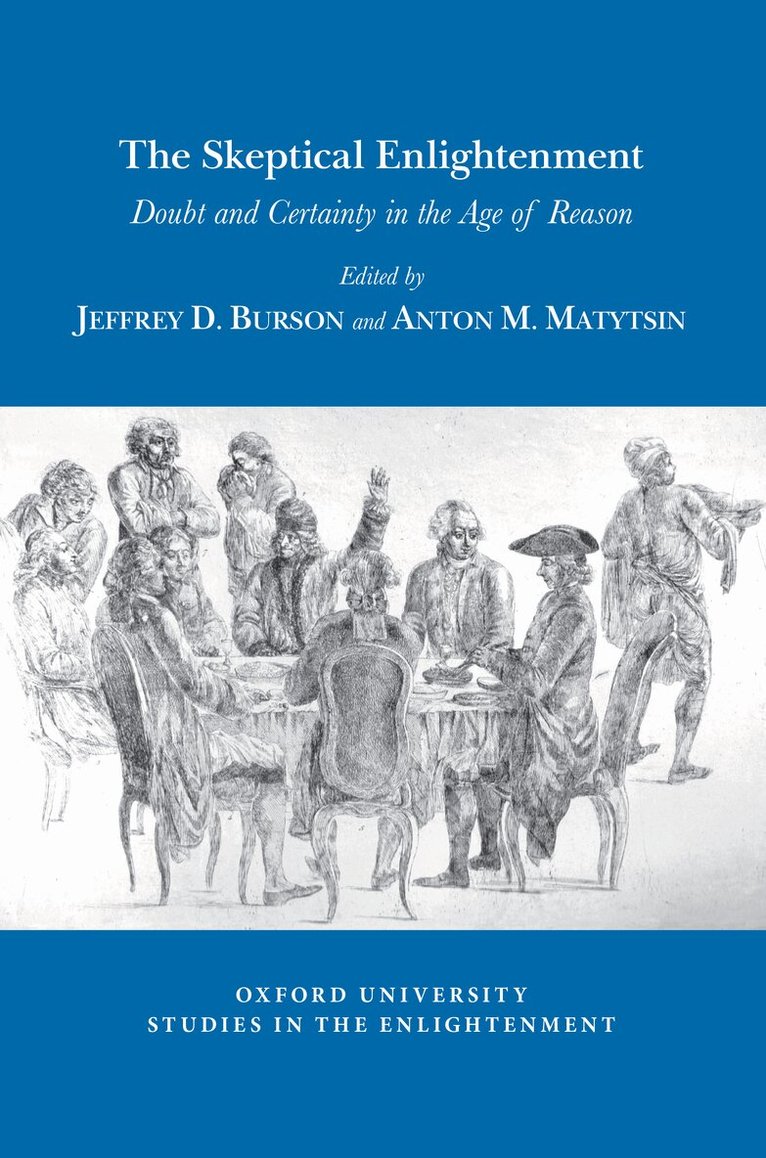
Althoughmany historical narratives often describe the eighteenth century as an unalloyed‘Age of Reason’, Enlightenment thinkers continued to grapple with thechallenges posed by the revival and spread of philosophical skepticism. Theimperative to overcome doubt and uncertainty informed some of the mostinnovative characteristics of eighteenth-century intellectual culture,including not only debates about epistemology and metaphysics but also mattersof jurisprudence, theology, history, moral philosophy, and politics. Thinkersof this period debated about, established, and productively worked for progresswithin the parameters of the increasingly circumscribed boundaries of humanreason. No longer considered innate and consistently perfect, reason insteadbecame conceived as a faculty that was inherently fallible, limited by personalexperiences, and in need of improvement throughout the course of anyindividual’s life.In its depictionof a complicated, variegated, and diverse Enlightenment culture, this volume examines the process by whichphilosophical skepticism was challenged and gradually tamed to bring about ananxious confidence in the powers of human understanding. The variouscontributions collectively demonstrate that philosophical skepticism, andnot simply unshakable confidence in the powers of reason or the optimisticassumption about inevitable human improvement, was, in fact, the crucible ofthe Enlightenment process itself.