Anton M. Matytsin - Böcker
Visar alla böcker från författaren Anton M. Matytsin. Handla med fri frakt och snabb leverans.
3 produkter
3 produkter
737 kr
Tillfälligt slut
The ancient Greek philosophy of Pyrrhonian skepticism spread across a wide spectrum of disciplines in the 1600s, casting a shadow over the European learned world. The early modern skeptics expressed doubt concerning the existence of an objective reality independent of human perception. They also questioned long-standing philosophical assumptions and, at times, undermined the foundations of political, moral, and religious authorities. How did eighteenth-century scholars overcome this skeptical crisis of confidence to usher in the so-called Age of Reason? In The Specter of Skepticism in the Age of Enlightenment, Anton Matytsin describes how skeptical rhetoric forced philosophers to formulate the principles and assumptions that they found to be certain or, at the very least, highly probable. In attempting to answer the deep challenge of philosophical skepticism, these thinkers explicitly articulated the rules for attaining true and certain knowledge and defined the boundaries beyond which human understanding could not venture.Matytsin explains the dialectical outcome of the philosophical disputes between the skeptics and their various opponents in France, the Dutch Republic, Switzerland, and Prussia. He shows that these exchanges transformed skepticism by mitigating its arguments while broadening the learned world's confidence in the capacities of reason by moderating its aspirations. Ultimately, the debates about the powers and limits of human understanding led to the making of a new conception of rationality that privileged practicable reason over speculative reason. Matytsin also complicates common narratives about the Enlightenment by demonstrating that most of the thinkers who defended reason from skeptical critiques were religiously devout. By attempting either to preserve or to reconstruct the foundations of their worldviews and systems of thought, they became important agents of intellectual change and formulated new criteria of doubt and certainty. This complex and engaging book offers a powerful new explanation of how Enlightenment thinkers came to understand the purposes and the boundaries of rational inquiry.
615 kr
Tillfälligt slut
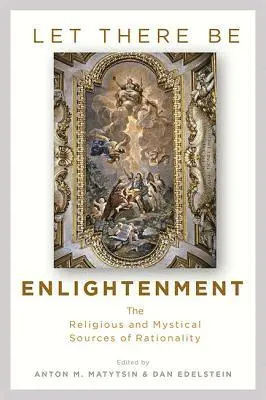
Challenging the triumphalist narrative of Enlightenment secularism.According to most scholars, the Enlightenment was a rational awakening, a radical break from a past dominated by religion and superstition. But in Let There Be Enlightenment, Anton M. Matytsin, Dan Edelstein, and the contributors they have assembled deftly undermine this simplistic narrative. Emphasizing the ways in which religious beliefs and motivations shaped philosophical perspectives, essays in this book highlight figures and topics often overlooked in standard genealogies of the Enlightenment. The volume underscores the prominent role that religious discourses continued to play in major aspects of seventeenth- and eighteenth-century thought. The essays probe a wide range of subjects, from reformer Jan Amos Comenius’s quest for universal enlightenment to the changing meanings of the light metaphor, Quaker influences on Baruch Spinoza’s theology, and the unexpected persistence of Aristotle in the Enlightenment. Exploring the emergence of historical consciousness among Enlightenment thinkers while examining their repeated insistence on living in an enlightened age, the collection also investigates the origins and the long-term dynamics of the relationship between faith and reason. Providing an overview of the rich spectrum of eighteenth-century culture, the authors demonstrate that religion was central to Enlightenment thought. The term “enlightenment” itself had a deeply religious connotation. Rather than revisiting the celebrated breaks between the eighteenth century and the period that preceded it, Let There Be Enlightenment reveals the unacknowledged continuities that connect the Enlightenment to its various antecedents.Contributors: Philippe Buc, William J. Bulman, Jeffrey D. Burson, Charly Coleman, Dan Edelstein, Matthew T. Gaetano, Howard Hotson, Anton M. Matytsin, Darrin M. McMahon, James Schmidt, Céline Spector, Jo Van Cauter
1 771 kr
Skickas inom 7-10 vardagar
Althoughmany historical narratives often describe the eighteenth century as an unalloyed‘Age of Reason’, Enlightenment thinkers continued to grapple with thechallenges posed by the revival and spread of philosophical skepticism. Theimperative to overcome doubt and uncertainty informed some of the mostinnovative characteristics of eighteenth-century intellectual culture,including not only debates about epistemology and metaphysics but also mattersof jurisprudence, theology, history, moral philosophy, and politics. Thinkersof this period debated about, established, and productively worked for progresswithin the parameters of the increasingly circumscribed boundaries of humanreason. No longer considered innate and consistently perfect, reason insteadbecame conceived as a faculty that was inherently fallible, limited by personalexperiences, and in need of improvement throughout the course of anyindividual’s life.In its depictionof a complicated, variegated, and diverse Enlightenment culture, this volume examines the process by whichphilosophical skepticism was challenged and gradually tamed to bring about ananxious confidence in the powers of human understanding. The variouscontributions collectively demonstrate that philosophical skepticism, andnot simply unshakable confidence in the powers of reason or the optimisticassumption about inevitable human improvement, was, in fact, the crucible ofthe Enlightenment process itself.