Dan Edelstein - Böcker
Visar alla böcker från författaren Dan Edelstein. Handla med fri frakt och snabb leverans.
16 produkter
16 produkter
291 kr
Skickas inom 7-10 vardagar
How an event once considered the greatest of all political dangers came to be seen as a solution to all social problemsPolitical thinkers from Plato to John Adams saw revolutions as a grave threat to society and advocated for a constitution that prevented them by balancing social interests and forms of government. The Revolution to Come traces how evolving conceptions of history ushered in a faith in the power of revolution to create more just and reasonable societies.Taking readers from Greek antiquity to Leninist Russia, Dan Edelstein describes how classical philosophers viewed history as chaotic and directionless, and sought to keep historical change—especially revolutions—at bay. This conception prevailed until the eighteenth century, when Enlightenment thinkers conceived of history as a form of progress and of revolution as its catalyst. These ideas were put to the test during the French Revolution and came to define revolutions well into the twentieth century. Edelstein demonstrates how the coming of the revolution leaves societies divided over its goals, giving rise to new forms of violence in which rivals are targeted as counterrevolutionaries.A panoramic work of intellectual history, The Revolution to Come challenges us to reflect on the aims and consequences of revolution and to balance the value of stability over the hope for change in our own moment of fear and upheaval.
Terror of Natural Right
Republicanism, the Cult of Nature, and the French Revolution
Inbunden, Engelska, 2009
461 kr
Skickas inom 7-10 vardagar
Natural right - the idea that there is a collection of laws and rights based not on custom or belief but that are 'natural' in origin - is typically associated with liberal politics and freedom. "In The Terror of Natural Right", Dan Edelstein argues that the revolutionaries of eighteenth-century France used the natural right concept of the 'enemy of the human race' - an individual who has transgressed the laws of nature and must be executed without judicial formalities - to authorize three-quarters of the deaths during the Terror. Edelstein further contends that the Jacobins shared a political philosophy that he calls 'natural republicanism,' which assumed that the natural state of society was a republic and that natural right provided its only acceptable laws. Ultimately, he proves that what we call the Terror was in fact only one facet of the republican theory that prevailed from Louis's trial until the fall of Robespierre. A highly original work of historical analysis, political theory, literary criticism, and intellectual history, "The Terror of Natural Right" challenges prevailing assumptions about the Terror to offer a new perspective on the Revolutionary period.
Terror of Natural Right – Republicanism, the Cult of Nature, and the French Revolution
Häftad, Engelska, 2010
291 kr
Skickas inom 7-10 vardagar
Natural right - the idea that there is a collection of laws and rights based not on custom or belief but that are 'natural' in origin - is typically associated with liberal politics and freedom. "In The Terror of Natural Right", Dan Edelstein argues that the revolutionaries of eighteenth-century France used the natural right concept of the 'enemy of the human race' - an individual who has transgressed the laws of nature and must be executed without judicial formalities - to authorize three-quarters of the deaths during the Terror. Edelstein further contends that the Jacobins shared a political philosophy that he calls 'natural republicanism,' which assumed that the natural state of society was a republic and that natural right provided its only acceptable laws. Ultimately, he proves that what we call the Terror was in fact only one facet of the republican theory that prevailed from Louis's trial until the fall of Robespierre. A highly original work of historical analysis, political theory, literary criticism, and intellectual history, "The Terror of Natural Right" challenges prevailing assumptions about the Terror to offer a new perspective on the Revolutionary period.
904 kr
Skickas inom 7-10 vardagar
What was the Enlightenment? Though many scholars have attempted to solve this riddle, none has made as much use of contemporary answers as Dan Edelstein does here. In seeking to recover where, when, and how the concept of 'the Enlightenment' first emerged, Edelstein departs from genealogies that trace it back to political and philosophical developments in England and the Dutch Republic. According to Edelstein, by the 1720s scholars and authors in France were already employing a constellation of terms - such as l'esprit philosophique - to describe what we would today call the Enlightenment. But Edelstein argues that it was within the French Academies, and in the context of the "Quarrel of the Ancients and the Moderns", that the key definition, concepts, and historical narratives of the Enlightenment were crafted. A necessary corrective to many of our contemporary ideas about the Enlightenment, Edelstein's book turns conventional thinking about the period on its head. Concise, clear, and contrarian, "The Enlightenment" will be welcomed by all teachers and students of the period.
279 kr
Skickas inom 7-10 vardagar
What was the Enlightenment? Though many scholars have attempted to solve this riddle, none has made as much use of contemporary answers as Dan Edelstein does here. In seeking to recover where, when, and how the concept of 'the Enlightenment' first emerged, Edelstein departs from genealogies that trace it back to political and philosophical developments in England and the Dutch Republic. According to Edelstein, by the 1720s scholars and authors in France were already employing a constellation of terms - such as l'esprit philosophique - to describe what we would today call the Enlightenment. But Edelstein argues that it was within the French Academies, and in the context of the "Quarrel of the Ancients and the Moderns", that the key definition, concepts, and historical narratives of the Enlightenment were crafted. A necessary corrective to many of our contemporary ideas about the Enlightenment, Edelstein's book turns conventional thinking about the period on its head. Concise, clear, and contrarian, "The Enlightenment" will be welcomed by all teachers and students of the period.
515 kr
Skickas inom 11-20 vardagar
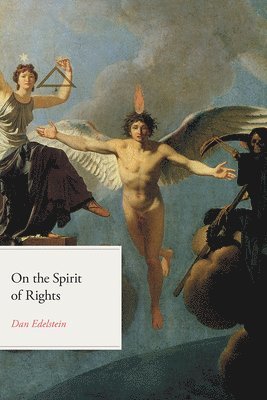
By the end of the eighteenth century, politicians in America and France were invoking the natural rights of man to wrest sovereignty away from kings and lay down universal basic entitlements. Exactly how and when did “rights” come to justify such measures? In On the Spirit of Rights, Dan Edelstein answers this question by examining the complex genealogy of the rights that regimes enshrined in the American and French Revolutions. With a lively attention to detail, he surveys a sprawling series of debates among rulers, jurists, philosophers, political reformers, writers, and others who were all engaged in laying the groundwork for our contemporary systems of constitutional governance. Every seemingly new claim about rights turns out to be a variation on a theme, as late medieval notions were subtly repeated and refined to yield the talk of “rights” we recognize today. From the Wars of Religion to the French Declaration of the Rights of Man and of the Citizen to the 1948 Universal Declaration of Human Rights, On the Spirit of Rights is a sweeping tour through centuries of European intellectual history and an essential guide to our ways of thinking about human rights today.
267 kr
Skickas inom 7-10 vardagar
By the end of the eighteenth century, politicians in America and France were invoking the natural rights of man to wrest sovereignty away from kings and lay down universal basic entitlements. Exactly how and when did “rights” come to justify such measures? In On the Spirit of Rights, Dan Edelstein answers this question by examining the complex genealogy of the rights that regimes enshrined in the American and French Revolutions. With a lively attention to detail, he surveys a sprawling series of debates among rulers, jurists, philosophers, political reformers, writers, and others who were all engaged in laying the groundwork for our contemporary systems of constitutional governance. Every seemingly new claim about rights turns out to be a variation on a theme, as late medieval notions were subtly repeated and refined to yield the talk of “rights” we recognize today. From the Wars of Religion to the French Declaration of the Rights of Man and of the Citizen to the 1948 Universal Declaration of Human Rights, On the Spirit of Rights is a sweeping tour through centuries of European intellectual history and an essential guide to our ways of thinking about human rights today.
259 kr
Kommande
How an event once considered the greatest of all political dangers came to be seen as a solution to all social problemsPolitical thinkers from Plato to John Adams saw revolutions as a grave threat to society and advocated for a constitution that prevented them by balancing social interests and forms of government. The Revolution to Come traces how evolving conceptions of history ushered in a faith in the power of revolution to create more just and reasonable societies.Taking readers from Greek antiquity to Leninist Russia, Dan Edelstein describes how classical philosophers viewed history as chaotic and directionless, and sought to keep historical change—especially revolutions—at bay. This conception prevailed until the eighteenth century, when Enlightenment thinkers conceived of history as a form of progress and of revolution as its catalyst. These ideas were put to the test during the French Revolution and came to define revolutions well into the twentieth century. Edelstein demonstrates how the coming of the revolution leaves societies divided over its goals, giving rise to new forms of violence in which rivals are targeted as counterrevolutionaries.A panoramic work of intellectual history, The Revolution to Come challenges us to reflect on the aims and consequences of revolution and to balance the value of stability over the hope for change in our own moment of fear and upheaval.
1 771 kr
Skickas inom 7-10 vardagar
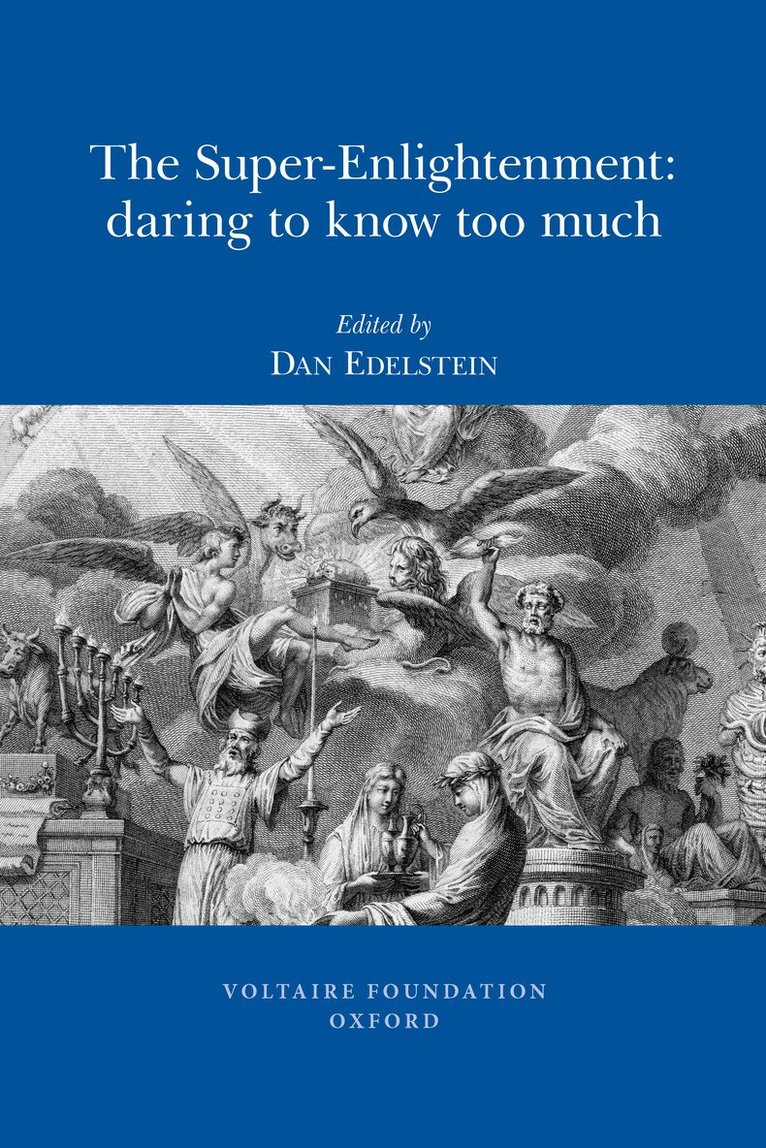
Historians of eighteenth-century thought have implied a clear distinction between mystical or occult writing, often termed ‘illuminist’, and better-known forms of Enlightenment thinking and culture. But where are the boundaries of ‘enlightened’ human understanding?This is the question posed by contributors to this volume, who put forward a completely new way of configuring these seemingly antithetical currents of thought, and identify a grey area that binds the two, a ‘Super-Enlightenment’. Through articles exploring the social, religious, artistic, political and scientific dimensions of the Super-Enlightenment, contributors demonstrate the co-existence of apparent opposites: the enlightened and the esoteric, empiricism and imagination, history and myth, the secretive and the public, mysticism and science. The Enlightenment can no longer be seen as a sturdy, homogeneous movement defined by certain core beliefs, but one which oscillates between opposing poles in its social practices, historiography and even its epistemology: between daring to know, and daring to know too much.
Scripting Revolution
A Historical Approach to the Comparative Study of Revolutions
Inbunden, Engelska, 2015
1 509 kr
Skickas inom 7-10 vardagar
The "Arab Spring" was heralded and publicly embraced by foreign leaders of many countries that define themselves by their own historic revolutions. The contributors to this volume examine the legitimacy of these comparisons by exploring whether or not all modern revolutions follow a pattern or script. Traditionally, historians have studied revolutions as distinct and separate events. Drawing on close familiarity with many different cultures, languages, and historical transitions, this anthology presents the first cohesive historical approach to the comparative study of revolutions.This volume argues that the American and French Revolutions provided the genesis of the revolutionary "script" that was rewritten by Marx, which was revised by Lenin and the Bolshevik Revolution, which was revised again by Mao and the Chinese Communist Revolution. Later revolutions in Cuba and Iran improvised further. This script is once again on display in the capitals of the Middle East and North Africa, and it will serve as the model for future revolutionary movements.
Scripting Revolution
A Historical Approach to the Comparative Study of Revolutions
Häftad, Engelska, 2015
370 kr
Skickas
The "Arab Spring" was heralded and publicly embraced by foreign leaders of many countries that define themselves by their own historic revolutions. The contributors to this volume examine the legitimacy of these comparisons by exploring whether or not all modern revolutions follow a pattern or script. Traditionally, historians have studied revolutions as distinct and separate events. Drawing on close familiarity with many different cultures, languages, and historical transitions, this anthology presents the first cohesive historical approach to the comparative study of revolutions.This volume argues that the American and French Revolutions provided the genesis of the revolutionary "script" that was rewritten by Marx, which was revised by Lenin and the Bolshevik Revolution, which was revised again by Mao and the Chinese Communist Revolution. Later revolutions in Cuba and Iran improvised further. This script is once again on display in the capitals of the Middle East and North Africa, and it will serve as the model for future revolutionary movements.
331 kr
Skickas
Redrawing the map and resetting the clock of the Age of RevolutionsIn 2015, Bryan Banks and Cindy Ermus launched AgeofRevolutions.com, a site offering critical reconsideration of the foundational concept of revolution and centered on three key questions: What was the Age of Revolutions? Where was the Age of Revolutions? And are we still living in an Age of Revolutions? This collection represents the best of scholars' answers to these expansive, urgent questions. Throughout, contributors place the revolutionary era within a larger and more fluid context of global interconnections, situating it within multiple overlapping narratives of resistance and transformation and encouraging a more nuanced and expansive conception of revolution across time and space. They challenge traditional understandings that placed the Age of Revolutions between the years 1775 and 1848 and that confined it to Europe and the Atlantic world. Instead, this volume demonstrates that the Age of Revolutions began much earlier in the eighteenth century and continues through the present day and across the globe—from Haiti to Hong Kong. Collectively, these field-defining essays explore the implications of this new understanding of the concept, offering snapshots of the diverse nature of revolutionary change across all continents.
The Cambridge History of Rights: Volume 4, The Eighteenth and Nineteenth Centuries
Inbunden, Engelska, 2024
1 578 kr
Skickas inom 7-10 vardagar
The age of Enlightenment and revolutions produced some of our best-known declarations of rights, but they did not create the idea of rights. Writers during this age did such a good job at declaring rights that many historians and politicians later believed that they invented them. The fourth volume of The Cambridge History of Rights shows that the eighteenth and nineteenth centuries are better understood as a time of transformation, extending rights-making to meet the needs of a modernizing world. Rights became a means of liberation for religious minorities, the economic downtrodden, women, slaves, and others. But rights also became a means of control, especially in European colonies around the world, as well as in liberal economic regimes that protected property rights. Through twenty-six essays from experts across the world, this volume serves as an authoritative reference for the development of rights across this period of history.
615 kr
Tillfälligt slut
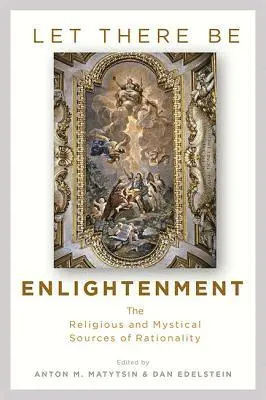
Challenging the triumphalist narrative of Enlightenment secularism.According to most scholars, the Enlightenment was a rational awakening, a radical break from a past dominated by religion and superstition. But in Let There Be Enlightenment, Anton M. Matytsin, Dan Edelstein, and the contributors they have assembled deftly undermine this simplistic narrative. Emphasizing the ways in which religious beliefs and motivations shaped philosophical perspectives, essays in this book highlight figures and topics often overlooked in standard genealogies of the Enlightenment. The volume underscores the prominent role that religious discourses continued to play in major aspects of seventeenth- and eighteenth-century thought. The essays probe a wide range of subjects, from reformer Jan Amos Comenius’s quest for universal enlightenment to the changing meanings of the light metaphor, Quaker influences on Baruch Spinoza’s theology, and the unexpected persistence of Aristotle in the Enlightenment. Exploring the emergence of historical consciousness among Enlightenment thinkers while examining their repeated insistence on living in an enlightened age, the collection also investigates the origins and the long-term dynamics of the relationship between faith and reason. Providing an overview of the rich spectrum of eighteenth-century culture, the authors demonstrate that religion was central to Enlightenment thought. The term “enlightenment” itself had a deeply religious connotation. Rather than revisiting the celebrated breaks between the eighteenth century and the period that preceded it, Let There Be Enlightenment reveals the unacknowledged continuities that connect the Enlightenment to its various antecedents.Contributors: Philippe Buc, William J. Bulman, Jeffrey D. Burson, Charly Coleman, Dan Edelstein, Matthew T. Gaetano, Howard Hotson, Anton M. Matytsin, Darrin M. McMahon, James Schmidt, Céline Spector, Jo Van Cauter
1 771 kr
Skickas inom 7-10 vardagar
Additional resources for this book are available on our Manifold site, which can be accessed via https://liverpooluniversitypress.manifoldapp.org/projects/networks-of-enlightenmentWhile many periods of history are popularly known by their 'great men', the Enlightenment stands out for the prominence of its 'great groups’. This volume assembles leading scholars using data-driven scholarship to study the networks that made the Enlightenment possible, and contributed to creating a new sense of European identity. From Voltaire’s correspondence with Catherine the Great, to Adam Smith’s travels on the European continent, mediated and unmediated communication networks were the lifeline of the Enlightenment. What is particularly notable about the Enlightenment is how these different networks were central to their participants’ identity. One could not take part in the Enlightenment on one’s own.Although some older historical studies highlight the importance of social networks in the Enlightenment, data-driven approaches allow for a more comprehensive and granular understanding of the many different types of networks that formed the intellectual and cultural infrastructure of the Enlightenment throughout Europe. The recent influx of metadata from the correspondences of major Enlightenment figures now allows scholars to study these networks at both the micro and macro levels, and to explore the worlds of the philosophes and the “nodes” in their networks in rich detail.It is at this intersection of Enlightenment historiography, data capture, and social network analysis that the essays collected in this volume all fall, taking advantage of new data sources, configurations, and modes of analysis to deepen our understanding of how Enlightenment sociability worked, who it included, and what it meant for participants.
151 kr
Skickas inom 3-6 vardagar