Jeffrey P. Blomster - Böcker
Visar alla böcker från författaren Jeffrey P. Blomster. Handla med fri frakt och snabb leverans.
3 produkter
3 produkter
896 kr
Tillfälligt slut
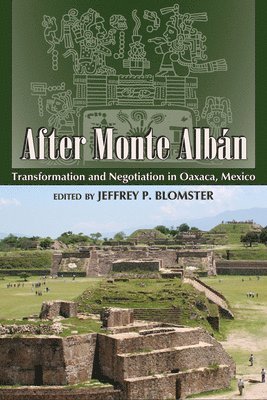
After Monte Albán reveals the richness and interregional relevance of Postclassic transformations in the area now known as Oaxaca, which lies between Central Mexico and the Maya area and, as contributors to this volume demonstrate, achieved cultural centrality in pan-Mesoamerican networks. Large nucleated states throughout Oaxaca collapsed after 700 C.E., including the great Zapotec state centered in the Valley of Oaxaca, Monte Albán. Elite culture changed in fundamental ways as small city-states proliferated in Oaxaca, each with a new ruling dynasty required to devise novel strategies of legitimization. The vast majority of the population, though, sustained continuity in lifestyle, religion, and cosmology.Contributors synthesize these regional transformations and continuities in the lower Rio Verde Valley, the Valley of Oaxaca, and the Mixteca Alta. They provide data from material culture, architecture, codices, ethnohistoric documents, and ceramics, including a revised ceramic chronology from the Late Classic to the end of the Postclassic that will be crucial to future investigations. After Monte Albán establishes Postclassic Oaxaca's central place in the study of Mesoamerican antiquity.Contributors include Jeffrey P. Blomster, Bruce E. Byland, Gerardo Gutierrez, Byron Ellsworth Hamann, Arthur A. Joyce, Stacie M. King, Michael D. Lind, Robert Markens, Cira Martínez López, Michel R. Oudijk, and Marcus Winter.
1 526 kr
Skickas inom 7-10 vardagar
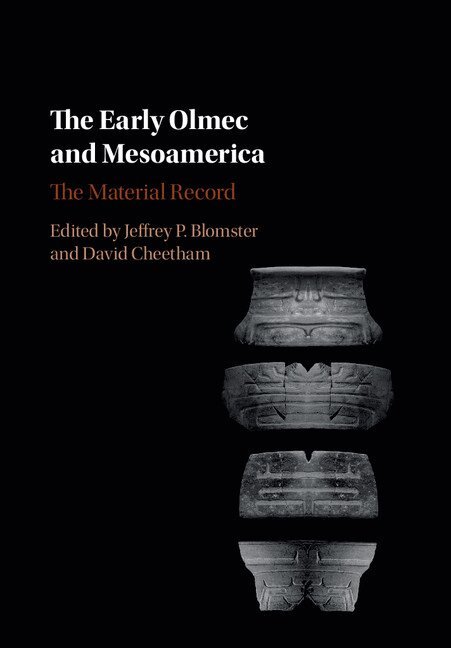
The Early Formative Olmec are central in a wide variety of debates regarding the development of Mesoamerican societies. A fundamental issue in Olmec archaeology is the nature of interregional interaction among contemporaneous societies and the possible Olmec role in it. Previous debates have often not been informed by recent research and data, often relying on materials lacking archaeological context. In order to approach these issues from new perspectives, this book introduces readers to the full spectrum of the material culture of the Olmec and their contemporaries, relying primarily on archaeological data, much of which has not been previously published. For the first time, using a standard lexicon to consider the nature of the interaction among Early Formative societies, the authors, experts in diverse regions of Mesoamerican art and archaeology, provide carefully considered contrasts and comparisons that advance the understanding of the Early Formative origins of social complexity in Mesoamerica.
509 kr
Skickas inom 5-8 vardagar
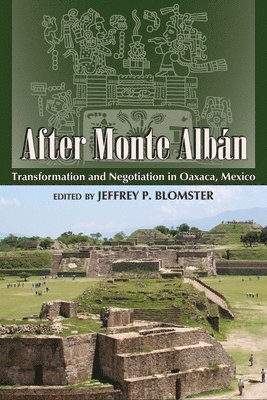
After Monte Albán reveals the richness and interregional relevance of Postclassic transformations in the area now known as Oaxaca, which lies between Central Mexico and the Maya area and, as contributors to this volume demonstrate, achieved cultural centrality in pan-Mesoamerican networks. Large nucleated states throughout Oaxaca collapsed after 700 C.E., including the great Zapotec state centered in the Valley of Oaxaca, Monte Albán. Elite culture changed in fundamental ways as small city-states proliferated in Oaxaca, each with a new ruling dynasty required to devise novel strategies of legitimization. The vast majority of the population, though, sustained continuity in lifestyle, religion, and cosmology.Contributors synthesize these regional transformations and continuities in the lower Rio Verde Valley, the Valley of Oaxaca, and the Mixteca Alta. They provide data from material culture, architecture, codices, ethnohistoric documents, and ceramics, including a revised ceramic chronology from the Late Classic to the end of the Postclassic that will be crucial to future investigations. After Monte Albán establishes Postclassic Oaxaca's central place in the study of Mesoamerican antiquity.Contributors include Jeffrey P. Blomster, Bruce E. Byland, Gerardo Gutierrez, Byron Ellsworth Hamann, Arthur A. Joyce, Stacie M. King, Michael D. Lind, Robert Markens, Cira Martínez López, Michel R. Oudijk, and Marcus Winter.