Jeffrey S. Ravel - Böcker
Visar alla böcker från författaren Jeffrey S. Ravel. Handla med fri frakt och snabb leverans.
6 produkter
6 produkter
1 597 kr
Skickas inom 10-15 vardagar
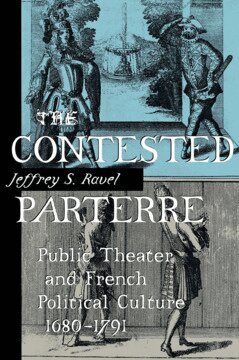
In the playhouses of eighteenth-century France, clerks and students, soldiers and merchants, and the occasional aristocrat stood in the pit, while the majority of the elite sat in loges. These denizens of the parterre, who accounted for up to two-thirds of the audience, were given to disruptive behavior that culminated in full-scale riots in the last years before the Revolution. Offering a commoner's eye view of the drama offstage, this fascinating history of French theater audiences clearly demonstrates how problems in the parterre reflected tensions at the heart of the Old Regime.Jeffrey S. Ravel vividly depicts the scene in the parterre where the male spectators occupied themselves shoving one another, drinking, urinating, and confronting the actors with critiques of the performance. He traces the futile efforts of the Bourbon Court—and later its Enlightened opponents—to control parterre behavior by both persuasion and force. Ravel describes how the parterre came to represent a larger, more politicized notion of the public, one that exposed the inability of the government to accommodate the demands of French citizens. An important contribution to debates on the public sphere, Ravel's book is the first to explore the role of the parterre in the political culture of eighteenth-century France.
487 kr
Skickas inom 10-15 vardagar
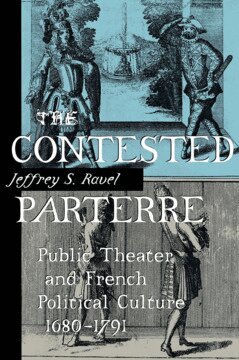
In the playhouses of eighteenth-century France, clerks and students, soldiers and merchants, and the occasional aristocrat stood in the pit, while the majority of the elite sat in loges. These denizens of the parterre, who accounted for up to two-thirds of the audience, were given to disruptive behavior that culminated in full-scale riots in the last years before the Revolution. Offering a commoner's eye view of the drama offstage, this fascinating history of French theater audiences clearly demonstrates how problems in the parterre reflected tensions at the heart of the Old Regime.Jeffrey S. Ravel vividly depicts the scene in the parterre where the male spectators occupied themselves shoving one another, drinking, urinating, and confronting the actors with critiques of the performance. He traces the futile efforts of the Bourbon Court—and later its Enlightened opponents—to control parterre behavior by both persuasion and force. Ravel describes how the parterre came to represent a larger, more politicized notion of the public, one that exposed the inability of the government to accommodate the demands of French citizens. An important contribution to debates on the public sphere, Ravel's book is the first to explore the role of the parterre in the political culture of eighteenth-century France.
510 kr
Tillfälligt slut
Drawing on unusual archival materials, addressing a variety of nonliterary or extratextual sources, employing new theoretical approaches, and offering innovative discussions of established works, the essays gathered in the latest volume of Studies in Eighteenth-Century Culture reflect the most exciting new directions of research within the field. The novel is a dominant focus, and the contributors to this volume offer new perspectives on the genre itself or bold new readings of such canonical texts as Les Liaisons dangereuses, Cecilia, Histoire de M. Cleveland, and the early fiction of Daniel Defoe, as well as Casanova's novelistic autobiography, Histoire de ma vie. Some essays use unusual or little-known sources or materials:-the early English novel, The Jamaica Lady; an anonymous British seaman's journal; and "infant's petitions," the letters that accompanied babies left at foundling hospitals.Other essays examine the complicated constructions of identity and authorship that emerge in various disciplines and genres: depictions of statuary in eighteenth-century French painting and literature; representations of the French literary marketplace; the role of singing in the poetry of Stephen Duck; the presence of ancient Stoic and Baconian principles in Samuel Johnson's moral writing; and the complicated correspondence between Horace Walpole and William Cole. The volume concludes with a special section of essays meditating on the complex eighteenth-century discourse on beauty and aesthetics. Contributors: Jeffrey Barnouw, Barbara Benedict, Melissa Downes, Ted Emery, Timothy Erwin, Susan Greenfield, George Haggerty, Adam Komisaruk, Laurence Mall, James Mullholland, Alexander Pitosfsky, David Porter, Neil Saccamano, Laura Schattschneider, April Shelford, Peter Sonderen, Geoffrey Turnovsky, Caroline Weber
585 kr
Skickas
With this well-illustrated new volume, the SECC continues its tradition of publishing innovative interdisciplinary scholarship on the interpretive edge.Essays include:Misty Anderson, Our Purpose is the Same: Whitefield, Foote, and the Theatricality of Methodism Tili Boon Cuille, La Vraisemblance du merveilleux: Operatic Aesthetics in Cazotte's Fantastic Fiction Simon Dickie, Joseph Andrews and the Great Laughter Debate: The Roasting of Adams Lynn Festa, Cosmetic Differences: The Changing Faces of England and France Blake Gerard, All that the heart wishes: Changing Views toward Sentimentality Reflected in Visualizations of Sterne's Maria, 1773-1888 Jennifer Keith, The Sins of Sensibility and the Challenge of Antislavery Poetry Mary Helen McMurran, Aphra Behn from Both Sides: Translation in the Atlantic World Leslie Richardson, Leaving her Father's House: Locke, Astell, and Clarissa's Body Politic Sandra Sherman, The Wealth of Nations in the 1790s Alan Sikes, Snip Snip Here, Snip Snip There, and a Couple of Tra La Las: The Rise and Fall of the Castrato Singer Rivka Swenson, Representing Modernity in Jane Barker's Galesia Trilogy: Jacobite Allegory and the Aesthetics of the Patch-Work Subject
510 kr
Tillfälligt slut
This well-illustrated new volume continues the tradition of Studies in Eighteenth-Century Culture of publishing innovative interdisciplinary scholarship on the interpretive edge. Contents include: ASECS Women's Caucus Roundtable: The Career and Work of Madelyn GutwirthCarol Blum, Madeleine Dobie, Madelyn Gutwirth, Katherine Jensen, Sarah Maza, Karyna Szmurlo, and Janet Whately The Plantation and the Polis: Reform Ideology and the Generic Structure in Matthew Lewis' Journal of the West Indian ProprietorEllen Malenas Give Us Our Daily Breadfruit: Bread Substitution in the Pacific in the Eighteenth CenturyVanessa Smith The People Things Make: Locke's An Essay Concerning Human Understanding and the Properties of SelfMark Blackwell Covering Sexual Disguise: Passing Women and Generic RestraintFraser Easton Sapphic Self-Fashioning in the Baroque Era: Women's Petrarchan Parody in English and Spanish, 1650-1700Dianne Dugaw and Amanda W. Powell "Why, you...I oughta'...": Aposiopesis and the Natural Language of the Passions, 1670-1770Robert G.Dimit From Geneva to Glasgow: Rousseau and Adam Smith on the Theatre and Commercial SocietyRyan Hanley Faux savants, femmes philosophes, and philosophes amoureux: Foibles of the philosophe on the Eighteenth-Century French StageAnne Vila The New Paris in the Guise of the Old: Louis Sebastian Mercier from Old Regime to RevolutionJoanna Stalnaker Carriages, Conversation, and A Sentimental JourneyDanielle Bobker Hyperborean Atlantis: Jean-Sylvian Bailly, Madame Blavatsky, and the Nazi MythDan Edelstein
510 kr
Tillfälligt slut
This new volume continues the tradition of Studies in Eighteenth-Century Culture of publishing innovative interdisciplinary scholarship on the interpretive edge. Undertaking critical investigation of eighteenth-century ideas and practices, it discusses the possibilities and limitations of print; royal portraiture, the sentimental novel, and botanical classification through the categories of gender; the European experience in the 1700s; and change over time in the realms of music, architecture, and literature from the eighteenth century to the nineteenth. Contributors and content: James Swenson, Critique, Progress, Autonomy Eve Tavor Bannet, Printed Epistolary Manuals and the Rescripting of Manuscript Culture Madeleine Forell Marshall, Late Eighteenth-Century Public Reading, with Particular Attention to Sheridan's Strictures on Reading the Church Service (1789) Daniel Rosenberg, Joseph Priestley and the Graphic Invention of Modern Time Jennifer G. Germann, Fecund Fathers and Missing Mothers: Louis XV, Marie Leszczinska, and the Politics of Royal Parentage in the 1720s Mary McAlpin, Julie's Breasts, Julie's Scars: Physiology and Character in La Nouvelle Heloise Ann B.Shteir, Flora primavera or Flora meretrix? Iconography, Gender, and Science Karen Melvin, A Potential Saint Thwarted: Religion and the Politics of Sanctity in Late-Eighteenth Century New Spain Margaret R. Ewalt, Christianity, Coca, and Commerce in the Peruvian Mercury Howard Irving, Haydn and the Politics of the Picturesque Richard Wittman, The Hut and the Altar: Architectural Origins and the Public Sphere in Eighteenth-Century France Goran Blix, The Occult Roots of Realism: Balzac, Mesmer, and Second Sight