Jennifer Newell - Böcker
Visar alla böcker från författaren Jennifer Newell. Handla med fri frakt och snabb leverans.
5 produkter
5 produkter
36 kr
Tillfälligt slut
The voyages of Captain Cook are endlessly fascinating to a wide audience, and no aspect of them has been more controversial than Cook's death. This book reprints one of the classic accounts of this episode, the vivid and lively narrative by one of the voyage surgeons, David Samwell. This book not only makes Samwell's "Narrative of the Death of Captain James Cook" readily available for the first time, but presents it with Samwell's previously unpublished letters relating to Cook's third voyage, and his poetry. The introductory essays discuss Samwell's contribution to our understanding of this dramatic period in Pacific and maritime history, and examine the personality and career of Samwell himself.
510 kr
Skickas inom 11-20 vardagar
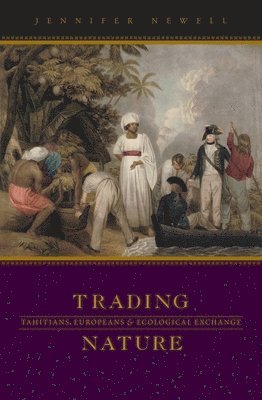
When Captain Samuel Wallis became the first European to land at Tahiti in June 1767, he left not only a British flag on shore but also three guinea hens, a pair of turkeys, a pregnant cat, and a garden planted with peas for the chiefess Purea. Thereafter, a succession of European captains, missionaries, and others planted seeds and introduced livestock from around the world. In turn, the islanders traded away great quantities of important island resources, including valuable and spiritually significant plants and animals. What did these exchanges mean? What was their impact? The answers are often unexpected. They also reveal the ways islanders retained control over their societies and landscapes in an era of increasing European intervention. ""Trading Nature"" explores - from both the European and Tahitian perspective - the effects of 'ecological exchange' on one island from the mid-eighteenth century to the present day. Through a series of dramatic episodes, ""Trading Nature"" uncovers the potency of trading in nature. In the interweavings of chiefly power, ordinary islanders, the ambitions of outsiders, transplanted species, and existing ecologies, the book uncovers the cultural and ecological impacts of cross-cultural exchange. Evidence of these transactions has been found in a rich variety of voyage journals, missionary diaries, Tahitian accounts, colonial records, travelers' tales, and a range of visual and material sources. The story progresses from the first trades on Tahiti's shores for provisions for British and French ships to the contrasting histories of cattle in Tahiti and Hawai'i.
752 kr
Skickas inom 7-10 vardagar
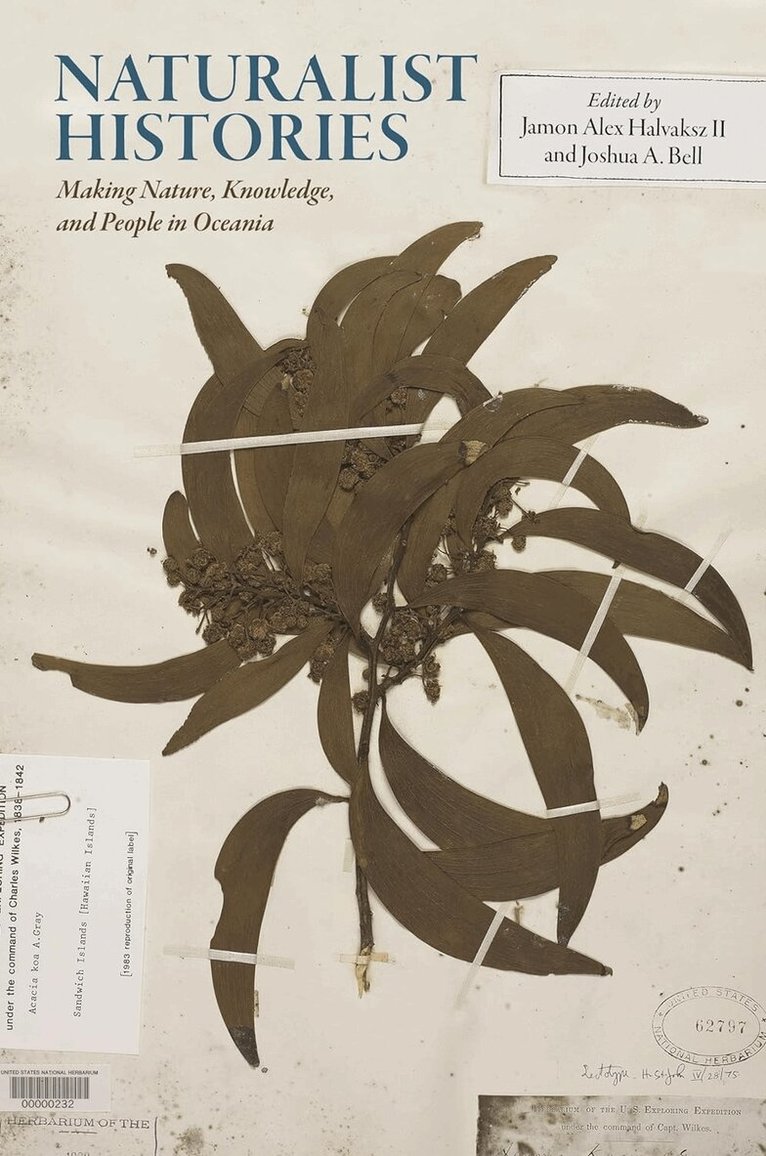
From early explorers to contemporary scientists, naturalists have examined island flora and fauna of Oceania, discovering new species, carefully documenting the lives of animals, and creating work central to the image of Oceania. These "discoveries" and exploratory moves have had profound local and global impacts. Often, however, local knowledge and communities are silent in the ethologies and histories that naturalists produce. This volume analyzes the ways that Indigenous and non-Indigenous naturalists have made island natures visible to a wider audience, their relationship with the communities where they work, as well as the unique natures that they explore and help make. In staking out an area of naturalist histories, each contributor addresses the relationship between naturalists and Oceanic communities, how these histories shaped past and present place and practices, the influence on conservations and development projects, and the relationship between scientific and indigenous knowledge. The essays span across colonial and postcolonial frames, tracing shifts in biological practice from the eighteenth- and nineteenth-century focus on taxonomy and discovery to the twentieth-century disciplinary restructurings and new collecting strategies, and contemporary concerns with biodiversity loss, conservation, and knowledge formation.The production of scientific knowledge is typically seen in ethnographic accounts as oppositional, contrasting Indigenous and western, local and global, objective and subjective. Such dichotomous views reinforce differences and further exaggerate inequities in the production of knowledge. More dangerously, value distinctions become embedded in discussions of Indigenous identity, rights, and sovereignty. Contributors acknowledge that these dichotomous narratives have dominated the approach of the scientific community while informing how social scientists have understood the contributions of Pacific communities. The essays offer a nuanced gradient as historical narratives of scientific investigation, in dialogue with local histories, and reveal greater levels of participation in the creation of knowledge. The volume highlights how power infuses the scientific endeavor and offers a distinct and diverse view of knowledge production in Oceania. Combining senior and emerging international scholars, the collection will be of interest to researchers in the social sciences, history, as well as biology and allied fields.
2 088 kr
Skickas inom 10-15 vardagar
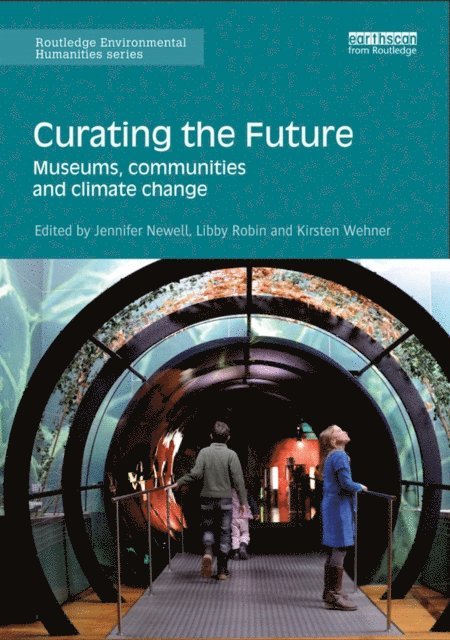
Curating the Future: Museums, Communities and Climate Change explores the way museums tackle the broad global issue of climate change. It explores the power of real objects and collections to stir hearts and minds, to engage communities affected by change. Museums work through exhibitions, events, and specific collection projects to reach different communities in different ways. The book emphasises the moral responsibilities of museums to address climate change, not just by communicating science but also by enabling people already affected by changes to find their own ways of living with global warming. There are museums of natural history, of art and of social history. The focus of this book is the museum communities, like those in the Pacific, who have to find new ways to express their culture in a new place. The book considers how collections in museums might help future generations stay in touch with their culture, even where they have left their place. It asks what should the people of the present be collecting for museums in a climate-changed future? The book is rich with practical museum experience and detailed projects, as well as critical and philosophical analyses about where a museum can intervene to speak to this great conundrum of our times. Curating the Future is essential reading for all those working in museums and grappling with how to talk about climate change. It also has academic applications in courses of museology and museum studies, cultural studies, heritage studies, digital humanities, design, anthropology, and environmental humanities.
644 kr
Skickas inom 10-15 vardagar
Curating the Future: Museums, Communities and Climate Change explores the way museums tackle the broad global issue of climate change. It explores the power of real objects and collections to stir hearts and minds, to engage communities affected by change. Museums work through exhibitions, events, and specific collection projects to reach different communities in different ways. The book emphasises the moral responsibilities of museums to address climate change, not just by communicating science but also by enabling people already affected by changes to find their own ways of living with global warming. There are museums of natural history, of art and of social history. The focus of this book is the museum communities, like those in the Pacific, who have to find new ways to express their culture in a new place. The book considers how collections in museums might help future generations stay in touch with their culture, even where they have left their place. It asks what should the people of the present be collecting for museums in a climate-changed future? The book is rich with practical museum experience and detailed projects, as well as critical and philosophical analyses about where a museum can intervene to speak to this great conundrum of our times. Curating the Future is essential reading for all those working in museums and grappling with how to talk about climate change. It also has academic applications in courses of museology and museum studies, cultural studies, heritage studies, digital humanities, design, anthropology, and environmental humanities.