Jennifer Wenzel - Böcker
Visar alla böcker från författaren Jennifer Wenzel. Handla med fri frakt och snabb leverans.
8 produkter
8 produkter
282 kr
Skickas inom 7-10 vardagar
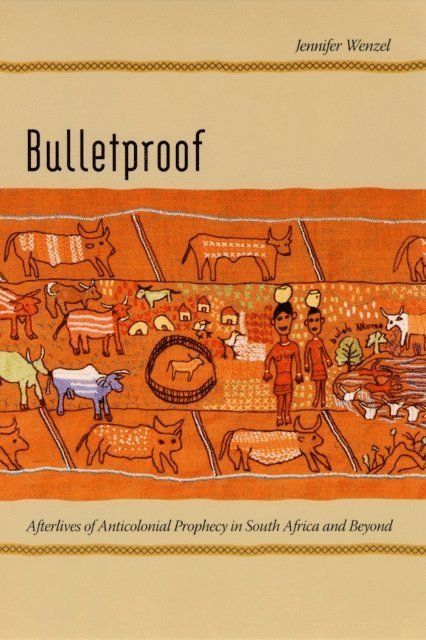
In 1856 and 1857, in response to a prophet's command, the Xhosa people of southern Africa killed their cattle and ceased planting crops; the resulting famine cost tens of thousands of lives. Much like other millenarian, anti colonial movements - such as the Ghost Dance in North America and the Birsa Munda uprising in India - these actions were meant to transform the world and liberate the Xhosa from oppression. Despite the movement's momentous failure to achieve that goal, the event has continued to exert a powerful pull on the South African imagination ever since. It is these afterlives of the prophecy that Jennifer Wenzel explores in "Bulletproof". Wenzel examines literary and historical texts to show how writers have manipulated images and ideas associated with the cattle killing - harvest, sacrifice, rebirth, devastation - to speak to their contemporary predicaments. Widening her lens, Wenzel also looks at how past failure can both inspire and constrain movements for justice in the present, and her brilliant insights into the cultural implications of prophecy will fascinate readers across a wide variety of disciplines.
1 362 kr
Skickas inom 11-20 vardagar
How has our relation to energy changed over time? What differences do particular energy sources make to human values, politics, and imagination? How have transitions from one energy source to another—from wood to coal, or from oil to solar to whatever comes next—transformed culture and society? What are the implications of uneven access to energy in the past, present, and future? Which concepts and theories clarify our relation to energy, and which just get in the way? Fueling Culture offers a compendium of keywords written by scholars and practitioners from around the world and across the humanities and social sciences. These keywords offer new ways of thinking about energy as both the source and the limit of how we inhabit culture, with the aim of opening up new ways of understanding the seemingly irresolvable contradictions of dependence upon unsustainable energy forms.Fueling Culture brings together writing that is risk-taking and interdisciplinary, drawing on insights from literary and cultural studies, environmental history and ecocriticism, political economy and political ecology, postcolonial and globalization studies, and materialisms old and new.Keywords in this volume include: Aboriginal, Accumulation, Addiction, Affect, America, Animal, Anthropocene, Architecture, Arctic, Automobile, Boom, Canada, Catastrophe, Change, Charcoal, China, Coal, Community, Corporation, Crisis, Dams, Demand, Detritus, Disaster, Ecology, Electricity, Embodiment, Ethics, Evolution, Exhaust, Fallout, Fiction, Fracking, Future, Gender, Green, Grids, Guilt, Identity, Image, Infrastructure, Innervation, Kerosene, Lebenskraft, Limits, Media, Metabolism, Middle East, Nature, Necessity, Networks, Nigeria, Nuclear, Petroviolence, Photography, Pipelines, Plastics, Renewable, Resilience, Risk, Roads, Rubber, Rural, Russia, Servers, Shame, Solar, Spill, Spiritual, Statistics, Surveillance, Sustainability, Tallow, Texas, Textiles, Utopia, Venezuela, Whaling, Wood, Work For a full list of keywords in and contributors to this volume, please go to: http://ow.ly/4mZZxV
391 kr
Skickas inom 7-10 vardagar
How has our relation to energy changed over time? What differences do particular energy sources make to human values, politics, and imagination? How have transitions from one energy source to another—from wood to coal, or from oil to solar to whatever comes next—transformed culture and society? What are the implications of uneven access to energy in the past, present, and future? Which concepts and theories clarify our relation to energy, and which just get in the way? Fueling Culture offers a compendium of keywords written by scholars and practitioners from around the world and across the humanities and social sciences. These keywords offer new ways of thinking about energy as both the source and the limit of how we inhabit culture, with the aim of opening up new ways of understanding the seemingly irresolvable contradictions of dependence upon unsustainable energy forms.Fueling Culture brings together writing that is risk-taking and interdisciplinary, drawing on insights from literary and cultural studies, environmental history and ecocriticism, political economy and political ecology, postcolonial and globalization studies, and materialisms old and new.Keywords in this volume include: Aboriginal, Accumulation, Addiction, Affect, America, Animal, Anthropocene, Architecture, Arctic, Automobile, Boom, Canada, Catastrophe, Change, Charcoal, China, Coal, Community, Corporation, Crisis, Dams, Demand, Detritus, Disaster, Ecology, Electricity, Embodiment, Ethics, Evolution, Exhaust, Fallout, Fiction, Fracking, Future, Gender, Green, Grids, Guilt, Identity, Image, Infrastructure, Innervation, Kerosene, Lebenskraft, Limits, Media, Metabolism, Middle East, Nature, Necessity, Networks, Nigeria, Nuclear, Petroviolence, Photography, Pipelines, Plastics, Renewable, Resilience, Risk, Roads, Rubber, Rural, Russia, Servers, Shame, Solar, Spill, Spiritual, Statistics, Surveillance, Sustainability, Tallow, Texas, Textiles, Utopia, Venezuela, Whaling, Wood, Work For a full list of keywords in and contributors to this volume, please go to: http://ow.ly/4mZZxV
419 kr
Skickas inom 7-10 vardagar
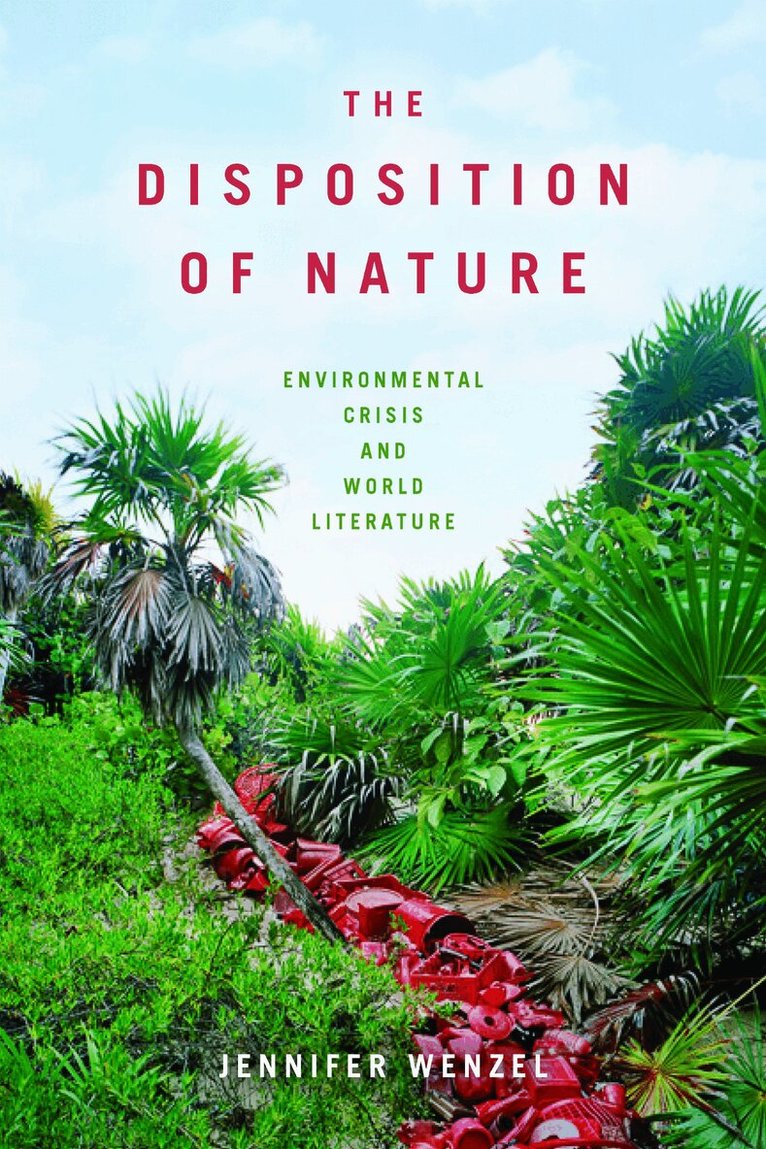
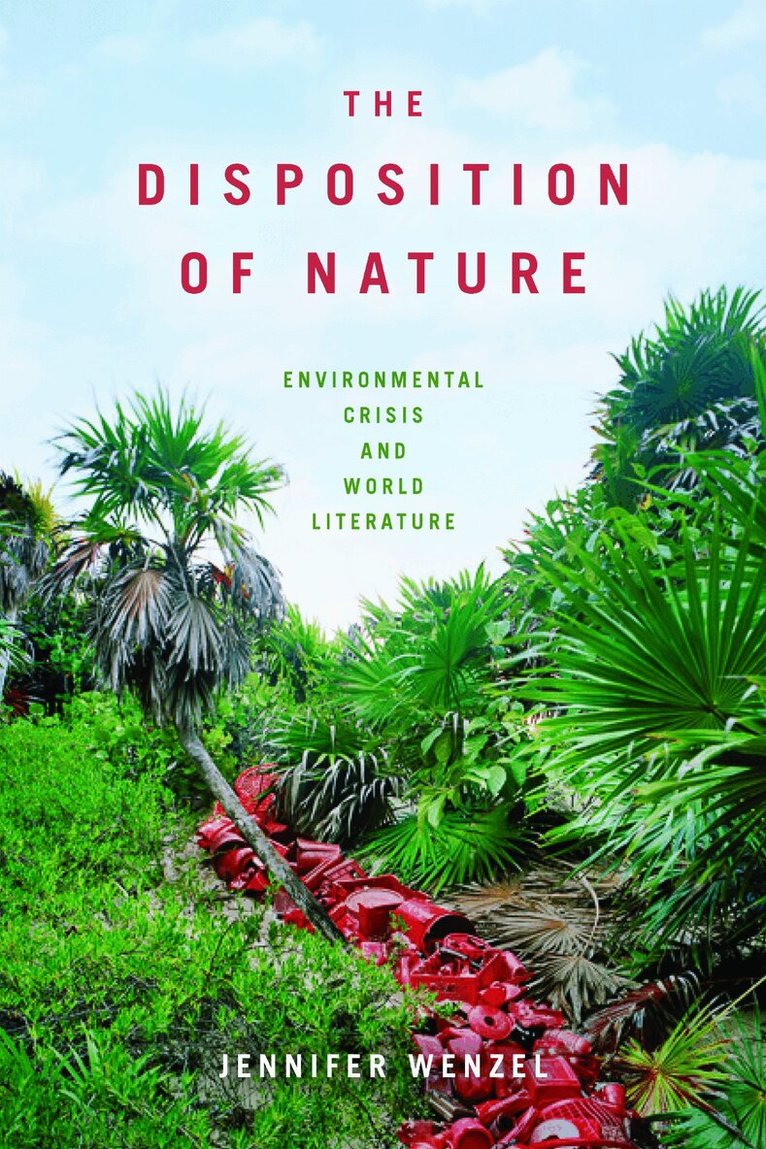
Finalist, 2022 Ecocriticism Book Prize, Association for the Study of Literature and the EnvironmentShortlisted, 2020 Book Prize, Association for the Study of the Arts of the PresentHow do literature and other cultural forms shape how we imagine the planet, for better or worse? In this rich, original, and long awaited book, Jennifer Wenzel tackles the formal innovations, rhetorical appeals, and sociological imbrications of world literature that might help us confront unevenly distributed environmental crises, including global warming.The Disposition of Nature argues that assumptions about what nature is are at stake in conflicts over how it is inhabited or used. Both environmental discourse and world literature scholarship tend to confuse parts and wholes. Working with writing and film from Africa, South Asia, and beyond, Wenzel takes a contrapuntal approach to sites and subjects dispersed across space and time. Reading for the planet, Wenzel shows, means reading from near to there: across experiential divides, between specific sites, at more than one scale.Impressive in its disciplinary breadth, Wenzel's book fuses insights from political ecology, geography, anthropology, history, and law, while drawing on active debates between postcolonial theory and world literature, as well as scholarship on the Anthropocene and the material turn. In doing so, the book shows the importance of the literary to environmental thought and practice, elaborating how a supple understanding of cultural imagination and narrative logics can foster more robust accounts of global inequality and energize movements for justice and livable futures.
1 491 kr
Skickas inom 10-15 vardagar
Finalist, 2022 Ecocriticism Book Prize, Association for the Study of Literature and the EnvironmentShortlisted, 2020 Book Prize, Association for the Study of the Arts of the PresentHow do literature and other cultural forms shape how we imagine the planet, for better or worse? In this rich, original, and long awaited book, Jennifer Wenzel tackles the formal innovations, rhetorical appeals, and sociological imbrications of world literature that might help us confront unevenly distributed environmental crises, including global warming.The Disposition of Nature argues that assumptions about what nature is are at stake in conflicts over how it is inhabited or used. Both environmental discourse and world literature scholarship tend to confuse parts and wholes. Working with writing and film from Africa, South Asia, and beyond, Wenzel takes a contrapuntal approach to sites and subjects dispersed across space and time. Reading for the planet, Wenzel shows, means reading from near to there: across experiential divides, between specific sites, at more than one scale.Impressive in its disciplinary breadth, Wenzel's book fuses insights from political ecology, geography, anthropology, history, and law, while drawing on active debates between postcolonial theory and world literature, as well as scholarship on the Anthropocene and the material turn. In doing so, the book shows the importance of the literary to environmental thought and practice, elaborating how a supple understanding of cultural imagination and narrative logics can foster more robust accounts of global inequality and energize movements for justice and livable futures.
246 kr
Kommande
283 kr
Skickas inom 7-10 vardagar
661 kr
Skickas inom 11-20 vardagar
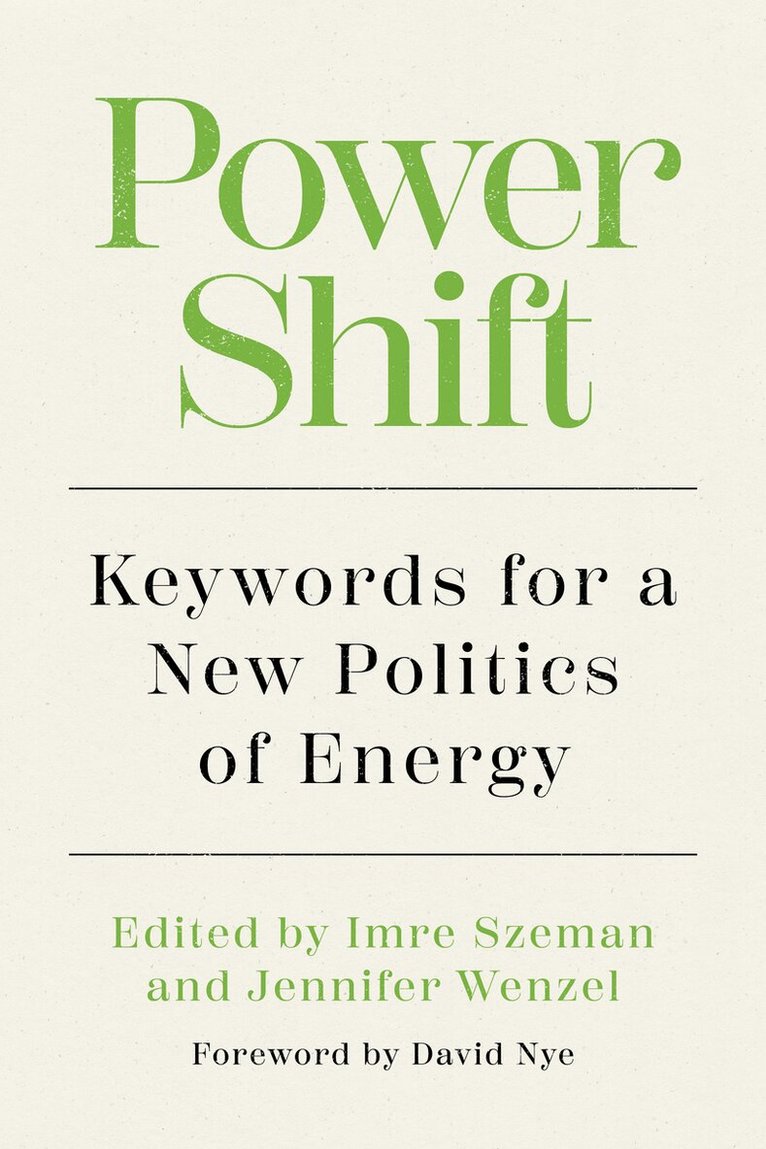
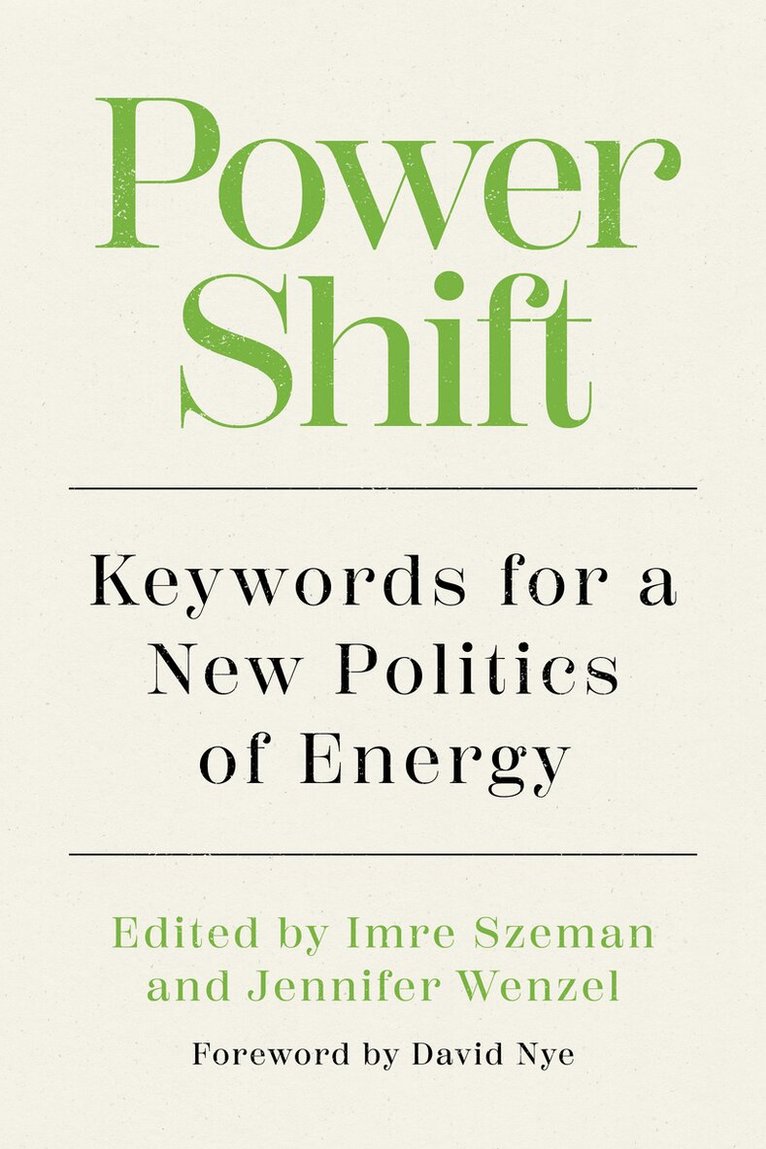
Power Shift traces recent social and cultural shifts in how we understand and imagine energy, the environment, and the challenges of global warming. Across the globe, the need to transition to renewables has become the guiding reality of our energy present and future, despite continuing resistance to change. But what does this moment of energy transition look like for those struggling to make it happen in a way that benefits every individual and all communities? Featuring brief essays on 101 key terms by scholars, artists, and activists from around the world and across disciplines, Power Shift offers an expansive, kaleidoscopic guide to the history of petromodernity, recent technological and social developments, and pathways to new energy futures. The book offers new insights into the emergent politics of energy, contrasting today's environmental and climate movements with the geopolitical contests of the Cold War era. It explores the still unfolding story of energy transition by focusing on the ongoing struggles of communities and individuals against decisions made by corporations, governments, and international organizations.