Jeong-eun Rhee - Böcker
Visar alla böcker från författaren Jeong-eun Rhee. Handla med fri frakt och snabb leverans.
4 produkter
4 produkter
713 kr
Skickas inom 10-15 vardagar
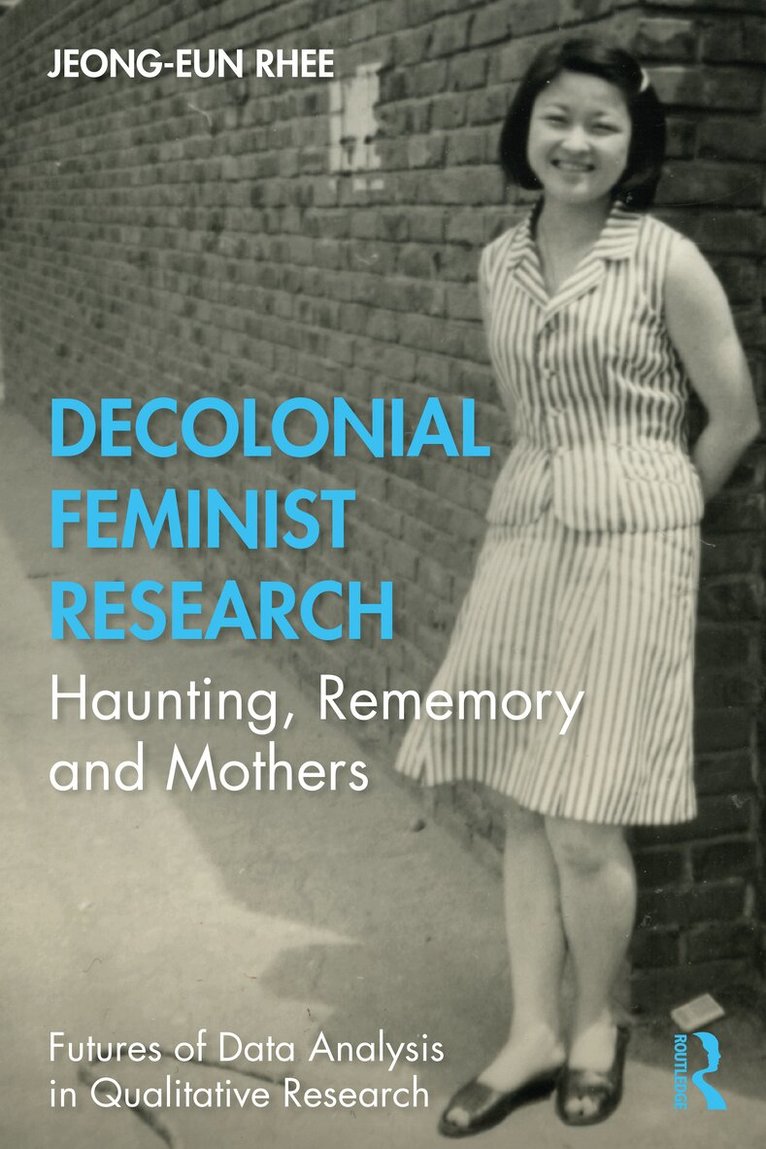
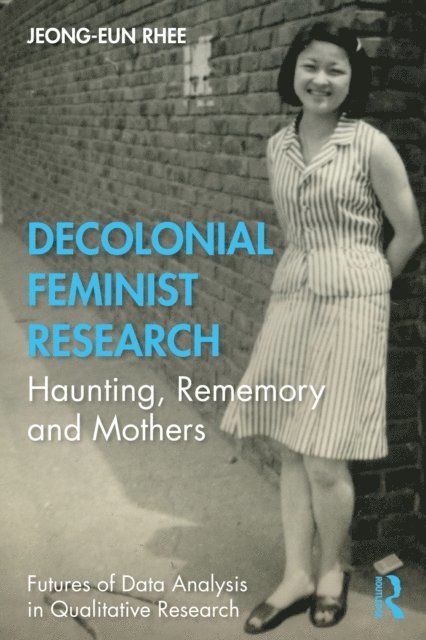
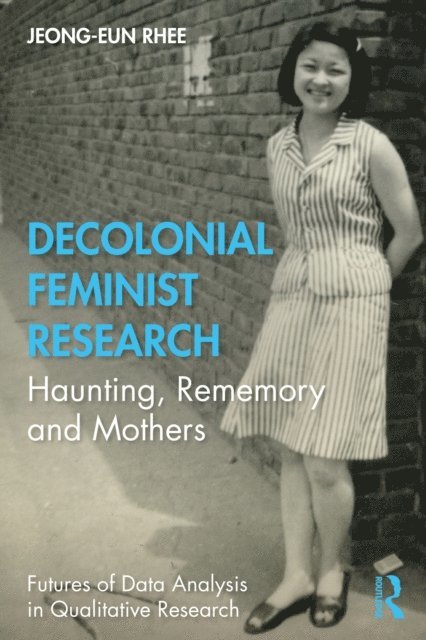
Honourable Mention, ICQI 2022 Outstanding Qualitative Book AwardHonorable Mention, AERA Qualitative SIG for 2023 Outstanding Book Award Category In Decolonial Feminist Research: Haunting, Rememory and Mothers, Jeong-eun Rhee embarks on a deeply personal inquiry that is demanded by her dead mother’s haunting rememory and pursues what has become her work/life question: What methodologies are available to notice and study a reality that exceeds and defies modern scientific ontology and intelligibility? Rhee is a Korean migrant American educational qualitative researcher, who learns anew how to notice, feel, research, and write her mother’s rememory across time, geography, languages, and ways of knowing and being. She draws on Toni Morrison's concept of "rememory" and Theresa Hak Kyung Cha's "fragmented-multi self." Using various genres such as poems, dialogues, fictions, and theories, Rhee documents a multi-layered process of conceptualizing, researching, and writing her (m/others’) transnational rememory as a collective knowledge project of intergenerational decolonial feminists of color. In doing so, the book addresses the following questions: How can researchers write in the name and practice of research what can never be known or narrated with logic and reason? What methodologies can be used to work through and with both personal and collective losses, wounds, and connections that have become y/our questions? Rhee shows how to feel connectivity and fragmentation as/of self not as binary but as constitutive through rememory and invites readers to explore possibilities of decolonial feminist research as an affective bridge to imagine, rememory, and engender healing knowledge. Embodied onto-epistemologies of women of color haunt and thus demand researchers to contest and cross the boundary of questions, topics, methodologies, and academic disciplinary knowledge that are counted as relevant, appropriate, and legitimate within a dominant western science regime. This book is for qualitative researchers and feminism scholars who are pursuing these kinds of boundary-crossing "personal" inquiries.
2 317 kr
Skickas inom 10-15 vardagar
Honourable Mention, ICQI 2022 Outstanding Qualitative Book AwardHonorable Mention, AERA Qualitative SIG for 2023 Outstanding Book Award Category In Decolonial Feminist Research: Haunting, Rememory and Mothers, Jeong-eun Rhee embarks on a deeply personal inquiry that is demanded by her dead mother’s haunting rememory and pursues what has become her work/life question: What methodologies are available to notice and study a reality that exceeds and defies modern scientific ontology and intelligibility? Rhee is a Korean migrant American educational qualitative researcher, who learns anew how to notice, feel, research, and write her mother’s rememory across time, geography, languages, and ways of knowing and being. She draws on Toni Morrison's concept of "rememory" and Theresa Hak Kyung Cha's "fragmented-multi self." Using various genres such as poems, dialogues, fictions, and theories, Rhee documents a multi-layered process of conceptualizing, researching, and writing her (m/others’) transnational rememory as a collective knowledge project of intergenerational decolonial feminists of color. In doing so, the book addresses the following questions: How can researchers write in the name and practice of research what can never be known or narrated with logic and reason? What methodologies can be used to work through and with both personal and collective losses, wounds, and connections that have become y/our questions? Rhee shows how to feel connectivity and fragmentation as/of self not as binary but as constitutive through rememory and invites readers to explore possibilities of decolonial feminist research as an affective bridge to imagine, rememory, and engender healing knowledge. Embodied onto-epistemologies of women of color haunt and thus demand researchers to contest and cross the boundary of questions, topics, methodologies, and academic disciplinary knowledge that are counted as relevant, appropriate, and legitimate within a dominant western science regime. This book is for qualitative researchers and feminism scholars who are pursuing these kinds of boundary-crossing "personal" inquiries.
Promiscuous Feminist Methodologies in Education
Engaging Research Beyond Gender
Häftad, Engelska, 2020
561 kr
Skickas inom 10-15 vardagar
The book marks the circulation of the term "promiscuous feminist methodology" and registers its salience for educational researchers who risk blundering feminist theories and methodologies in chaotic and unbridled ways. The sexism embedded in language is what makes the notion of promiscuous "feminists gone wild" tantalizing, though what the book puts forth is how the messy practice of inquiry transgresses any imposed boundaries or assumptions about what counts as research and feminism. What can researchers do when we realize that theories are not quite enough to respond to our material experiences with people, places, practices, and policies becoming data? As a collection, the book provides how various theories researchers put to work "get dirty" as they are contaminated and re-appropriated by other ways of thinking and doing through (con)texts of messy practices. In this way, gender cannot simply be gender and promiscuous feminist methodologies are always in-the-making and already ahead of what we think they are.This book was originally published as a special issue of the International Journal of Qualitative Studies in Education.
Promiscuous Feminist Methodologies in Education
Engaging Research Beyond Gender
Inbunden, Engelska, 2014
2 119 kr
Skickas inom 10-15 vardagar
The book marks the circulation of the term "promiscuous feminist methodology" and registers its salience for educational researchers who risk blundering feminist theories and methodologies in chaotic and unbridled ways. The sexism embedded in language is what makes the notion of promiscuous "feminists gone wild" tantalizing, though what the book puts forth is how the messy practice of inquiry transgresses any imposed boundaries or assumptions about what counts as research and feminism. What can researchers do when we realize that theories are not quite enough to respond to our material experiences with people, places, practices, and policies becoming data? As a collection, the book provides how various theories researchers put to work "get dirty" as they are contaminated and re-appropriated by other ways of thinking and doing through (con)texts of messy practices. In this way, gender cannot simply be gender and promiscuous feminist methodologies are always in-the-making and already ahead of what we think they are.This book was originally published as a special issue of the International Journal of Qualitative Studies in Education.