• Fri frakt över 249 kr
  • •
  • Snabba leveranser
  • •
  • Billiga böcker
Kundservice

Du är på sajten för privatpersoner.

Företag, bibliotek eller offentlig verksamhet?

Du handlar på classic.bokus.com, där alla dina funktioner finns intakta.
Till classic.bokus.com
Bokus logotyp. Gå till startsidan.
  • Erbjudanden
  • Nyheter
  • Student
  • Topplistor
  • Barn & ungdom
  • Bokus Play
  • E-böcker
  • Pocketböcker
  • Spel & pussel

10% rabatt på allt med kod: NYSTART10 →

Sidfot

Mina sidor

    Hjälp

    • Kundservice
    • Vanliga frågor och svar
    • Frakt och leverans
    • Retur vid ångerrätt
    • Reklamera vara
    • Betalning
    • Köpvillkor
    • Allmänna villkor
    • Information om webbplatsens tillgänglighet

    Om Bokus

    • Om oss
    • Pressrum
    • För studenter
    • För företag
    • För bibliotek och offentlig verksamhet
    • För leverantörer
    • Hållbarhet

    Populärt

    • Aktuella erbjudanden
    • Presentkort
    • Studentlitteratur
    • Nya böcker
    • Topplistor
    • Signerade böcker
    • Engelska böcker

    Inspiration

    • Boktips
    • BookTok
    • Populära bokserier
    • Barnbokskaraktärer
    • Populära författare
    Logotyp för Bokus
    Följ oss på Facebook (extern länk)Följ oss på Instagram (extern länk)Följ oss på YouTube (extern länk)Följ oss på TikTok (extern länk)
    bokus @ CookiesAnpassa cookiesIntegritetspolicyKöpvillkor
    Till Citymail hemsida (extern länk)Till Budbee hemsida (extern länk)Till Postnord hemsida (extern länk)Till Schenker hemsida (extern länk)Till Early Bird hemsida (extern länk)Till Walleys hemsida (extern länk)
    1. Samhälle och politik
    2. Samhälle och kultur
    3. Kultur och medier
    4. Referensverk och tvärvetenskap

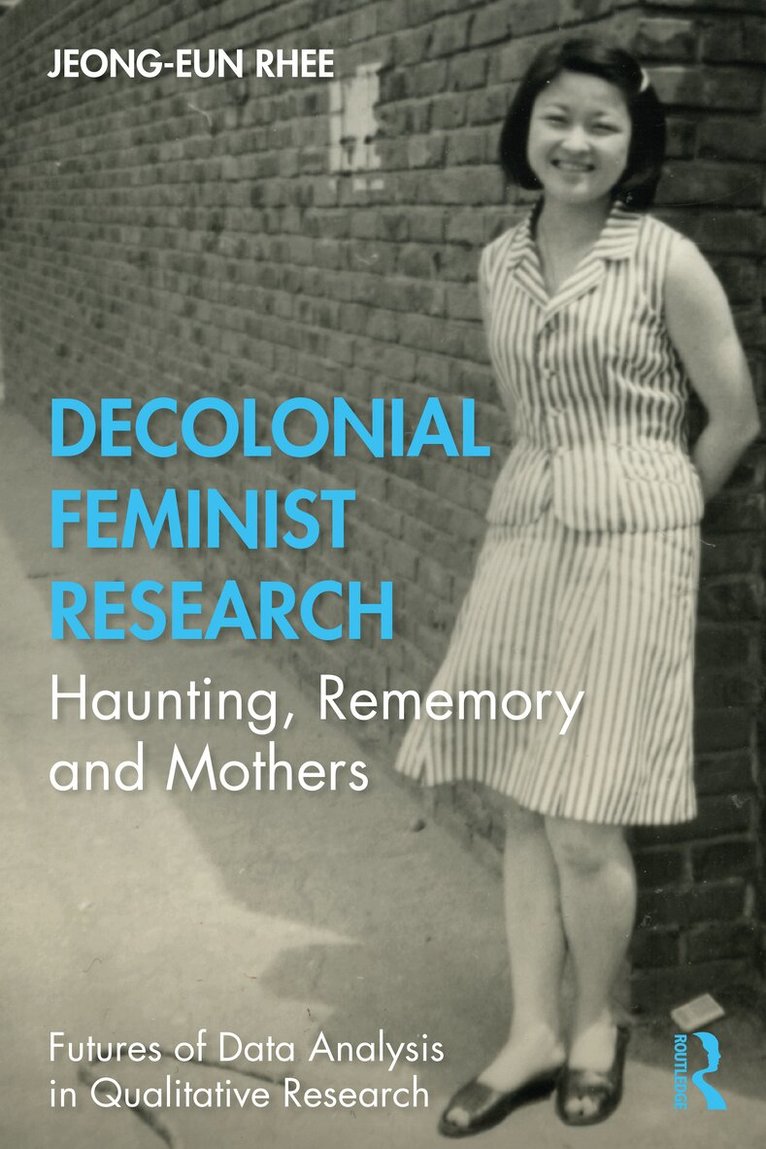
    Decolonial Feminist Research

    Haunting, Rememory and Mothers

    AvJeong-eun Rhee

    Häftad, Engelska, 2020

    Del i serien Futures of Data Analysis in Qualitative Research

    780 kr

    Beställningsvara. Skickas inom 10-15 vardagar. Fri frakt över 249 kr.

    Fler format och utgåvor

    Inbunden

    2 648 kr

    E-bok

    922 kr

    E-bok

    922 kr

    Beskrivning

    Honourable Mention, ICQI 2022 Outstanding Qualitative Book AwardHonorable Mention, AERA Qualitative SIG for 2023 Outstanding Book Award Category In Decolonial Feminist Research: Haunting, Rememory and Mothers, Jeong-eun Rhee embarks on a deeply personal inquiry that is demanded by her dead mother’s haunting rememory and pursues what has become her work/life question: What methodologies are available to notice and study a reality that exceeds and defies modern scientific ontology and intelligibility? Rhee is a Korean migrant American educational qualitative researcher, who learns anew how to notice, feel, research, and write her mother’s rememory across time, geography, languages, and ways of knowing and being. She draws on Toni Morrison's concept of "rememory" and Theresa Hak Kyung Cha's "fragmented-multi self." Using various genres such as poems, dialogues, fictions, and theories, Rhee documents a multi-layered process of conceptualizing, researching, and writing her (m/others’) transnational rememory as a collective knowledge project of intergenerational decolonial feminists of color. In doing so, the book addresses the following questions: How can researchers write in the name and practice of research what can never be known or narrated with logic and reason? What methodologies can be used to work through and with both personal and collective losses, wounds, and connections that have become y/our questions? Rhee shows how to feel connectivity and fragmentation as/of self not as binary but as constitutive through rememory and invites readers to explore possibilities of decolonial feminist research as an affective bridge to imagine, rememory, and engender healing knowledge. Embodied onto-epistemologies of women of color haunt and thus demand researchers to contest and cross the boundary of questions, topics, methodologies, and academic disciplinary knowledge that are counted as relevant, appropriate, and legitimate within a dominant western science regime. This book is for qualitative researchers and feminism scholars who are pursuing these kinds of boundary-crossing "personal" inquiries.

    Produktinformation

    • Utgivningsdatum:2020-10-30
    • Mått:156 x 234 x 11 mm
    • Vikt:240 g
    • Format:Häftad
    • Språk:Engelska
    • Serie:Futures of Data Analysis in Qualitative Research
    • Antal sidor:110
    • Förlag:Taylor & Francis Ltd
    • ISBN:9780367222345

    Utforska kategorier

    • Referensverk och tvärvetenskap inom Samhälle och politik
    • Genusvetenskap inom Samhälle och politik

    Mer om författaren

    Jeong-eun Rhee is Professor of Education, Long Island University, USA. She is the co-editor of Promiscuous Feminist Methodologies in Education: Engaging Research Beyond Gender (Routledge, 2014).

    Recensioner i media

    With every page of this book, I held my breath and asked myself: How is it possible for an author to both challenge and move me so deeply as she speaks of memory, relationship, connections, and rememory? Rhee’s breathtakingly brilliant work defies genre and categorization. It moves gracefully and complexly, whispering incantations of feminist of color theory, biography, fiction, and memory studies. It is a multilayered inquiry that very deftly and purposefully helps us unlearn, remake and connect our minds one to another, our bodies and spirits across differences, and our ways of engaging relations and generations of hope, fears and struggles. This book is an intimate opening into the power and possibility of women of color feminist knowledge that lays bare the vulnerabilities, inabilities and difficult work of (re)search that, in its meanderings, remains unattached to a particular outcome. In this way, it heals all who engage it in the often-tumultuous journey toward visibility, connection and justice. Rhee’s words inspire. Her stories conjure. Her work opens us up, allows us to feel the spirit of theory in our flesh, bones and lives. We would do well to accept Rhee’s invitation to explore what continues to haunt and make demands in/on our lives, not as something to be avoided or feared, but as generative spaces of inner sight and wisdom. This magnificent and necessary book points the way—Cynthia B. Dillard, Ph.D. (Nana Mansa II of Mpeasem, Ghana), Mary Frances Early Professor in Teacher Education, University of Georgia Rhee’s embodied, poetic and theoretically rich work compels its readers to engage across generations of shared oppressions, histories of injustice, and subjugated knowledges of hope and transformation. Intertwining time and space, Rhee pursues her mother’s rememories as a decolonial feminist project that enlivens connections to m/others of color—past, present and future—and as a methodology that challenges modern, colonialist ways of knowing and being. This beautifully written book itself performs inquiry as a method of vast possibilities and imagination—Sofia A. Villenas, Ph.D. President, Council on Anthropology & Education of the American Anthropological Association, Associate Professor, Department of Anthropology, Cornell UniversityHow do we not turn our backs on what we have been trained to desire not to see? Jeong-eun Rhee works through matrilineal rememories and rememory-ing to invite readers to feel and imagine beyond the narrow confines of linear time and the individual self. Her work creates a space of generative dis-illusionment with the universalization of the modern onto-epistemology that surrounds us and beautifully illustrates how educational research can bridge academic and auto-biographical spheres—Vanessa de Oliveira Andreotti, Professor and Canada Research Chair in Race, Inequalities and Global Change at the University of British Columbia.

    Innehållsförteckning

    • Introduction: Writing Mothers’ Rememory: Connectivity as/of Self 1. Haunting Rememory of Mothers: Decolonial Feminist Methodology 2. Fiction Theory: Beloved and Dictee as M/others’ Rememories 3. My Mother’s Feminism: Y/Our Rememory 4. Research as Daughterly Work/Life for Healing and Connectivity. Codas. Appendix. References