Futures of Data Analysis in Qualitative Research - Böcker
Visar alla böcker i serien Futures of Data Analysis in Qualitative Research. Handla med fri frakt och snabb leverans.
8 produkter
8 produkter
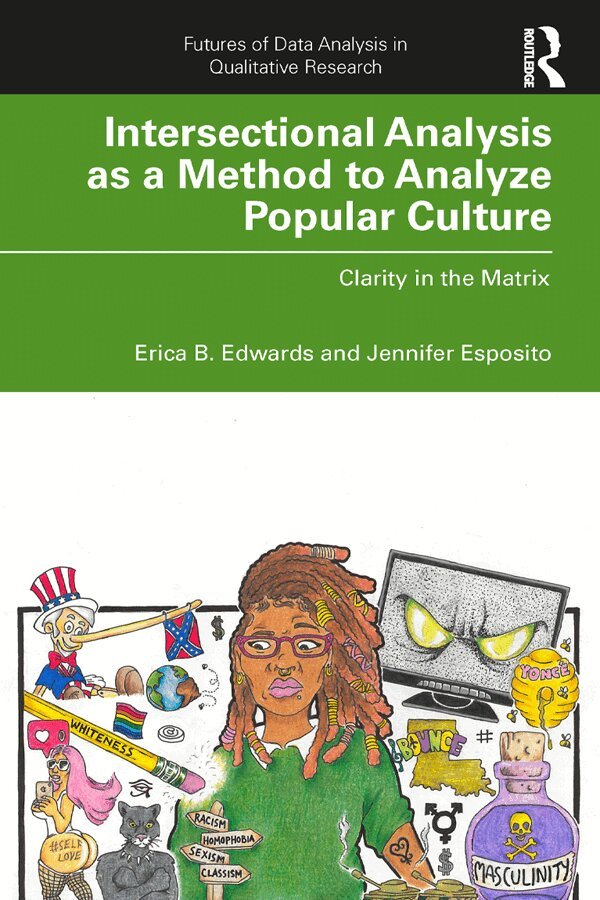
Intersectional Analysis as a Method to Analyze Popular Culture
Clarity in the Matrix
Inbunden, Engelska, 2019
2 113 kr
Skickas inom 10-15 vardagar
Intersectional Analysis as a Method to Analyze Popular Culture: Clarity in the Matrix explores how race, class, gender, sexuality, and other social categories are represented in, and constructed by, some of the most significant popular culture artifacts in contemporary Western culture. Through readings of racialized television sitcoms, LGBTQ+ representation in mainstream American music, the role of Black Panther in Western imperialist projects, and self-love narratives promoted by social media influencers, it demonstrates how novice and emerging researchers can use intersectional theory as an analysis method in the field of cultural studies. The case studies presented are contextualized through a brief history of intersectional theory, a methodological rationale for its use in relation to popular culture, and a review of the ethical considerations researchers should take before, during, and after they approach popular artifacts. Intended to be a textbook for novice and emerging researchers across a wide range of social science disciplines, this book serves as a practical guide to uncover the multiple and interlocking ways oppression is reified, resisted and/or negotiated through popular culture.2021 Winner of the AESA Critics’ Choice Book Award
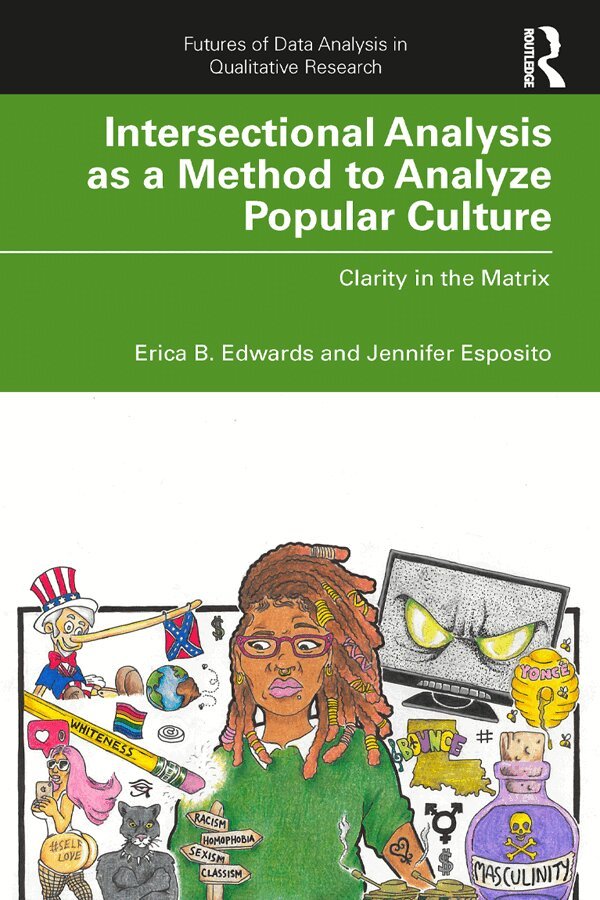
Intersectional Analysis as a Method to Analyze Popular Culture
Clarity in the Matrix
Häftad, Engelska, 2019
659 kr
Skickas inom 10-15 vardagar
Intersectional Analysis as a Method to Analyze Popular Culture: Clarity in the Matrix explores how race, class, gender, sexuality, and other social categories are represented in, and constructed by, some of the most significant popular culture artifacts in contemporary Western culture. Through readings of racialized television sitcoms, LGBTQ+ representation in mainstream American music, the role of Black Panther in Western imperialist projects, and self-love narratives promoted by social media influencers, it demonstrates how novice and emerging researchers can use intersectional theory as an analysis method in the field of cultural studies. The case studies presented are contextualized through a brief history of intersectional theory, a methodological rationale for its use in relation to popular culture, and a review of the ethical considerations researchers should take before, during, and after they approach popular artifacts. Intended to be a textbook for novice and emerging researchers across a wide range of social science disciplines, this book serves as a practical guide to uncover the multiple and interlocking ways oppression is reified, resisted and/or negotiated through popular culture.2021 Winner of the AESA Critics’ Choice Book Award
713 kr
Skickas inom 10-15 vardagar
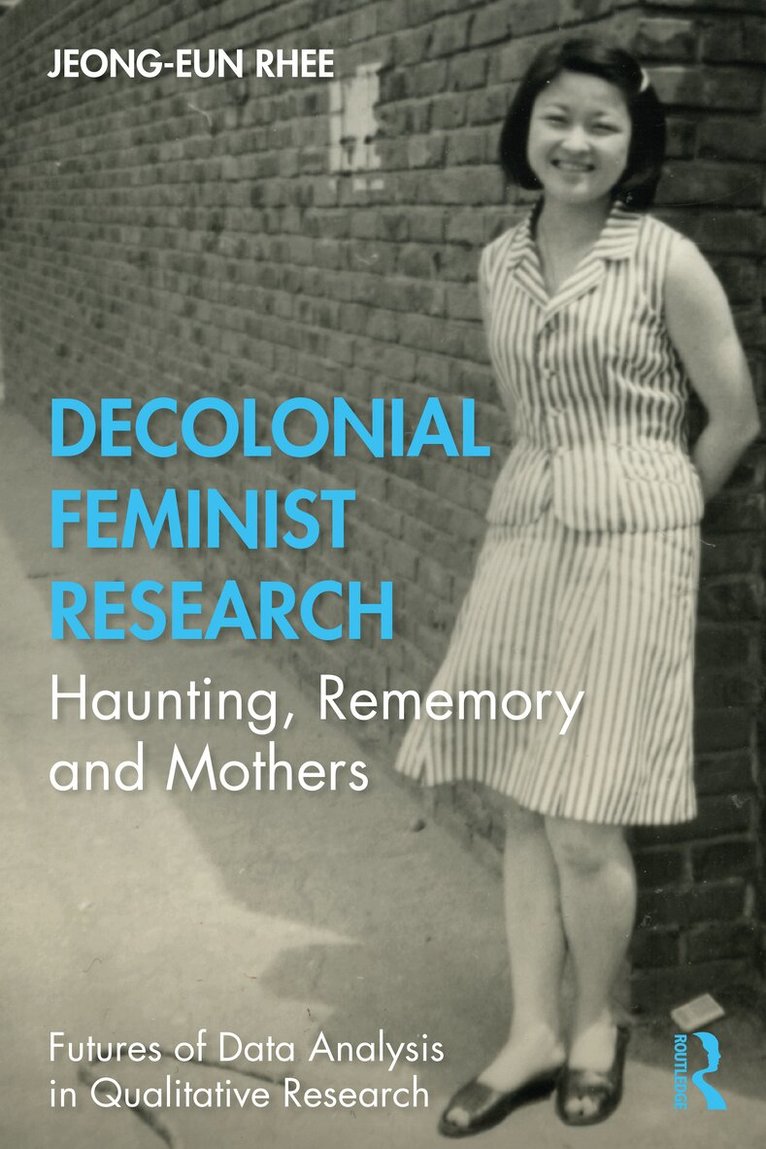
Honourable Mention, ICQI 2022 Outstanding Qualitative Book AwardHonorable Mention, AERA Qualitative SIG for 2023 Outstanding Book Award Category In Decolonial Feminist Research: Haunting, Rememory and Mothers, Jeong-eun Rhee embarks on a deeply personal inquiry that is demanded by her dead mother’s haunting rememory and pursues what has become her work/life question: What methodologies are available to notice and study a reality that exceeds and defies modern scientific ontology and intelligibility? Rhee is a Korean migrant American educational qualitative researcher, who learns anew how to notice, feel, research, and write her mother’s rememory across time, geography, languages, and ways of knowing and being. She draws on Toni Morrison's concept of "rememory" and Theresa Hak Kyung Cha's "fragmented-multi self." Using various genres such as poems, dialogues, fictions, and theories, Rhee documents a multi-layered process of conceptualizing, researching, and writing her (m/others’) transnational rememory as a collective knowledge project of intergenerational decolonial feminists of color. In doing so, the book addresses the following questions: How can researchers write in the name and practice of research what can never be known or narrated with logic and reason? What methodologies can be used to work through and with both personal and collective losses, wounds, and connections that have become y/our questions? Rhee shows how to feel connectivity and fragmentation as/of self not as binary but as constitutive through rememory and invites readers to explore possibilities of decolonial feminist research as an affective bridge to imagine, rememory, and engender healing knowledge. Embodied onto-epistemologies of women of color haunt and thus demand researchers to contest and cross the boundary of questions, topics, methodologies, and academic disciplinary knowledge that are counted as relevant, appropriate, and legitimate within a dominant western science regime. This book is for qualitative researchers and feminism scholars who are pursuing these kinds of boundary-crossing "personal" inquiries.
2 317 kr
Skickas inom 10-15 vardagar
Honourable Mention, ICQI 2022 Outstanding Qualitative Book AwardHonorable Mention, AERA Qualitative SIG for 2023 Outstanding Book Award Category In Decolonial Feminist Research: Haunting, Rememory and Mothers, Jeong-eun Rhee embarks on a deeply personal inquiry that is demanded by her dead mother’s haunting rememory and pursues what has become her work/life question: What methodologies are available to notice and study a reality that exceeds and defies modern scientific ontology and intelligibility? Rhee is a Korean migrant American educational qualitative researcher, who learns anew how to notice, feel, research, and write her mother’s rememory across time, geography, languages, and ways of knowing and being. She draws on Toni Morrison's concept of "rememory" and Theresa Hak Kyung Cha's "fragmented-multi self." Using various genres such as poems, dialogues, fictions, and theories, Rhee documents a multi-layered process of conceptualizing, researching, and writing her (m/others’) transnational rememory as a collective knowledge project of intergenerational decolonial feminists of color. In doing so, the book addresses the following questions: How can researchers write in the name and practice of research what can never be known or narrated with logic and reason? What methodologies can be used to work through and with both personal and collective losses, wounds, and connections that have become y/our questions? Rhee shows how to feel connectivity and fragmentation as/of self not as binary but as constitutive through rememory and invites readers to explore possibilities of decolonial feminist research as an affective bridge to imagine, rememory, and engender healing knowledge. Embodied onto-epistemologies of women of color haunt and thus demand researchers to contest and cross the boundary of questions, topics, methodologies, and academic disciplinary knowledge that are counted as relevant, appropriate, and legitimate within a dominant western science regime. This book is for qualitative researchers and feminism scholars who are pursuing these kinds of boundary-crossing "personal" inquiries.
2 430 kr
Skickas inom 10-15 vardagar
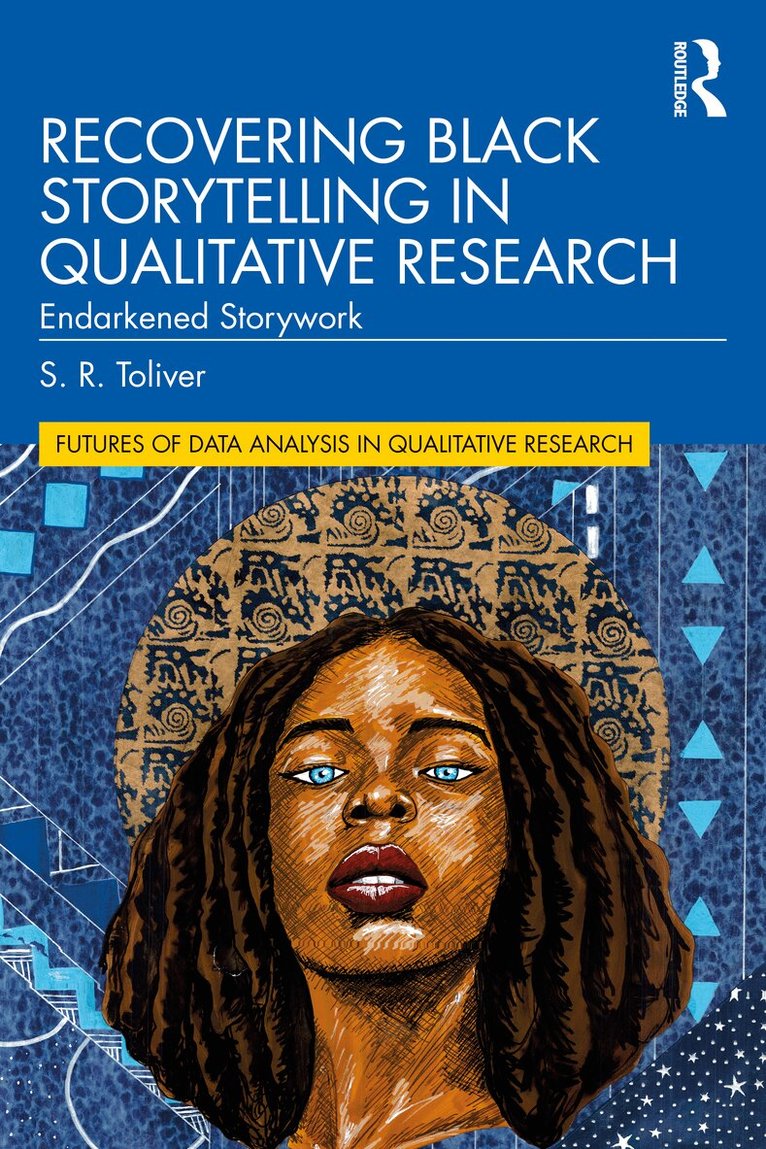
This research-based book foregrounds Black narrative traditions and honors alternative methods of data collection, analysis, and representation. Toliver presents a semi-fictionalized narrative in an alternative science fiction setting, refusing white-centric qualitative methods and honoring the ways of the griots who were the scholars of their African nations.By utilizing Black storytelling, Afrofuturism, and womanism as an onto-epistemological tool, this book asks readers to elevate Black imaginations, uplift Black dreams, and consider how Afrofuturity is qualitative futurity. By centering Black girls, the book considers the ethical responsibility of researchers to focus upon the words of our participants, not only as a means to better understand our historic and current world, but to better situate inquiry for what the future world and future research could look like. Ultimately, this book decenters traditional, white-centered qualitative methods and utilizes Afrofuturism as an onto-epistemological tool and ethical premise. It asks researchers to consider how we move forward in data collection, data analysis, and data representation by centering how Black girls reclaim and recover the past, counter negative and elevate positive realities that exist in the present, and create new possibilities for the future. The semi-fictionalized narrative of the book highlights the intricate methodological and theoretical work that undergirds the story. It will be an important text for both new and seasoned researchers interested in social justice. Informed and anti-racist researchers will find Endarkened storywork a useful tool for educational, cultural, and social critiques now and in the future.
727 kr
Skickas inom 10-15 vardagar
This research-based book foregrounds Black narrative traditions and honors alternative methods of data collection, analysis, and representation. Toliver presents a semi-fictionalized narrative in an alternative science fiction setting, refusing white-centric qualitative methods and honoring the ways of the griots who were the scholars of their African nations.By utilizing Black storytelling, Afrofuturism, and womanism as an onto-epistemological tool, this book asks readers to elevate Black imaginations, uplift Black dreams, and consider how Afrofuturity is qualitative futurity. By centering Black girls, the book considers the ethical responsibility of researchers to focus upon the words of our participants, not only as a means to better understand our historic and current world, but to better situate inquiry for what the future world and future research could look like. Ultimately, this book decenters traditional, white-centered qualitative methods and utilizes Afrofuturism as an onto-epistemological tool and ethical premise. It asks researchers to consider how we move forward in data collection, data analysis, and data representation by centering how Black girls reclaim and recover the past, counter negative and elevate positive realities that exist in the present, and create new possibilities for the future. The semi-fictionalized narrative of the book highlights the intricate methodological and theoretical work that undergirds the story. It will be an important text for both new and seasoned researchers interested in social justice. Informed and anti-racist researchers will find Endarkened storywork a useful tool for educational, cultural, and social critiques now and in the future.
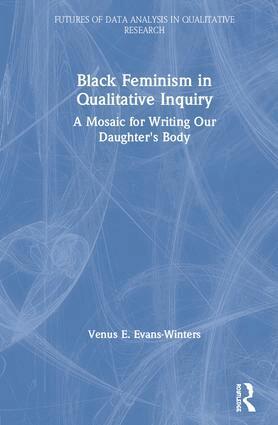
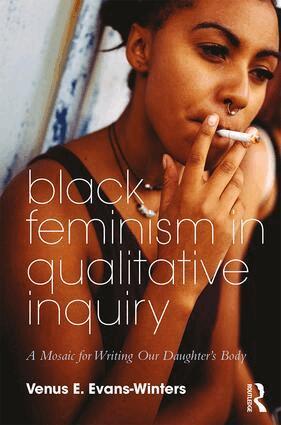
Black Feminism in Qualitative Inquiry
A Mosaic for Writing Our Daughter's Body
Inbunden, Engelska, 2019
2 113 kr
Skickas inom 10-15 vardagar
Recently, Black women have taken the world stage in national politics, popular culture, professional sports, and bringing attention to racial injustice in policing and the judicial system. However, rarely are Black women acknowledged and highlighted for their efforts to understand the social problems confronting our generation and those generations that came before us. In the post-civil rights era, research faculty and theoreticians must acknowledge the marginalization of Black women scholars’ voices in contemporary qualitative scholarship and debates. Black Feminism in Qualitative Inquiry: A Mosaic for Writing our Daughter's Body engages qualitative inquiry to center the issues and concerns of Black women as researcher(s) and the researched while simultaneously questioning the ostensible innocence of qualitative inquiry, including methods of data collection, processes of data analysis, and representations of human experiences and identities. The text centers "daughtering" as the onto-epistemological tool for approaches to Black feminist and critical race data analysis in qualitative inquiry. Advanced and novice researchers interested in decolonizing methodologies and liberatory tools of analysis will find the text useful for cultural, education, political, and racial critiques that center the intersectional identities and interpretations of Black women and girls and other people of color. Daughtering as a tool of analysis in Black feminist qualitative inquiry is our own cultural and spiritual way of being, doing, and performing decolonizing work.
578 kr
Skickas inom 10-15 vardagar
Recently, Black women have taken the world stage in national politics, popular culture, professional sports, and bringing attention to racial injustice in policing and the judicial system. However, rarely are Black women acknowledged and highlighted for their efforts to understand the social problems confronting our generation and those generations that came before us. In the post-civil rights era, research faculty and theoreticians must acknowledge the marginalization of Black women scholars’ voices in contemporary qualitative scholarship and debates. Black Feminism in Qualitative Inquiry: A Mosaic for Writing our Daughter's Body engages qualitative inquiry to center the issues and concerns of Black women as researcher(s) and the researched while simultaneously questioning the ostensible innocence of qualitative inquiry, including methods of data collection, processes of data analysis, and representations of human experiences and identities. The text centers "daughtering" as the onto-epistemological tool for approaches to Black feminist and critical race data analysis in qualitative inquiry. Advanced and novice researchers interested in decolonizing methodologies and liberatory tools of analysis will find the text useful for cultural, education, political, and racial critiques that center the intersectional identities and interpretations of Black women and girls and other people of color. Daughtering as a tool of analysis in Black feminist qualitative inquiry is our own cultural and spiritual way of being, doing, and performing decolonizing work.