Jeremy Potter - Böcker
Visar alla böcker från författaren Jeremy Potter. Handla med fri frakt och snabb leverans.
2 produkter
2 produkter
1 637 kr
Skickas inom 10-15 vardagar
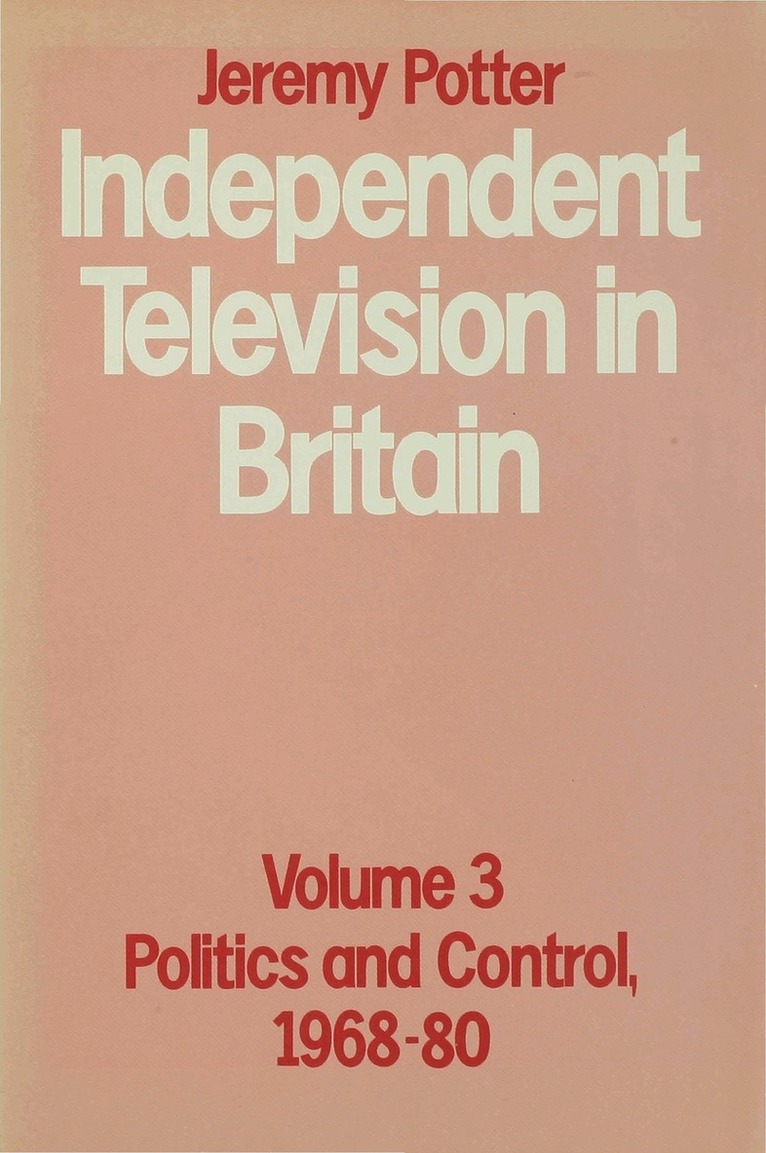
The first two volumes of this history, written by Bernard Sendall, described the events behind the birth and early years of independent television up until 1968. This volume focuses on the central issues facing the Independent Broadcasting Authority and independent television companies during the years of enquiry and uncertainty between the beginning of a new contract period in July 1968 and the passage of the Broadcasting Act and the announcement of successful applicants for new contracts in December 1980 This period was marked by many official investigations culminating in the comprehensive report of the Annan Committee and the passage of the Broadcasting Act 1980. The book details campaigns against violence and sex on the screen, greater accountability from broadcasters and public access to the media. It discusses the impact of colour television and the launch of a fourth channel on Britain, and explains the differences of opinion between politicians and broadcasters. The other volumes in the same work are "Origins and Foundations", "Expansion and Change" and "The Companies and Their Programmes".
Independent Television in Britain
Volume 4: Companies and Programmes, 1968–80
Inbunden, Engelska, 1990
1 637 kr
Skickas inom 10-15 vardagar
A companion to volume 3 "Politics and Control, 1968-80", this book covers aspects of the same period and completes the history of Independent Television from its origin and foundation to the end of 1980. The division between volumes 3 and 4 reflects the system whereby a regulatory body, which was by statute the publisher and the editor of all programmes, employed contractors to undertake the primary function of programme-making. This arrangement built stresses into the structure, and plenty of instances of tension between the supervisors and supervised are recorded. Other drawbacks were an Authority more reactive than "proactive"; the need for much industry and inter-company decision-making by committee; and a short-term approach to planning resulting from limited-period contracts and the uncertainty of renewal.