Jeremy Travis - Böcker
Visar alla böcker från författaren Jeremy Travis. Handla med fri frakt och snabb leverans.
13 produkter
13 produkter
878 kr
Tillfälligt slut
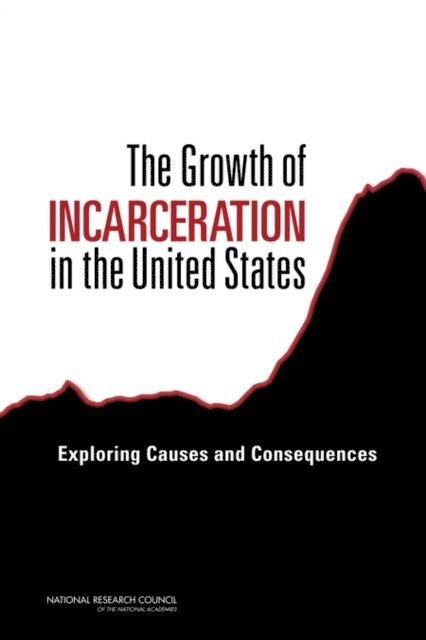
After decades of stability from the 1920s to the early 1970s, the rate of imprisonment in the United States more than quadrupled during the last four decades. The U.S. penal population of 2.2 million adults is by far the largest in the world. Just under one-quarter of the world's prisoners are held in American prisons. The U.S. rate of incarceration, with nearly 1 out of every 100 adults in prison or jail, is 5 to 10 times higher than the rates in Western Europe and other democracies. The U.S. prison population is largely drawn from the most disadvantaged part of the nation's population: mostly men under age 40, disproportionately minority, and poorly educated. Prisoners often carry additional deficits of drug and alcohol addictions, mental and physical illnesses, and lack of work preparation or experience. The growth of incarceration in the United States during four decades has prompted numerous critiques and a growing body of scientific knowledge about what prompted the rise and what its consequences have been for the people imprisoned, their families and communities, and for U.S. society.The Growth of Incarceration in the United States examines research and analysis of the dramatic rise of incarceration rates and its affects. This study makes the case that the United States has gone far past the point where the numbers of people in prison can be justified by social benefits and has reached a level where these high rates of incarceration themselves constitute a source of injustice and social harm. The Growth of Incarceration in the United States recommends changes in sentencing policy, prison policy, and social policy to reduce the nation's reliance on incarceration. The report also identifies important research questions that must be answered to provide a firmer basis for policy. The study assesses the evidence and its implications for public policy to inform an extensive and thoughtful public debate about and reconsideration of policies.
331 kr
Skickas inom 7-10 vardagar
Prisoner Reentry and Crime in America is intended to shed light on a question that fuels the public's concern about the number of returning prisoners. What are the public safety consequences of the fourfold increase in the number of individuals entering and leaving the nation's prisons each year? Many have speculated about the nexus between prisoner reentry and public safety. Journalistic accounts of the reentry phenomenon have painted a picture of a tidal wave of hardened criminals coming back home to resume their destructive lifestyles. Law enforcement officials have attributed increases in violence in their communities to the influx of returning prisoners. Politicians have recommended policies that keep former prisoners out of high crime neighborhoods in the belief that crime would be reduced. The chapters in this book address these issues and suggest policies that will keep released prisoners from committing new crimes.
745 kr
Skickas inom 7-10 vardagar
Prisoner Reentry and Crime in America is intended to shed light on a question that fuels the public's concern about the number of returning prisoners. What are the public safety consequences of the fourfold increase in the number of individuals entering and leaving the nation's prisons each year? Many have speculated about the nexus between prisoner reentry and public safety. Journalistic accounts of the reentry phenomenon have painted a picture of a tidal wave of hardened criminals coming back home to resume their destructive lifestyles. Law enforcement officials have attributed increases in violence in their communities to the influx of returning prisoners. Politicians have recommended policies that keep former prisoners out of high crime neighborhoods in the belief that crime would be reduced. The chapters in this book address these issues and suggest policies that will keep released prisoners from committing new crimes.
488 kr
Skickas inom 10-15 vardagar
As our justice system has embarked upon one of our time's greatest social experiments—responding to crime by expanding prisons—we have forgotten the iron law of imprisonment: they all come back. In 2002, more than 630,000 individuals left federal and state prisons. Thirty years ago, only 150,000 did. In the intense political debate over America's punishment policies, the impact of these returning prisoners on families and communities has been largely overlooked. In But They All Come Back, Jeremy Travis continues his pioneering work on the new realities of punishment in America vis-a-vis public safety, families and children, work, housing, public health, civic identity, and community capacity. Travis proposes organizing the criminal justice system around five principles of reentry to encourage change and spur innovation.
300 kr
Skickas inom 5-8 vardagar
300 kr
Skickas inom 5-8 vardagar
150 kr
Skickas inom 5-8 vardagar
150 kr
Skickas inom 5-8 vardagar
265 kr
Skickas inom 3-6 vardagar
265 kr
Skickas inom 3-6 vardagar
Exploring the Role of the Police in Prisoner Reentry - Scholar's Choice Edition
Häftad, Engelska, 2015
265 kr
Skickas inom 3-6 vardagar
265 kr
Skickas inom 3-6 vardagar
237 kr
Skickas inom 5-8 vardagar
How to envision a justice system that combines the least possible punishment with the greatest possible healing, from an all-star cast of contributors “An extraordinary and long overdue collection offering myriad ways that we can and must completely overhaul the way we imagine as well as implement ‘justice.’” —Heather Ann Thompson, historian and Pulitzer Prize–winning author of Blood in the WaterAfter decades of overpolicing and ever-more punitive criminal justice measures, the time has come for a new approach to violence and community safety. Parsimony and Other Radical Ideas About Justice brings together leading activists, legal practitioners, and researchers, many of them justice-involved, to envision a justice system that applies a less-is-more framework to achieve the goal of public safety. Grounded in a new social contract heralding safety not punishment, community power not state power, the book describes a paradigm shift where justice is provided not by police and prisons, but in healing from harm.A distinguished cast of contributors from the Square One Project at Columbia University’s Justice Lab shows that a parsimonious approach to punishment, alongside a reckoning with racism and affirming human dignity, would fundamentally change how we respond to harm. We would encourage mercy in the face of violence, replace police with community investment, address the trauma lying at the heart of mass incarceration, reduce pre-trial incarceration, close the democracy gap between community residents and government policymakers, and eliminate youth prisons, among other significant changes to justice policy.