Bruce Western - Böcker
Visar alla böcker från författaren Bruce Western. Handla med fri frakt och snabb leverans.
9 produkter
9 produkter
878 kr
Tillfälligt slut
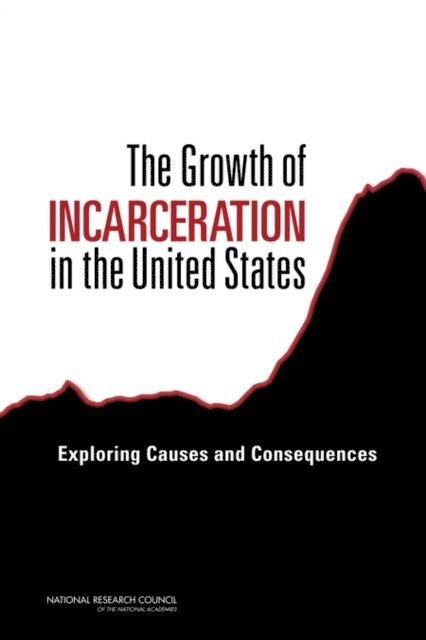
After decades of stability from the 1920s to the early 1970s, the rate of imprisonment in the United States more than quadrupled during the last four decades. The U.S. penal population of 2.2 million adults is by far the largest in the world. Just under one-quarter of the world's prisoners are held in American prisons. The U.S. rate of incarceration, with nearly 1 out of every 100 adults in prison or jail, is 5 to 10 times higher than the rates in Western Europe and other democracies. The U.S. prison population is largely drawn from the most disadvantaged part of the nation's population: mostly men under age 40, disproportionately minority, and poorly educated. Prisoners often carry additional deficits of drug and alcohol addictions, mental and physical illnesses, and lack of work preparation or experience. The growth of incarceration in the United States during four decades has prompted numerous critiques and a growing body of scientific knowledge about what prompted the rise and what its consequences have been for the people imprisoned, their families and communities, and for U.S. society.The Growth of Incarceration in the United States examines research and analysis of the dramatic rise of incarceration rates and its affects. This study makes the case that the United States has gone far past the point where the numbers of people in prison can be justified by social benefits and has reached a level where these high rates of incarceration themselves constitute a source of injustice and social harm. The Growth of Incarceration in the United States recommends changes in sentencing policy, prison policy, and social policy to reduce the nation's reliance on incarceration. The report also identifies important research questions that must be answered to provide a firmer basis for policy. The study assesses the evidence and its implications for public policy to inform an extensive and thoughtful public debate about and reconsideration of policies.
Decarcerating Correctional Facilities during COVID-19
Advancing Health, Equity, and Safety
Häftad, Engelska, 2020
785 kr
Tillfälligt slut
The conditions and characteristics of correctional facilities - overcrowded with rapid population turnover, often in old and poorly ventilated structures, a spatially concentrated pattern of releases and admissions in low-income communities of color, and a health care system that is siloed from community public health - accelerates transmission of the novel coronavirus (SARS-CoV-2) responsible for COVID-19. Such conditions increase the risk of coming into contact with the virus for incarcerated people, correctional staff, and their families and communities. Relative to the general public, moreover, incarcerated individuals have a higher prevalence of chronic health conditions such as asthma, hypertension, and cardiovascular disease, making them susceptible to complications should they become infected. Indeed, cumulative COVID-19 case rates among incarcerated people and correctional staff have grown steadily higher than case rates in the general population.Decarcerating Correctional Facilities during COVID-19 offers guidance on efforts to decarcerate, or reduce the incarcerated population, as a response to COIVD-19 pandemic. This report examines best practices for implementing decarceration as a response to the pandemic and the conditions that support safe and successful reentry of those decarcerated.
588 kr
Tillfälligt slut
The history of the U.S. criminal justice system is marked by racial inequality and sustained by present day policy. Large racial and ethnic disparities exist across the several stages of criminal legal processing, including in arrests, pre-trial detention, and sentencing and incarceration, among others, with Black, Latino, and Native Americans experiencing worse outcomes. The historical legacy of racial exclusion and structural inequalities form the social context for racial inequalities in crime and criminal justice. Racial inequality can drive disparities in crime, victimization, and system involvement.Reducing Racial Inequality in Crime and Justice: Science, Practice, and Policy synthesizes the evidence on community-based solutions, noncriminal policy interventions, and criminal justice reforms, charting a path toward the reduction of racial inequalities by minimizing harm in ways that also improve community safety. Reversing the effects of structural racism and severing the close connections between racial inequality, criminal harms such as violence, and criminal justice involvement will involve fostering local innovation and evaluation, and coordinating local initiatives with state and federal leadership.This report also highlights the challenge of creating an accurate, national picture of racial inequality in crime and justice: there is a lack of consistent, reliable data, as well as data transparency and accountability. While the available data points toward trends that Black, Latino, and Native American individuals are overrepresented in the criminal justice system and given more severe punishments compared to White individuals, opportunities for improving research should be explored to better inform decision-making.
502 kr
Skickas inom 7-10 vardagar
In the United States, less than one worker in five is currently in a labor union, while in Sweden, virtually the entire workforce is unionized. Despite compelling evidence for their positive effects, even the strongest European unions are now in retreat as some policymakers herald the U.S. model of market deregulation. These differences in union power significantly affect workers' living standards and the fortunes of national economies. What explains the enormous variation in unionization and why has the last decade been so hostile to organized labor? Bruce Western tackles these questions in an analysis of labor union organization in eighteen capitalist democracies from 1950 to 1990. Combining insights from sociology and economics in a novel way, Western views unions as the joint product of market forces and political and economic institutions. The author argues that three institutional conditions are essential for union growth: strong working-class political parties, centralized collective bargaining, and union-run unemployment insurance.These conditions shaped the impact of market currents and explain variations across industries, across countries, and over time for the four decades since 1950. Between Class and Market traces the story of the postwar labor movements supported by a blend of historical investigation and sophisticated statistical analysis in an innovative framework for comparative research. Western tightly integrates institutional explanation and comparative method in a way that balances comparative generality with the unique historical experiences of specific cases.
312 kr
Skickas inom 5-8 vardagar
170 kr
Skickas inom 5-8 vardagar
Investigating Prisoner Reentry
The Impact of Conviction Status on the Employment Prospects of Young Men
Häftad, Engelska, 2012
323 kr
Skickas inom 3-6 vardagar
Investigating Prisoner Reentry
The Impact of Conviction Status on the Employment Prospects of Young Men - Scholar's Choice Edition
Häftad, Engelska, 2015
323 kr
Skickas inom 3-6 vardagar
237 kr
Skickas inom 5-8 vardagar
How to envision a justice system that combines the least possible punishment with the greatest possible healing, from an all-star cast of contributors “An extraordinary and long overdue collection offering myriad ways that we can and must completely overhaul the way we imagine as well as implement ‘justice.’” —Heather Ann Thompson, historian and Pulitzer Prize–winning author of Blood in the WaterAfter decades of overpolicing and ever-more punitive criminal justice measures, the time has come for a new approach to violence and community safety. Parsimony and Other Radical Ideas About Justice brings together leading activists, legal practitioners, and researchers, many of them justice-involved, to envision a justice system that applies a less-is-more framework to achieve the goal of public safety. Grounded in a new social contract heralding safety not punishment, community power not state power, the book describes a paradigm shift where justice is provided not by police and prisons, but in healing from harm.A distinguished cast of contributors from the Square One Project at Columbia University’s Justice Lab shows that a parsimonious approach to punishment, alongside a reckoning with racism and affirming human dignity, would fundamentally change how we respond to harm. We would encourage mercy in the face of violence, replace police with community investment, address the trauma lying at the heart of mass incarceration, reduce pre-trial incarceration, close the democracy gap between community residents and government policymakers, and eliminate youth prisons, among other significant changes to justice policy.