Jerry Brotton - Böcker
Visar alla böcker från författaren Jerry Brotton. Handla med fri frakt och snabb leverans.
19 produkter
19 produkter
126 kr
Skickas
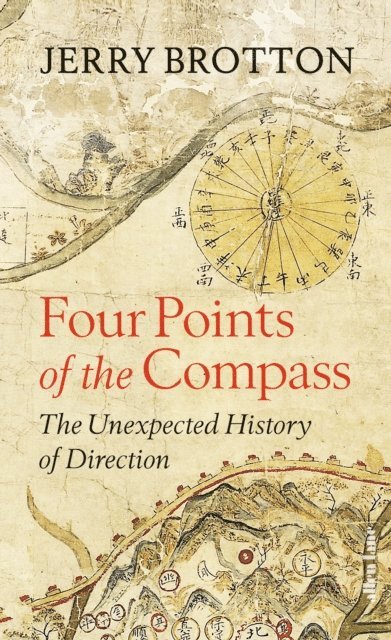
A sparkling exploration of direction, by the acclaimed author of A History of the World in 12 MapsNorth, south, east and west: almost all societies use the four cardinal directions to orientate themselves, to understand who they are by projecting where they are. For millennia, these four directions have been foundational to our travel, navigation and exploration and are central to the imaginative, moral and political geography of virtually every culture in the world. Yet they are far more subjective and various – sometimes contradictory – than we might realize.The Four Points of the Compass takes the reader on a journey of directional discovery. Jerry Brotton reveals why Hebrew culture privileges east; why Renaissance Europeans began drawing north at the top of their maps; why the early Islam revered the south; why the Aztecs used five colour-coded cardinal directions; and why no societies, primitive or modern, have ever orientated themselves westwards. He ends by reflecting on our digital age in which we, the little blue dot on the screen, have become the most important compass point. Throughout, Brotton shows that the directions reflect a human desire to create order and that they only have meaning, literally and metaphorically, depending on where you stand.
160 kr
Skickas
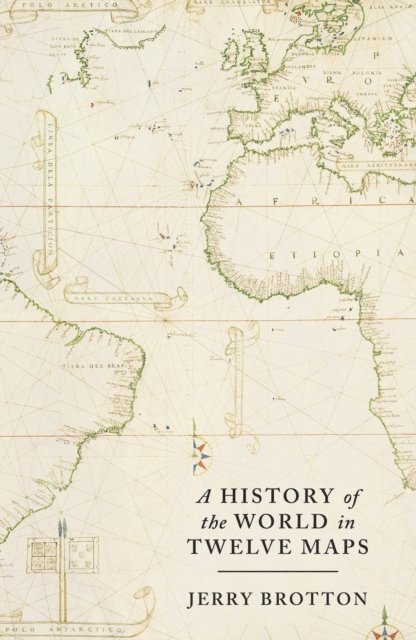
'Fascinating, panoramic, wonderful' Tom HollandA magical book which explores how the world was seen at twelve points in history, through twelve extraordinary maps and the minds of those who made themWhat you see depends on where - and when - you are looking from. As Jerry Brotton's enthralling book shows, maps have shaped our view of the world throughout history, and are themselves shaped by the ideas, prejudices, systems of power and creativity of their age.Brotton examines twelve world maps from global history - from the mystical representations of ancient civilizations and the fourteenth-century Mappamundi to the satellite-derived imagery of today - to show how, by reading them, we can better understand the worlds that produced them. You will not look at a map in quite the same way again.'The intellectual background to these images is conveyed with beguiling erudition ... maps prove to be less conveyors of information than theatrical performances ... There is nothing more subversive than a map' Andrew Linklater, Spectator'Fascinating and thought-provoking ... An achievement of evocation' Anthony Sattin, Literary Review'Elegant, powerfully argued' David Horspool, Guardian, Books of the Year'Rich and adventurous' John Carey, Sunday Times'A highly rewarding study ... you will emerge with a detailed insight into how maps reflect, expose and manipulate the societies in which they are made' Simon Garfield, Mail on Sunday
152 kr
Skickas
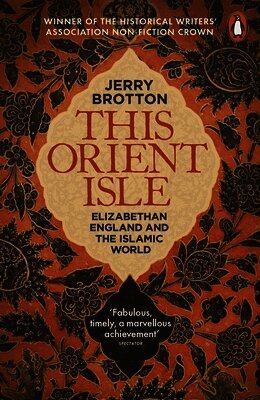
WINNER OF THE HISTORICAL WRITERS ASSOCIATION NON-FICTION CROWNAS HEARD ON BBC RADIO 4'Fabulous, timely, a marvellous achievement' Spectator'A richly resonant work which recasts our understanding of the Elizabethan era' Daily TelegraphIn 1570, after plots and assassination attempts against her, Elizabeth I was excommunicated by the Pope. It was the beginning of cultural, economic and political exchanges with the Islamic world of a depth not again experienced until the modern age. England signed treaties with the Ottoman Porte, received ambassadors from Morocco and shipped munitions to Marrakech in the hope of establishing an accord which would keep the common enemy of Catholic Spain at bay. This awareness of the Islamic world found its way into many of the great English cultural productions of the day - especially, of course, Shakespeare's Othello and The Merchant of Venice. This Orient Isle shows that England's relations with the Muslim world were far more extensive, and often more amicable, than we have ever appreciated, and that their influence was felt across the political, commercial and domestic landscape of Elizabethan England.
111 kr
Skickas inom 5-8 vardagar
More than ever before, the Renaissance stands as one of the defining moments in world history. Between 1400 and 1600, European perceptions of society, culture, politics and even humanity itself emerged in ways that continue to affect not only Europe but the entire world. This wide-ranging exploration of the Renaissance sees the period as a time of unprecedented intellectual excitement and cultural experimentation and interaction on a global scale, alongside a darker side of religion, intolerance, slavery, and massive inequality of wealth and status. It guides the reader through the key issues that defined the period, from its art, architecture, and literature, to advancements in the fields of science, trade, and travel. In its incisive account of the complexities of the political and religious upheavals of the period, the book argues that Europe's reciprocal relationship with its eastern neighbours offers us a timely perspective on the Renaissance that still has much to teach us today. ABOUT THE SERIES: The Very Short Introductions series from Oxford University Press contains hundreds of titles in almost every subject area. These pocket-sized books are the perfect way to get ahead in a new subject quickly. Our expert authors combine facts, analysis, perspective, new ideas, and enthusiasm to make interesting and challenging topics highly readable.
559 kr
Skickas inom 7-10 vardagar
More than ever before, the Renaissance stands as one of the defining moments in world history. Between 1400 and 1600, European perceptions of society, culture, politics and even humanity itself emerged in ways that continue to affect not only Europe but the entire world. This wide-ranging exploration of the Renaissance sees the period as a time of unprecedented intellectual excitement and cultural experimentation and interaction on a global scale, alongside a darker side of religion, intolerance, slavery, and massive inequality of wealth and status.It guides the reader through the key issues that defined the period, from its art, architecture, and literature, to advancements in the fields of science, trade, and travel. In its incisive account of the complexities of the political and religious upheavals of the period, the book argues that Europe's reciprocal relationship with its eastern neighbours offers us a timely perspective on the Renaissance as a moment of global inclusiveness that still has much to teach us today.
235 kr
Tillfälligt slut
A sparkling exploration of direction, by the acclaimed author of A History of the World in 12 MapsNorth, south, east and west: almost all societies use the four cardinal directions to orientate themselves, to understand who they are by projecting where they are. For millennia, these four directions have been foundational to our travel, navigation and exploration and are central to the imaginative, moral and political geography of virtually every culture in the world. Yet they are far more subjective and various – sometimes contradictory – than we might realize.The Four Points of the Compass takes the reader on a journey of directional discovery. Jerry Brotton reveals why Hebrew culture privileges east; why Renaissance Europeans began drawing north at the top of their maps; why the early Islam revered the south; why the Aztecs used five colour-coded cardinal directions; and why no societies, primitive or modern, have ever orientated themselves westwards. He ends by reflecting on our digital age in which we, the little blue dot on the screen, have become the most important compass point. Throughout, Brotton shows that the directions reflect a human desire to create order and that they only have meaning, literally and metaphorically, depending on where you stand.
1 287 kr
Skickas inom 3-6 vardagar
In this generously illustrated book, Jerry Brotton documents the dramatic changes in the nature of geographical representation which took place during the sixteenth century, explaining how much they convey about the transformation of European culture at the end of the early modern era. He examines the age's fascination with maps, charts, and globes as both texts and artifacts that provided their owners with a promise of gain, be it intellectual, political, or financial. From the Middle Ages through most of the sixteenth century, Brotton argues, mapmakers deliberately exploited the partial, often conflicting accounts of geographically distant territories to create imaginary worlds. As long as the lands remained inaccessible, these maps and globes were politically compelling. They bolstered the authority of the imperial patrons who employed the geographers and integrated their creations into ever more grandiose rhetorics of expansion. As the century progressed, however, geographers increasingly owed allegiance to the administrators of vast joint-stock companies that sought to exploit faraway lands and required the systematic mapping of commercially strategic territories. By the beginning of the seventeenth century, maps had begun to serve instead as scientific guides, defining objectively valid images of the world.
1 377 kr
Skickas inom 3-6 vardagar
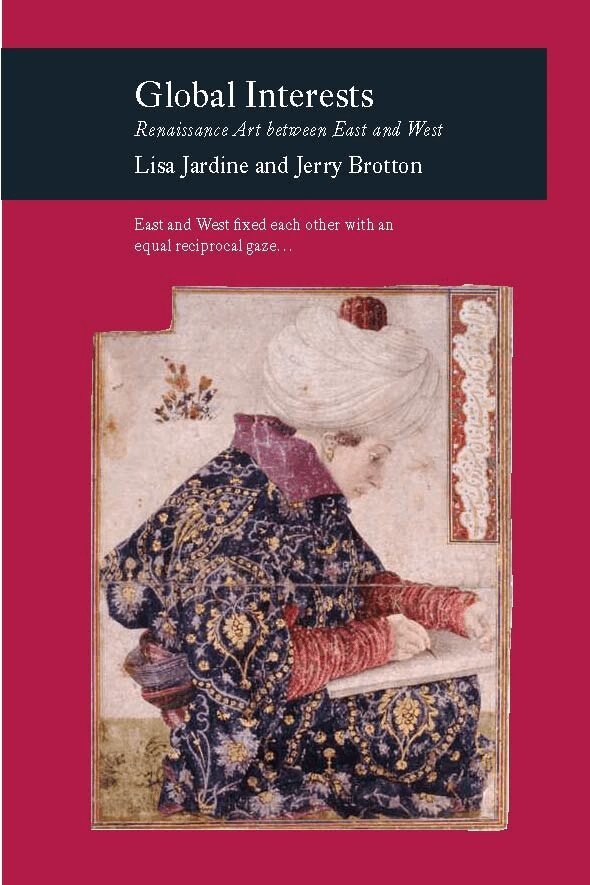
In this groundbreaking, highly provocative examination of the Renaissance, Jerry Brotton and Lisa Jardine raise questions about the formation of cultural identity in Western Europe. Through an analysis of the circulation of art and luxury objects, the authors challenge the view that Renaissance culture defined itself in large part against an exotic, dangerous, always marginal East. Featuring more than seventy illustrations, including many in color and some published for the first time, their book provides fascinating insights into the works of Pisanello, Leonardo, Dürer, Holbein, and Titian. Global Interests explores the trade in portrait medals, tapestries, and equestrian art, all items that Brotton and Jardine demonstrate were markers of power and influence in both the West and the East. The authors reveal that this trade represented a remarkably equal exchange between Renaissance Europe and the Ottoman East. Their findings lead them to argue that the East, and in particular the Ottoman Empire of Mehmet the Conqueror and Suleiman the Magnificent, was not the antithetical "other" to the emergence of a Western European identity in the sixteenth century. Instead, Paris, Venice, and London were linked with Istanbul and the East through networks of shared political and commercial interests. By showing that the traditional view of Renaissance culture is misleading, the authors offer a more truly global understanding of historical experience.
319 kr
Skickas inom 3-6 vardagar
231 kr
Skickas inom 3-6 vardagar
318 kr
Skickas
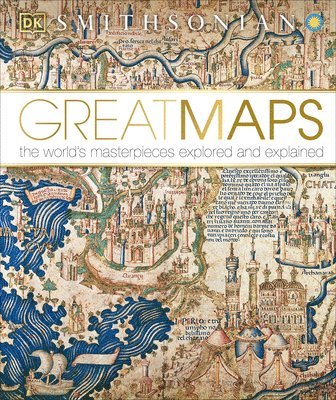
A superbly illustrated guide to 64 maps from all around the world! From examples of medieval Mappa Mundi and the first atlas to Google Earth and maps of the moon, this captivating maps book is a must-have for all history and geography enthusiasts and explorers! Embark on a visual tour of the world's finest maps! This fascinating world atlas book: - Analyses each map visually, with the help of pull-outs and graphic close-up details- Traces the history of maps chronologically, providing a fascinating overview of cartography through the ages- Tells the story behind each map - why it was created, who it was for, and how it was achieved- Profiles key cartographers, explorers, and artists- Draws together navigation, propaganda, power, art, and politics through the world's greatest mapsMaps are much more than just geographical data. They are an accurate reflection of the culture and context of different time frames in history. This remarkable geography book puts cartography on the map! It tells the stories behind great maps through stunning pull-out details and reveals how they have helped people make sense of the world. Embark on a global adventure of a lifetime with this world map book and see our planet like never before! On this mind-blowing journey, you'll encounter maps that show the way to heaven, depict lands with no sunshine and even the world ocean floor. With incredible secret stories from British historian, Jerry Brotton, and insight into how mapmakers have expressed their world views, Great Maps is a welcome addition to any armchair cartographer's bookshelf.
415 kr
Skickas inom 3-6 vardagar
197 kr
Skickas inom 5-8 vardagar
Set against the backdrop of war, revolution, and regicide, and moving from London to Venice, Mantua, Madrid, Paris and the Low Countries, Jerry Brotton’s colourful and critically acclaimed book, The Sale of the Late King's Goods, explores the formation and dispersal of King Charles I’s art collection. Following a remarkable and unprecedented Parliamentary Act for ‘The sale of the late king’s goods’, Cromwell’s republican regime sold off nearly 2,000 paintings, tapestries, statues and drawings in an attempt to settle the dead king’s enormous debts and raise money for the Commonwealth’s military forces. Brotton recreates the extraordinary circumstances of this sale, in which for the first time ordinary working people were able to handle and own works by the great masters. He also examines the abiding relationship between art and power, revealing how the current Royal Collection emerged from this turbulent period, and paints its own vivid and dramatic picture of one of the greatest lost collections in English history.
202 kr
Skickas inom 7-10 vardagar
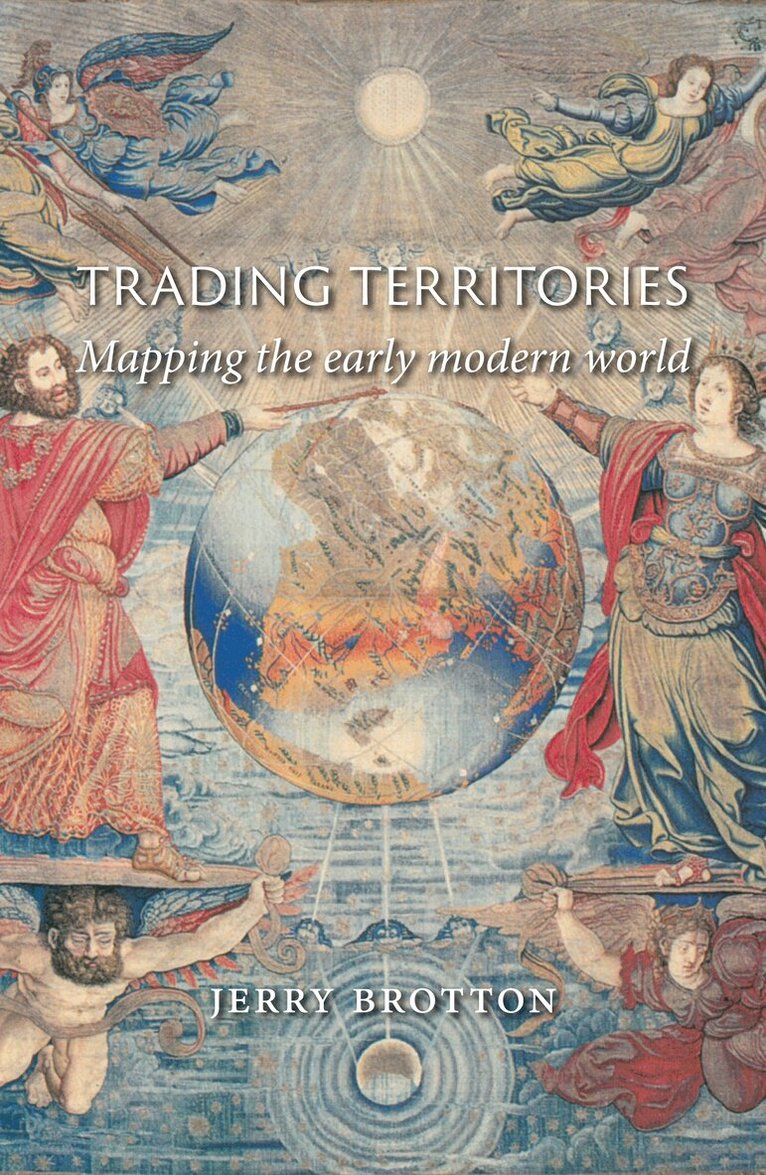
Trading Territories tells the compelling story of maps and geographical knowledge in the early modern world from the fifteenth to the early seventeenth century. Examining how European geographers mapped the territories of the Old World –Africa and Southeast Asia – this book shows how the historical preoccupation with Columbus’s ‘discovery’ of the New World of America in 1492 obscured the ongoing importance of mapping territories that have since been defined as ‘eastern’, especially those in the Muslim world.In this book, now available in paperback and updated with a new preface by the author, Jerry Brotton shows that trade and diplomacy defined the development of maps and globes in this period, far more than the disinterested pursuit of scientific accuracy and objectivity, and challenges our preconceptions about not just maps, but also the history and geography of what we call East and West.
481 kr
Skickas inom 7-10 vardagar
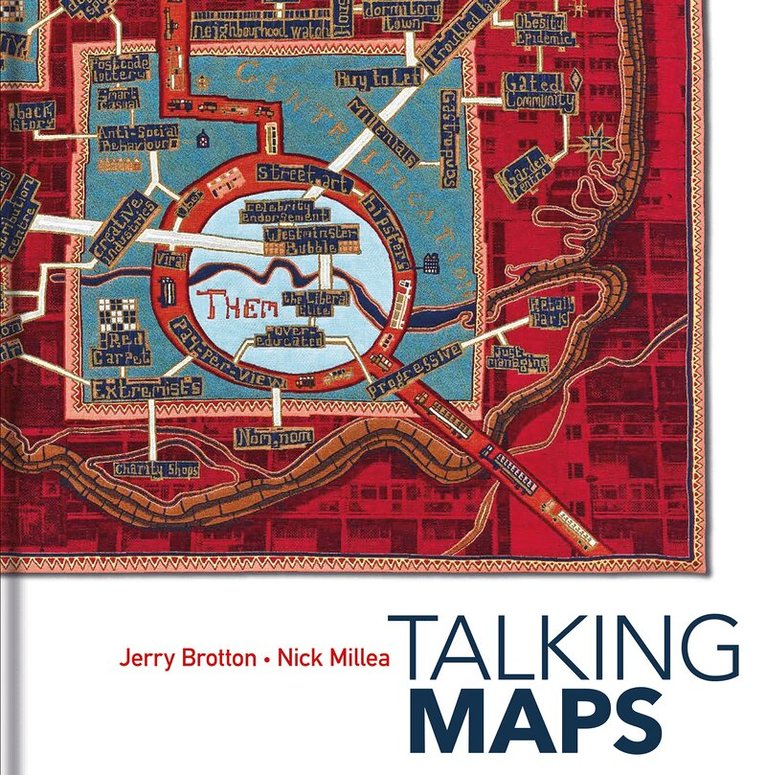
Every map tells a story. Some provide a narrative for travellers, explorers and surveyors or offer a visual account of changes to people’s lives, places and spaces, while others tell imaginary tales, transporting us to fictional worlds created by writers and artists. In turn, maps generate more stories, taking users on new journeys in search of knowledge and adventure. Drawing on the Bodleian Library’s outstanding map collection and covering almost a thousand years, 'Talking Maps' takes a new approach to map-making by showing how maps and stories have always been intimately entwined. Including such rare treasures as a unique map of the Mediterranean from the eleventh-century Arabic 'Book of Curiosities', al-Sharīf al-Idrīsī’s twelfth-century world map, C.S. Lewis’s map of Narnia, J.R.R. Tolkien’s cosmology of Middle-earth and Grayson Perry’s twenty-first-century tapestry map, this fascinating book analyses maps as objects that enable us to cross sea and land; as windows into alternative and imaginary worlds; as guides to reaching the afterlife; as tools to manage cities, nations, even empires; as images of environmental change; and as digitized visions of the global future. By telling the stories behind the artefacts and those generated by them, 'Talking Maps' reveals how each map is not just a tool for navigation but also a worldly proposal that helps us to understand who we are by describing where we are.
151 kr
Skickas
From medieval maps to digital cartograms, this book features highlights from the Bodleian Library’s extraordinary map collection together with rare artefacts and some stunning examples from twenty-first-century map-makers. Each map is accompanied by a narrative revealing the story behind how it came to be made and the significance of what it shows. The chronological arrangement highlights how cartography has evolved over the centuries and how it reflects political and social change. Showcasing a twelfth-century Arabic map of the Mediterranean, highly decorated portolan charts, military maps, trade maps, a Siberian sealskin map, maps of heaven and hell, C.S. Lewis’s map of Narnia, J.R.R. Tolkien’s cosmology of Middle-earth and Grayson Perry’s tapestry map, this book is a treasure-trove of cartographical delights spanning over a thousand years.
326 kr
Skickas
In this radical and wide-ranging reassessment of Renaissance art, Jerry Brotton and Lisa Jardine examine the ways in which European culture came to define itself culturally and aesthetically in the years 1450 to 1550. Looking outwards for confirmation of who they were and of what defined them as ‘civilized’, Europeans encountered the returning gaze of what we now call the East, in particular the powerful Ottoman Empire of Mehmed the Conqueror and Süleyman the Magnificent. Global Interests explores these historical interactions by offering new and exciting accounts of three often neglected art objects: portrait medals, tapestries and equestrian art. The portability of medals and tapestries, and the transportability of, and esteem accorded to, pure-bred Eastern horses made them frequently exchanged objects, and, as such, highly revealing of the cultural currents flowing between Occident and Orient. The authors provide fascinating new responses to some of the most iconic paintings of the period, including the work of Pisanello, Leonardo, Dürer, Holbein and Titian.Global Interests also offers a timely reassessment of the development of European imperialism, focusing on the Habsburg Empire of Charles V, and concludes with a consideration of the impact this history continues to have upon contemporary perceptions of European culture and ethnic identity.
521 kr
Skickas inom 7-10 vardagar
Unveiling the treasures of the Schroder Collection, one of the finest collections of Renaissance silver, paintings, works on paper, bronzes, maiolica and gems in private handsThe highlights of this lavishly illustrated catalogue include magnificent Renaissance goldsmith work; paintings by artists such as Lucas Cranach the Elder, Hans Holbein the Elder and Hans Burgkmair, and masterpieces of Italian maiolica and bronze sculpture by masters including Giambologna. Acquired by the Schroder banking family mainly between the second half of the nineteenth and the early twentieth century, several of these masterpieces have never been seen by the public and have remained unpublished until now. This diverse group of objects, made of both familiar and exotic materials and spanning a wide range of styles, subjects and techniques, embodies the characteristics of the Renaissance and its global nature. Jerry Brotton’s innovative and thought-provoking overview of the period reveals the crosscultural fertilization of materials, ideas and motifs both across Europe (especially from north to south) and the East, including first Byzantine then Ottoman dominions, as well as the Far East. This sets the scene for a survey of sixteenth-century art forms, including luxury goldsmith work, German prints and books, Northern Renaissance painting, Italian bronze and maiolica, and antique engraved gems and cameos. Each section is introduced by a leading expert in the field and includes in-depth essays on selected highlights from the collection. The publication celebrates the launch of the new Renaissance Gallery in the Holburne Museum in Bath, which draws inspiration from the grand treasury displays of the past and makes the collection accessible to a wider audience.Published by Paul Holberton PublishingExhibition Schedule:The Holburne Museum(June 2025)
446 kr
Skickas inom 3-6 vardagar