• Fri frakt över 249 kr
  • •
  • Snabba leveranser
  • •
  • Billiga böcker
Kundservice

Du är på sajten för privatpersoner.

Företag, bibliotek eller offentlig verksamhet?

Du handlar på classic.bokus.com, där alla dina funktioner finns intakta.
Till classic.bokus.com
Bokus logotyp. Gå till startsidan.
  • Erbjudanden
  • Nyheter
  • Student
  • Topplistor
  • Barn & ungdom
  • Bokus Play
  • E-böcker
  • Pocketböcker
  • Spel & pussel

10% rabatt på allt med kod NYSTART10 →

Sidfot

Mina sidor

    Hjälp

    • Kundservice
    • Vanliga frågor och svar
    • Frakt och leverans
    • Retur vid ångerrätt
    • Reklamera vara
    • Betalning
    • Köpvillkor
    • Allmänna villkor
    • Information om webbplatsens tillgänglighet

    Om Bokus

    • Om oss
    • Pressrum
    • För studenter
    • För företag
    • För bibliotek och offentlig verksamhet
    • För leverantörer
    • Hållbarhet

    Populärt

    • Aktuella erbjudanden
    • Presentkort
    • Studentlitteratur
    • Nya böcker
    • Topplistor
    • Signerade böcker
    • Engelska böcker

    Inspiration

    • Boktips
    • BookTok
    • Populära bokserier
    • Barnbokskaraktärer
    • Populära författare
    Logotyp för Bokus
    Följ oss på Facebook (extern länk)Följ oss på Instagram (extern länk)Följ oss på YouTube (extern länk)Följ oss på TikTok (extern länk)
    bokus @ CookiesAnpassa cookiesIntegritetspolicyKöpvillkor
    Till Citymail hemsida (extern länk)Till Budbee hemsida (extern länk)Till Postnord hemsida (extern länk)Till Schenker hemsida (extern länk)Till Early Bird hemsida (extern länk)Till Walleys hemsida (extern länk)
    1. Samhälle och politik
    2. Samhälle och kultur
    3. Kultur och medier
    4. Kulturvetenskap

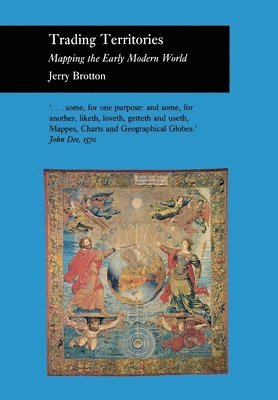
    Trading Territories

    Mapping the Early Modern World

    AvJerry Brotton

    Inbunden, Engelska, 1997

    1 293 kr

    Beställningsvara. Skickas inom 3-6 vardagar. Fri frakt över 249 kr.

    Fler format och utgåvor

    Häftad

    210 kr

    Beskrivning

    In this generously illustrated book, Jerry Brotton documents the dramatic changes in the nature of geographical representation which took place during the sixteenth century, explaining how much they convey about the transformation of European culture at the end of the early modern era. He examines the age's fascination with maps, charts, and globes as both texts and artifacts that provided their owners with a promise of gain, be it intellectual, political, or financial. From the Middle Ages through most of the sixteenth century, Brotton argues, mapmakers deliberately exploited the partial, often conflicting accounts of geographically distant territories to create imaginary worlds. As long as the lands remained inaccessible, these maps and globes were politically compelling. They bolstered the authority of the imperial patrons who employed the geographers and integrated their creations into ever more grandiose rhetorics of expansion. As the century progressed, however, geographers increasingly owed allegiance to the administrators of vast joint-stock companies that sought to exploit faraway lands and required the systematic mapping of commercially strategic territories. By the beginning of the seventeenth century, maps had begun to serve instead as scientific guides, defining objectively valid images of the world.

    Produktinformation

    • Utgivningsdatum:1997-11-06
    • Mått:156 x 235 x undefined mm
    • Vikt:680 g
    • Format:Inbunden
    • Språk:Engelska
    • Antal sidor:256
    • Förlag:Cornell University Press
    • ISBN:9780801434990

    Utforska kategorier

    • Kulturvetenskap inom Samhälle och politik
    • Allmän historia och världshistoria inom Historia och arkeologi
    • Geografi inom Naturvetenskap och teknik

    Mer om författaren

    Jerry Brotton is Senior Lecturer in Renaissance Studies, Queen Mary, University of London. He is the author of The Renaissance Bazaar.

    Recensioner i media

    "Brotton clearly shows the commercial and political pressures that made mapmaking so important during the 1600s . . . The book excellently tells the story of mapmakers' progressing from servants whose maps distorted kings' territories to independent scholars whose maps' political neutrality and geographical accuracy were rewarded by private companies. . . . Map buffs and those interested in early world exploration should enjoy this one."—Booklist