Jesse Driscoll - Böcker
Visar alla böcker från författaren Jesse Driscoll. Handla med fri frakt och snabb leverans.
6 produkter
6 produkter
Doing Global Fieldwork
A Social Scientist's Guide to Mixed-Methods Research Far from Home
Inbunden, Engelska, 2021
951 kr
Skickas inom 7-10 vardagar
To do quality research, many social scientists must travel to far-flung parts of the world and spend long stretches of time living in places they find unfamiliar and uncomfortable. No matter how prepared researchers think they are, everyone encounters unexpected challenges in the course of their work in the field.In Doing Global Fieldwork, the political scientist Jesse Driscoll offers a how-to guide for social scientists who are considering extended mixed-methods international fieldwork. He details the major steps in fieldwork planning and execution, from creating a plan, to what happens when political conditions throw up obstacles to research, to distilling and writing up research findings upon return. Driscoll emphasizes the ability to improvise and adapt because in the field, ideas will shift, plans will change, and something will inevitably go wrong. He offers a practical overview of the types of psychological and physical preparation, professionalization, and self-presentation that social scientists conducting research abroad need to prioritize. Driscoll describes the challenges that arise when working in difficult settings, such as war zones, areas of contested sovereignty, and volatile nondemocratic states. He explores the practical and ethical considerations for data collection in these unique situations, including whether and how much to reveal about one’s research and common psychological harms associated with fieldwork.Doing Global Fieldwork is an up-to-date methodological guide for graduate students and social science researchers of all stripes who need blunt, no-nonsense advice about how to make the best of their time in the field.
Doing Global Fieldwork
A Social Scientist's Guide to Mixed-Methods Research Far from Home
Häftad, Engelska, 2021
243 kr
Skickas inom 7-10 vardagar
To do quality research, many social scientists must travel to far-flung parts of the world and spend long stretches of time living in places they find unfamiliar and uncomfortable. No matter how prepared researchers think they are, everyone encounters unexpected challenges in the course of their work in the field.In Doing Global Fieldwork, the political scientist Jesse Driscoll offers a how-to guide for social scientists who are considering extended mixed-methods international fieldwork. He details the major steps in fieldwork planning and execution, from creating a plan, to what happens when political conditions throw up obstacles to research, to distilling and writing up research findings upon return. Driscoll emphasizes the ability to improvise and adapt because in the field, ideas will shift, plans will change, and something will inevitably go wrong. He offers a practical overview of the types of psychological and physical preparation, professionalization, and self-presentation that social scientists conducting research abroad need to prioritize. Driscoll describes the challenges that arise when working in difficult settings, such as war zones, areas of contested sovereignty, and volatile nondemocratic states. He explores the practical and ethical considerations for data collection in these unique situations, including whether and how much to reveal about one’s research and common psychological harms associated with fieldwork.Doing Global Fieldwork is an up-to-date methodological guide for graduate students and social science researchers of all stripes who need blunt, no-nonsense advice about how to make the best of their time in the field.
347 kr
Skickas inom 7-10 vardagar
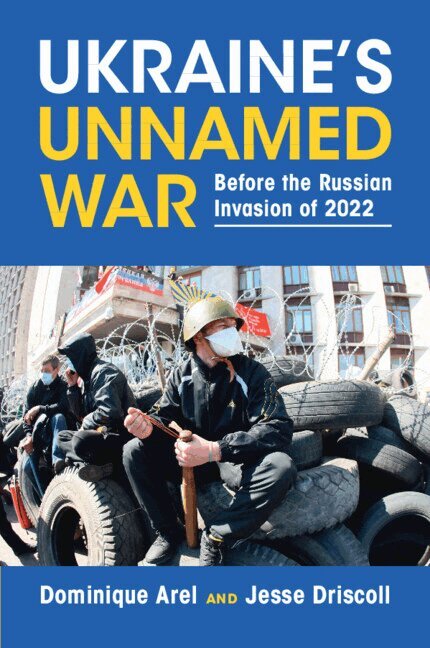
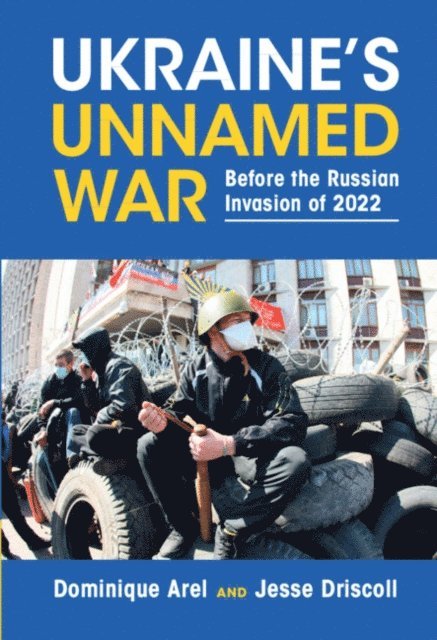
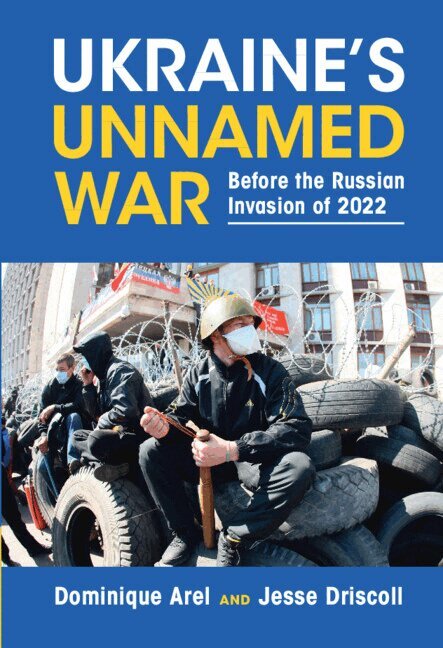
The Russian invasion of Ukraine in 2022 has its roots in the events of 2013-2014. Russia cynically termed the seditionist conflict in Crimea and Eastern Donbas a 'civil war' in order to claim non-involvement. This flies in the face of evidence, but the authors argue that the social science literature on civil wars can be used help understand why no political solution was found between 2015 and 2022. The book explains how Russia, after seizing Crimea, was reacting to events it could not control and sent troops only to areas of Ukraine where it knew it would face little resistance (Eastern Donbas). Kremlin decisionmakers misunderstood the attachment of the Russian-speaking population to the Ukrainian state and also failed to anticipate that their intervention would transform Ukraine into a more cohesively 'Ukrainian' polity. Drawing on Ukrainian documentary sources, this concise book explains these important developments to a non-specialist readership.
1 245 kr
Skickas inom 7-10 vardagar
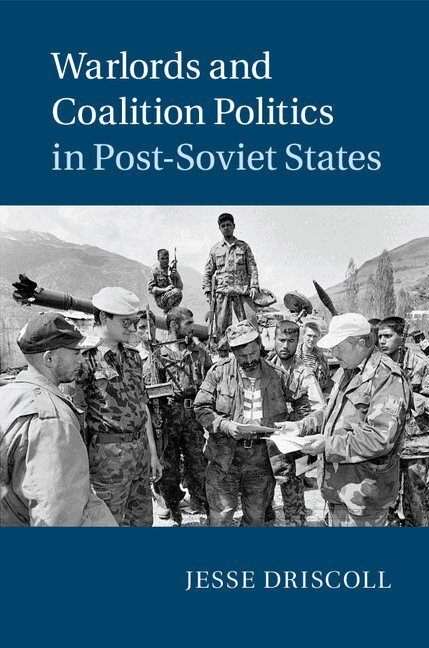
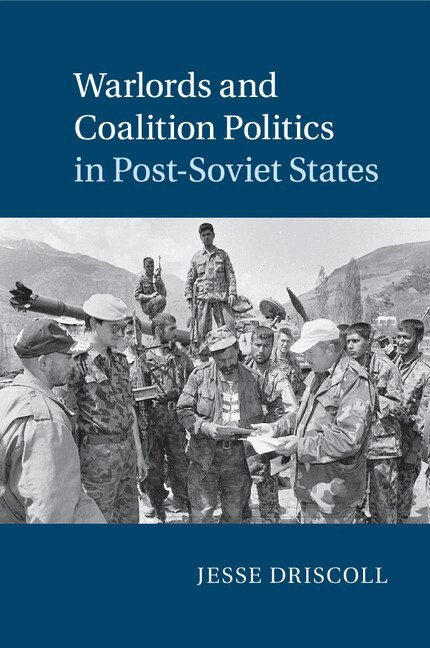
The break-up of the USSR was unexpected and unexpectedly peaceful. Though a third of the new states fell prey to violent civil conflict, anarchy on the post-Soviet periphery, when it occurred, was quickly cauterized. This book argues that this outcome had nothing to do with security guarantees by Russia or the United Nations and everything to do with local innovation by ruthless warlords, who competed and colluded in a high-risk coalition formation game. Drawing on a structured comparison of Georgian and Tajik militia members, the book combines rich comparative data with formal modeling, treating the post-Soviet space as an extraordinary laboratory to observe the limits of great powers' efforts to shape domestic institutions in weak states.
350 kr
Skickas inom 7-10 vardagar
The break-up of the USSR was unexpected and unexpectedly peaceful. Though a third of the new states fell prey to violent civil conflict, anarchy on the post-Soviet periphery, when it occurred, was quickly cauterized. This book argues that this outcome had nothing to do with security guarantees by Russia or the United Nations and everything to do with local innovation by ruthless warlords, who competed and colluded in a high-risk coalition formation game. Drawing on a structured comparison of Georgian and Tajik militia members, the book combines rich comparative data with formal modeling, treating the post-Soviet space as an extraordinary laboratory to observe the limits of great powers' efforts to shape domestic institutions in weak states.
1 100 kr
Skickas inom 7-10 vardagar
The Russian invasion of Ukraine in 2022 has its roots in the events of 2013-2014. Russia cynically termed the seditionist conflict in Crimea and Eastern Donbas a 'civil war' in order to claim non-involvement. This flies in the face of evidence, but the authors argue that the social science literature on civil wars can be used help understand why no political solution was found between 2015 and 2022. The book explains how Russia, after seizing Crimea, was reacting to events it could not control and sent troops only to areas of Ukraine where it knew it would face little resistance (Eastern Donbas). Kremlin decisionmakers misunderstood the attachment of the Russian-speaking population to the Ukrainian state and also failed to anticipate that their intervention would transform Ukraine into a more cohesively 'Ukrainian' polity. Drawing on Ukrainian documentary sources, this concise book explains these important developments to a non-specialist readership.