Jesse McCarthy - Böcker
Visar alla böcker från författaren Jesse McCarthy. Handla med fri frakt och snabb leverans.
10 produkter
10 produkter
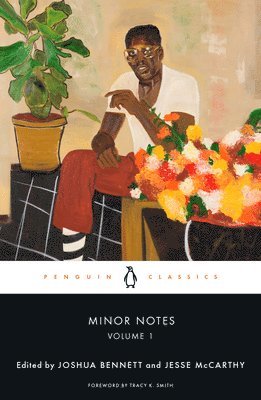
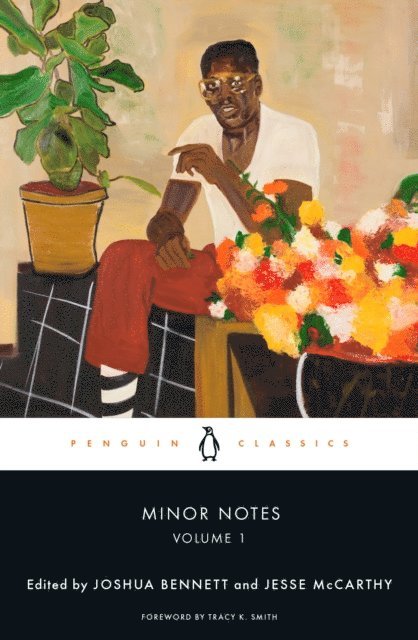
Minor Notes, Volume 1
Poems by a Slave; Visions of the Dusk; and Bronze: A Book of Verse
Häftad, Engelska, 2023
182 kr
Skickas
Minor Notes Vol. 1 features the work of three poets. Published in 1837, Poems by a Slave is one of the lesser-known works by George Moses Horton (1798-1883), once popularly known as the 'black bard of North Carolina.' Visions of the Dusk (1915) is an American prose poem known for its formal innovation by Fenton Johnson, a poet, essayist, editor and educator from Chicago. Georgia Douglas Johnson was the most widely read black woman poet in the US during the first three decades of the 20th century. Bronze: A Book of Verse (1922) was introduced with a foreword by W. E. B. Du Bois.
181 kr
Kommande
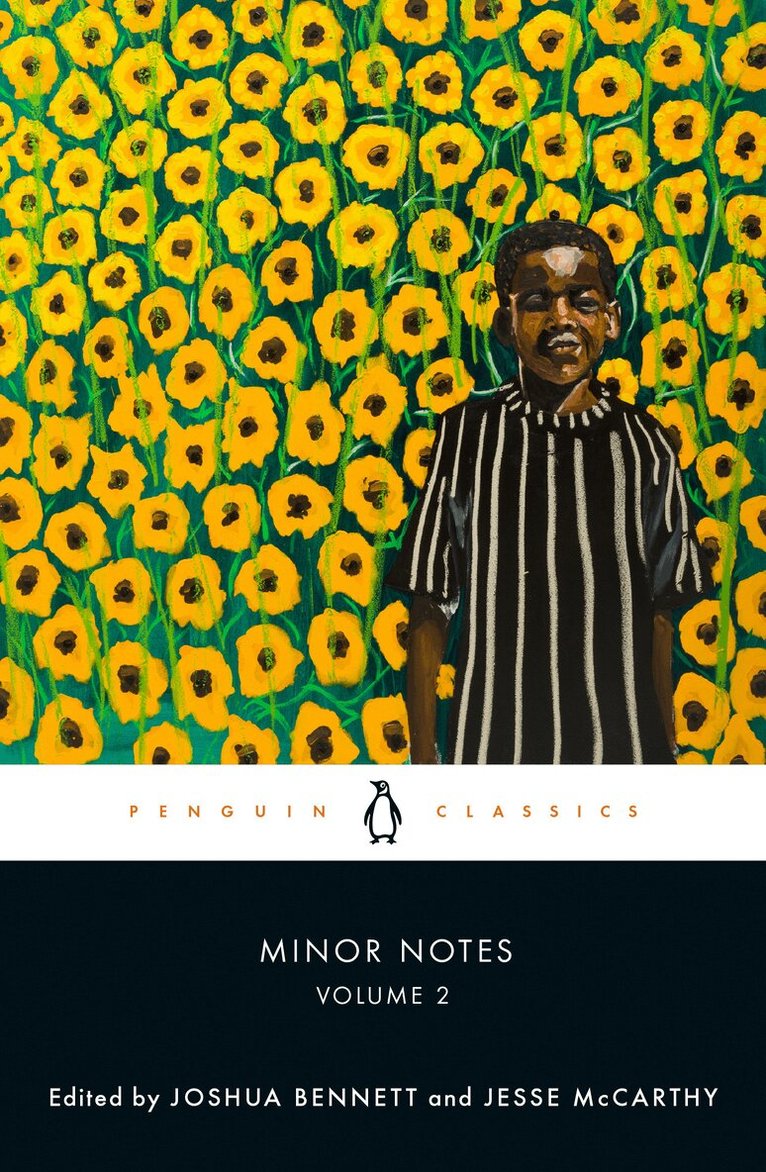
Joshua Bennett and Jesse McCarthy repeatedly found themselves struck by the number ofexciting poets they came across in long-out-of-print collections and forgotten journals whose work has been neglected or entirely ignored, even by scholars of Black poetry. Minor Notes is an excavation initiative that recovers and curates archival materials from these understudied, though supremely gifted, African American poets of the nineteenth and twentieth centuries, and aims to bridge scholarly interest with the growing general audience who reads, writes, and circulates poetry within that tradition. As Minor Notes clarifies, the work of contemporary Black poets is perhaps best understood through the lens of a long-standing tradition of the poet as witness, as prophetic voice, as communal bard, and as scholar of the everyday and the miraculous.The central theme of this volume is an archival exploration of young people’s poetry within the Black expressive tradition.
918 kr
Skickas inom 7-10 vardagar
Addresses the political and aesthetic evolution of African American literature and its authors during the Cold War, an era McCarthy calls “the Blue Period.”In the years after World War II, to be a black writer was to face a stark predicament. The contest between the Soviet Union and the United States was a global one—an ideological battle that dominated almost every aspect of the cultural agenda. On the one hand was the Soviet Union, espousing revolutionary communism that promised egalitarianism while being hostile to conceptions of personal freedom. On the other hand was the United States, a country steeped in racial prejudice and the policies of Jim Crow.Black writers of this time were equally alienated from the left and the right, Jesse McCarthy argues, and they channeled that alienation into remarkable experiments in literary form. Embracing racial affect and interiority, they forged an aesthetic resistance premised on fierce dissent from both US racial liberalism and Soviet communism. From the end of World War II to the rise of the Black Power movement in the 1960s, authors such as Richard Wright, James Baldwin, Gwendolyn Brooks, and Paule Marshall defined a distinctive moment in American literary culture that McCarthy terms the Blue Period.In McCarthy’s hands, this notion of the Blue Period provides a fresh critical framework that challenges long-held disciplinary and archival assumptions. Black writers in the early Cold War went underground, McCarthy argues, not to depoliticize or liberalize their work, but to make it more radical—keeping alive affective commitments for a future time.
238 kr
Skickas inom 7-10 vardagar
Addresses the political and aesthetic evolution of African American literature and its authors during the Cold War, an era McCarthy calls “the Blue Period.”In the years after World War II, to be a black writer was to face a stark predicament. The contest between the Soviet Union and the United States was a global one—an ideological battle that dominated almost every aspect of the cultural agenda. On the one hand was the Soviet Union, espousing revolutionary communism that promised egalitarianism while being hostile to conceptions of personal freedom. On the other hand was the United States, a country steeped in racial prejudice and the policies of Jim Crow.Black writers of this time were equally alienated from the left and the right, Jesse McCarthy argues, and they channeled that alienation into remarkable experiments in literary form. Embracing racial affect and interiority, they forged an aesthetic resistance premised on fierce dissent from both US racial liberalism and Soviet communism. From the end of World War II to the rise of the Black Power movement in the 1960s, authors such as Richard Wright, James Baldwin, Gwendolyn Brooks, and Paule Marshall defined a distinctive moment in American literary culture that McCarthy terms the Blue Period.In McCarthy’s hands, this notion of the Blue Period provides a fresh critical framework that challenges long-held disciplinary and archival assumptions. Black writers in the early Cold War went underground, McCarthy argues, not to depoliticize or liberalize their work, but to make it more radical—keeping alive affective commitments for a future time.
120 kr
Skickas inom 7-10 vardagar
“William Edward Burghardt Du Bois, the author of this small, paradigm-shifting book, was a brilliant polymath, a pioneering historian and sociologist, a fierce advocate for racial justice, and a towering social philosopher, widely regarded as one of the greatest black geniuses of the modern era. In The Souls of Black Folk, he sought to synthesize the different modes of inquiry that he was trained in—philosophy, history, rhetoric, and sociology—in order to produce a sweeping mural of epic history and local color telling the story of black life in America.”—JESSE MCCARTHY, from the Introduction
221 kr
Skickas inom 7-10 vardagar
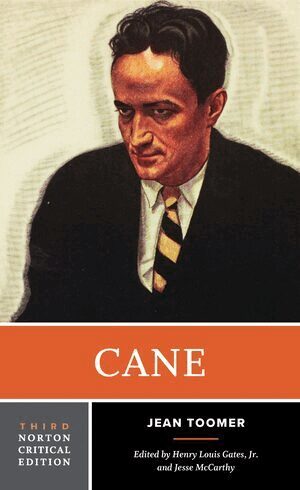
This Norton Critical Edition includes:The text of Toomer’s genre-bending masterpiece as edited by Darwin T. Turner for the First Norton Critical Edition (1988).A revised and expanded introduction, featuring new archival discoveries, and annotations by Henry Louis Gates, Jr., and Jesse McCarthy.Thirteen illustrations related to Toomer’s life, which are new to the Third Edition, and the map of Sparta, Georgia, that accompanies the text.Thirty-five background selections that feature additional writings by Toomer and extensive excerpts from his personal correspondence.Twenty-five critical responses—nine of which are new to the Third Edition—from contemporary and modern critics examining important themes in the work. A chronology of Toomer’s life and a selected bibliography.
198 kr
Skickas inom 7-10 vardagar
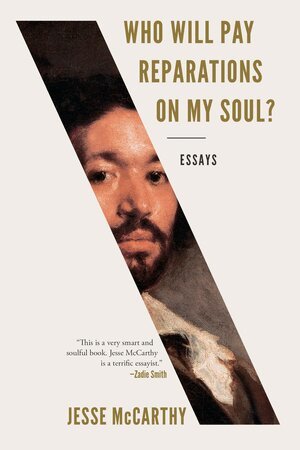
Ranging from Ta-Nehisi Coates’s case for reparations to D’Angelo’s simmering blend of R&B and racial justice, Jesse McCarthy’s dazzling essays capture debates at the intersection of art, literature and politics in the twenty-first century with virtuosic intensity.In “Notes on Trap”, McCarthy borrows a conceit from Susan Sontag to dissect the significance of trap music in American society, while in “The Master’s Tools”, Velázquez becomes a lens through which to view Kehinde Wiley’s paintings. Essays on John Edgar Wideman, Terrance Hayes and Claudia Rankine survey the state of black letters. In “The Time of the Assassins”, McCarthy, a black American raised in France, writes about returning to Paris after the Bataclan massacre and finding a nation in mourning but dangerously unchanged. Taken together, these essays portray a brilliant critic at work, making sense of our dislocated times while seeking to transform our understanding of race and art, identity and representation.
240 kr
Skickas
198 kr
Skickas inom 7-10 vardagar
292 kr
Skickas inom 7-10 vardagar
Ranging from Ta-Nehisi Coates’s case for reparations to D’Angelo’s simmering blend of R&B and racial justice, Jesse McCarthy’s dazzling essays capture debates at the intersection of art, literature and politics in the twenty-first century with virtuosic intensity.In “Notes on Trap”, McCarthy borrows a conceit from Susan Sontag to dissect the significance of trap music in American society, while in “The Master’s Tools”, Velázquez becomes a lens through which to view Kehinde Wiley’s paintings. Essays on John Edgar Wideman, Terrance Hayes and Claudia Rankine survey the state of black letters. In “The Time of the Assassins”, McCarthy, a black American raised in France, writes about returning to Paris after the Bataclan massacre and finding a nation in mourning but dangerously unchanged. Taken together, these essays portray a brilliant critic at work, making sense of our dislocated times while seeking to transform our understanding of race and art, identity and representation.