Jessica Hooten Wilson - Böcker
Visar alla böcker från författaren Jessica Hooten Wilson. Handla med fri frakt och snabb leverans.
13 produkter
13 produkter
1 219 kr
Skickas inom 5-8 vardagar
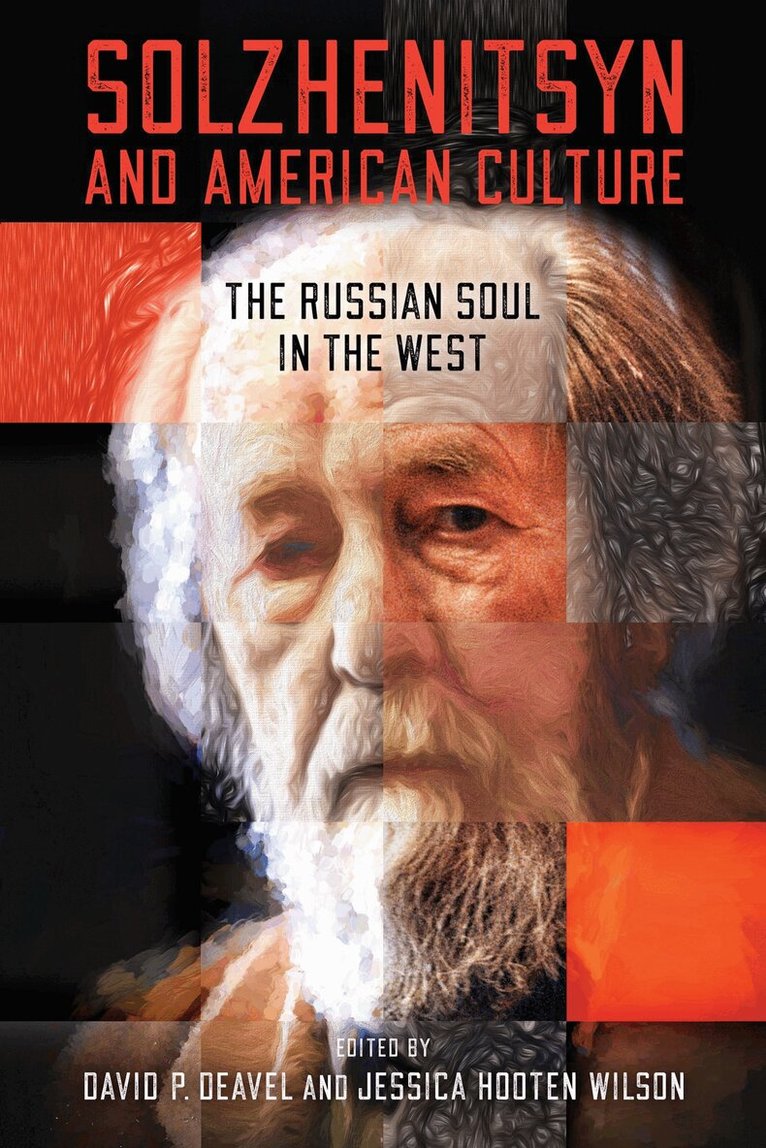
These essays will interest readers familiar with the work of Nobel Prize–winner Aleksandr Solzhenitsyn and are a great starting point for those eager for an introduction to the great Russian's work.When people think of Russia today, they tend to gravitate toward images of Soviet domination or, more recently, Vladimir Putin's war against Ukraine. The reality, however, is that, despite Russia's political failures, its rich history of culture, religion, and philosophical reflection—even during the darkest days of the Gulag—have been a deposit of wisdom for American artists, religious thinkers, and political philosophers probing what it means to be human in America. Aleksandr Solzhenitsyn stands out as the key figure in this conversation, as both a Russian literary giant and an exile from Russia living in America for two decades. This anthology reconsiders Solzhenitsyn's work from a variety of perspectives—his faith, his politics, and the influences and context of his literature—to provide a prophetic vision for our current national confusion over universal ideals.In Solzhenitsyn and American Culture: The Russian Soul in the West, David P. Deavel and Jessica Hooten Wilson have collected essays from the foremost scholars and thinkers of comparative studies who have been tracking what Americans have borrowed and learned from Solzhenitsyn and his fellow Russians. The book offers a consideration of what we have in common—the truth, goodness, and beauty America has drawn from Russian culture and from masters such as Solzhenitsyn—and will suggest to readers what we can still learn and what we must preserve. The last section expands the book's theme and reach by examining the impact of other notable Russian authors, including Pushkin, Dostoevsky, and Gogol.Contributors: David P. Deavel, Jessica Hooten Wilson, Nathan Nielson, Eugene Vodolazkin, David Walsh, Matthew Lee Miller, Ralph C. Wood, Gary Saul Morson, Edward E. Ericson, Jr., Micah Mattix, Joseph Pearce, James F. Pontuso, Daniel J. Mahoney, William Jason Wallace, Lee Trepanier, Peter Leithart, Dale Peterson, Julianna Leachman, Walter G. Moss, and Jacob Howland.
543 kr
Skickas inom 10-15 vardagar
These essays will interest readers familiar with the work of Nobel Prize–winner Aleksandr Solzhenitsyn and are a great starting point for those eager for an introduction to the great Russian's work.When people think of Russia today, they tend to gravitate toward images of Soviet domination or, more recently, Vladimir Putin's war against Ukraine. The reality, however, is that, despite Russia's political failures, its rich history of culture, religion, and philosophical reflection—even during the darkest days of the Gulag—have been a deposit of wisdom for American artists, religious thinkers, and political philosophers probing what it means to be human in America. Aleksandr Solzhenitsyn stands out as the key figure in this conversation, as both a Russian literary giant and an exile from Russia living in America for two decades. This anthology reconsiders Solzhenitsyn's work from a variety of perspectives—his faith, his politics, and the influences and context of his literature—to provide a prophetic vision for our current national confusion over universal ideals.In Solzhenitsyn and American Culture: The Russian Soul in the West, David P. Deavel and Jessica Hooten Wilson have collected essays from the foremost scholars and thinkers of comparative studies who have been tracking what Americans have borrowed and learned from Solzhenitsyn and his fellow Russians. The book offers a consideration of what we have in common—the truth, goodness, and beauty America has drawn from Russian culture and from masters such as Solzhenitsyn—and will suggest to readers what we can still learn and what we must preserve. The last section expands the book's theme and reach by examining the impact of other notable Russian authors, including Pushkin, Dostoevsky, and Gogol.Contributors: David P. Deavel, Jessica Hooten Wilson, Nathan Nielson, Eugene Vodolazkin, David Walsh, Matthew Lee Miller, Ralph C. Wood, Gary Saul Morson, Edward E. Ericson, Jr., Micah Mattix, Joseph Pearce, James F. Pontuso, Daniel J. Mahoney, William Jason Wallace, Lee Trepanier, Peter Leithart, Dale Peterson, Julianna Leachman, Walter G. Moss, and Jacob Howland.
Learning the Good Life
Wisdom from the Great Hearts and Minds That Came Before
Inbunden, Engelska, 2022
258 kr
Skickas
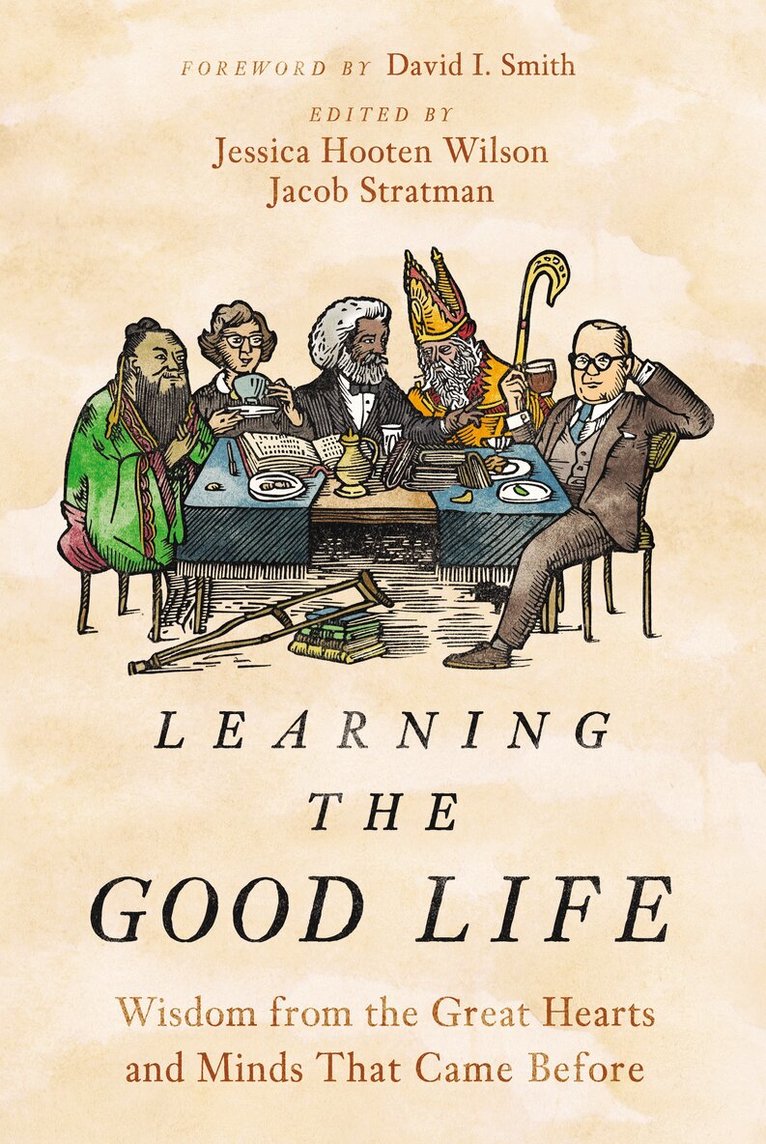
Discover the Good Life as you learn from the wise voices of the past.We've lost ourselves. Disconnected from the past and uncertain about the future, we are anxious about what our lives will be and troubled by a nagging sense of meaninglessness. Adrift in the world, many Christians have their identity completely wrapped up in work, and their definition of the "good life" is financial success. Fewer of are staying committed to the Christian faith, finding it difficult to reconcile their experience with their longings and desires. With so much uncertainty, where can we find a true vision of "the Good Life"?Learning the Good Life speaks to this malaise with a curated collection of voices from the past, inviting Christians into an ages-old dialogue with some of history's wisest and most reflective minds. Featuring thought-provoking writings from a diverse lineup of over 35 writers and thinkers:From the classic—including Confucius, Augustine, Sor Juana Inés de la Cruz, Henry David Thoreau, and Frederick Douglass;To the modern—including W.E.B. DuBois, Flannery O'Connor, T.S. Eliot, and Simone Weil;To the contemporary—including Wendell Berry, David Foster Wallace, and Marilynne Robinson.Together these sages, writers, philosophers, and poets address important issues such as virtue, beauty, community, wonder, suffering, and meaning.Each of these texts are introduced by experts from a variety of Christian colleges and universities to help provide a richer narrative in which Christians can participate. Each text is also accompanied by discussion questions to provoke further thought and contemplation and to facilitate discussion when used in groups.Learning the Good Life is ideal for any Christian seeking a deeper connection to the wisdom of the past and wanting a more cohesive vision of the good life. Though not all these writers were themselves Christians, they all have a message for you. All of them are calling you to die to yourself, to your habits of indulgence, to your pride and ambition—and to dedicate your time to learning, thinking, and loving.
279 kr
Skickas
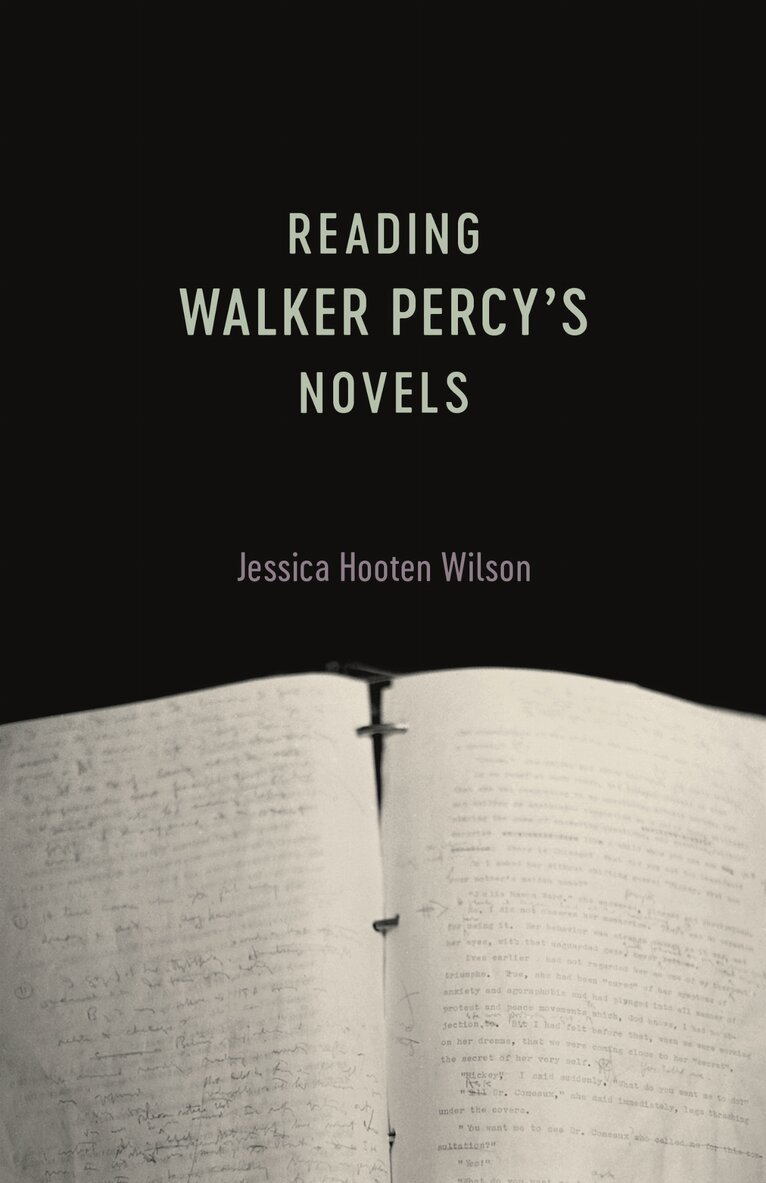
Walker Percy (1916- 1990) considered novels the strongest tool with which to popularize great ideas among a broad audience, and, more than half a century after they first appeared in print, his works of fiction continue to fascinate contemporary readers. Despite their lasting appeal, however, Percy's engaging narratives also contain intellectual elements that demand further explication. Philosophical themes, including existentialism, language acquisition theory, and modern Catholic theology, provide a deeper layer of meaning in Percy's writings.Jessica Hooten Wilson's Reading Walker Percy's Novels serves as a companion guide for readers who enjoy Percy's novels but may be less familiar with the works of Sartre, Camus, Kierkegaard, and Dante. In addition to clarifying Percy's philosophies, Wilson highlights allusions to other writers within his narratives, addresses historical and political contexts, and provides insight into the creation and reception of The Moviegoer, The Last Gentleman, Love in the Ruins, Lancelot, The Second Coming, and The Thanatos Syndrome. An introduction covers aspects of Percy's biography that influenced his writing, including his deep southern roots, faith, and search for meaning in life. An appendix offers an explanation of Percy's satirical parody Lost in the Cosmos: The Last Self-Help Book.Written in an accessible and conversational style, this primer will appeal to everyone who appreciates the nuances of Walker Percy's fiction.
524 kr
Skickas
Giving the Devil His Due
Demonic Authority in the Fiction of Flannery O'Connor and Fyodor Dostoevsky
Häftad, Engelska, 2017
258 kr
Skickas inom 5-8 vardagar
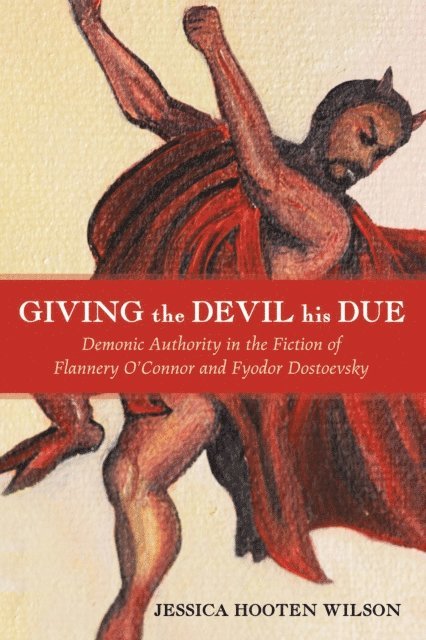
Giving the Devil His Due
Demonic Authority in the Fiction of Flannery O'Connor and Fyodor Dostoevsky
Inbunden, Engelska, 2017
461 kr
Skickas inom 5-8 vardagar
Scandal of Holiness – Renewing Your Imagination in the Company of Literary Saints
Inbunden, Engelska, 2022
198 kr
Skickas
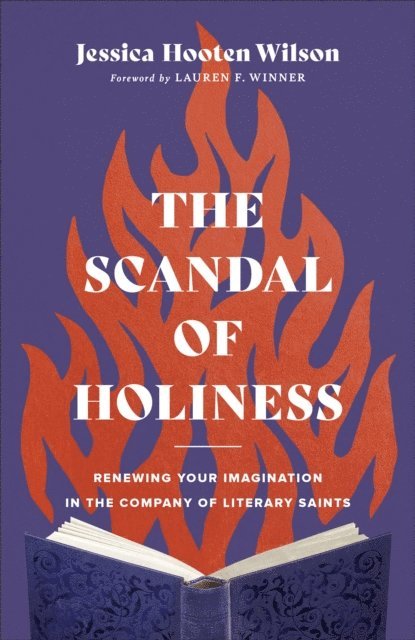
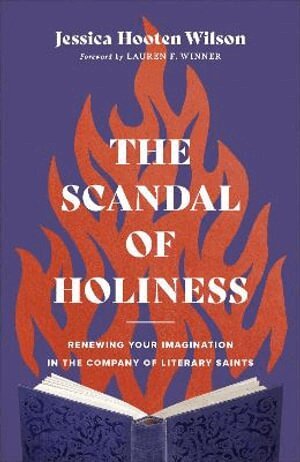
Christianity Today 2023 Award of Merit (Culture & the Arts)Midwest Book Review 2023 Silver Book Award (Nonfiction - Religion/Philosophy)How do we become better people? Initiatives such as New Year's resolutions, vision boards, thirty-day plans, and self-help books often fail to compel us to live differently. We settle for small goals--frugal spending, less yelling at the kids, more time at the gym--but we are called to something far greater. We are created to be holy.Award-winning author Jessica Hooten Wilson explains that learning to hear the call of holiness requires cultivating a new imagination--one rooted in the act of reading. Learning to read with eyes attuned to the saints who populate great works of literature moves us toward holiness, where God opens up a way of living that extends far beyond what we can conjure for ourselves. Literature has the power to show us what a holy life looks like, and these depictions often scandalize even as they shape our imagination. As such, careful reading becomes a sort of countercultural spiritual discipline.The book includes devotionals, prayers, wisdom from the saints, and more to help individuals and groups cultivate a saintly imagination. Foreword by Lauren F. Winner.
239 kr
Skickas
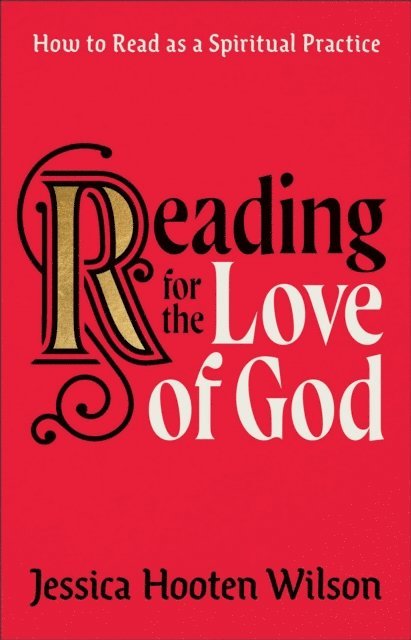
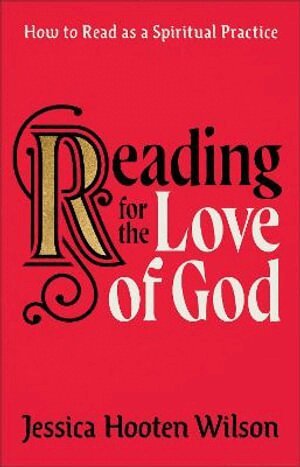
"A timely and accessible primer."--Christian CenturyWhat if we viewed reading as not just a personal hobby or a pleasurable indulgence but also a spiritual practice that deepens our faith?In Reading for the Love of God, award-winning author Jessica Hooten Wilson does just that--and then shows readers how to reap the spiritual benefits of reading. She argues that the simple act of reading can help us learn to pray well, love our neighbor, be contemplative, practice humility, and disentangle ourselves from contemporary idols.This accessible and engaging guide outlines several ways Christian thinkers--including Augustine, Julian of Norwich, Frederick Douglass, and Dorothy L. Sayers--approached the act of reading. It also includes useful special features such as suggested reading lists, guided practices for approaching texts, and tips for meditating on specific texts or Bible passages.By learning to read for the love of God, readers will discover not only a renewed love of reading but also a new, vital spiritual practice to deepen their walk with God.
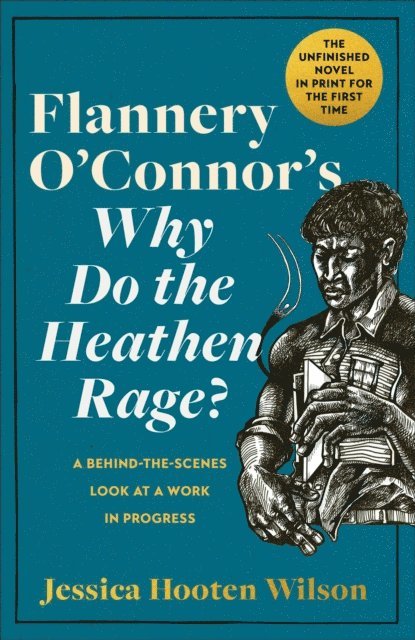
Flannery O'Connor's Why Do the Heathen Rage?
A Behind-the-Scenes Look at a Work in Progress
Inbunden, Engelska, 2024
239 kr
Skickas inom 7-10 vardagar
Christianity Today 2025 Award of Merit (Culture, Poetry, and the Arts)"Wilson does a great service in resurrecting one of O'Connor's lesser-known works."--Publishers WeeklyWhen celebrated American novelist and short story writer Flannery O'Connor died at the age of thirty-nine in 1964, she left behind an unfinished third novel titled Why Do the Heathen Rage? Scholarly experts uncovered and studied the material, deeming it unpublishable. It stayed that way for more than fifty years.Until now.For the past ten-plus years, award-winning author Jessica Hooten Wilson has explored the 378 pages of typed and handwritten material of the novel--transcribing pages, organizing them into scenes, and compiling everything to provide a glimpse into what O'Connor might have planned to publish.This book is the result of Hooten Wilson's work. In it, she introduces O'Connor's novel to the public for the first time and imagines themes and directions O'Connor's work might have taken. Including illustrations and an afterword from noted artist Steve Prince (One Fish Studio), the book unveils scenes that are both funny and thought-provoking, ultimately revealing that we have much to learn from what O'Connor left behind.
212 kr
Skickas inom 7-10 vardagar
"A timely and accessible primer."--Christian CenturyWhat if we viewed reading as not just a personal hobby or a pleasurable indulgence but also a spiritual practice that deepens our faith?In Reading for the Love of God, award-winning author Jessica Hooten Wilson does just that--and then shows readers how to reap the spiritual benefits of reading. She argues that the simple act of reading can help us learn to pray well, love our neighbor, be contemplative, practice humility, and disentangle ourselves from contemporary idols.This accessible and engaging guide outlines several ways Christian thinkers--including Augustine, Julian of Norwich, Frederick Douglass, and Dorothy L. Sayers--approached the act of reading. It also includes useful special features such as suggested reading lists, guided practices for approaching texts, and tips for meditating on specific texts or Bible passages.By learning to read for the love of God, readers will discover not only a renewed love of reading but also a new, vital spiritual practice to deepen their walk with God.
224 kr
Skickas inom 5-8 vardagar
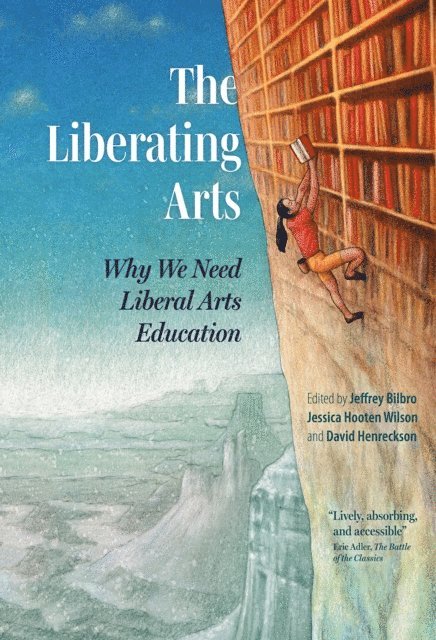
A new generation of teachers envisions a liberal arts education that is good for everyone.Why would anyone study the liberal arts? It’s no secret that the liberal arts have fallen out of favor and are struggling to prove their relevance. The cost of college pushes students to majors and degrees with more obvious career outcomes.A new cohort of educators isn’t taking this lying down. They realize they need to reimagine and rearticulate what a liberal arts education is for, and what it might look like in today’s world. In this book, they make an honest reckoning with the history and current state of the liberal arts.You may have heard – or asked – some of these questions yourself:Aren’t the liberal arts a waste of time? How will reading old books and discussing abstract ideas help us feed the hungry, liberate the oppressed and reverse climate change? Actually, we first need to understand what we mean by truth, the good life, and justice.Aren’t the liberal arts racist? The “great books” are mostly by privileged dead white males. Despite these objections, for centuries the liberal arts have been a resource for those working for a better world. Here’s how we can benefit from ancient voices while expanding the conversation.Aren’t the liberal arts liberal? Aren’t humanities professors mostly progressive ideologues who indoctrinate students? In fact, the liberal arts are an age-old tradition of moral formation, teaching people to think for themselves and learn from other perspectives.Aren’t the liberal arts elitist? Hasn’t humanities education too often excluded poor people and minorities? While that has sometime been the case, these educators map out well-proven ways to include people of all social and educational backgrounds.Aren’t the liberal arts a bad career investment? I really just want to get a well-paying job and not end up as an overeducated barista. The numbers – and the people hiring – tell a different story.In this book, educators mount a vigorous defense of the humanist tradition, but also chart a path forward, building on their tradition’s strengths and addressing its failures. In each chapter, dispatches from innovators describe concrete ways this is being put into practice, showing that the liberal arts are not only viable today, but vital to our future.***Contributors include Emily Auerbach, Nathan Beacom, Jeffrey Bilbro, Joseph Clair, Margarita Mooney Clayton, Lydia Dugdale, Brad East, Don Eben, Becky L. Eggimann, Rachel Griffis, David Henreckson, Zena Hitz, David Hsu, L. Gregory Jones, Brandon McCoy, Peter Mommsen, Angel Adams Parham, Steve Prince, John Mark Reynolds, Erin Shaw, Anne Snyder, Sean Sword, Noah Toly, Jonathan Tran, and Jessica Hooten Wilson
550 kr
Skickas inom 5-8 vardagar
A new generation of teachers envisions a liberal arts education that is good for everyone.Why would anyone study the liberal arts? It’s no secret that the liberal arts have fallen out of favor and are struggling to prove their relevance. The cost of college pushes students to majors and degrees with more obvious career outcomes.A new cohort of educators isn’t taking this lying down. They realize they need to reimagine and rearticulate what a liberal arts education is for, and what it might look like in today’s world. In this book, they make an honest reckoning with the history and current state of the liberal arts.You may have heard – or asked – some of these questions yourself:Aren’t the liberal arts a waste of time? How will reading old books and discussing abstract ideas help us feed the hungry, liberate the oppressed and reverse climate change? Actually, we first need to understand what we mean by truth, the good life, and justice.Aren’t the liberal arts racist? The “great books” are mostly by privileged dead white males. Despite these objections, for centuries the liberal arts have been a resource for those working for a better world. Here’s how we can benefit from ancient voices while expanding the conversation.Aren’t the liberal arts liberal? Aren’t humanities professors mostly progressive ideologues who indoctrinate students? In fact, the liberal arts are an age-old tradition of moral formation, teaching people to think for themselves and learn from other perspectives.Aren’t the liberal arts elitist? Hasn’t humanities education too often excluded poor people and minorities? While that has sometime been the case, these educators map out well-proven ways to include people of all social and educational backgrounds.Aren’t the liberal arts a bad career investment? I really just want to get a well-paying job and not end up as an overeducated barista. The numbers – and the people hiring – tell a different story.In this book, educators mount a vigorous defense of the humanist tradition, but also chart a path forward, building on their tradition’s strengths and addressing its failures. In each chapter, dispatches from innovators describe concrete ways this is being put into practice, showing that the liberal arts are not only viable today, but vital to our future.***Contributors include Emily Auerbach, Nathan Beacom, Jeffrey Bilbro, Joseph Clair, Margarita Mooney Clayton, Lydia Dugdale, Brad East, Don Eben, Becky L. Eggimann, Rachel Griffis, David Henreckson, Zena Hitz, David Hsu, L. Gregory Jones, Brandon McCoy, Peter Mommsen, Angel Adams Parham, Steve Prince, John Mark Reynolds, Erin Shaw, Anne Snyder, Sean Sword, Noah Toly, Jonathan Tran, and Jessica Hooten Wilson