• Fri frakt över 249 kr
  • •
  • Snabba leveranser
  • •
  • Billiga böcker
Kundservice

Du är på sajten för privatpersoner.

Företag, bibliotek eller offentlig verksamhet?

Du handlar på classic.bokus.com, där alla dina funktioner finns intakta.
Till classic.bokus.com
Bokus logotyp. Gå till startsidan.
  • Erbjudanden
  • Nyheter
  • Student
  • Topplistor
  • Barn & ungdom
  • Bokus Play
  • E-böcker
  • Pocketböcker
  • Spel & pussel

10% rabatt på allt med kod NYSTART10 →

Sidfot

Mina sidor

    Hjälp

    • Kundservice
    • Vanliga frågor och svar
    • Frakt och leverans
    • Retur vid ångerrätt
    • Reklamera vara
    • Betalning
    • Köpvillkor
    • Allmänna villkor
    • Information om webbplatsens tillgänglighet

    Om Bokus

    • Om oss
    • Pressrum
    • För studenter
    • För företag
    • För bibliotek och offentlig verksamhet
    • För leverantörer
    • Hållbarhet

    Populärt

    • Aktuella erbjudanden
    • Presentkort
    • Studentlitteratur
    • Nya böcker
    • Topplistor
    • Signerade böcker
    • Engelska böcker

    Inspiration

    • Boktips
    • BookTok
    • Populära bokserier
    • Barnbokskaraktärer
    • Populära författare
    Logotyp för Bokus
    Följ oss på Facebook (extern länk)Följ oss på Instagram (extern länk)Följ oss på YouTube (extern länk)Följ oss på TikTok (extern länk)
    bokus @ CookiesAnpassa cookiesIntegritetspolicyKöpvillkor
    Till Citymail hemsida (extern länk)Till Budbee hemsida (extern länk)Till Postnord hemsida (extern länk)Till Schenker hemsida (extern länk)Till Early Bird hemsida (extern länk)Till Walleys hemsida (extern länk)
    1. Psykologi och pedagogik
    2. Pedagogik
    3. Pedagogisk teori och filosofi

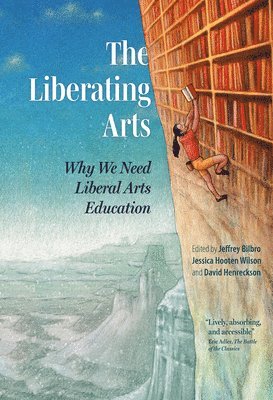
    Liberating Arts

    Why We Need Liberal Arts Education

    AvJeffrey Bilbro,Jessica Hooten Wilson

    Häftad, Engelska, 2023

    228 kr

    Beställningsvara. Skickas inom 5-8 vardagar. Fri frakt över 249 kr.

    Beskrivning

    A new generation of teachers envisions a liberal arts education that is good for everyone.Why would anyone study the liberal arts? It’s no secret that the liberal arts have fallen out of favor and are struggling to prove their relevance. The cost of college pushes students to majors and degrees with more obvious career outcomes.A new cohort of educators isn’t taking this lying down. They realize they need to reimagine and rearticulate what a liberal arts education is for, and what it might look like in today’s world. In this book, they make an honest reckoning with the history and current state of the liberal arts.You may have heard – or asked – some of these questions yourself:Aren’t the liberal arts a waste of time? How will reading old books and discussing abstract ideas help us feed the hungry, liberate the oppressed and reverse climate change? Actually, we first need to understand what we mean by truth, the good life, and justice.Aren’t the liberal arts racist? The “great books” are mostly by privileged dead white males. Despite these objections, for centuries the liberal arts have been a resource for those working for a better world. Here’s how we can benefit from ancient voices while expanding the conversation.Aren’t the liberal arts liberal? Aren’t humanities professors mostly progressive ideologues who indoctrinate students? In fact, the liberal arts are an age-old tradition of moral formation, teaching people to think for themselves and learn from other perspectives.Aren’t the liberal arts elitist? Hasn’t humanities education too often excluded poor people and minorities? While that has sometime been the case, these educators map out well-proven ways to include people of all social and educational backgrounds.Aren’t the liberal arts a bad career investment? I really just want to get a well-paying job and not end up as an overeducated barista. The numbers – and the people hiring – tell a different story.In this book, educators mount a vigorous defense of the humanist tradition, but also chart a path forward, building on their tradition’s strengths and addressing its failures. In each chapter, dispatches from innovators describe concrete ways this is being put into practice, showing that the liberal arts are not only viable today, but vital to our future.***Contributors include Emily Auerbach, Nathan Beacom, Jeffrey Bilbro, Joseph Clair, Margarita Mooney Clayton, Lydia Dugdale, Brad East, Don Eben, Becky L. Eggimann, Rachel Griffis, David Henreckson, Zena Hitz, David Hsu, L. Gregory Jones, Brandon McCoy, Peter Mommsen, Angel Adams Parham, Steve Prince, John Mark Reynolds, Erin Shaw, Anne Snyder, Sean Sword, Noah Toly, Jonathan Tran, and Jessica Hooten Wilson

    Produktinformation

    • Utgivningsdatum:2023-09-19
    • Mått:140 x 203 x 17 mm
    • Vikt:314 g
    • Format:Häftad
    • Språk:Engelska
    • Antal sidor:224
    • Förlag:Plough Publishing House
    • ISBN:9781636080673

    Utforska kategorier

    • Pedagogisk teori och filosofi inom Psykologi och pedagogik
    • Socialpedagogik inom Psykologi och pedagogik
    • Litteraturvetenskap inom Skönlitteratur

    Mer om författaren

    Jeffrey Bilbro is an editor at Front Porch Republic and an associate professor of English at Grove City College. He is the author of several books, most recently Reading the Times: A Literary and Theological Inquiry into the News. He lives in Grove City, Pennsylvania. Jessica Hooten Wilson is the inaugural Seaver College Scholar of Liberal Arts at Pepperdine University and a senior fellow at Trinity Forum. She is the author of several books, most recently The Scandal of Holiness: Renewing Your Imagination in the Company of Literary Saints. David Henreckson is an assistant professor and Director of the Weyerhaeuser Center for Christian Faith and Learning at Whitworth University. He is author of The Immortal Commonwealth, a recipient of the Manfred Lautenschlaeger Award. He lives in Spokane, Washington.

    Recensioner i media

    In this series of lively, absorbing, and accessible essays, the contributors invoke and dismantle all the chief objections to the study of the liberal arts. The result is a clarion call for an education that enables human and societal flourishing. Everyone concerned about the fate of learning today must read this book. —Eric Adler, author, The Battle of the Classics

    Innehållsförteckning

    • Chapter 1: What are the Liberating Arts?Practical Matters, the EditorsAmid the Ruins, by David HenrecksonChapter 2: Aren't the Liberal Arts a Waste of Time?Practicing the Liberal Arts in Prison, by Sean SwordThe Possibility of Leisure, by Zena HitzOn the Road with Marilynne Robinson, by David HenrecksonChapter 3: Aren’t the Liberal Arts Elitist?               On The Odyssey Project, by Emily AuerbachA History of Liberation, by Brandon McCoyConsidering The Catherine Project, by Zena HitzChapter 4: Aren’t the Liberal Arts Liberal or Progressive?Respecting Reality, by Anne SnyderImagining Love University, by Joseph ClairElite Education for the Rest of Us, by John Mark ReynoldsChapter 5: Aren’t the Liberal Arts Racist?Inside Nysana Classical Community, by Angel Adams ParhamAn Expansive Collection, by Angel Adams ParhamHow to Fight Over the Canon, by Johnathan TranChapter 6: Aren’t the Liberal Arts Outdated?On Traditioned Innovation, by L. Gregory JonesThe Liberating Potential of Knowing the Past, by Jeffrey BilbroScience as a Human Tradition, Becky L. EggimannChapter 7: Aren’t the Liberal Arts Irrelevant?The Art of Beauty by Steve PrinceStories and Severed Selves, by Erin ShawChapter 8: Aren’t the Liberal Arts Unprofitable?Why Engineers Need the Liberal Arts, by David HsuRejecting the False Dichotomy between Professional Training and Liberal Arts Formation, by Rachel GriffisWhy Liberal Arts Matter in Hiring, by Don EbenChapter 9: Aren’t the Liberal Arts a Luxury Good?Remembering Albert Raboteau and Reflecting on Redemptive Suffering, by Margarita Mooney ClaytonLiberating the Least of These, by Brad EastLiberation from Lonely Suffering and Death, by Lydia DugdaleChapter 10: Who Are Liberating Artists?Lyceums: Places to Think with Neighbors, by Nathan BeacomLiberal Learning for All, by Jessica Hooten WilsonSmall Magazines as Educational Communities, by Peter Mommsen