Jeffrey Bilbro - Böcker
Visar alla böcker från författaren Jeffrey Bilbro. Handla med fri frakt och snabb leverans.
12 produkter
12 produkter
891 kr
Skickas inom 3-6 vardagar
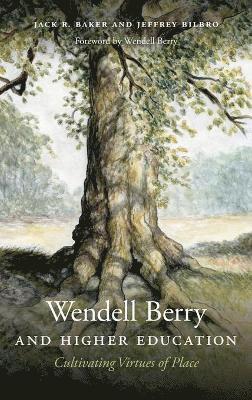
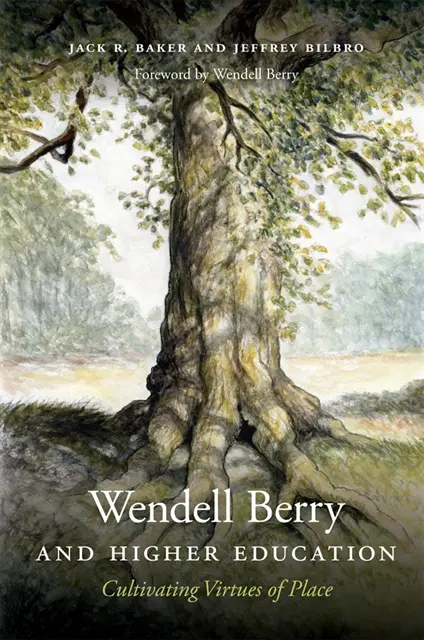
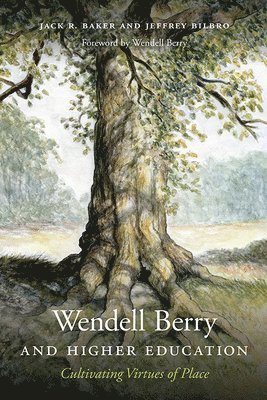
Prominent author and cultural critic Wendell Berry is well known for his contributions to agrarianism and environmentalism, but his commentary on education has received comparatively little attention. Berry has been eloquently unmasking America's cultural obsession with restless mobility for decades, arguing that it causes damage to both the land and the character of our communities. Education, he maintains, plays a central role in this obsession, inculcating in students' minds the American dream of moving up and moving on.Drawing on Berry's essays, fiction, and poetry, Jack R. Baker and Jeffrey Bilbro illuminate the influential thinker's vision for higher education in this pathbreaking study. Each chapter begins with an examination of one of Berry's fictional narratives and then goes on to consider how the passage inspires new ways of thinking about the university's mission. Throughout, Baker and Bilbro argue that instead of training students to live in their careers, universities should educate students to inhabit and serve their places. The authors also offer practical suggestions for how students, teachers, and administrators might begin implementing these ideas.Baker and Bilbro conclude that institutions guided by Berry's vision might cultivate citizens who can begin the work of healing their communities -- graduates who have been educated for responsible membership in a family, a community, or a polity.
416 kr
Skickas inom 3-6 vardagar
Prominent author and cultural critic Wendell Berry is well known for his contributions to agrarianism and environmentalism, but his commentary on education has received comparatively little attention. Berry has been eloquently unmasking America's cultural obsession with restless mobility for decades, arguing that it causes damage to both the land and the character of our communities. Education, he maintains, plays a central role in this obsession, inculcating in students' minds the American dream of moving up and moving on.Drawing on Berry's essays, fiction, and poetry, Jack R. Baker and Jeffrey Bilbro illuminate the influential thinker's vision for higher education in this pathbreaking study. Each chapter begins with an examination of one of Berry's fictional narratives and then goes on to consider how the passage inspires new ways of thinking about the university's mission. Throughout, Baker and Bilbro argue that instead of training students to live in their careers, universities should educate students to inhabit and serve their places. The authors also offer practical suggestions for how students, teachers, and administrators might begin implementing these ideas.Baker and Bilbro conclude that institutions guided by Berry's vision might cultivate citizens who can begin the work of healing their communities -- graduates who have been educated for responsible membership in a family, a community, or a polity.
492 kr
Skickas inom 3-6 vardagar
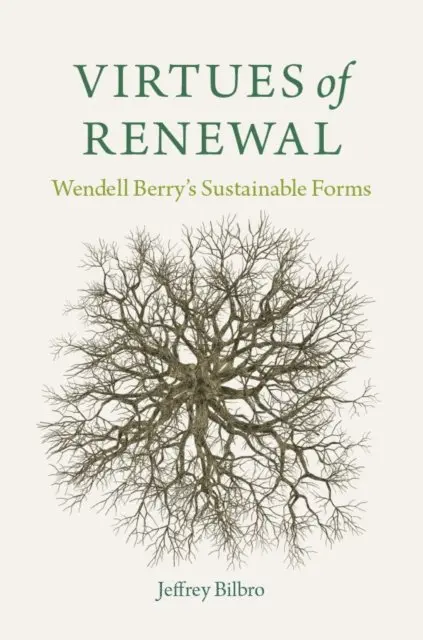
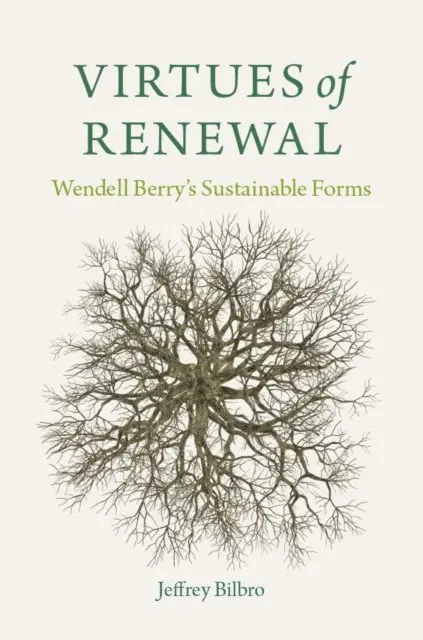
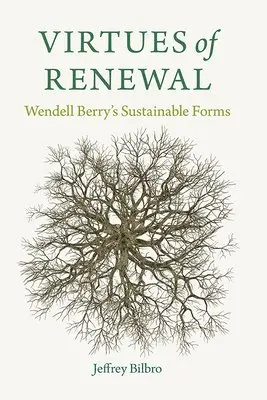
For over fifty years, Wendell Berry has argued that our most pressing ecological and cultural need is a renewed formal intelligence -- a mode of thinking and acting that fosters the health of the earth and its beings. Yet the present industrial economy prioritizes a technical, self-centered way of relating to the world that often demands and rewards busyness over thoughtful observation, independence over relationships, and replacing over repairing. Such a system is both unsustainable and results in destructive, far-reaching consequences for our society and land.In Virtues of Renewal: Wendell Berry's Sustainable Forms, Jeffrey Bilbro combines textual analysis and cultural criticism to explain how Berry's literary forms encourage readers to practice virtues of renewal. While the written word alone cannot enact change, Bilbro asserts that Berry's poetry, essays, and fiction can inspire people to, as Berry writes, "practice resurrection." Bilbro examines the distinct, yet symbiotic, features of these three genres, demonstrating the importance of the humanities in supporting tenable economies. He uses Berry's pieces to suggest the need for more robust language for discussing conservation, ecology, and the natural -- and regenerative -- process of death. Bilbro additionally translates Berry's literature to a wider audience, putting him in conversation with philosophers and theologians such as Ivan Illich, Willie Jennings, Charles Taylor, and Augustine.The lessons that Berry and his work have to offer are not only for those interested in cultivating the land, but also for those who cultivate their communities and live mindfully. In short, these lessons are pertinent to all who are willing to make an effort to live the examined life. Such formative work is not dramatic or quick, but it can foster the deep and lasting transformation necessary to develop a more sustainable culture and economy.
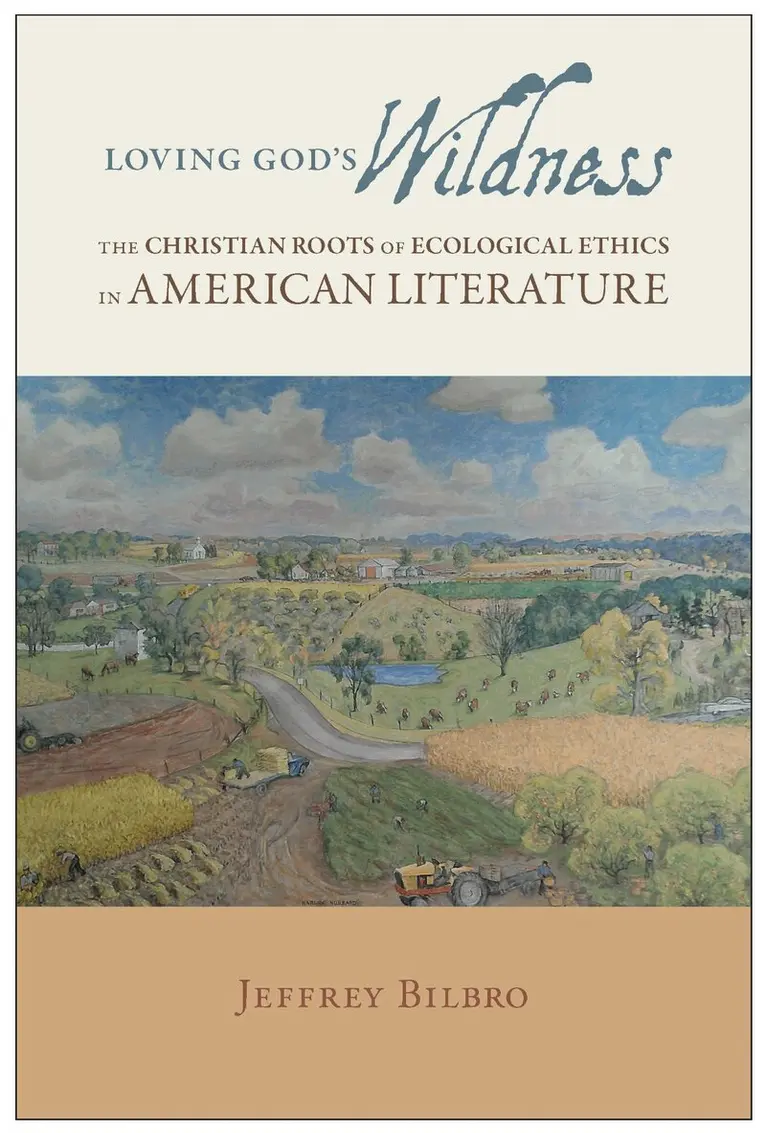
Loving God's Wildness
The Christian Roots of Ecological Ethics in American Literature
Inbunden, Engelska, 2015
678 kr
Skickas inom 7-10 vardagar
Analysing writings ranging from the Puritans to the present day, Loving God’s Wildness traces the effects of Christian theology on America’s ecological imagination, revealing the often conflicted ways in which Americans relate to and perceive the natural world.When the Puritans arrived in the New World to carry out the colonization they saw as divinely mandated, they were confronted by the American wilderness. Part of their theology led them to view the natural environment as “a temple of God” in which they should glorify and serve its creator. The larger prevailing theological view, however, saw this vast continent as “the Devil’s Territories” needing to be conquered and cultivated for God’s Kingdom. These contradictory designations gave rise to an ambivalence regarding the character of this land and humanity’s proper relation to it.Loving God’s Wildness rediscovers the environmental roots of America’s Puritan heritage. In tracing this history, Jeffrey Bilbro demonstrates how the dualistic Christianity that the Puritans brought to America led them to see the land as an empty wilderness that God would turn into a productive source of marketable commodities. Bilbro carefully explores the effect of this dichotomy in the nature writings of Henry David Thoreau, John Muir, Willa Cather, and Wendell Berry.Thoreau, Muir, Cather, and Berry imaginatively developed the Puritan theological tradition to propose practical, physical means by which humans should live and worship within the natural temple of God’s creation. They reshaped Puritan dualism, each according to the particular needs of his or her own ecological and cultural contexts, into a theology that demands care for the entire created community. While differing in their approaches and respective ecological ethics, the four authors Bilbro examines all share the conviction that God remains active in creation and that humans ought to relinquish their selfish ends to participate in his wild ecology.Loving God’s Wildness fills a critical gap in literary criticism and environmental studies by offering a sustained, detailed argument regarding how Christian theology has had a profound and enduring legacy in shaping the contours of the American ecological imagination. Literary critics, scholars of religion and environmental studies, and thoughtful Christians who are concerned about environmental issues will profit from this engaging new book.
309 kr
Skickas inom 5-8 vardagar
599 kr
Skickas inom 7-10 vardagar
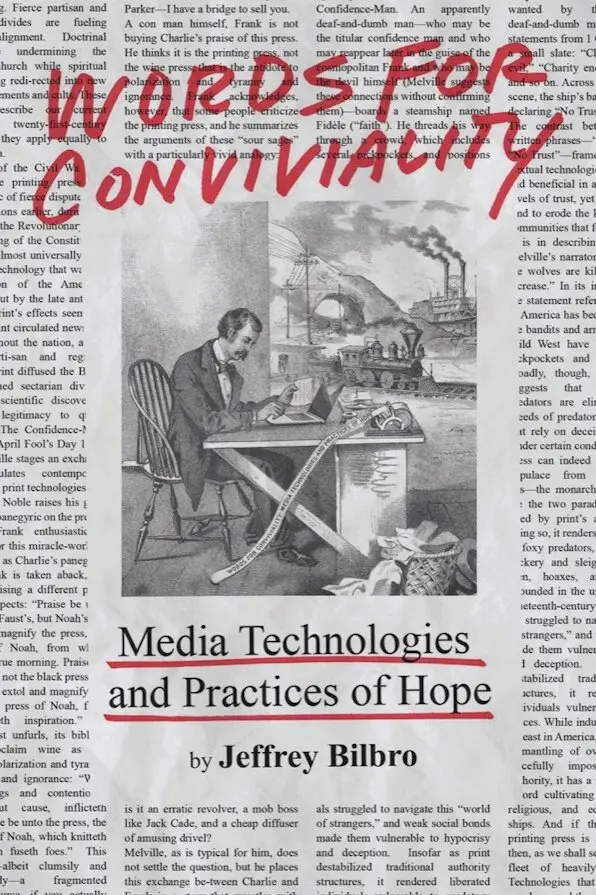
The industrialization of print technologies in early nineteenth-century America transformed print culture in ways that parallel the transformation wrought by the digital revolution. Understanding how a previous era was shaped by the assumptions print technology engendered may enable us to recognize more clearly how our verbal habits and practices are formed and deformed by our enmeshment in digital technologies.When powerful new verbal media come along, our options are not limited to naive optimism or resigned pessimism. And some of the most helpful guides in charting a path toward genuinely convivial modes of reading are the literary authors who lived through the antebellum industrialization of print. Those authors sought to understand the effects of technologies such as the telegraph and the steam-powered rotary printing press through the most fundamental tool that language provides: metaphor. Evocative metaphors are a potent way to raise cultural awareness regarding the hidden affordances and subtle nudges that are latent within dominant communications technologies.The argument of Words for Conviviality follows a pilgrimage with three stages and considers a set of metaphors that such authors deployed to answer three underlying questions: What does industrial print tempt optimistic readers to imagine themselves as? What does it lead its victims to fear they will become? And what alternative metaphors might ground more convivial reading? The metaphors of hope that Jeffrey Bilbro discusses suggest that to wield textual technologies well, we need to develop cultural practices and institutions that strengthen our relationships with one another and our commitment to a common good. Instead of developing new technologies to solve the problems that technologies have caused, the authors considered here propose developing better readers—readers more attuned to the power of the textual technologies they use and better able to imagine and practice healthy, convivial forms of discourse. These authors obviously did not eschew industrialized print, and they did not simply give up on the technologies of their day. Rather, they developed metaphors that might inspire us to beat textual swords into plowshares.
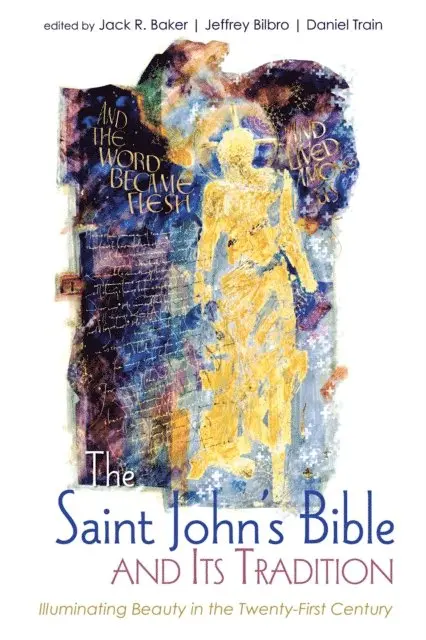
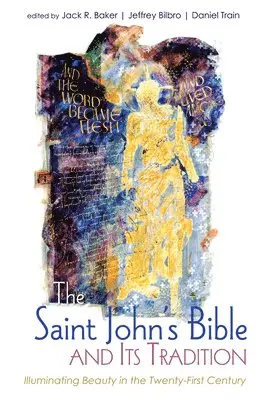
Saint John's Bible and Its Tradition
Illuminating Beauty in the Twenty-First Century
Inbunden, Engelska, 2018
447 kr
Skickas inom 5-8 vardagar
Saint John's Bible and Its Tradition
Illuminating Beauty in the Twenty-First Century
Häftad, Engelska, 2018
280 kr
Skickas inom 5-8 vardagar
322 kr
Skickas inom 5-8 vardagar
525 kr
Skickas inom 5-8 vardagar
224 kr
Skickas inom 5-8 vardagar
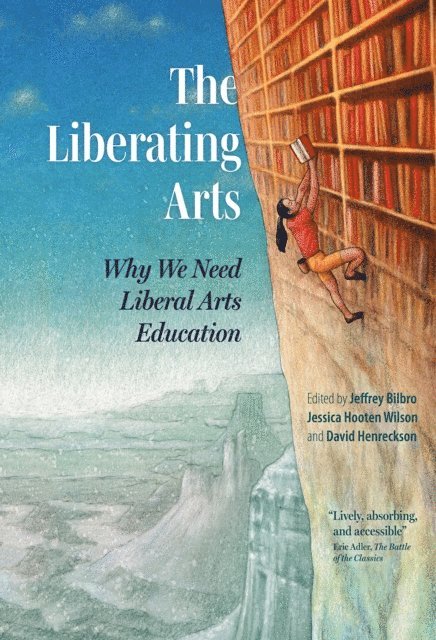
A new generation of teachers envisions a liberal arts education that is good for everyone.Why would anyone study the liberal arts? It’s no secret that the liberal arts have fallen out of favor and are struggling to prove their relevance. The cost of college pushes students to majors and degrees with more obvious career outcomes.A new cohort of educators isn’t taking this lying down. They realize they need to reimagine and rearticulate what a liberal arts education is for, and what it might look like in today’s world. In this book, they make an honest reckoning with the history and current state of the liberal arts.You may have heard – or asked – some of these questions yourself:Aren’t the liberal arts a waste of time? How will reading old books and discussing abstract ideas help us feed the hungry, liberate the oppressed and reverse climate change? Actually, we first need to understand what we mean by truth, the good life, and justice.Aren’t the liberal arts racist? The “great books” are mostly by privileged dead white males. Despite these objections, for centuries the liberal arts have been a resource for those working for a better world. Here’s how we can benefit from ancient voices while expanding the conversation.Aren’t the liberal arts liberal? Aren’t humanities professors mostly progressive ideologues who indoctrinate students? In fact, the liberal arts are an age-old tradition of moral formation, teaching people to think for themselves and learn from other perspectives.Aren’t the liberal arts elitist? Hasn’t humanities education too often excluded poor people and minorities? While that has sometime been the case, these educators map out well-proven ways to include people of all social and educational backgrounds.Aren’t the liberal arts a bad career investment? I really just want to get a well-paying job and not end up as an overeducated barista. The numbers – and the people hiring – tell a different story.In this book, educators mount a vigorous defense of the humanist tradition, but also chart a path forward, building on their tradition’s strengths and addressing its failures. In each chapter, dispatches from innovators describe concrete ways this is being put into practice, showing that the liberal arts are not only viable today, but vital to our future.***Contributors include Emily Auerbach, Nathan Beacom, Jeffrey Bilbro, Joseph Clair, Margarita Mooney Clayton, Lydia Dugdale, Brad East, Don Eben, Becky L. Eggimann, Rachel Griffis, David Henreckson, Zena Hitz, David Hsu, L. Gregory Jones, Brandon McCoy, Peter Mommsen, Angel Adams Parham, Steve Prince, John Mark Reynolds, Erin Shaw, Anne Snyder, Sean Sword, Noah Toly, Jonathan Tran, and Jessica Hooten Wilson
550 kr
Skickas inom 5-8 vardagar
A new generation of teachers envisions a liberal arts education that is good for everyone.Why would anyone study the liberal arts? It’s no secret that the liberal arts have fallen out of favor and are struggling to prove their relevance. The cost of college pushes students to majors and degrees with more obvious career outcomes.A new cohort of educators isn’t taking this lying down. They realize they need to reimagine and rearticulate what a liberal arts education is for, and what it might look like in today’s world. In this book, they make an honest reckoning with the history and current state of the liberal arts.You may have heard – or asked – some of these questions yourself:Aren’t the liberal arts a waste of time? How will reading old books and discussing abstract ideas help us feed the hungry, liberate the oppressed and reverse climate change? Actually, we first need to understand what we mean by truth, the good life, and justice.Aren’t the liberal arts racist? The “great books” are mostly by privileged dead white males. Despite these objections, for centuries the liberal arts have been a resource for those working for a better world. Here’s how we can benefit from ancient voices while expanding the conversation.Aren’t the liberal arts liberal? Aren’t humanities professors mostly progressive ideologues who indoctrinate students? In fact, the liberal arts are an age-old tradition of moral formation, teaching people to think for themselves and learn from other perspectives.Aren’t the liberal arts elitist? Hasn’t humanities education too often excluded poor people and minorities? While that has sometime been the case, these educators map out well-proven ways to include people of all social and educational backgrounds.Aren’t the liberal arts a bad career investment? I really just want to get a well-paying job and not end up as an overeducated barista. The numbers – and the people hiring – tell a different story.In this book, educators mount a vigorous defense of the humanist tradition, but also chart a path forward, building on their tradition’s strengths and addressing its failures. In each chapter, dispatches from innovators describe concrete ways this is being put into practice, showing that the liberal arts are not only viable today, but vital to our future.***Contributors include Emily Auerbach, Nathan Beacom, Jeffrey Bilbro, Joseph Clair, Margarita Mooney Clayton, Lydia Dugdale, Brad East, Don Eben, Becky L. Eggimann, Rachel Griffis, David Henreckson, Zena Hitz, David Hsu, L. Gregory Jones, Brandon McCoy, Peter Mommsen, Angel Adams Parham, Steve Prince, John Mark Reynolds, Erin Shaw, Anne Snyder, Sean Sword, Noah Toly, Jonathan Tran, and Jessica Hooten Wilson