Jessica R. Pliley - Böcker
Visar alla böcker från författaren Jessica R. Pliley. Handla med fri frakt och snabb leverans.
6 produkter
6 produkter
408 kr
Skickas inom 10-15 vardagar
America’s first anti–sex trafficking law, the 1910 Mann Act, made it illegal to transport women over state lines for prostitution “or any other immoral purpose.” It was meant to protect women and girls from being seduced or sold into sexual slavery. But, as Jessica Pliley illustrates, its enforcement resulted more often in the policing of women’s sexual behavior, reflecting conservative attitudes toward women’s roles at home and their movements in public. By citing its mandate to halt illicit sexuality, the fledgling Bureau of Investigation gained entry not only into brothels but also into private bedrooms and justified its own expansion.Policing Sexuality links the crusade against sex trafficking to the rapid growth of the Bureau from a few dozen agents at the time of the Mann Act into a formidable law enforcement organization that cooperated with state and municipal authorities across the nation. In pursuit of offenders, the Bureau often intervened in domestic squabbles on behalf of men intent on monitoring their wives and daughters. Working prostitutes were imprisoned at dramatically increased rates, while their male clients were seldom prosecuted.In upholding the Mann Act, the FBI reinforced sexually conservative views of the chaste woman and the respectable husband and father. It built its national power and prestige by expanding its legal authority to police Americans’ sexuality and by marginalizing the very women it was charged to protect.
Global Anti-Vice Activism, 1890-1950
Fighting Drinks, Drugs, and 'Immorality'
Inbunden, Engelska, 2016
1 390 kr
Skickas inom 7-10 vardagar
Vice was one of the primary shared interests of the global community at the turn of the twentieth century. Anti-vice activists worked to combat noxious substances such as alcohol, drugs and cigarettes, and 'immoral' sexual activities such as prostitution. Nearly all of these activists approached the issue of vice by expressing worries about the body, its physical health, and functionality. By situating anti-vice politics in their broader historical contexts, Global Anti-Vice Activism, 1890-1950 sheds fresh light on the initiatives of various actors, organizations and institutions which have previously been treated primarily within national and regional boundaries. Looking at anti-vice policy from both social and cultural historical perspectives, it illuminates the centrality of regulating vice in imperial and national modernization projects. The contributors argue that vice and vice regulation constitute an ideal topic for global history, because they bridge the gap between discourse and practice, and state and civil society.
441 kr
Skickas inom 7-10 vardagar
Vice was one of the primary shared interests of the global community at the turn of the twentieth century. Anti-vice activists worked to combat noxious substances such as alcohol, drugs and cigarettes, and 'immoral' sexual activities such as prostitution. Nearly all of these activists approached the issue of vice by expressing worries about the body, its physical health, and functionality. By situating anti-vice politics in their broader historical contexts, Global Anti-Vice Activism, 1890-1950 sheds fresh light on the initiatives of various actors, organizations and institutions which have previously been treated primarily within national and regional boundaries. Looking at anti-vice policy from both social and cultural historical perspectives, it illuminates the centrality of regulating vice in imperial and national modernization projects. The contributors argue that vice and vice regulation constitute an ideal topic for global history, because they bridge the gap between discourse and practice, and state and civil society.
331 kr
Skickas inom 7-10 vardagar
Over the last two decades, fighting modern slavery and human trafficking has become a cause célèbre. Yet large numbers of researchers, non-governmental organizations, trade unions, workers, and others who would seem like natural allies in the fight against modern slavery and trafficking are hugely skeptical of these movements. They object to how the problems are framed, and are skeptical of the "new abolitionist" movement. Why? This book tackles key controversies surrounding the anti-slavery and anti-trafficking movements head on. Champions and skeptics explore the fissures and fault lines that surround efforts to fight modern slavery and human trafficking today. These include: whether efforts to fight modern slavery displace or crowd out support for labor and migrant rights; whether and to what extent efforts to fight modern slavery mask, naturalize, and distract from racial, gendered, and economic inequality; and whether contemporary anti-slavery and anti-trafficking crusaders' use of history are accurate and appropriate.
Fighting Modern Slavery and Human Trafficking
History and Contemporary Policy
Inbunden, Engelska, 2021
1 065 kr
Skickas inom 7-10 vardagar
Over the last two decades, fighting modern slavery and human trafficking has become a cause célèbre. Yet large numbers of researchers, non-governmental organizations, trade unions, workers, and others who would seem like natural allies in the fight against modern slavery and trafficking are hugely skeptical of these movements. They object to how the problems are framed, and are skeptical of the "new abolitionist" movement. Why? This book tackles key controversies surrounding the anti-slavery and anti-trafficking movements head on. Champions and skeptics explore the fissures and fault lines that surround efforts to fight modern slavery and human trafficking today. These include: whether efforts to fight modern slavery displace or crowd out support for labor and migrant rights; whether and to what extent efforts to fight modern slavery mask, naturalize, and distract from racial, gendered, and economic inequality; and whether contemporary anti-slavery and anti-trafficking crusaders' use of history are accurate and appropriate.
727 kr
Skickas inom 3-6 vardagar
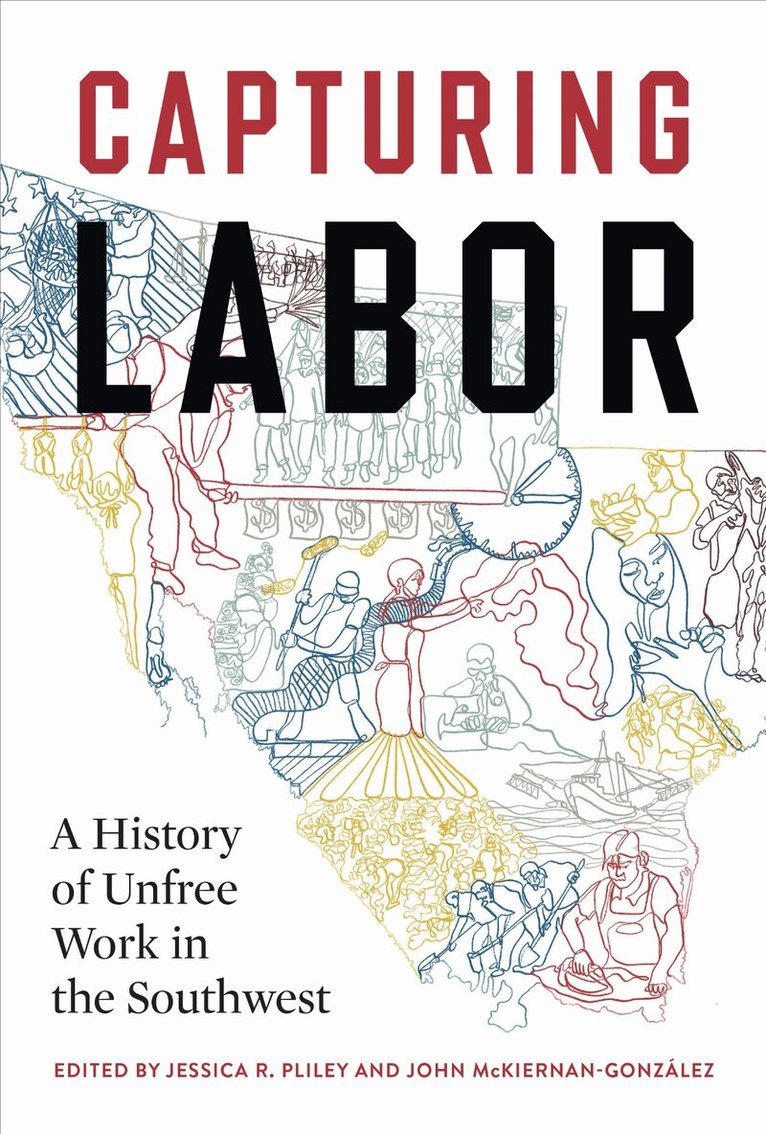
A collection of essays grappling with the many, often overlooked, forms of unfree labor in the West.When Americans think of unfree labor—coerced, extracted from workers unable to freely enter and exit contracts—what comes to mind is Black slavery and peonage in the South. But other forms of unfree labor also built the United States. Collecting a diverse range of sharply argued historical essays, Capturing Labor shares the story of unfree labor in the Southwest, affecting mainly Indigenous people, Mexican Americans, and people of color. In Texas and elsewhere, state agents developed various methods for directing the movement of workers, seizing their time, and controlling the products of their efforts. Case studies highlight the detention during World War I of Indigenous children and unaccompanied women, who were placed in boarding schools, fined, and obligated to work off the resulting debt. Other essays expose authorities forcing workers to break strikes and jailing Americans who supported labor uprisings in rural Mexico and the United States. Prisons and asylums supplied coerced agricultural workers and musicians who were never compensated for their labor or by the labels that took their recordings. Editors Jessica Pliley and John Mckiernan-GonzÁlez contend that unfree labor continues to shape American life, and is all around us today. Understanding its history aids us in recognizing and bringing attention to the grim realities of the present.