Genevieve LeBaron - Böcker
Visar alla böcker från författaren Genevieve LeBaron. Handla med fri frakt och snabb leverans.
7 produkter
7 produkter
Del 220 - Proceedings of the British Academy
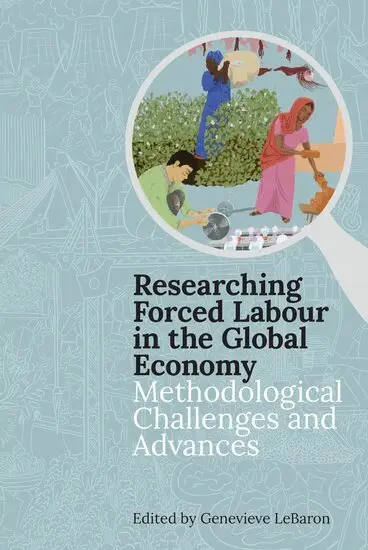
Researching Forced Labour in the Global Economy
Methodological Challenges and Advances
Inbunden, Engelska, 2018
677 kr
Skickas inom 7-10 vardagar
By most accounts, forced labour, human trafficking, and modern slavery are thriving in the global economy. Recent media reports -- including the discovery of widespread trafficking in Thailand's shrimp industry, forced labour in global tea and cocoa supply chains, and the devastating deaths of workers constructing stadiums for Qatar's World Cup-- have brought once hidden exploitation into the mainstream spotlight. As public concern about forced labour has escalated, governments around the world have begun to enact legislation to combat it in global production.Yet, in spite of soaring media and policy attention, reliable research on the business of forced labour remains difficult to come by. Forced labour is notoriously challenging to investigate, given that it is illegal, and powerful corporations and governments are reluctant to grant academics access to their workers and supply chains. Given the risk associated with researching the business of forced labour, until very recently, few scholars even attempted to collect hard or systematic data. Instead, academics have often had little choice but to rely on poor quality second-hand data, frequently generated by activists and businesses with vested interests in portraying the problem in a certain light. As a result, the evidence base on contemporary forced labour is both dangerously thin and riddled with bias.Researching Forced Labour in the Global Economy gathers an interdisciplinary group of leading scholars to tackle this problem. It provides the first, comprehensive, scholarly account of forced labour's role in the contemporary global economy and reflections on the methodologies used to generate this research.
665 kr
Skickas inom 7-10 vardagar
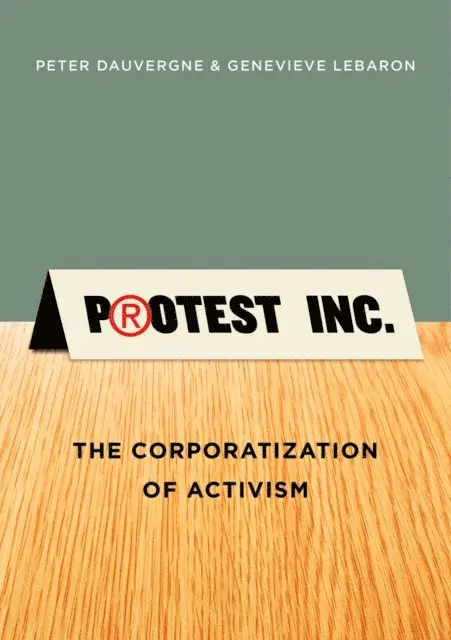
Mass protests have raged since the global financial crisis of 2008. Across the world students and workers and environmentalists are taking to the streets. Discontent is seething even in the wealthiest countries, as the world saw with Occupy Wall Street in 2011. Protest Inc. tells a disturbingly different story of global activism. As millions of grassroots activists rally against capitalism, activism more broadly is increasingly mirroring business management and echoing calls for market-based solutions. The past decade has seen nongovernmental organizations partner with oil companies like ExxonMobil, discount retailers like Walmart, fast-food chains like McDonald’s, and brand manufacturers like Nike and Coca-Cola. NGOs are courting billionaire philanthropists, branding causes, and turning to consumers as wellsprings of reform. Are “career” activists selling out to pay staff and fund programs? Partly. But far more is going on. Political and socioeconomic changes are enhancing the power of business to corporatize activism, including a worldwide crackdown on dissent, a strengthening of consumerism, a privatization of daily life, and a shifting of activism into business-style institutions. Grassroots activists are fighting back. Yet, even as protestors march and occupy cities, more and more activist organizations are collaborating with business and advocating for corporate-friendly “solutions.” This landmark book sounds the alarm about the dangers of this corporatizing trend for the future of transformative change in world politics.
231 kr
Skickas inom 7-10 vardagar
Mass protests have raged since the global financial crisis of 2008. Across the world students and workers and environmentalists are taking to the streets. Discontent is seething even in the wealthiest countries, as the world saw with Occupy Wall Street in 2011. Protest Inc. tells a disturbingly different story of global activism. As millions of grassroots activists rally against capitalism, activism more broadly is increasingly mirroring business management and echoing calls for market-based solutions. The past decade has seen nongovernmental organizations partner with oil companies like ExxonMobil, discount retailers like Walmart, fast-food chains like McDonald’s, and brand manufacturers like Nike and Coca-Cola. NGOs are courting billionaire philanthropists, branding causes, and turning to consumers as wellsprings of reform. Are “career” activists selling out to pay staff and fund programs? Partly. But far more is going on. Political and socioeconomic changes are enhancing the power of business to corporatize activism, including a worldwide crackdown on dissent, a strengthening of consumerism, a privatization of daily life, and a shifting of activism into business-style institutions. Grassroots activists are fighting back. Yet, even as protestors march and occupy cities, more and more activist organizations are collaborating with business and advocating for corporate-friendly “solutions.” This landmark book sounds the alarm about the dangers of this corporatizing trend for the future of transformative change in world politics.
331 kr
Skickas inom 7-10 vardagar
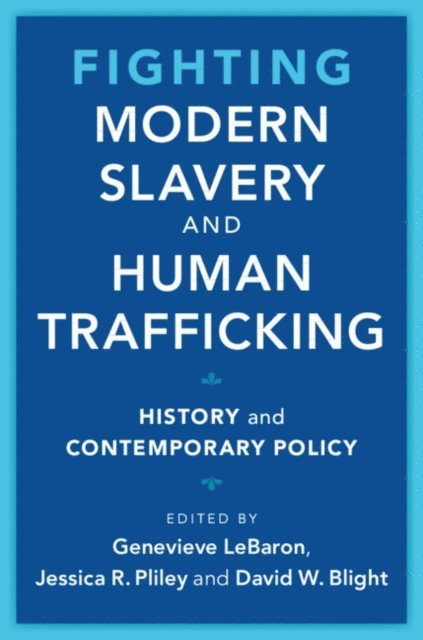
Over the last two decades, fighting modern slavery and human trafficking has become a cause célèbre. Yet large numbers of researchers, non-governmental organizations, trade unions, workers, and others who would seem like natural allies in the fight against modern slavery and trafficking are hugely skeptical of these movements. They object to how the problems are framed, and are skeptical of the "new abolitionist" movement. Why? This book tackles key controversies surrounding the anti-slavery and anti-trafficking movements head on. Champions and skeptics explore the fissures and fault lines that surround efforts to fight modern slavery and human trafficking today. These include: whether efforts to fight modern slavery displace or crowd out support for labor and migrant rights; whether and to what extent efforts to fight modern slavery mask, naturalize, and distract from racial, gendered, and economic inequality; and whether contemporary anti-slavery and anti-trafficking crusaders' use of history are accurate and appropriate.
Fighting Modern Slavery and Human Trafficking
History and Contemporary Policy
Inbunden, Engelska, 2021
1 065 kr
Skickas inom 7-10 vardagar
Over the last two decades, fighting modern slavery and human trafficking has become a cause célèbre. Yet large numbers of researchers, non-governmental organizations, trade unions, workers, and others who would seem like natural allies in the fight against modern slavery and trafficking are hugely skeptical of these movements. They object to how the problems are framed, and are skeptical of the "new abolitionist" movement. Why? This book tackles key controversies surrounding the anti-slavery and anti-trafficking movements head on. Champions and skeptics explore the fissures and fault lines that surround efforts to fight modern slavery and human trafficking today. These include: whether efforts to fight modern slavery displace or crowd out support for labor and migrant rights; whether and to what extent efforts to fight modern slavery mask, naturalize, and distract from racial, gendered, and economic inequality; and whether contemporary anti-slavery and anti-trafficking crusaders' use of history are accurate and appropriate.
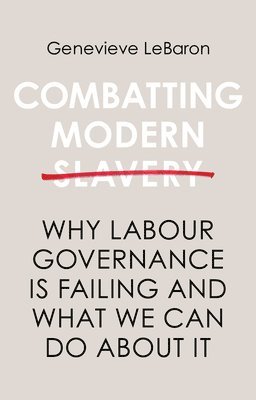
Combatting Modern Slavery
Why Labour Governance is Failing and What We Can Do About It
Inbunden, Engelska, 2020
685 kr
Skickas inom 11-20 vardagar
Over the last decade, the world’s largest corporations – from The Coca Cola Company to Amazon, Apple to Unilever – have taken up the cause of combatting modern slavery. Yet, by most measures, across many sectors and regions, severe labour exploitation continues to soar. Corporate social responsibility is not working. Why? In this landmark book, Genevieve LeBaron lifts the lid on a labour governance regime that is severely flawed and limited. She takes a close-up look at the millions of corporate dollars spent on anti-slavery networks, NGO partnerships, lobbying for new transparency legislation, and investment in social auditing and ethical certification schemes, to show how such efforts serve to bolster corporate growth and legitimacy as well as government reputations, whilst failing to protect the world’s most vulnerable workers. To eradicate modern slavery and human trafficking in global supply chains a new approach is needed; one that confronts corporate power and profits, dismantles exploitative business models, and regulates the booming private industry of accounting firms, social auditors, and consultants that has emerged to ‘monitor’ and ‘enforce’ labour standards. Only worker-driven initiatives that uphold fundamental rights can protect workers in the contemporary global economy and make forced labour a thing of the past.
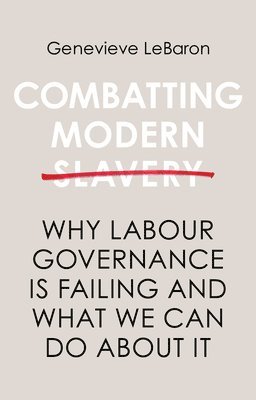
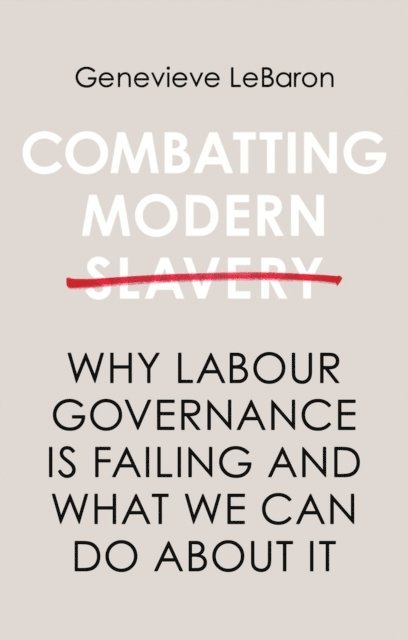
Combatting Modern Slavery
Why Labour Governance is Failing and What We Can Do About It
Häftad, Engelska, 2020
217 kr
Skickas inom 7-10 vardagar
Over the last decade, the world’s largest corporations – from The Coca Cola Company to Amazon, Apple to Unilever – have taken up the cause of combatting modern slavery. Yet, by most measures, across many sectors and regions, severe labour exploitation continues to soar. Corporate social responsibility is not working. Why? In this landmark book, Genevieve LeBaron lifts the lid on a labour governance regime that is severely flawed and limited. She takes a close-up look at the millions of corporate dollars spent on anti-slavery networks, NGO partnerships, lobbying for new transparency legislation, and investment in social auditing and ethical certification schemes, to show how such efforts serve to bolster corporate growth and legitimacy as well as government reputations, whilst failing to protect the world’s most vulnerable workers. To eradicate modern slavery and human trafficking in global supply chains a new approach is needed; one that confronts corporate power and profits, dismantles exploitative business models, and regulates the booming private industry of accounting firms, social auditors, and consultants that has emerged to ‘monitor’ and ‘enforce’ labour standards. Only worker-driven initiatives that uphold fundamental rights can protect workers in the contemporary global economy and make forced labour a thing of the past.