Jing Xie - Böcker
Visar alla böcker från författaren Jing Xie. Handla med fri frakt och snabb leverans.
7 produkter
7 produkter
696 kr
Skickas inom 10-15 vardagar
Urban planning, regeneration and design is an essentially cultural practice with the outcomes often depending upon an understanding of and engagement with the past. As cities in China strive to be competitive and attractive on the world stage, their decaying historical urban fabrics are being transformed into vibrant places through historical-cultural led urban regeneration, however, the impact of their rapid development has escaped serious scrutiny. Heritage-led Urban Regeneration in China presents the detailed evolution of three well-known historic streets in China: the Southern Song Imperial Street in Hangzhou; the residential Pingjiang Street in Suzhou; and the commercial Tunxi Old Street in Huangshan. From their original formation to their more recent regeneration, this book offers a critical evaluation of historical-cultural led urban regeneration projects in China and provides theoretical guidelines for contemporary practice in relation to its tangible and intangible urban heritage. Using interdisciplinary research in architecture, urban design, history and cultural studies, Jing Xie and Tim Heath provide a detailed analysis of the conservation and regeneration efforts of China as an emerging and pivotal world power. An invaluable resource for urban designers, urban planners and architects interested in and working in China, Heritage-led Urban Regeneration in China helps its readers to engage with the essential and invisible factors that produce these revitalised places while forming a critical view towards these projects.
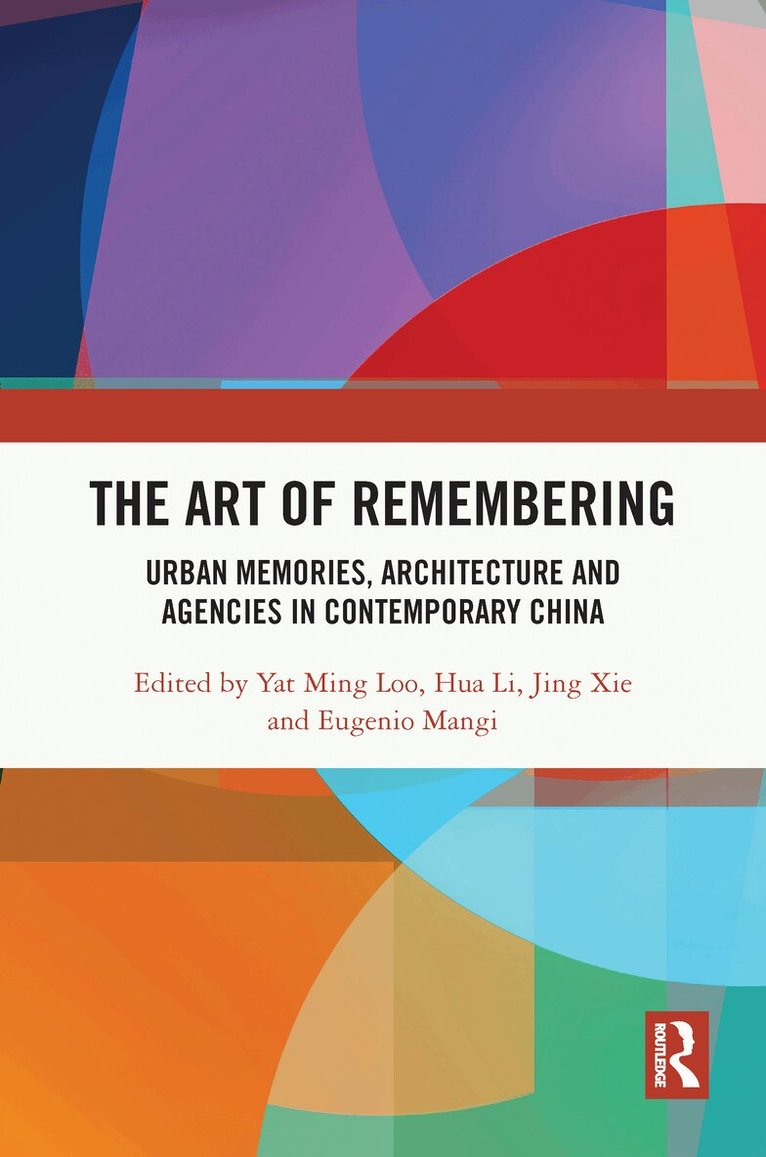
Art of Remembering
Urban Memories, Architecture and Agencies in Contemporary China
Inbunden, Engelska, 2024
2 444 kr
Skickas inom 10-15 vardagar
Focusing on the non-Western context and case studies, this book explores theories of interdisciplinary architectural thinking and the construction of urban memory in Chinese cities, with an emphasis on contemporary architecture and the diversity of agencies.China has undergone one of the fastest urbanisation and urban renewal processes in human history, but discussions of urban memory in China have tended to be practice-oriented and lack theoretical reflection. This book brings together interdisciplinary architectural scholarship to interrogate the production of urban memory and examine experiences in China. The 14 chapters explore different processes, projects, materials, architecture and urban spaces in different Chinese cities by analysing cityscapes such as temples, bridges, conservation projects, architectural design, historical architecture, memorial hall, market street, city images, custom bike, food market and so on. The book deals with different agencies and methods, tangible and intangible, in the construction of memories aimed at promoting hybridised multiple identities, and explores the interplay of different versions of memory, i.e. state, public, regional, local, individual and collective memory.This book will be essential reading for scholars and students of architecture and urbanism, cultural studies and China studies, as well as architects, urban planners and historians interested in these fields.
2 096 kr
Skickas inom 10-15 vardagar
Urban planning, regeneration and design is an essentially cultural practice with the outcomes often depending upon an understanding of and engagement with the past. As cities in China strive to be competitive and attractive on the world stage, their decaying historical urban fabrics are being transformed into vibrant places through historical-cultural led urban regeneration, however, the impact of their rapid development has escaped serious scrutiny. Heritage-led Urban Regeneration in China presents the detailed evolution of three well-known historic streets in China: the Southern Song Imperial Street in Hangzhou; the residential Pingjiang Street in Suzhou; and the commercial Tunxi Old Street in Huangshan. From their original formation to their more recent regeneration, this book offers a critical evaluation of historical-cultural led urban regeneration projects in China and provides theoretical guidelines for contemporary practice in relation to its tangible and intangible urban heritage. Using interdisciplinary research in architecture, urban design, history and cultural studies, Jing Xie and Tim Heath provide a detailed analysis of the conservation and regeneration efforts of China as an emerging and pivotal world power. An invaluable resource for urban designers, urban planners and architects interested in and working in China, Heritage-led Urban Regeneration in China helps its readers to engage with the essential and invisible factors that produce these revitalised places while forming a critical view towards these projects.
350 kr
Skickas inom 5-8 vardagar
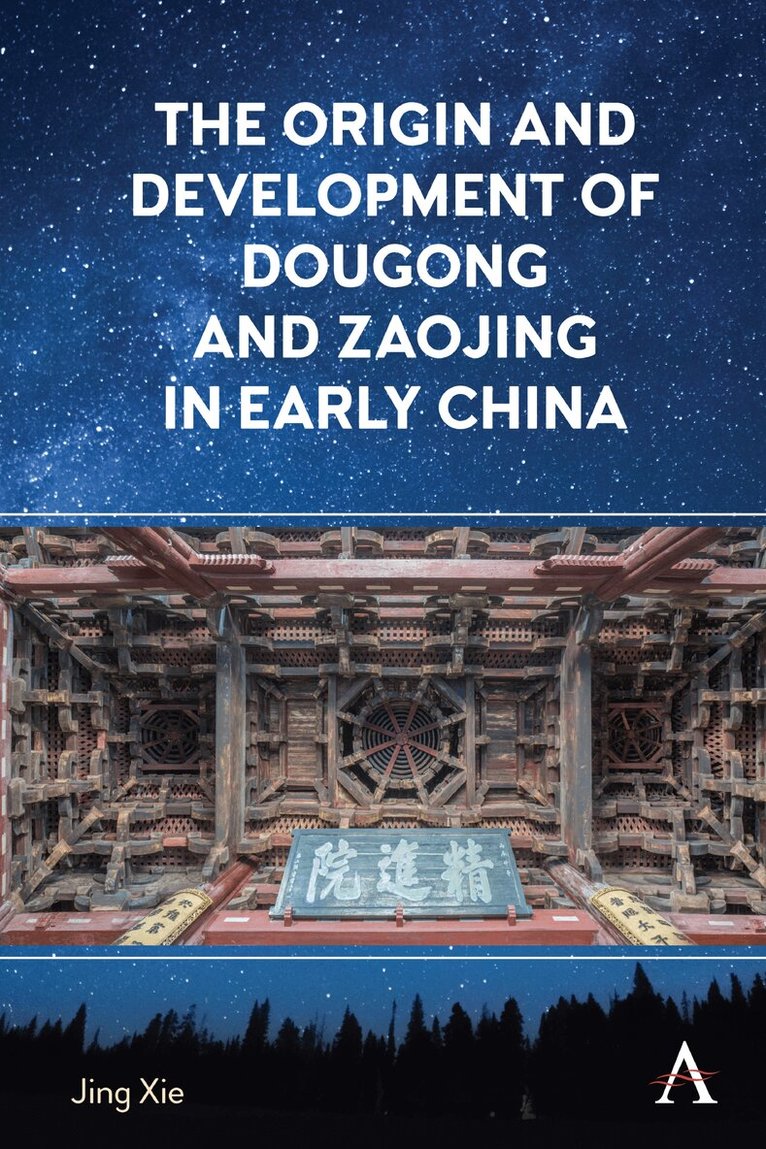
This book focuses on two significant architectural elements in traditional Chinese buildings, that is, Dougong and Zaojing. Dougong is a bracket set often sitting above columns and beams as a key component in the great buildings and tombs of imperial China. Zaojing is a special structure sunken into the ceiling, often profusely decorated with carvings and colorful paintings in various motifs. The book inquires about the origin of Dougong and Zaojing in the Chinese Bronze Age, and their heavenly interpretations in the Han dynasty (206 BCE–220). Compared to their later technically oriented development during the Tang to the Qing dynasties (c. 618–1912), and their preservation and innovative reinterpretation in modern times, the rich cultural meanings originally embodied in Dougong and Zaojing have almost disappeared.
370 kr
Tillfälligt slut
370 kr
Tillfälligt slut
1 343 kr
Skickas inom 3-6 vardagar
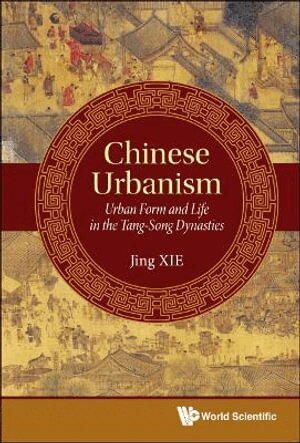
Since the 1990s, the urban landscape of China has witnessed revolutionary changes that are unrivalled in any country of the world throughout history. Rapid urbanization, facilitated by the modern planning mechanism for growth, provides a feast for property developers. Yet, associated urban problems such as housing affordability, traffic congestion, energy consumption, and environmental deterioration are aggravated. This book takes a historic approach to investigate the planning philosophy, urban form and life of the past. Through a detailed study of urban development from early times through the imperial period with a focus on the Tang-Song dynasties, this book attempts to articulate the good qualities of urban landscapes from the past that still have instructive value for modern practices. The focus on the Tang-Song period is not only because China was the most advanced civilization of its time, but also because it underwent a similar process of "urbanization", evident by tremendous economic growth, a dramatic rise of urban population, and an extended building boom. Through evaluating the streets, city layout, public places, urban communities, houses and gardens, and using interdisciplinary research in urban planning, urban design, architecture, history, and cultural studies, this book asserts that the past is quintessentially important. The past not only truthfully records the course of social and cultural formation of urban community and its associated physical fabric, but also regulates the directions we may take in the future.