Joan Marie Johnson - Böcker
Visar alla böcker från författaren Joan Marie Johnson. Handla med fri frakt och snabb leverans.
9 produkter
9 produkter
565 kr
Skickas inom 10-15 vardagar
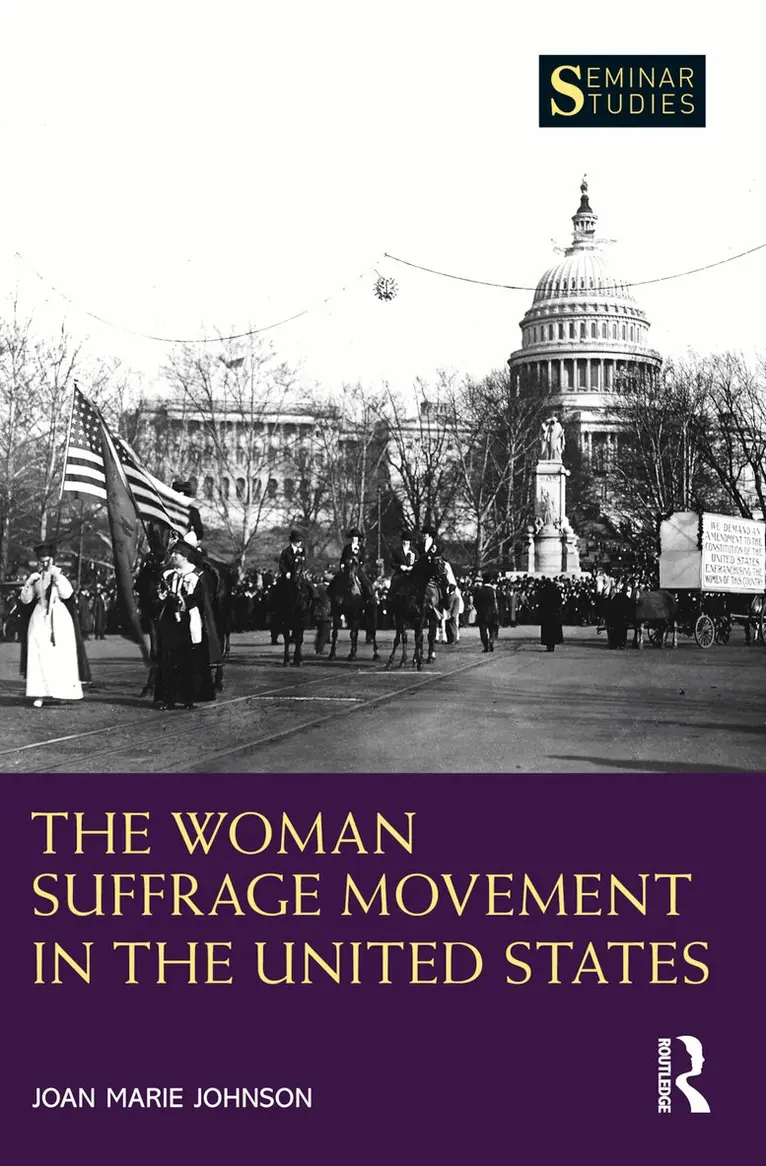
The Woman Suffrage Movement in the United States presents important moments and participants in the history of the American suffrage movement, ranging from the mid-nineteenth century through the passage of the Nineteenth Amendment in 1920.The book highlights the many participants in the suffrage movement, including well-known leaders, lesser-known activists, major national organizations, and local efforts across the country. An array of perspectives is examined: the garment factory worker working for protective labor laws, the wealthy wife hoping to control her inheritance, the Black activist seeking voting power for her community, and the temperance worker wanting to vote for prohibition laws. The volume examines the crucial activism of Black suffragists and other women of color, as well as the fraught nature of the cross-racial coalition in the movement. The broad and accessible approach to this important period in history will enable students to consider questions such as: How could suffragists overcome their differences and build community? Were wealthy women who funded salaries, headquarters, and parades afforded more power? What tactics and strategies did suffragists utilize to lobby legislators and win over the public? How did suffragists and anti-suffragists wield racism as a political tactic both in support of and against the Nineteenth Amendment? How and when did women of color finally achieve the right to vote? Students will also be able to consider lessons from the suffrage movement for an inclusive feminist movement today.This book will be of interest to students and scholars in US women’s history, the history of the Gilded Age and the Progressive Era, and those interested in the histories of social movements.
2 150 kr
Skickas inom 10-15 vardagar
The Woman Suffrage Movement in the United States presents important moments and participants in the history of the American suffrage movement, ranging from the mid-nineteenth century through the passage of the Nineteenth Amendment in 1920.The book highlights the many participants in the suffrage movement, including well-known leaders, lesser-known activists, major national organizations, and local efforts across the country. An array of perspectives is examined: the garment factory worker working for protective labor laws, the wealthy wife hoping to control her inheritance, the Black activist seeking voting power for her community, and the temperance worker wanting to vote for prohibition laws. The volume examines the crucial activism of Black suffragists and other women of color, as well as the fraught nature of the cross-racial coalition in the movement. The broad and accessible approach to this important period in history will enable students to consider questions such as: How could suffragists overcome their differences and build community? Were wealthy women who funded salaries, headquarters, and parades afforded more power? What tactics and strategies did suffragists utilize to lobby legislators and win over the public? How did suffragists and anti-suffragists wield racism as a political tactic both in support of and against the Nineteenth Amendment? How and when did women of color finally achieve the right to vote? Students will also be able to consider lessons from the suffrage movement for an inclusive feminist movement today.This book will be of interest to students and scholars in US women’s history, the history of the Gilded Age and the Progressive Era, and those interested in the histories of social movements.
454 kr
Skickas inom 5-8 vardagar
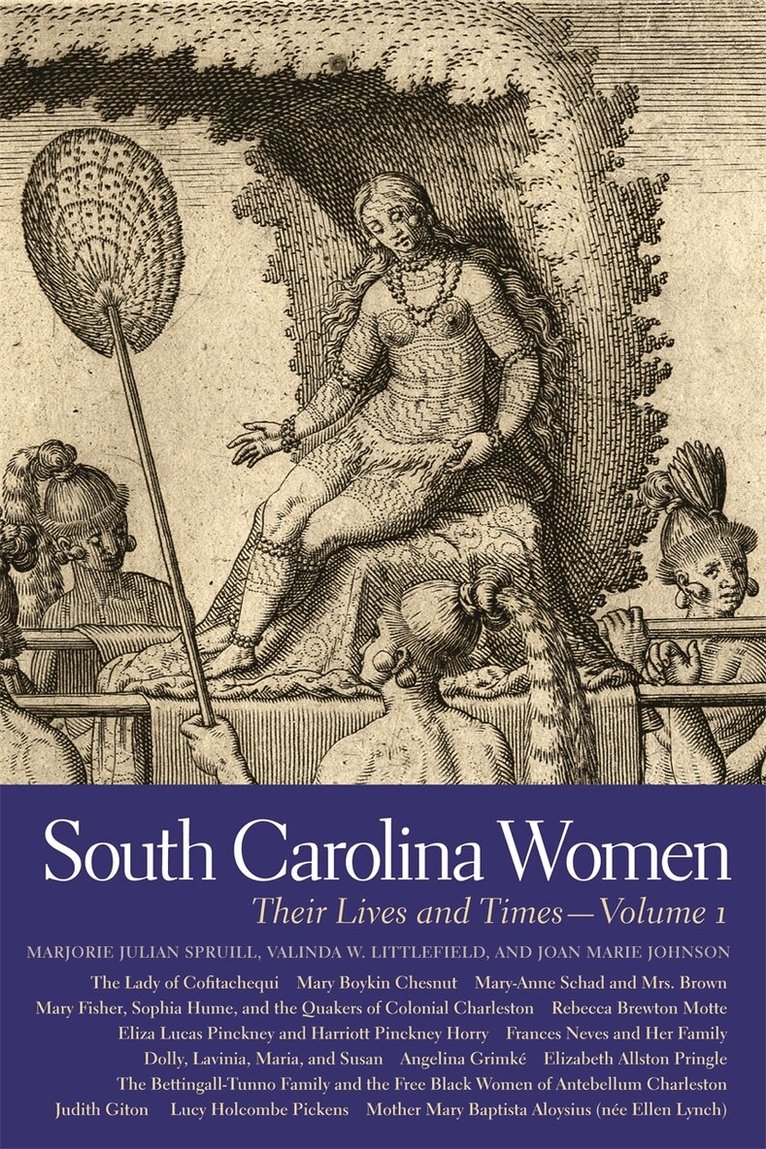
This volume, which spans the long period from the sixteenth century through the Civil War era, is remarkable for the religious, racial, ethnic, and class diversity of the women it features. Essays on plantation mistresses, overseers' wives, nonslaveholding women from the upcountry, slave women, and free black women in antebellum Charleston are certain to challenge notions about the slave South and about the significance of women to the state's economy. South Carolina's unusual history of religious tolerance is explored through the experiences of women of various faiths, and accounts of women from Europe, the West Indies, and other colonies reflect the diverse origins of the state's immigrants.The volume begins with a profile of the Lady of Cofitachequi, who sat at the head of an Indian chiefdom and led her people in encounters with Spanish explorers. The essays that follow look at well-known women such as Eliza Lucas Pinckney, who managed several indigo plantations; the abolitionist Angelina Grimke; and Civil War diarist Mary Boykin Chesnut. Also included, however, are essays on the much-less-documented lives of poor white farming women (the Neves family of Mush Creek), free African American women (Margaret Bettingall and her daughters), and slave women, the latter based on interviews and their own letters. The essays in volume 1 demonstrate that many women in this most conservative of states, with its strong emphasis on traditional gender roles, carved out far richer public lives than historians have often attributed to antebellum southern women.Historical figures included:The Lady of CofitachequiJudith Giton ManigaultMary FisherSophia HumeMary-Anne SchadMrs. BrownRebecca Brewton MotteEliza Lucas PinckneyHarriott Pinckney HorryEnslaved woman known as DollyEnslaved woman known as LaviniaEnslaved woman known as MariaEnslaved woman known as SusanWomen of the Bettingall-Tunno FamilyAngelina GrimkéElizabeth Allston PringleMother Mary Baptista AloysiusMary Boykin ChesnutFrances NevesLucy Holcombe Pickens
Southern Women at the Seven Sister Colleges
Feminist Values and Social Activism, 1875-1915
Inbunden, Engelska, 2008
860 kr
Skickas inom 5-8 vardagar
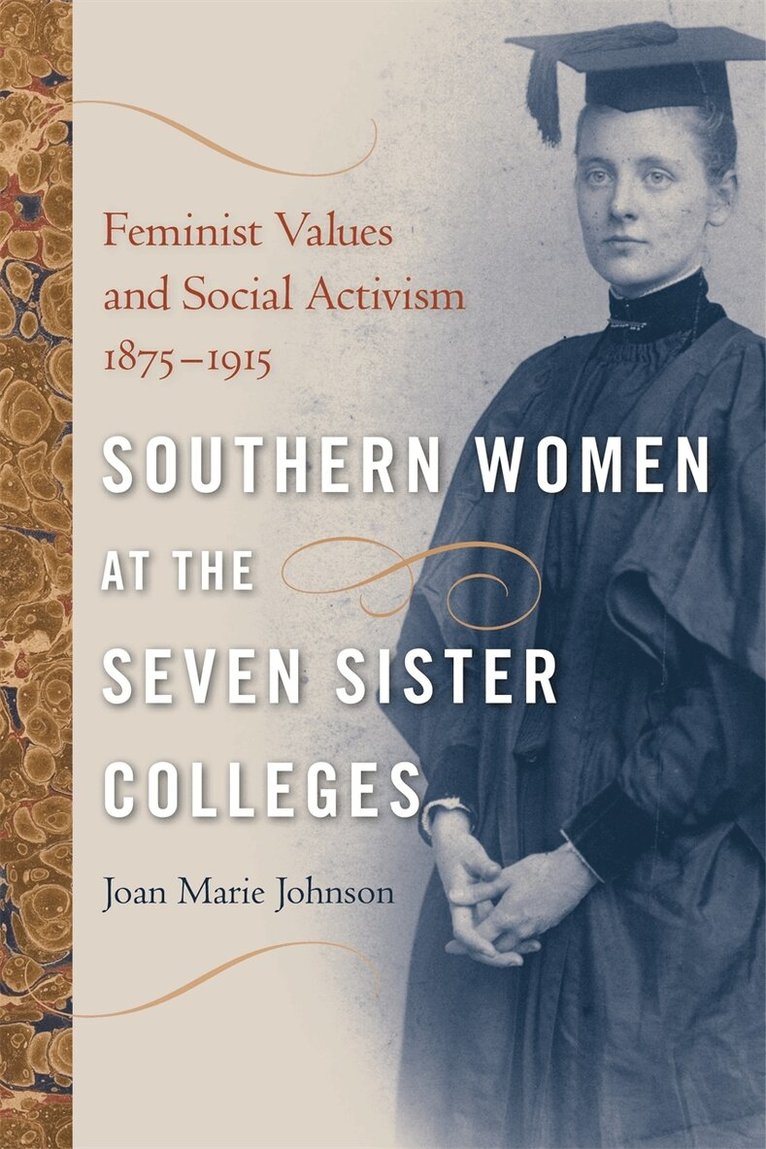
From the end of Reconstruction and into the New South era, more than one thousand white southern women attended one of the Seven Sister colleges: Vassar, Wellesley, Smith, Mount Holyoke, Bryn Mawr, Radcliffe, and Barnard. Joan Marie Johnson looks at how such educations—in the North, at some of the country’s best schools—influenced southern women to challenge their traditional gender roles and become active in woman suffrage and other social reforms of the Progressive Era South.Attending one of the Seven Sister colleges, Johnson argues, could transform a southern woman indoctrinated in notions of domesticity and dependence into someone with newfound confidence and leadership skills. Many southern students at northern schools imported the values they imbibed at college, returning home to found schools of their own, women’s clubs, and woman suffrage associations. At the same time, during college and after graduation, southern women maintained a complicated relationship to home, nurturing their regional identity and remaining loyal to the ideals of the Confederacy.Johnson explores why students sought a classical liberal arts education, how they prepared for entrance examinations, and how they felt as southerners on northern campuses. She draws on personal writings, information gleaned from college publications and records, and data on the women’s decisions about marriage, work, children, and other life-altering concerns.In their time, the women studied in this book would eventually make up a disproportionately high percentage of the elite southern female leadership. This collective biography highlights the important part they played in forging new roles for women, especially in social reform, education, and suffrage.
Southern Women at the Seven Sister Colleges
Feminist Values and Social Activism, 1875-1915
Häftad, Engelska, 2010
428 kr
Skickas inom 5-8 vardagar
From the end of Reconstruction and into the New South era, more than one thousand white southern women attended one of the Seven Sister colleges: Vassar, Wellesley, Smith, Mount Holyoke, Bryn Mawr, Radcliffe, and Barnard. Joan Marie Johnson looks at how such educations—in the North, at some of the country’s best schools—influenced southern women to challenge their traditional gender roles and become active in woman suffrage and other social reforms of the Progressive Era South.Attending one of the Seven Sister colleges, Johnson argues, could transform a southern woman indoctrinated in notions of domesticity and dependence into someone with newfound confidence and leadership skills. Many southern students at northern schools imported the values they imbibed at college, returning home to found schools of their own, women’s clubs, and woman suffrage associations. At the same time, during college and after graduation, southern women maintained a complicated relationship to home, nurturing their regional identity and remaining loyal to the ideals of the Confederacy.Johnson explores why students sought a classical liberal arts education, how they prepared for entrance examinations, and how they felt as southerners on northern campuses. She draws on personal writings, information gleaned from college publications and records, and data on the women’s decisions about marriage, work, children, and other life-altering concerns.In their time, the women studied in this book would eventually make up a disproportionately high percentage of the elite southern female leadership. This collective biography highlights the important part they played in forging new roles for women, especially in social reform, education, and suffrage.
1 290 kr
Skickas inom 5-8 vardagar
Covering an era from the early twentieth century to the present, this volume features twenty-seven South Carolina women of varied backgrounds whose stories reflect the ever-widening array of activities and occupations in which women were engaged in a transformative era that included depression, world wars, and dramatic changes in the role of women. Some striking revelations emerge from these biographical portraits—in particular, the breadth of interracial cooperation between women in the decades preceding the civil rights movement and ways that women carved out diverse career opportunities, sometimes by breaking down formidable occupational barriers. Some women in the volume proceeded cautiously, working within the norms of their day to promote reform even as traditional ideas about race and gender held powerful sway. Others spoke out more directly and forcefully and demanded change.Most of the women featured in these essays were leaders within their respective communities and the state. Many of them, such as Wil Lou Gray, Hilla Sheriff, and Ruby Forsythe, dedicated themselves to improving the quality of education and health care for South Carolinians. Septima Clark, Alice Spearman Wright, Modjeska Simkins, and many others sought to improve conditions and obtain social justice for African Americans. Others, including Victoria Eslinger and Tootsie Holland, were devoted to the cause of women’s rights. Louise Smith, Mary Elizabeth Massey, and Mary Blackwell Butler entered traditionally male-dominated fields, while Polly Woodham and Mary Jane Manigault created their own small businesses. A few, including Mary Gordon Ellis, Dolly Hamby, and Harriet Keyserling exercised political influence. Familiar figures like Jean Toal, current chief justice of the South Carolina Supreme Court, are included, but readers also learn about lesser-known women such as Julia and Alice Delk, sisters employed in the Charleston Naval Yard during World War II.
517 kr
Skickas inom 5-8 vardagar
Covering an era from the early twentieth century to the present, this volume features twenty-seven South Carolina women of varied backgrounds whose stories reflect the ever-widening array of activities and occupations in which women were engaged in a transformative era that included depression, world wars, and dramatic changes in the role of women. Some striking revelations emerge from these biographical portraits—in particular, the breadth of interracial cooperation between women in the decades preceding the civil rights movement and ways that women carved out diverse career opportunities, sometimes by breaking down formidable occupational barriers. Some women in the volume proceeded cautiously, working within the norms of their day to promote reform even as traditional ideas about race and gender held powerful sway. Others spoke out more directly and forcefully and demanded change.Most of the women featured in these essays were leaders within their respective communities and the state. Many of them, such as Wil Lou Gray, Hilla Sheriff, and Ruby Forsythe, dedicated themselves to improving the quality of education and health care for South Carolinians. Septima Clark, Alice Spearman Wright, Modjeska Simkins, and many others sought to improve conditions and obtain social justice for African Americans. Others, including Victoria Eslinger and Tootsie Holland, were devoted to the cause of women’s rights. Louise Smith, Mary Elizabeth Massey, and Mary Blackwell Butler entered traditionally male-dominated fields, while Polly Woodham and Mary Jane Manigault created their own small businesses. A few, including Mary Gordon Ellis, Dolly Hamby, and Harriet Keyserling exercised political influence. Familiar figures like Jean Toal, current chief justice of the South Carolina Supreme Court, are included, but readers also learn about lesser-known women such as Julia and Alice Delk, sisters employed in the Charleston Naval Yard during World War II.
Funding Feminism
Monied Women, Philanthropy, and the Women's Movement, 1870-1967
Inbunden, Engelska, 2017
454 kr
Skickas inom 11-20 vardagar
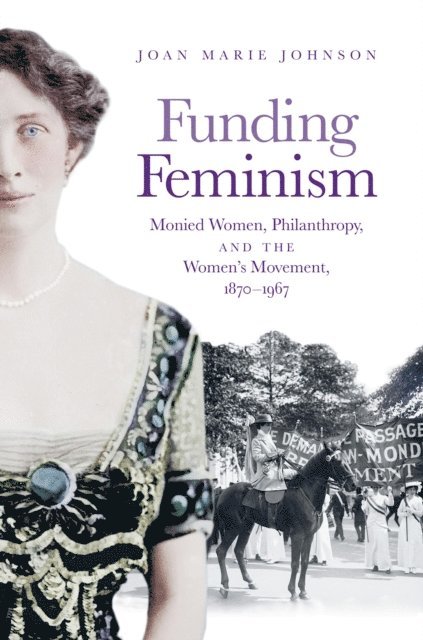
Joan Marie Johnson examines an understudied dimension women's history in the United States: how a group of affluent white women from the late-nineteenth through the mid-twentieth centuries advanced the status of all women through acts of philanthropy. This cadre of activists included Phoebe Hearst, the mother of William Randolph Hearst; Grace Dodge, granddaughter of Wall Street ""Merchant Prince"" William Earle Dodge; and Ava Belmont, who married into the Vanderbilt family fortune. Motivated by their own experiences with sexism, and focusing on women's need for economic independence, these benefactors sought to expand women's access to higher education, promote suffrage, and champion reproductive rights as well as to provide assistance to working-class women. In a time when women still wielded limited political power, philanthropy was perhaps the most potent tool they had. But even as these wealthy women exercised considerable influence, their activism had significant limits. As Johnson argues, restrictions tied to their giving engendered resentment and jeopardized efforts to establish coalitions across racial and class lines. As the struggle for full economic and political power and self-determination for women continues today, this history reveals how generous women helped shape the movement. And Johnson shows us that tensions over wealth and power that persist in the modern movement have deep historical roots.
Funding Feminism
Monied Women, Philanthropy, and the Women's Movement, 1870–1967
Häftad, Engelska, 2020
378 kr
Skickas inom 10-15 vardagar
Joan Marie Johnson examines an understudied dimension of women's history in the United States: how a group of affluent white women from the late nineteenth through the mid-twentieth centuries advanced the status of all women through acts of philanthropy. This cadre of activists included Phoebe Hearst, the mother of William Randolph Hearst; Grace Dodge, granddaughter of Wall Street "Merchant Prince" William Earle Dodge; and Ava Belmont, who married into the Vanderbilt family fortune. Motivated by their own experiences with sexism, and focusing on women's need for economic independence, these benefactors sought to expand women's access to higher education, promote suffrage, and champion reproductive rights, as well as to provide assistance to working-class women. In a time when women still wielded limited political power, philanthropy was perhaps the most potent tool they had. But even as these wealthy women exercised considerable influence, their activism had significant limits. As Johnson argues, restrictions tied to their giving engendered resentment and jeopardized efforts to establish coalitions across racial and class lines. As the struggle for full economic and political power and self-determination for women continues today, this history reveals how generous women helped shape the movement. And Johnson shows us that tensions over wealth and power that persist in the modern movement have deep historical roots.