Marjorie Julian Spruill - Böcker
Visar alla böcker från författaren Marjorie Julian Spruill. Handla med fri frakt och snabb leverans.
4 produkter
4 produkter
454 kr
Skickas inom 5-8 vardagar
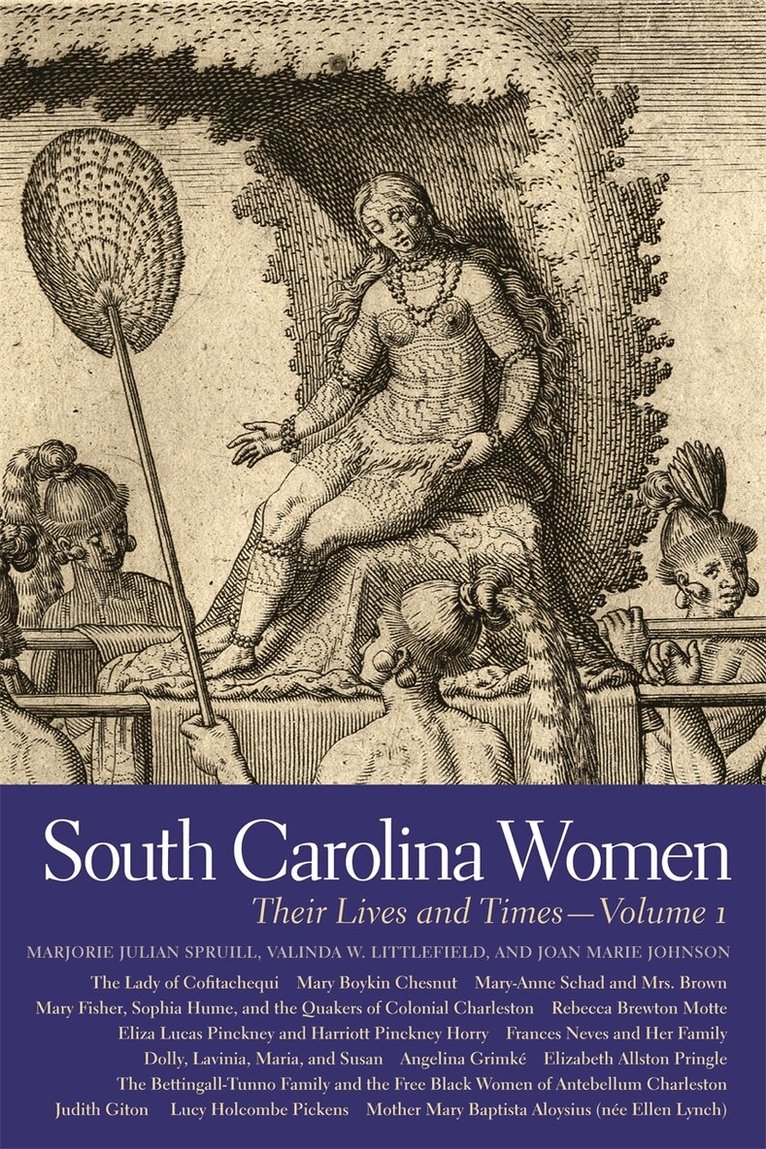
This volume, which spans the long period from the sixteenth century through the Civil War era, is remarkable for the religious, racial, ethnic, and class diversity of the women it features. Essays on plantation mistresses, overseers' wives, nonslaveholding women from the upcountry, slave women, and free black women in antebellum Charleston are certain to challenge notions about the slave South and about the significance of women to the state's economy. South Carolina's unusual history of religious tolerance is explored through the experiences of women of various faiths, and accounts of women from Europe, the West Indies, and other colonies reflect the diverse origins of the state's immigrants.The volume begins with a profile of the Lady of Cofitachequi, who sat at the head of an Indian chiefdom and led her people in encounters with Spanish explorers. The essays that follow look at well-known women such as Eliza Lucas Pinckney, who managed several indigo plantations; the abolitionist Angelina Grimke; and Civil War diarist Mary Boykin Chesnut. Also included, however, are essays on the much-less-documented lives of poor white farming women (the Neves family of Mush Creek), free African American women (Margaret Bettingall and her daughters), and slave women, the latter based on interviews and their own letters. The essays in volume 1 demonstrate that many women in this most conservative of states, with its strong emphasis on traditional gender roles, carved out far richer public lives than historians have often attributed to antebellum southern women.Historical figures included:The Lady of CofitachequiJudith Giton ManigaultMary FisherSophia HumeMary-Anne SchadMrs. BrownRebecca Brewton MotteEliza Lucas PinckneyHarriott Pinckney HorryEnslaved woman known as DollyEnslaved woman known as LaviniaEnslaved woman known as MariaEnslaved woman known as SusanWomen of the Bettingall-Tunno FamilyAngelina GrimkéElizabeth Allston PringleMother Mary Baptista AloysiusMary Boykin ChesnutFrances NevesLucy Holcombe Pickens
1 267 kr
Skickas inom 5-8 vardagar
Volume 1 of Mississippi Women enriched our understanding of women’s roles in the state’s history through profiles of notable, though often neglected, individuals. Volume 2 explores the historical forces that have shaped women’s lives in Mississippi. Covering an expanse of time from early European settlement through the course of the twentieth century, the essays in the second volume acknowledge the state’s diverse cultural and physical landscapes as they discuss how issues of race, gender, and class affected women’s lives in various private and public spheres.Essays on the state’s early history focus on such topics as Choctaw and Chickasaw women’s influence on Native American society and tribal councils, daily life for free black women in slaveholding Natchez, and the efforts of white Protestant women to establish churches on the frontier. Several essays cast new light on legal concerns, including two on the pivotal Married Women’s Property Act of 1839, while other essays examine the impact of the Civil War and Reconstruction on women’s lives.The boundaries of race and gender in Jim Crow Mississippi are explored through an essay on the women of the mixed-race Knight family, notably the educator, nurse, and missionary Anna Knight. Women’s experiences with rural electrification, consumerism, civil rights activism, social and service clubs, and feminism are among the other twentieth-century topics addressed in the essays. Volume 2 concludes with an essay on storytelling and remembrance that centers on the family of Pulitzer Prize-winning columnist (and Mississippi native) William Raspberry.
1 290 kr
Skickas inom 5-8 vardagar
Covering an era from the early twentieth century to the present, this volume features twenty-seven South Carolina women of varied backgrounds whose stories reflect the ever-widening array of activities and occupations in which women were engaged in a transformative era that included depression, world wars, and dramatic changes in the role of women. Some striking revelations emerge from these biographical portraits—in particular, the breadth of interracial cooperation between women in the decades preceding the civil rights movement and ways that women carved out diverse career opportunities, sometimes by breaking down formidable occupational barriers. Some women in the volume proceeded cautiously, working within the norms of their day to promote reform even as traditional ideas about race and gender held powerful sway. Others spoke out more directly and forcefully and demanded change.Most of the women featured in these essays were leaders within their respective communities and the state. Many of them, such as Wil Lou Gray, Hilla Sheriff, and Ruby Forsythe, dedicated themselves to improving the quality of education and health care for South Carolinians. Septima Clark, Alice Spearman Wright, Modjeska Simkins, and many others sought to improve conditions and obtain social justice for African Americans. Others, including Victoria Eslinger and Tootsie Holland, were devoted to the cause of women’s rights. Louise Smith, Mary Elizabeth Massey, and Mary Blackwell Butler entered traditionally male-dominated fields, while Polly Woodham and Mary Jane Manigault created their own small businesses. A few, including Mary Gordon Ellis, Dolly Hamby, and Harriet Keyserling exercised political influence. Familiar figures like Jean Toal, current chief justice of the South Carolina Supreme Court, are included, but readers also learn about lesser-known women such as Julia and Alice Delk, sisters employed in the Charleston Naval Yard during World War II.
517 kr
Skickas inom 5-8 vardagar
Covering an era from the early twentieth century to the present, this volume features twenty-seven South Carolina women of varied backgrounds whose stories reflect the ever-widening array of activities and occupations in which women were engaged in a transformative era that included depression, world wars, and dramatic changes in the role of women. Some striking revelations emerge from these biographical portraits—in particular, the breadth of interracial cooperation between women in the decades preceding the civil rights movement and ways that women carved out diverse career opportunities, sometimes by breaking down formidable occupational barriers. Some women in the volume proceeded cautiously, working within the norms of their day to promote reform even as traditional ideas about race and gender held powerful sway. Others spoke out more directly and forcefully and demanded change.Most of the women featured in these essays were leaders within their respective communities and the state. Many of them, such as Wil Lou Gray, Hilla Sheriff, and Ruby Forsythe, dedicated themselves to improving the quality of education and health care for South Carolinians. Septima Clark, Alice Spearman Wright, Modjeska Simkins, and many others sought to improve conditions and obtain social justice for African Americans. Others, including Victoria Eslinger and Tootsie Holland, were devoted to the cause of women’s rights. Louise Smith, Mary Elizabeth Massey, and Mary Blackwell Butler entered traditionally male-dominated fields, while Polly Woodham and Mary Jane Manigault created their own small businesses. A few, including Mary Gordon Ellis, Dolly Hamby, and Harriet Keyserling exercised political influence. Familiar figures like Jean Toal, current chief justice of the South Carolina Supreme Court, are included, but readers also learn about lesser-known women such as Julia and Alice Delk, sisters employed in the Charleston Naval Yard during World War II.