Joanna Merwood-Salisbury - Böcker
Visar alla böcker från författaren Joanna Merwood-Salisbury. Handla med fri frakt och snabb leverans.
3 produkter
3 produkter
286 kr
Skickas
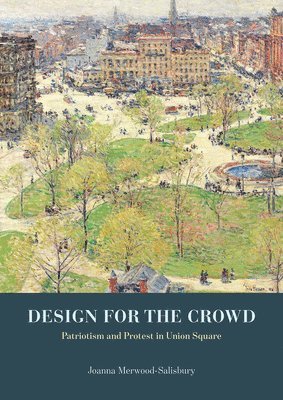
Situated on Broadway between Fourteenth and Seventeenth Streets, Union Square occupies a central place in both the geography and the history of New York City. Though this compact space was originally designed in 1830 to beautify a residential neighborhood and boost property values, by the early days of the Civil War, New Yorkers had transformed Union Square into a gathering place for political debate and protest. As public use of the square changed, so, too, did its design. When Frederick Law Olmsted and Calvert Vaux redesigned the park in the late nineteenth century, they sought to enhance its potential as a space for the orderly expression of public sentiment. A few decades later, anarchists and Communist activists, including Emma Goldberg, turned Union Square into a regular gathering place where they would advocate for radical change. In response, a series of city administrations and business groups sought to quash this unruly form of dissidence by remaking the square into a new kind of patriotic space. As Joanna Merwood-Salisbury shows us in Design for the Crowd, the history of Union Square illustrates ongoing debates over the proper organization of urban space--and competing images of the public that uses it.In this sweeping history of an iconic urban square, Merwood-Salisbury gives us a review of American political activism, philosophies of urban design, and the many ways in which a seemingly stable landmark can change through public engagement and design.Published with the support of Furthermore: a program of the J. M. Kaplan Fund.
1 000 kr
Kommande
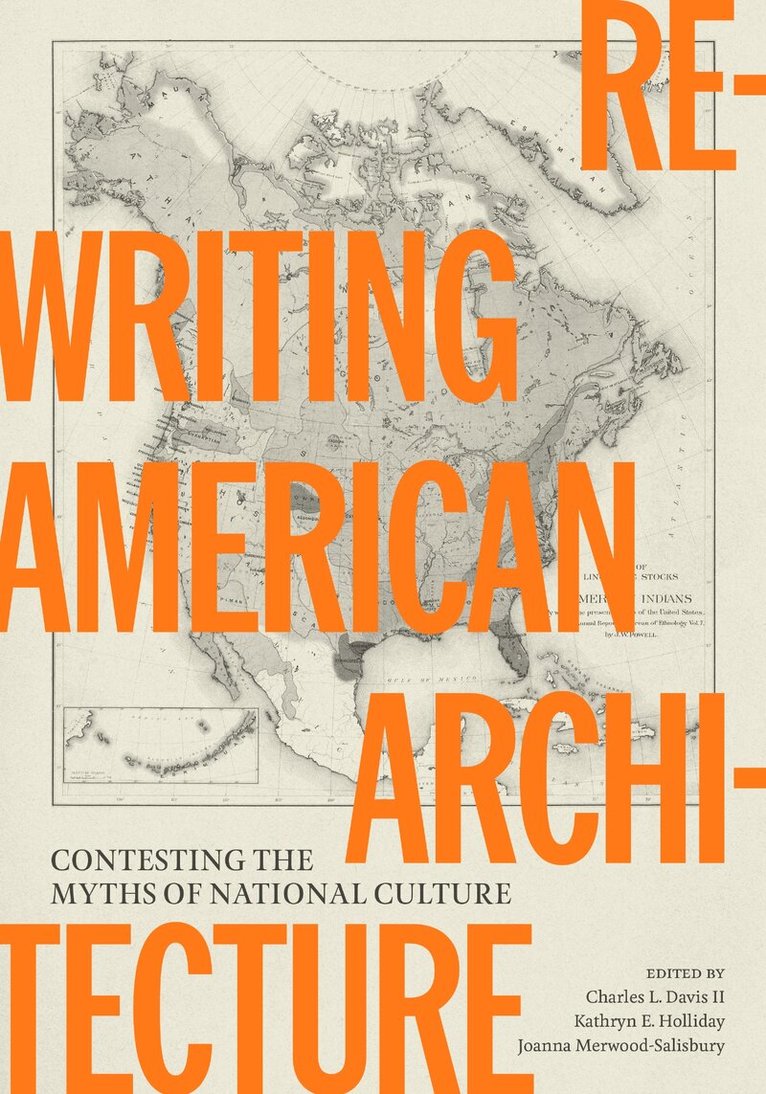
A critical reassessment of nineteenth‑century American architecture that uncovers how race, settler colonialism, and contested national identities shaped the built environment and its historiography.Rewriting American Architecture offers a revisionist riposte to the canonical story of nineteenth-century American architecture. Drawing on new archival research and revisionist historiography, the essays in this volume reveal how American architecture was shaped not by inevitable progress toward a unified national culture but by the turbulent realities of race, labor, settler colonialism, and territorial expansion. Rather than treating architecture as an apolitical aesthetic expression, the contributors expose it as an active arena in which the meanings of nationhood were constructed, contested, and often violently enforced. From Indigenous spatial practices and Black institutional building to transnational exchanges and the racial politics embedded in professionalization, this collection reframes the built environment as central to the competing cultural, political, and geographic claims that defined the United States during this period.
432 kr
Kommande
A critical reassessment of nineteenth‑century American architecture that uncovers how race, settler colonialism, and contested national identities shaped the built environment and its historiography.Rewriting American Architecture offers a revisionist riposte to the canonical story of nineteenth-century American architecture. Drawing on new archival research and revisionist historiography, the essays in this volume reveal how American architecture was shaped not by inevitable progress toward a unified national culture but by the turbulent realities of race, labor, settler colonialism, and territorial expansion. Rather than treating architecture as an apolitical aesthetic expression, the contributors expose it as an active arena in which the meanings of nationhood were constructed, contested, and often violently enforced. From Indigenous spatial practices and Black institutional building to transnational exchanges and the racial politics embedded in professionalization, this collection reframes the built environment as central to the competing cultural, political, and geographic claims that defined the United States during this period.