Joanne Parker - Böcker
Visar alla böcker från författaren Joanne Parker. Handla med fri frakt och snabb leverans.
11 produkter
11 produkter
756 kr
Skickas inom 5-8 vardagar
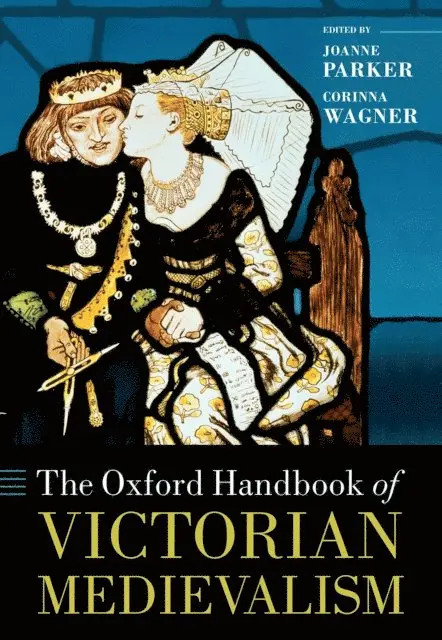
In 1859, the historian Lord John Acton asserted: 'two great principles divide the world, and contend for the mastery, antiquity and the middle ages'. The influence on Victorian culture of the 'Middle Ages' (broadly understood then as the centuries between the Roman Empire and the Renaissance) was both pervasive and multi-faceted. This 'medievalism' led, for instance, to the rituals and ornament of the Medieval Catholic church being reintroduced to Anglicanism. It led to the Saxon Witan being celebrated as a prototypical representative parliament. It resulted in Viking raiders being acclaimed as the forefathers of the British navy. And it encouraged innumerable nineteenth-century men to cultivate the superlative beards we now think of as typically 'Victorian'—in an attempt to emulate their Anglo-Saxon forefathers.Different facets of medieval life, and different periods before the Renaissance, were utilized in nineteenth-century Britain for divergent political and cultural agendas. Medievalism also became a dominant mode in Victorian art and architecture, with 75 per cent of churches in England built on a Gothic rather than a classical model. And it was pervasive in a wide variety of literary forms, from translated sagas to pseudo-medieval devotional verse to triple-decker novels. Medievalism even transformed nineteenth-century domesticity: while only a minority added moats and portcullises to their homes, the medieval-style textiles produced by Morris and Co. decorated many affluent drawing rooms. The Oxford Handbook of Victorian Medievalism is the first work to examine in full the fascinating phenomenon of 'medievalism' in Victorian Britain. Covering art, architecture, religion, literature, politics, music, and social reform, the Handbook also surveys earlier forms of antiquarianism that established the groundwork for Victorian movements. In addition, this collection addresses the international context, by mapping the spread of medievalism across Europe, South America, and India, amongst other places.
2 221 kr
Skickas inom 5-8 vardagar
In 1859, the historian Lord John Acton asserted: 'two great principles divide the world, and contend for the mastery, antiquity and the middle ages'. The influence on Victorian culture of the 'Middle Ages' (broadly understood then as the centuries between the Roman Empire and the Renaissance) was both pervasive and multi-faceted. This 'medievalism' led, for instance, to the rituals and ornament of the Medieval Catholic church being reintroduced to Anglicanism. It led to the Saxon Witan being celebrated as a prototypical representative parliament. It resulted in Viking raiders being acclaimed as the forefathers of the British navy. And it encouraged innumerable nineteenth-century men to cultivate the superlative beards we now think of as typically 'Victorian'--in an attempt to emulate their Anglo-Saxon forefathers. Different facets of medieval life, and different periods before the Renaissance, were utilized in nineteenth-century Britain for divergent political and cultural agendas. Medievalism also became a dominant mode in Victorian art and architecture, with 75 per cent of churches in England built on a Gothic rather than a classical model. And it was pervasive in a wide variety of literary forms, from translated sagas to pseudo-medieval devotional verse to triple-decker novels. Medievalism even transformed nineteenth-century domesticity: while only a minority added moats and portcullises to their homes, the medieval-style textiles produced by Morris and Co. decorated many affluent drawing rooms. The Oxford Handbook of Victorian Medievalism is the first work to examine in full the fascinating phenomenon of 'medievalism' in Victorian Britain. Covering art, architecture, religion, literature, politics, music, and social reform, the Handbook also surveys earlier forms of antiquarianism that established the groundwork for Victorian movements. In addition, this collection addresses the international context, by mapping the spread of medievalism across Europe, South America, and India, amongst other places.
1 228 kr
Skickas inom 5-8 vardagar
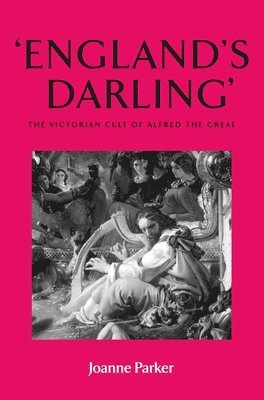
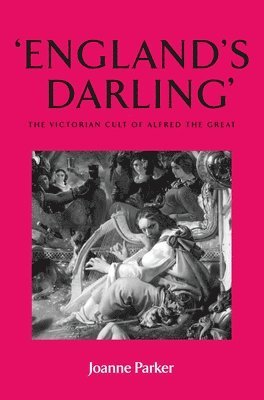
During the last two decades, numerous studies have been devoted to the Victorian fascination with King Arthur, however . the figure of King Alfred has received almost no attention. For much of the nineteenth century, Alfred was as important as Arthur in the British popular imagination. A pervasive cult of the king developed which included the erection of at least four public statues, the completion of more than twenty-five paintings, and the publication of over a hundred texts, by authors ranging from Wordsworth to minor women writers. By 1852, J.A. Froude could describe Alfred’s life as ‘the favourite story in English nurseries’; in 1901, a national holiday marked the thousandth anniversary of his death, organised by a committee including Edward Burne Jones, Arthur Conan Doyle and Thomas Hughes. England’s darling sets out to answer the questions that must arise in the face of such nineteenth-century enthusiasm for a long-dead king. It addresses a genuine gap in the literature on Victorian medievalism in particular and cultural history in general and argues that knowledge of the cult of Alfred is crucial to understanding the Victorian cultural map. The book examines the ways in which Alfred was rewritten by nineteenth-century authors and artists, and asks how beliefs about the Saxon king’s reign and achievements related to nineteenth-century ideals about leadership, law, religion, commerce, education and the Empire. The book concludes by addressing the most interesting enigma in Alfred’s reception history: why is the king no longer ‘England’s darling’?A fascinating study that will be enjoyed by scholars of history, cultural history, literature and art history.
208 kr
Skickas
For much of the nineteenth century, King Alfred was as important as King Arthur in the British popular imagination. A pervasive cult of the King developed which included the erection of at least four public statues, the completion of more than twenty-five paintings, and the publication of over a hundred texts, by authors ranging from Wordsworth to minor women writers. By 1852, J.A. Froude could describe Alfred’s life as ‘the favourite story in English nurseries’; in 1901, a national holiday marked the thousandth anniversary of his death, organised by a committee including Edward Burne Jones, Arthur Conan Doyle and Thomas Hughes. The book examines the ways in which Alfred was rewritten by nineteenth-century authors and artists, and asks how beliefs about the Saxon king’s reign and achievements related to nineteenth-century ideals about leadership, law, religion, commerce, education and the Empire. The book concludes by addressing the most interesting enigma in Alfred’s reception history: why is the king no longer ‘England’s darling’?A fascinating study that will be enjoyed by scholars of history, cultural history, literature and art history.
333 kr
Skickas inom 3-6 vardagar
251 kr
Skickas inom 3-6 vardagar
333 kr
Skickas inom 3-6 vardagar
251 kr
Skickas inom 3-6 vardagar
Survival Guide for Newly Qualified Social Workers in Adult and Mental Health Services
Hitting the Ground Running
Häftad, Engelska, 2011
398 kr
Skickas inom 7-10 vardagar
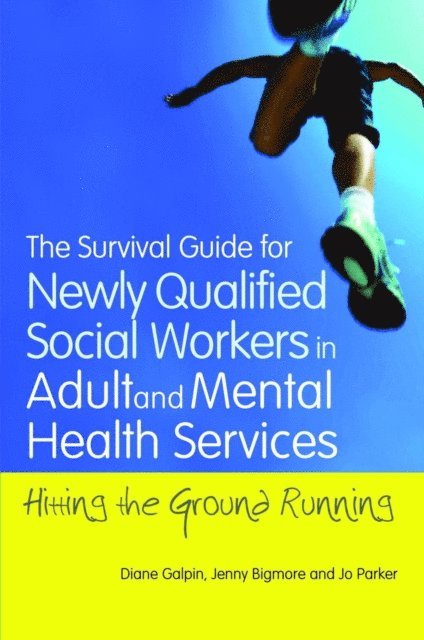
Formal education has finally ended, you've passed your exams and you're getting started as a newly qualified social worker (NQSW). As you make the transition from student to fully fledged practitioner, you'll soon discover a whole host of challenges as you hit the ground running in your new career.This handbook will guide you through the initial hurdles you will face in this transitional phase, helping you to fully understand your role and how to meet the requirements of NQSW status. The book explores the practicalities of starting work in a new organisation and the professional demands particular to adult and mental health services, such as working jointly with other professions and maintaining your professional identity. A range of strategies are provided for staying motivated, managing stress and developing support networks. The authors also explore the role of supervision and critical reflection, and give advice on continuing professional development.This survival guide is an essential support to students, newly qualified social workers, practice educators and post-qualification practitioners specialising in adult and mental health services.
251 kr
Skickas inom 3-6 vardagar
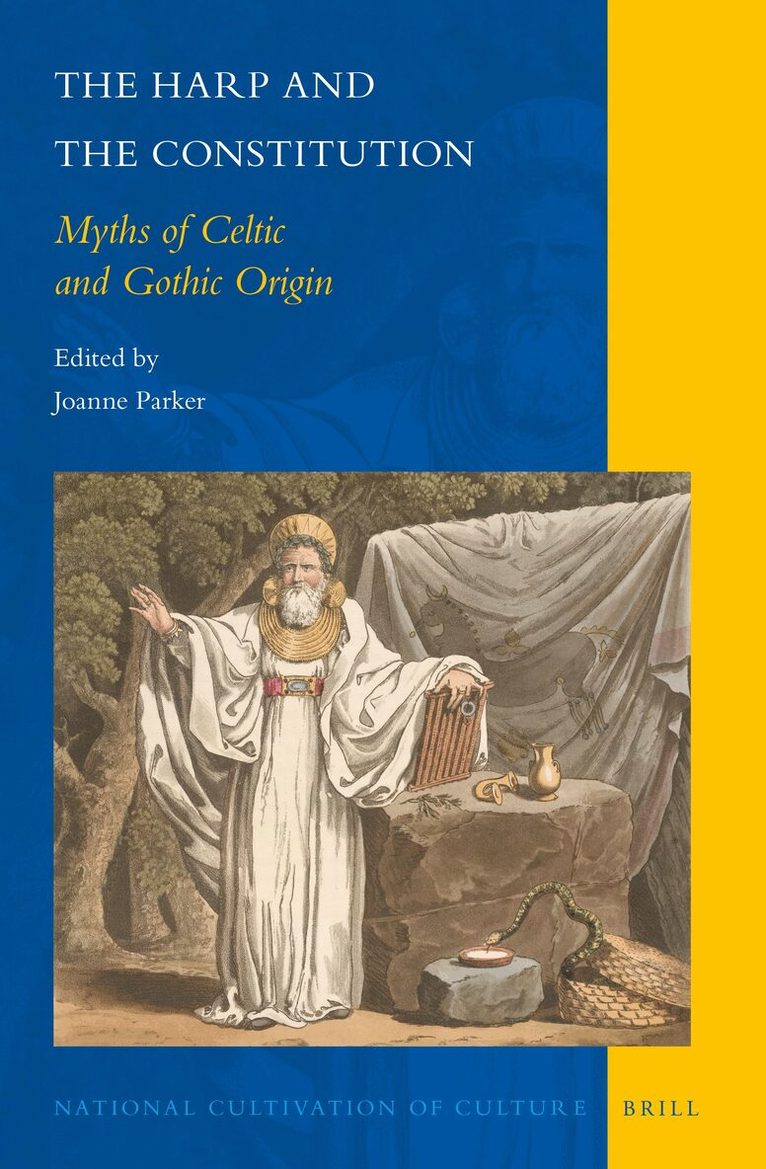
Del 11 - National Cultivation of Culture
Harp and the Constitution
Myths of Celtic and Gothic Origin
Inbunden, Engelska, 2015
2 274 kr
Skickas inom 5-8 vardagar
‘Celtic’ and ‘Gothic’: both words refer today to both ancient tribes and modern styles. ‘Celtic’ is associated with harp music, native knitwear, and spirituality; ‘Gothic’ with medieval cathedrals, rock bands, and horror fiction. The eleven essays collected together here chart some of the curious and unexpected ways in which the Celts and the Goths were appropriated and reinvented in Britain and other European countries through the eighteenth, nineteenth, and twentieth centuries – becoming not just mythologised races, but lending their names to abstract principles and entire value systems. Contributed by experts in literature, archaeology, history, and Celtic studies, the essays range from broad surveys to specific case-studies, and together demonstrate the complicated interplay that has always existed between ‘Celticism’ and ‘Gothicism’. Contributors are: John Collis, Robert DeMaria, Jr., Tom Duggett, Tim Fulford, Nick Groom, Amy Hale, Ronald Hutton, Joep Leerssen, Dafydd Moore, Joanne Parker, Juan Miguel Zarandona.